
Beginner's Guide to Buying a Pool Table: From Size, Material to Installation, Everything Explained Without Wasting Money
Beginner's Guide to Buying a Pool Table: From Size, Material to Installation, Everything Explained Without Wasting Money
Have you ever had this experience? You're scrolling through short videos, see someone clearing the table with a single shot at home, think it's incredibly cool, and immediately open a shopping app to search for "pool table." Then you're dazzled by the prices and flashy looks. The $999 "promotional model" looks decent enough, while the $20,000 imported one makes your wallet ache. After hesitating for a while, you grit your teeth and buy a "best value for money" option, only to find when it arrives that the table sits in your living room like a wall, your cue keeps hitting the sofa behind you when you play, and the cloth starts pilling after just three months, with the seams looking like they were stitched by a drunk.
This isn't your fault. The pool table industry is full of pitfalls, and beginners who only look at price and appearance often end up paying for costly lessons. Today, we'll break down everything from size, material, to installation, so every penny you spend goes where it truly matters.
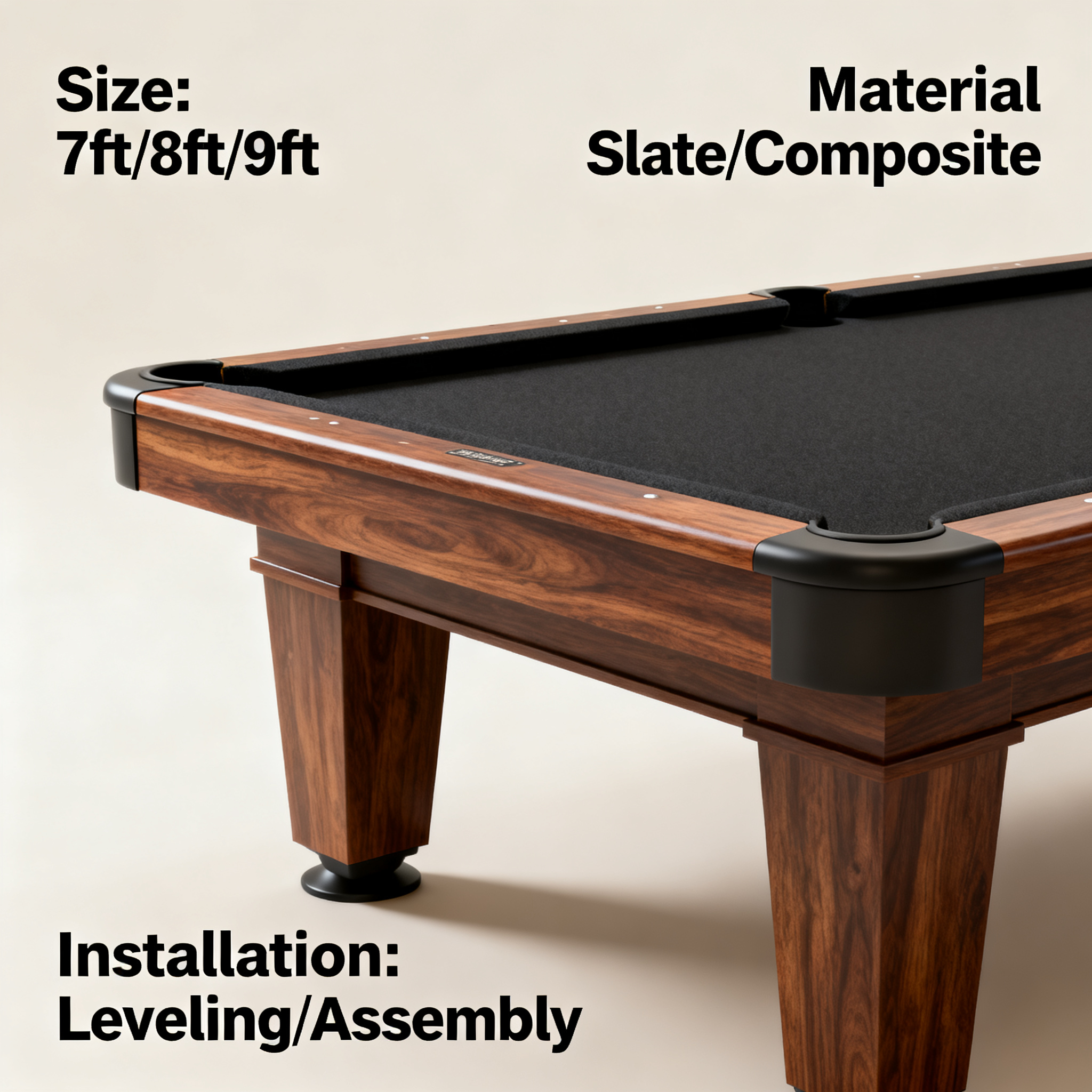
Measure Your Room First, Then Talk Tables: A Simple Formula to Find Your "Golden Size"
Many people get the first step wrong. They spot a beautiful table, then start stressing about whether it'll fit in their home. The right order is the opposite: measure your space first, then choose the table.
Here's a super simple formula—no need to memorize complex shot angles. Just ensure: Room length ≥ Table length + 4.2 meters, Room width ≥ Table width + 3.8 meters. Why? Because a standard cue is 1.45 meters long, and you need at least 1.5 meters of clearance on all sides to swing freely. Sellers who say "you can play even against the wall" are probably just trying to clear their inventory.
Here's a rundown of common home sizes:
- 7-foot (playing surface approx. 1.93m × 0.97m): Ideal for rooms of 10-12 square meters, top pick for small apartments. It feels a bit cramped, but it's plenty for practicing basic shots.
- 8-foot (playing surface approx. 2.24m × 1.12m): The sweet spot for rooms of 12-16 square meters, balancing home entertainment and semi-pro practice. It's also a standard in many pool clubs.
- 9-foot (playing surface approx. 2.54m × 1.27m): Standard tournament size, suited for rooms of 16 square meters or more, like a dedicated game room or basement. If you want the authentic feel, go straight for this.
Remember, it's better to go a size down than to cram the table into a room. You don't want every game to feel like an extreme challenge, twisting your body like a pretzel just to reach that far-off red ball.
Dissecting the "Heart": Slate, Cloth, and Cushions—No Room for Compromise
Many beginners only check if the tabletop is level and the color looks nice. But what truly determines your playing feel are the "big three" hidden underneath.
First, slate thickness. The "foundation" of a pool table is natural slate. Cheap tables on the market use 1.8cm or even thinner slate, with joints filled using plaster. Over time, they warp from moisture, turning the surface into a "hilly terrain" where balls veer off mysteriously. A reliable home table should have at least 3cm thick solid slate (larger sizes may have seams, but they must be tight and flush). How to test? Place a spirit level on the table; if the bubble sits dead center, it passes. You can also ask the seller to pour a bit of water on the slate—if the water beads roll to one side, the table has a slope, so move on to the next option.
Second, cloth density. The cloth is like the table's "skin." Domestic synthetic cloth costs a few dollars per meter, with sparse fibers that make the ball glide like on ice—no grip, and you can't control spin (English) at all. Better imported cloth (e.g., from the UK) uses a wool blend with dense, uniform fibers. Run your palm in one direction—it should feel smooth; against the grain, you should feel slight resistance. That's good cloth. Don't fall for the "slicker is better" myth; pro-level position play actually relies on just the right amount of friction from the cloth.
Third, cushion elasticity. The cushions are the rubber lining around the inner frame, determining how balls rebound off the rails. Poor-quality cushions are as hard as wood—balls hit with a dull thud and fly off unpredictably. Good cushions have even elasticity, like a well-inflated basketball, producing a crisp "pop" and a stable rebound path. You can press the cushion firmly with your finger; a good one will depress 2-3mm and spring back quickly without leaving a dent. This directly affects whether you can pull off clean "one-rail kicks" and "cross-bank shots."
Installation Is the Real Deal: Don't Let a $2,000 Table Be Ruined by a $50 Installation
Buying the right table only gets you halfway. More people trip up during installation than those who pick the wrong size.
Floor levelness is the first hurdle. If you have hardwood or tile floors, there might be subtle unevenness of 2-3mm. A professional installer will bring a level and adjustable feet, leveling the table by turning the leg screws. If the installer shows up and just shoves a wooden block under a leg, saying "good enough," stop them immediately. An uneven table will make balls roll toward the low side, and all your practice on straight shots will be in vain.
Leave room for cueing—don't wait until it's installed to find out. The size formula mentioned earlier needs to be double-checked during installation. Especially on the side against the wall, if there's not enough clearance, you'll be stuck with half or short strokes, and many shots won't be possible. Also, plan the position of the overhead light in advance. The bottom of the lampshade should be about 75-80cm above the table surface—too low and it'll hit your cue, too high and shadows will interfere with aiming.
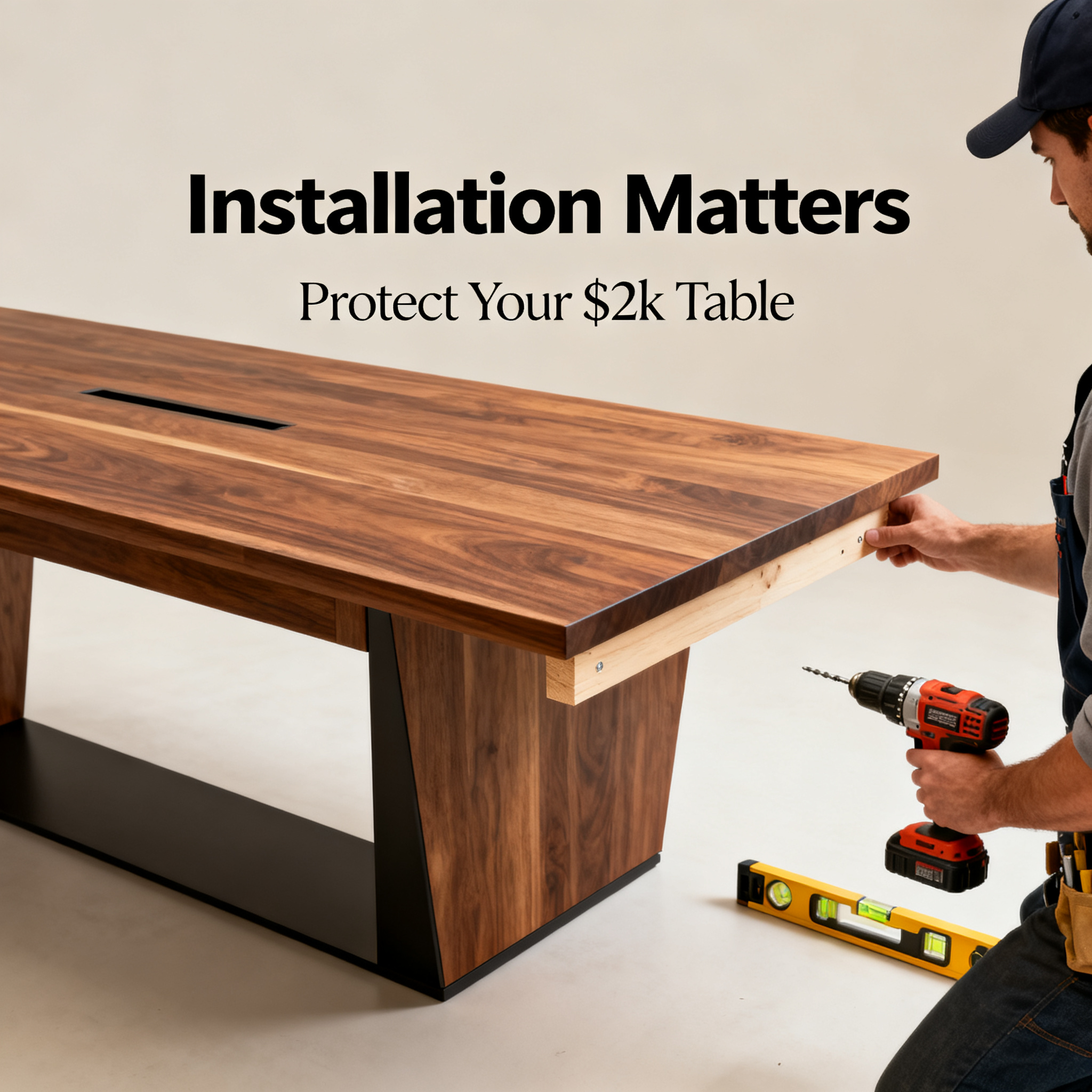
Stretching the cloth is a skilled job. When installing the cloth, the technician must use special tools to pull it tight and staple it to the frame with even tension. If it's not stretched properly, the cloth will wrinkle over time, causing balls to jump. You can ask the technician to do it in front of you, ensuring they use clamps and staples rather than just slapping on some glue.
Match Your Budget: From $700 to $4,000, Where Does the Money Go?
Now that we've covered the technical stuff, let's get practical. Based on your budget, here are three options to consider:
Budget $700 to $1,200 (Entry-Level Tryout): At this price, you can get a 7-foot or 8-foot domestic assembled table. Key focus: ensure the slate is at least 2.5cm thick and the cloth is mid-range domestic wool blend. Don't expect cushions to rival imported brands, but for home entertainment and weekend games with friends, it's more than enough. Remember, "solid wood" in this range is often veneer, so don't be too picky.
Budget $1,400 to $2,200 (Quality Upgrade): This is the most competitive segment for home tables. You can get an 8-foot or 9-foot from a well-known domestic brand or an entry-level imported brand. Slate thickness usually hits 3cm, cloth will be imported UK "Stratton" or "6811" series, and cushion elasticity is close to tournament standards. If you play more than twice a week, I strongly recommend stretching to this tier—the improved feel will make the extra money well worth it.
Budget $2,800 and Up (One-and-Done): Go straight for a 9-foot tournament table, with brands like "Xingpai" or "Qiaoshi" high-end series, or even custom-made options. At this price, every detail serves the "playability." From the flatness of the slate to the uniformity of the cushions, you'll experience the confidence of "aim and it goes." If you have the space and budget, this could be a family heirloom.
A Final Word
Choosing a pool table is essentially choosing a lifestyle you're willing to invest time in. Don't skimp $300 to buy a table that frustrates you more each time, and don't get swept away by the word "imported" and overspend. Take out a tape measure to size up your space, run your hand over the cloth, press the cushions, and sit by the table imagining your shots.
When you finally sit at a table that's the right size, with smooth cloth and responsive cushions, you'll suddenly understand why so many people are captivated by this "static sport." It tests not strength, but your control over angles, force, and mindset. Choose the right table, and you'll evolve from a fumbling beginner into a thoughtful player, eventually falling in love with that feeling of "cue in hand, world at peace."
I hope this guide helps you dodge those obvious pitfalls and makes your first pool table the starting point of a great story.