
Beginner's Guide to Buying a Billiard Table: From Selection to Maintenance, Everything You Need to Know
Beginner's Guide to Buying a Billiard Table: From Selection to Maintenance, Everything You Need to Know
Have you ever had this experience? You're out with a few friends on the weekend, playing a thrilling game at the pool hall, and you can't help but think, "It would be great to have a billiard table at home." But when you actually open your shopping app to place an order, you're instantly overwhelmed by a dizzying array of terms like sizes, thicknesses, and pocket types. How do you tell apart black-eight tables, snooker tables, and nine-ball tables? Is a thicker slate always better? Should you choose straight or curved pockets? Prices range from three thousand to thirty thousand—what's the real difference?
Don't worry; this guide is made for someone like you who's stuck in indecision. After reading it, you'll not only avoid those hidden pitfalls but also find the perfect table for your home in one go.
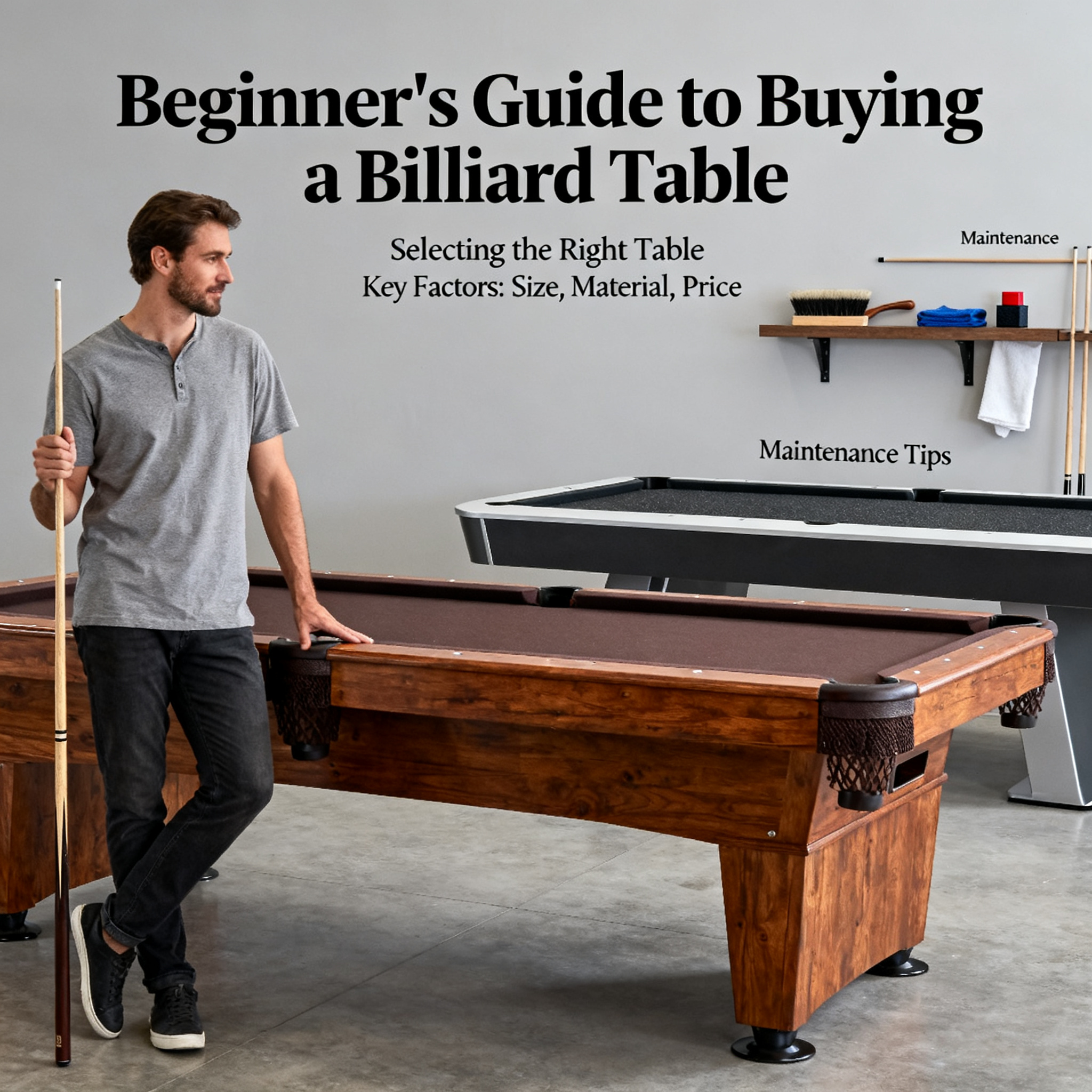
1. Core Parameters for Choosing a Table: Match Your Space and Budget
Bigger Isn't Always Better—First Measure Your Doors and Walls
Many beginners immediately fixate on international standard sizes, dreaming of squeezing a snooker table into their living room. But the reality is, a billiard table isn't just for show; you need enough room to swing your cue. A standard cue is about 145cm long, meaning you need at least 1.5 meters of clearance around the table. Otherwise, when you're playing near a wall, your backswing will hit it—just imagine how frustrating that would be.
If your living room is under 20 square meters, go for a 7-foot (about 2.1 meters long) home table. For spaces over 25 square meters, consider an 8-foot (about 2.3 meters). As for a 9-foot English snooker table, unless you have a dedicated media room or underground garage, it's really not recommended. Also, don't forget to measure your hallway and elevator door widths. Someone once spent a fortune on a great table, only to have it stuck at the stairwell, and they had to return it at their own shipping cost.
Slate Thickness: Choose for Value, Don't Fall for the "Thicker Is Better" Myth
Slate is the "heart" of a billiard table, directly affecting ball roll smoothness. On the market, you'll find two common structures: three-piece joined slate and one-piece solid slate. If the joining is done well, with industrial putty filling and sanding the seams, a joined slate can be perfectly level and is easier to transport. But if your budget allows, a one-piece slate offers better stability and sound transmission.
In terms of thickness, around 3cm is sufficient for home entertainment. Those tables boasting 5cm ultra-thick slate are usually meant for high-frequency use in pool halls; for home use, they just add unnecessary load to your floor. Remember one principle: Flatness matters more than thickness. Before buying, ask the seller for a slate flatness inspection report, or use a spirit level to test it yourself upon delivery. The error at the four corners and the center pockets should not exceed 1mm to be considered qualified.
Pocket Type: Directly Affects Your Playing Experience
Pockets come in two types: straight and rounded (also called "horn" pockets). Straight pockets (like those on Chinese black-eight tables) require more precise aiming angles, offering a greater challenge for players looking to advance their skills. Rounded pockets (like those on American nine-ball tables) are larger and more forgiving, making it easier for beginners to sink balls and feel a quick sense of achievement.
If your main goal is family fun and social gatherings, rounded pockets will make your games more enjoyable. If you plan to practice seriously and improve your skills, go for a standard Chinese black-eight table with straight pockets. This way, you'll develop proper hitting habits from the start and won't struggle to adapt if you switch tables later.
2. Installation, Adjustment, and Accessories: Details Make the Experience
Don't Skimp on Installation
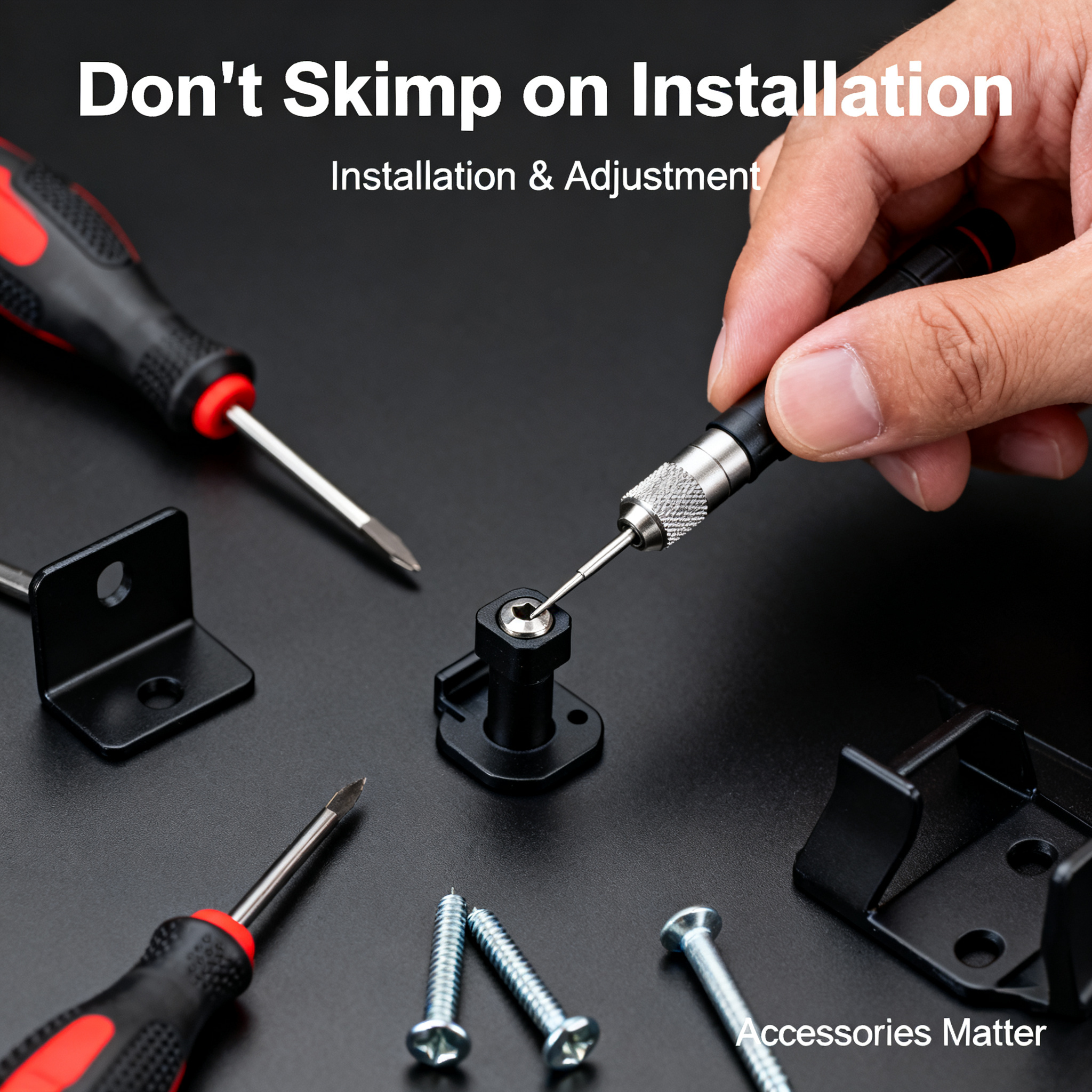
Many sellers quote a "bare table price" that doesn't include installation. Don't try to save a few hundred bucks by doing it yourself. Installing a billiard table is a skilled job, especially leveling the slate. It requires a professional spirit level and repeated adjustments of the leg shims; even a slight error can cause balls to roll off course. Reputable brands usually offer on-site installation services, costing between 300-800 yuan, and it's money well spent. Be present during installation to watch the technician level and tighten screws, and pick up a few tips for future minor adjustments.
Choosing the Cloth: Cheap Isn't Good, but Expensive Isn't Necessarily Right for You
The cloth is the fastest-wearing part of a billiard table. Mid-range domestic cloths (like Suli or Libaowen) cost between 500-1000 yuan and offer sufficient speed and durability for home use. Imported English cloths (like Strachan 6811) do have a top-tier feel, but they can cost two to three thousand yuan, and with low home usage, they're more prone to moisture damage and mold, making them less cost-effective.
For color, go with blue or green—they're easy on the eyes and hide dirt well. Avoid black or dark red at all costs; dust and chalk powder will be glaringly visible, and maintaining them will drive you crazy.
Cues and Accessories: Don't Rush to Buy Everything at Once
The most common mistake beginners make is buying a full set of high-end accessories, only to find they don't need them. At the entry level, two 4/3 two-piece ash wood cues (200-400 yuan each) are enough. Choose a medium-hard tip; too soft and it'll peel, too hard and it'll slip. Also, hold off on those high-end cues with extension handles, multi-piece designs, or carbon fiber. After three months of play, once you understand your stroke habits, you can consider upgrading.
3. Daily Cleaning and Maintenance: Extend Your Table's Life by Five Years
Cloth Cleaning: Don't Use a Wet Cloth!
Cloth hates moisture. After each game, use a dedicated cloth brush to sweep lightly in the direction of the nap, removing chalk and dust. Once a week, do a deep clean with a vacuum cleaner (using a soft brush attachment), but keep the suction low to avoid pulling up the nap. For stains, use a wrung-out damp towel to dab gently—never rub—and then immediately use a fan to dry the area.
Slate Moisture Protection: Especially Important for Southern Homes
If you live in the south, the high humidity during the rainy season can cause the slate to absorb moisture and lose its flatness. Place desiccant packs under the table and keep the room ventilated. If you won't use the table for a long time, cover it with a dedicated dust cover, but ensure the inside stays dry—ideally, place a couple of desiccant packs under the cover first.
Leather Pocket and Cushion Maintenance
The leather pockets and rubber cushions are rubber products that fear direct sunlight and heat sources. Don't place the table near a window with direct sun, and keep it away from radiators in winter. Wipe the pockets with a leather conditioner every six months to prevent cracking.
4. Summary and Practice Tips for Beginners
Finally, let's recap the common mistakes:
- Mistake 1: Only looking at the price, not the brand's after-sales service. A billiard table is a durable, large item, and after-sales service determines your overall experience.
- Mistake 2: Thinking bigger pockets are easier to play on. Oversized pockets can lead to sloppy stroke habits.
- Mistake 3: Ignoring leg leveling. Even a 2-3mm unevenness in the floor can cause balls to deviate.
- Mistake 4: Using a regular cloth to wipe the table cloth. This can cause pilling, discoloration, and accelerate aging.
If you're ready to make a purchase, here are three practice tips for beginners:
- Practice straight shots for half an hour daily: Place the cue ball in the break zone, the object ball at the opposite pocket, and practice center-stroke shots. This fundamental skill is a hundred times more important than fancy spin.
- Don't rush to learn draw and follow shots: Master the stop shot first. It's the litmus test for a smooth, straight stroke.
- Record every mistake: Don't just play mindlessly; after each shot, think about why you missed—was your aim off or was your stroke crooked? Building a habit of reviewing your play is more effective than blindly hitting a hundred balls.
A good billiard table isn't just a piece of furniture; it's your personal space to unwind and compete with friends. Follow this guide, and you're sure to find the "companion" that will bring you countless joyful moments. Once it's home, call your friends, crack open a cold drink, and play a few games—that kind of happiness is something your phone can't provide.