
Transform Your Living Room into a Private Entertainment Zone! A Guide to Buying a Home Pool Table Without Pitfalls + Real User Experience
Transform Your Living Room into a Private Entertainment Zone! A Guide to Buying a Home Pool Table Without Pitfalls + Real User Experience
Ever since I turned that idle TV wall in my living room into a mini billiard room, my family's weekend vibe has completely changed. Before, we'd all be glued to our phones on the couch; now, it's father and son competing for the cue stick, and friends insisting on a game or two when they visit. Honestly, when I first decided to bring a pool table home, everyone around me thought I was crazy. But after nearly six months of use, I can only say: this money was well spent.
Many people think a pool table is a luxury only "big shots" can own, but the home market has matured a lot now. Today, I'm not going to sugarcoat it—I'll share the pitfalls I fell into and my real feelings now, to give you a solid reference if you're thinking about getting one.
1. Buying Essentials: Don't Just Look at Looks—These Three Things Determine Success or Failure
1. Size: Don't Go Too Big—Measure Your Door and Walls First
This is the biggest trap! I initially had my heart set on a standard 9-foot table, thinking it would look grand. But when the installer came and measured, my living room width was barely enough, but the seating area for resting would be completely useless, and a slight extra force on the cue stick would hit the wall. In the end, I wisely chose the SQUARE COMFORT Chinese Eight-Ball home model, about 7.5 feet, leaving just enough striking space. Remember this rule: leave at least 1.5 meters around the table on all sides, which is the distance of a cue stick plus your backswing. If you have an irregularly shaped living room, it's best to tape out a mock frame on the floor to get a feel for the movement.
2. Material: The Slate Is the Soul, Wood Quality Matters for Eco-Friendliness
Pay attention! The soul of a pool table is its slate. Cheap tables on the market use synthetic boards or thin slate, which sound hollow and make balls roll unpredictably. I specifically chose the SQUARE COMFORT model because their tables use a single piece of natural bluestone, with extremely smooth seams. They also have that "12-step precision inspection," which sounds gimmicky, but in practice, the cushion rebound is remarkably consistent—unlike the cheap ones I've played on at friends' houses, where balls bounce erratically off the cushions. Also, make sure to ask if the wood is solid; some MDF boards can off-gas formaldehyde that'll make you question your life choices. The brand I picked uses FSC-certified wood, with high environmental standards, so it's safe even with kids around.
3. Budget: Don't Just Count the Table Price—Accessories and After-Sales Are Hidden Costs
When it comes to budget, the table itself is only part of it. Cloth, cue sticks, light fixtures, and balls—a good set of accessories doesn't come cheap. The most overlooked aspect is after-sales installation. Pool table installation is very particular about leveling; if the floor isn't level, no matter how expensive the table, it's useless. A key reason I chose SQUARE COMFORT was their promise of full technical guidance for installation, adjustment, and acceptance, plus that "annual safety inspection." At first, I thought it was a marketing gimmick, but when the installer came, he actually used a level and spent nearly two hours fine-tuning, and even taught me how to maintain the cloth. That's way better than another company I asked that only delivered but didn't set up properly.
2. Installation Notes: Don't Overlook the "Last Mile"
If you think you can just plug it in and play after buying, you're naive. First, make sure your hallway or elevator can accommodate it. In my case, they had to unpack it, and several workers carried the slate up wrapped in soft cloth—what a hassle. So before ordering, confirm whether "door-to-door delivery upstairs" and "assembly/disassembly" services are included.
Second, position it away from direct sunlight and air conditioning vents. The cloth is very delicate; sun exposure will fade it, and direct AC airflow will cause uneven table temperature, making balls veer off course. I placed my table against an interior wall and added a SQUARE COMFORT 3.7-meter competition-grade shadowless light. The light's brightness uniformity is incredible—no glare during play, and it instantly elevates the whole living room's style. Friends ask if I've moved a billiard hall home.
3. Daily Use Scenarios: It's Not Just a Table—It's a Happiness Generator
1. Friend Gatherings: From Awkward Silence to Cue-Stick Battles
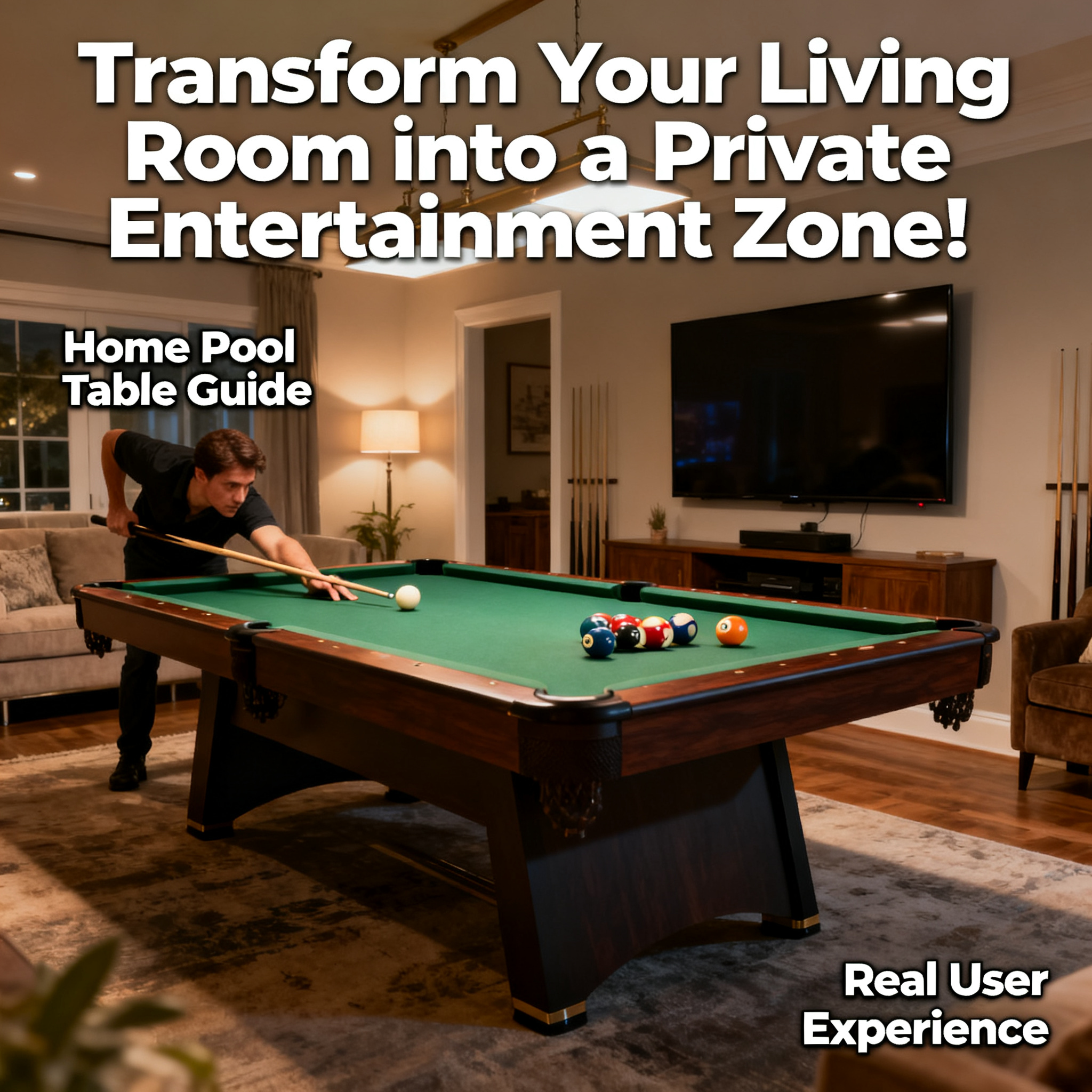
Before, friends would come over to eat, drink, and scroll their phones. Now, the moment they walk in, their eyes dart to the pool table. Even those who don't know how to play will take a cue and give it a few pokes. Last week, a few old buddies came over, and we even held a mini tournament where the losers did push-ups. That face-to-face interaction, the laughter and banter—it's something scrolling through phones can't provide. Plus, pool has an inherent "gentlemanly" ritual; as everyone moves around the table, strategizing, even the conversation feels more refined.
2. Parent-Child Time: "Quality Time" Without Screens
My son is ten this year. He used to love curling up on the couch watching cartoons on weekends. Now, he's hooked on playing Eight-Ball with me. I taught him basic stance and aiming, and he picked it up fast. Sometimes we'll play for an entire afternoon, and during that time, he'll ask me physics questions about angles and force. These moments of learning through play are more valuable than ten tutoring classes. I've also noticed that pool greatly improves focus and patience—his posture while doing homework has even improved.
3. Solo Moments: A Personal "Meditation Space"
At night, when the family's asleep, I'll turn on a small light and practice long shots by myself. That crisp "crack" of the cue hitting the ball, followed by the sound of the ball dropping into the pocket, is incredibly stress-relieving. In those moments, you truly appreciate the value of a good table—its precision in ball movement gives you a sense of "becoming one with the cue."
4. Summary: Is It Worth Buying?
Pros: Extremely strong family entertainment value, instantly elevating your living room's style; the solid wood and slate construction ensures durability beyond expectations; the brand's after-sales service is genuinely reassuring—the monthly follow-up calls can be a bit annoying, but you feel valued.
Cons: It definitely takes up space, so small apartments should be cautious; it requires regular maintenance (mainly dusting and re-leveling); and since getting it, sleeping in on weekends? Forget it—my son will knock on your door with a cue stick.
Final Practical Advice: If you have unused open space in your living room and a budget around a few thousand to ten thousand yuan, you should seriously consider getting one. But make sure to choose a brand like SQUARE COMFORT that has its own factory, offers a lifetime warranty, and provides annual free inspections. Don't save two thousand yuan on a no-name brand; when the cloth starts to bubble or the slate cracks later, you'll have no one to turn to.
If you have any more questions about home pool tables—like how to choose the right size or whether your home layout is suitable—feel free to leave a comment below. I'll reply to all of them! See you in the next post.