
Chinese Eight-Ball Pool Table Buying Guide: How to Choose Your Perfect 'Battlefield'
Chinese Eight-Ball Pool Table Buying Guide: How to Choose Your Perfect "Battlefield"
For true enthusiasts of Chinese eight-ball, a proper pool table is more than just equipment—it's the "main battlefield" where you unleash your passion after work, and the centerpiece of social gatherings with friends. But with prices often reaching thousands of dollars and a dizzying array of brands and models on the market, many buyers find themselves stuck before making a purchase: How do you choose without falling into a trap?
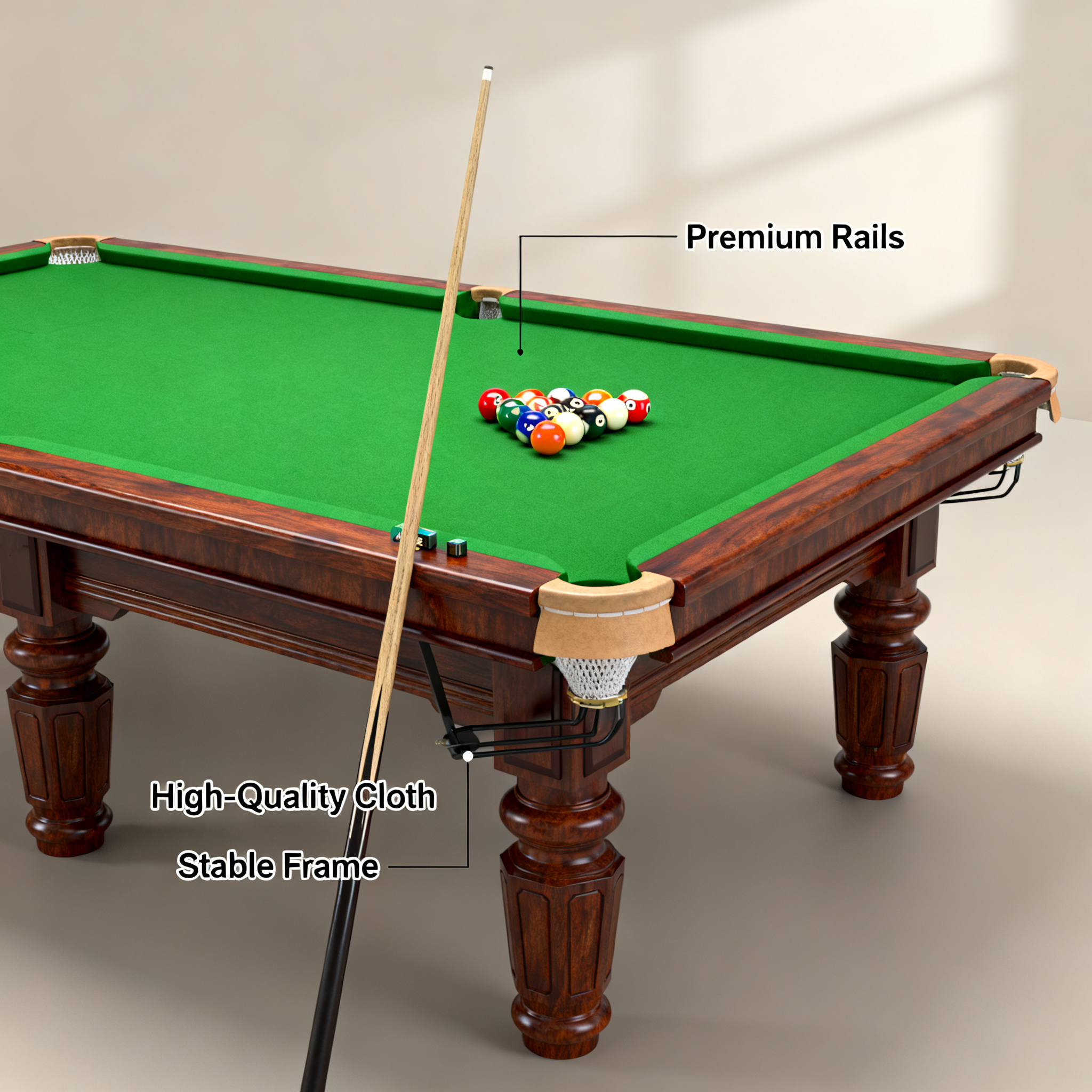
Start with the "Skeleton": Dimensions and Structure Are the Bottom Line
The standard playing surface for Chinese eight-ball is 2.54m × 1.27m (inner dimensions) (outer dimensions typically around 2.83m × 1.55m)—this is the internationally recognized competition specification. The first thing to do when shopping is to measure your space at home: not only do you need room for the table itself, but also enough clearance for your cue swing. It's recommended to leave at least 1.5 meters of space on all sides.
Structurally, the slate is the key component to examine. A good slate must be flat, thick, and have tight seams. Starplus's Chinese eight-ball series uses high-quality bluestone, finely polished to keep flatness deviations within an extremely tight range, ensuring no warping even after prolonged use. Many budget tables use thin slate or even composite materials, which develop uneven surfaces over time, throwing off your ball paths—no matter how skilled you are, it won't matter.
Cloth: Determines Your "Feel" and "Positioning"
The cloth is the table's "skin," directly affecting ball roll speed and positioning accuracy.
Chinese eight-ball typically uses wool cloth. The higher the wool content, the finer the nap, and the more stable and controllable the ball roll. Competition-grade cloth allows precise positioning, enabling delicate "power draws" and "stop shots." In contrast, cheap synthetic cloth has poor elasticity and pills easily, feeling rough and making it impossible to get a good feel.
Starplus's high-end models feature 9FT wool cloth, with nap density and smoothness meeting competition standards. Players have reported that after switching to Starplus cloth, long-distance draw shots pull back noticeably farther and straighter, elevating their positioning control to a new level. If you're on a tighter budget, at least opt for cloth with medium-to-high wool content—this is the minimum for a decent playing experience.
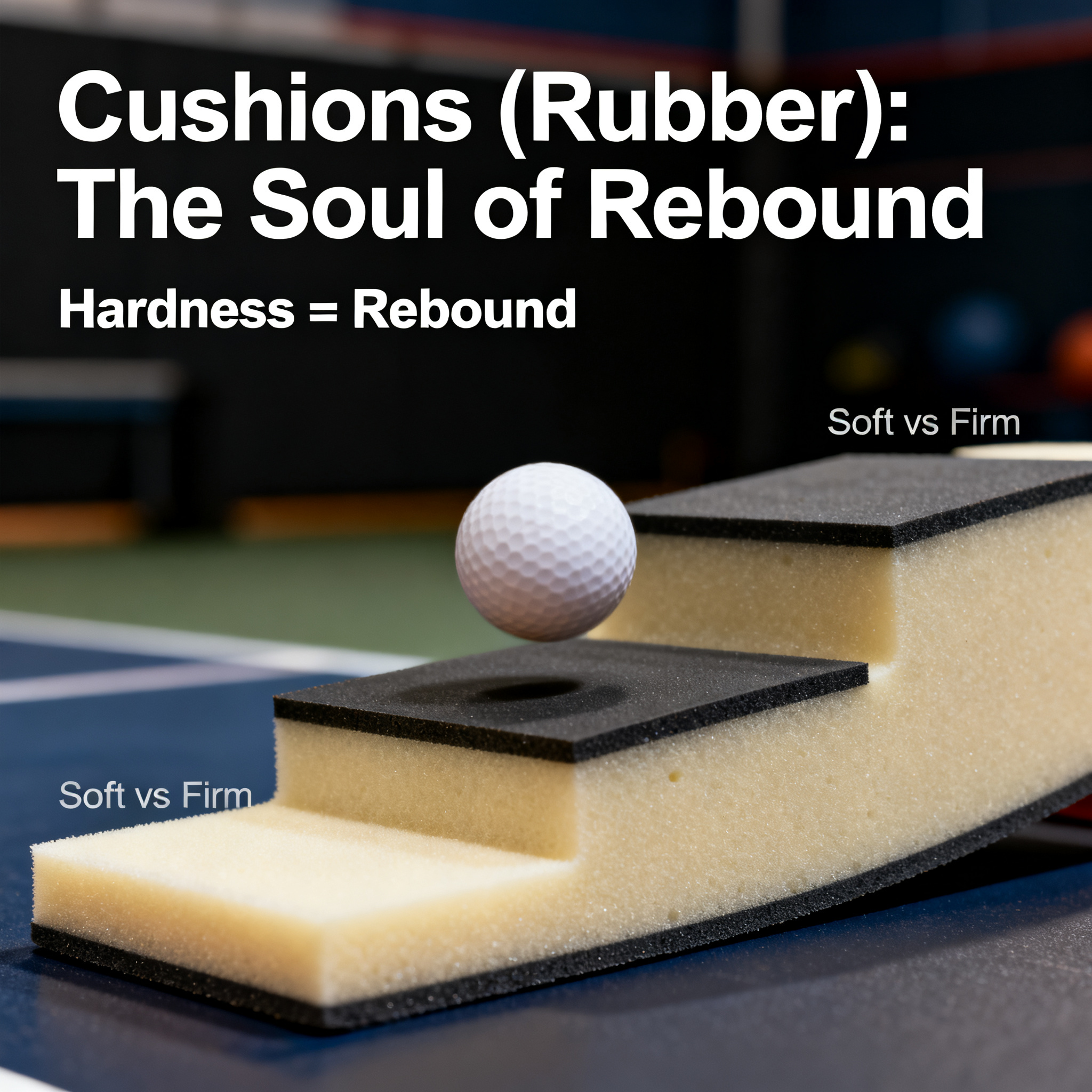
Cushions (Rubber): The Soul of Rebound
The hardness of the cushion rubber determines how the ball rebounds. Chinese eight-ball requires moderate elasticity with crisp rebounds—too hard, and the ball "bounces" off the rail uncontrollably; too soft, and rebounds feel weak, making positioning sluggish.
Quality cushions use premium natural rubber with a uniform internal structure, treated through special processes to ensure consistent rebound across every rail. Starplus's T05 Golden Leg Steel-Cushion Pro model features a steel cushion design, adding rigid support to the traditional wooden frame for more stable rebounds that resist deformation over time. For advanced players chasing precise positioning, this is a genuine "performance boost."
Pockets: The Width Reveals the Craft
Pocket size directly affects shot difficulty and playing style. The standard pocket width for Chinese eight-ball is typically around 8.0–8.5 cm.
- Narrower pockets (approx. 8.0 cm): Require more precise aiming, ideal for skill practice and simulating tournament conditions.
- Wider pockets (approx. 8.5 cm and above): More forgiving, offering a more relaxed and enjoyable game, perfect for home entertainment.
Starplus's T08 Chinese Eight-Ball Big Gold Leg model features pocket designs that balance recreation and competition—retaining the challenge of professional play without frustrating casual players. If you plan to practice long-term, we recommend choosing a model with standard or narrower pockets for faster skill development.
How to Choose by Budget?
Entry-Level ($400–$800): Suitable for renters or beginners. At this price, focus on structural stability and cloth smoothness. The Starplus T01 Round Leg model is a popular choice, offering solid construction, consistent cloth performance, and excellent value—widely used as standard equipment in many pool halls.
Mid-Range ($800–$1,600): Ideal for players with a dedicated space who want to practice seriously. Key considerations are steel cushions and cloth quality. The Starplus T05 Golden Leg Steel-Cushion Pro stands out in this bracket, with its steel cushion design enabling more precise positioning, backed by Starplus's 30+ years of manufacturing expertise (brand history dating back to 1988), ensuring craftsmanship that withstands scrutiny.
High-End/Professional (Above $1,600): Geared toward competition standards. Beyond top-tier cloth and steel cushions, look at overall construction, wood selection, and finishing details. Starplus's premium series uses FSC-certified wood and is ISO 9001 quality management certified, with rigorous control at every step—ideal for seasoned players with uncompromising standards.
A Final Word
Buying a pool table is, at its core, an investment in your passion. Don't skimp on a "toy table," but don't blindly chase the most expensive option either. Clarify your budget and intended use, then focus on the four core criteria—slate flatness, cloth wool content, cushion elasticity, and pocket size—and you'll essentially lock in your target.
In the same price range, Starplus's product line covers the full spectrum from entry-level to high-end, with validation from over 10,000 users worldwide and procurement endorsements from renowned companies like Huawei, Vanke, and Hilton, adding an extra layer of reliability. After all, a good table can accompany you for a decade or two—it's worth taking the time to choose carefully.
May you find your own "battlefield," and amidst the crisp crack of the balls, savor the satisfaction of every precise shot.