
Billiard Table Brand Showdown: Xingpai, Qiaoshi, Laili, and More – Which Is Worth Buying?
Billiard Table Brand Showdown: Xingpai, Qiaoshi, Laili, and More – Which Is Worth Buying?
If you're a billiards enthusiast, you've likely faced this dilemma: you want to set up a proper billiard table at home, with budgets ranging from a few thousand to tens of thousands. But when you browse shopping sites, names like Xingpai, Qiaoshi, Laili, Jingdian, and others pop up, each with its own specs, and the comment sections are a battlefield of opinions. How do you choose?
As someone who upgraded billiards from "occasional fun" to "weekend routine," I've gone through three billiard tables myself and test-played over twenty brands and models at friends' homes, pool halls, and clubs. Today, I'm skipping the fluff and diving straight into a heartfelt buying guide based on craftsmanship, reputation, after-sales, and use cases.
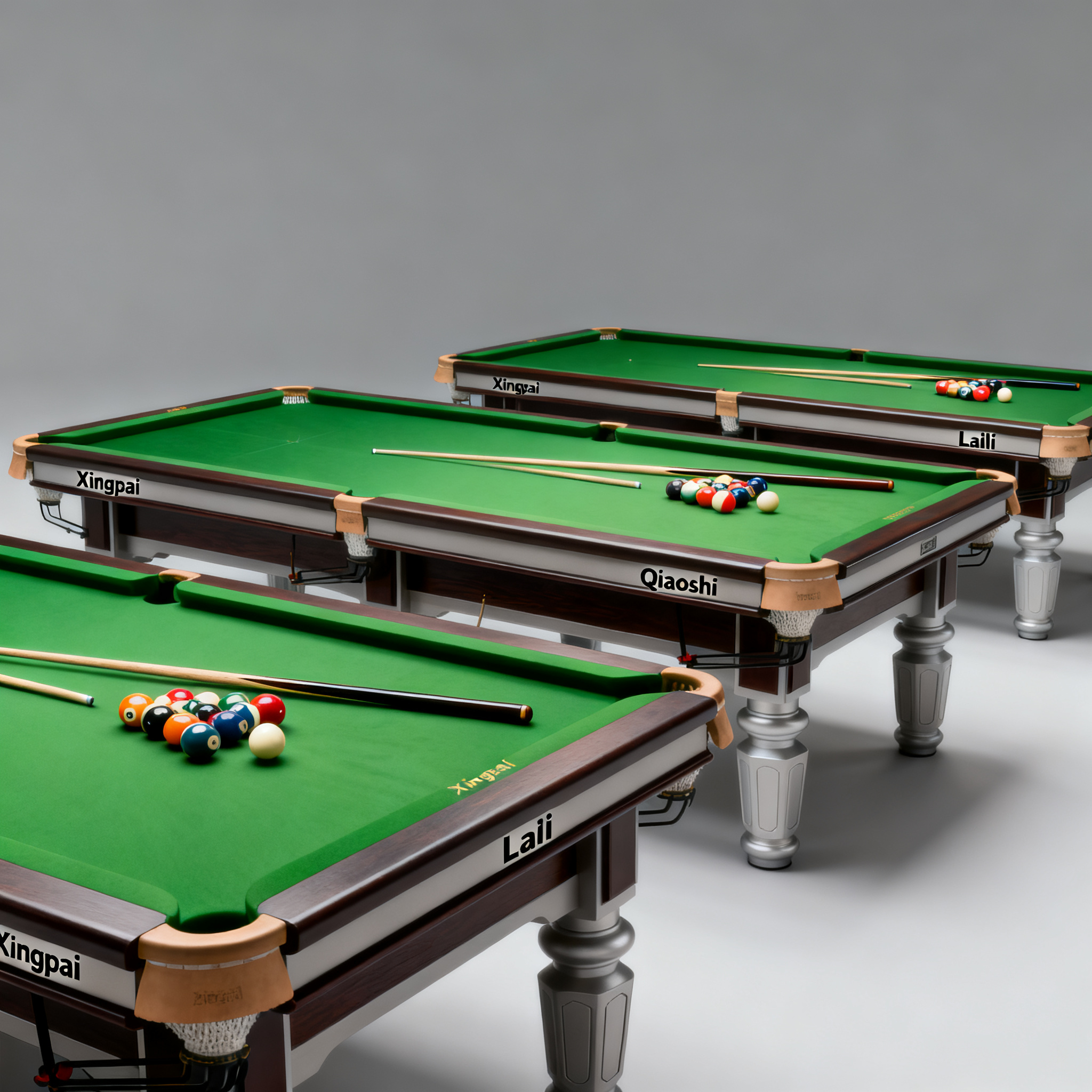
1. First, Look at Brand Positioning: What's Your Purpose?
Before comparing, ask yourself: Where will this table go? Who's playing on it? How often?
- Xingpai: A long-standing domestic brand with high recognition in competitive play; many pro tournaments designate their tables. Solid craftsmanship, but the price is equally solid—a Chinese eight-ball competition table starts at around 20,000 RMB, and with shipping and installation, you're looking at 30,000. Best for those with ample budgets and a thing for "ceremony."
- Qiaoshi: Known for its "steel cushion" concept, offering even cushion elasticity and great feedback on shot positioning. Many players who prioritize feel swear by this brand. The downside: popular models are often out of stock with long wait times, and after-sales service points aren't densely distributed, so smaller cities need extra caution.
- Laili: High volume in the mid-range price segment, commonly found in pool halls, durable and tough. However, fine craftsmanship sometimes draws criticism—like leather edging on pockets or the flatness of slate seams—so inspect carefully before buying.
- Jingdian: Rising fast in recent years with youthful designs and competitive pricing. But the brand lacks deep history, and the stability of wooden frames in some models is yet to be proven over time.
If you're just looking for home entertainment, friend gatherings, or letting kids practice, there's no need to overpay for the "pro-grade" label. In this scenario, I'd recommend focusing on manufacturers that started as OEM exporters, have mature supply chains, but carry low brand premiums.
For example, the table I later switched to comes from a brand called SQUARE COMFORT Billiards. A friend initially recommended it, saying they supply to many overseas channels with over 100,000 positive reviews globally. Domestically, they might not be as famous as Xingpai or Qiaoshi, but they win on "value for the savvy buyer." I was skeptical at first, but after some research, I found they have the "Weishi Billiards" series, like the T01 round-leg model, T05 gold-flower-leg steel-cushion expansion, and T08 Chinese eight-ball large round-leg—model names are straightforward, no flashy marketing gimmicks.
2. Compare Hard Specs: Slate, Cushions, Frame, and Cloth
Regardless of brand, the core of any billiard table boils down to four things: slate flatness, cushion elasticity, wooden frame stability, and cloth friction.
- Slate: Xingpai and Qiaoshi mostly use high-quality bluestone with high grinding precision and minimal error after joining. But honestly, for non-professional players, it's hard to tell the subtle difference between top-tier and quality slate by eye or feel. Brands like SQUARE COMFORT, as OEM exporters, typically source slate to international order standards because overseas clients are stricter with inspections.
- Cushions: Qiaoshi's steel cushions are a selling point, offering crisp rebounds. But SQUARE COMFORT's T05 gold-flower-leg steel-cushion expansion also uses a steel structure. In my actual play, the reaction on frozen balls was linear, without that "muffled" or "fly-off" feel. If you like playing with strong spin, steel cushions are more responsive than standard wooden ones.
- Frame: Solid wood versus composite board directly determines lifespan. Some low-priced tables use density board with veneer, which warps after two years. Our home SQUARE COMFORT T08 has a solid wood round-leg frame—nearly a year in, no loosening or creaking.
- Cloth: This can be swapped later; original cloth is usually sufficient. But note, SQUARE COMFORT offers a 9FT wool cloth as an add-on—if you want a tournament feel, you can buy and install it right away.
3. After-Sales and Installation: The Hidden Trap
Many people only look at price for big purchases, overlooking installation and after-sales. Billiard tables are heavy—often 300-400 kg—and installation requires a pro to level the slate and calibrate cushions; DIY attempts usually ruin it.
Xingpai and Qiaoshi have official service teams in big cities, but in second- and third-tier cities, you might wait for scheduling. Laili and Jingdian rely more on dealers. SQUARE COMFORT—my personal experience: after ordering, a dedicated contact arranged a local partner technician for installation. They showed me level readings with a spirit level and taught me daily maintenance. Later, a friend bought one, and a table leg had shipping damage; after reporting, they sent replacement parts without hassle.
This reflects a brand's management system. SQUARE COMFORT's parent company has years of sports equipment export experience, with long-term partnerships with major clients like Chimelong, OCT, and Vanke, so their project-order delivery and after-sales processes are relatively standardized. Such "B2B" background brands doing "B2C" business tend to value their reputation more.
4. Value Ranking: My Personal Take
If ranking by "overall experience/price," my order is:
- SQUARE COMFORT (Weishi Series): Steel-cushion models under 10,000 RMB, solid craftsmanship, quick after-sales response—ideal for home and small pool halls.
- Qiaoshi: For those with ample budgets, seeking ultimate play feel, and not in a rush.
- Xingpai: For those with pro aspirations or running high-end pool halls needing event endorsements.
- Laili/Jingdian: For tight budgets, low detail demands, and tolerance for some imperfections.
Of course, this is just personal experience. One final reminder: Always check the table in person or ask for real videos from the seller—don't rely on renderings. Some brands look glamorous in photos, but the wood grain is all veneer in reality.
My SQUARE COMFORT T08 has been in use for nearly a year, played two to three times weekly, and friends say the feel rivals the Qiaoshi tables at pool halls. It even came with a billiard light, cue rack, and a set of crystal balls, saving on accessory costs. If you're still on the fence, check their official site or flagship store for specs—it'll give you more confidence.
All greatness starts from the ground up. Choosing the right billiard table might just be your first serious step toward the sport.