
Got a Little Tornado at Home? Turn Your Pool Table into a Family Fun Zone—100x More Engaging Than a Phone
Got a Little Tornado at Home? Turn Your Pool Table into a Family Fun Zone—100x More Engaging Than a Phone
On a weekend afternoon, the mom group chat kicks off its usual venting session. The eternal topic: how to get the little "monsters" at home to put down their iPads and phones. One mom shared yesterday's "battle"—she moved the coffee table aside, laid out play mats, and tried to build blocks with her kid. But within twenty minutes, the child was bored, eyes drifting back to the screen. She sighed, "We've played everything at home; I can't exactly move an amusement park in here, can I?"
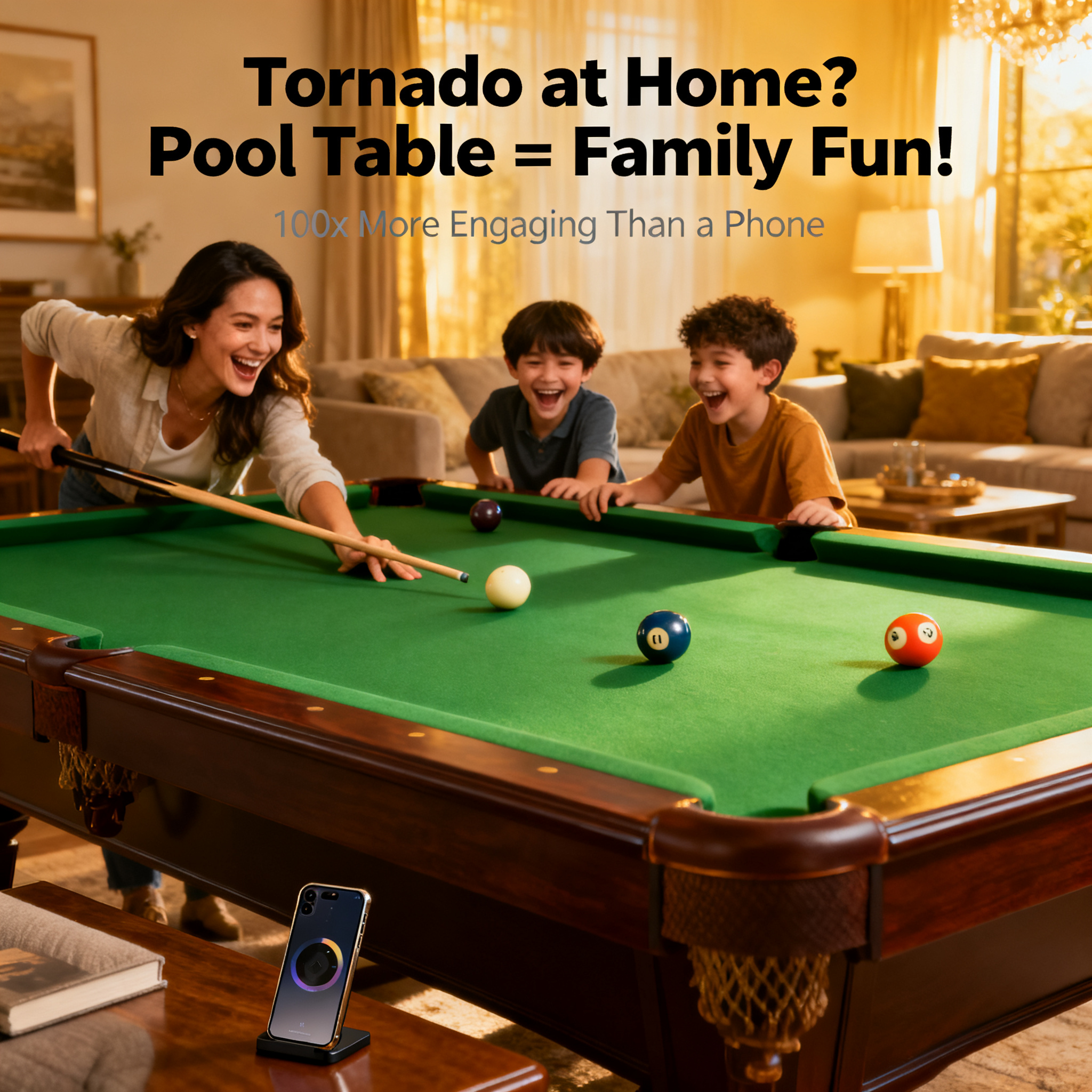
Actually, you don't need an amusement park. If you happen to have a spare pool table at home, or are thinking of adding a statement piece that's both practical and impressive, consider a fresh approach. A pool table isn't just an adult's leisure toy—with a bit of clever styling, it can become the "family interaction hub" that pulls kids away from screens. My own pool table from SQUARE COMFORT went from being a mocked "space hog" to the go-to spot for family fun.
Step 1: Soft Landing on the Floor—Safety First for Fearless Play
Kids are naturally active, and even the roundest table corners can cause a heart-stopping bump. So, the first step isn't buying cues—it's gearing up the floor.
I chose a thick, interlocking EVA foam mat in a soft light gray, laid around the table. These mats offer great slip resistance and cushioning, so if a child trips while chasing a ball, they won't hit the cold, hard floor. More importantly, the mat's boundary gives kids a psychological cue: this area is a "safe play zone."
At first, my partner teased me for overthinking, saying I was coddling the table. But later, he noticed that our kid felt confident enough to run around barefoot, even mimicking TV moves and lying down to aim. That carefree focus was more effective than any lecture. Soft floors mean bolder kids and a natural boost in curiosity.
Step 2: Low-Level Storage Around the Table—Let Toys "Go Home" Themselves
A pool table's height is perfect for adults but towering for kids. It naturally creates a semi-enclosed space, ideal for low storage. I bought two open toy shelves, about 60 cm high, placed against the wall beside the table. One holds his toy cars and blocks; the other, picture books and drawing paper.
The key is "low." Kids can easily grab or return toys without asking for help. This design turns tidying up into part of the game. After each play session, I race him to see who can return scattered balls and toys to their "homes" faster. To win, he proactively hangs cues back on the wall rack and pockets the colored balls. This beats yelling "clean up" a hundred times.
The table's surface height also doubles as a "standing workstation" for kids. Sometimes, he doesn't play pool but leans over the edge to draw with crayons or arrange his toy dinosaur squad. The flat, spacious surface is kinder to his spine than hunching over a coffee table.
Step 3: Extend Functionality—Create a Versatile Brain-Boosting Corner
If you only use the pool table for pool, you're missing out. I added a magnetic chalkboard sticker to the wall above and beside the table. Now, it doubles as an art studio and early math zone.
He draws a top-down view of the pool table on the board and designs his own "shot paths." Once, he sketched several wobbly lines and seriously explained that the red ball needed to hit the cushion first, bounce back, and then touch the blue ball. In that moment, I realized this wasn't just play—it was an introduction to physics and spatial reasoning.
On the other side of the toy shelf, I placed strategy and patience games like tangrams and logic puzzles. When he tires of dynamic ball games, he can switch to quiet, static play. This shift between "active" and "calm" channels his energy more effectively and gives me a moment to sit back with a glass of water on the nearby lounge chair. Speaking of which, when I chose the SQUARE COMFORT table, the matching lounge chair surprised me with its quality—solid and comfortable—and it's become my throne for watching him "direct" his games.
Step 4: Establish "Match Rules"—Turn Competitive Spirit into Good Character
Kids often get interested in pool just to whack balls around with the cue. At that point, don't rush to correct their stance; first, create your own "family match rules."
I simplified standard pool rules into a "color collection challenge." Each person claims a color and takes turns shooting; if your ball goes in, you get another shot. Whoever clears their color first wins. To spice it up, I added a "bonus ball": potting the black 8-ball lets you ask the opponent for one small favor, like "read three bedtime stories tonight."
Through this, he learns patience, respects the opponent's turn order, and handles wins and losses. He cheers when he wins but doesn't cry when he loses because another round starts right away. He gradually understands that winning requires focus, precise angles, and controlled force. This training in hand-eye coordination and concentration is something no amount of short videos can replace. Now, he often initiates "battles" and mimics snooker pros by walking around the table to study angles—his serious demeanor never fails to make us laugh.
Final Thoughts
Many parents resist having a pool table at home, fearing it'll become another dust collector. But if you're willing to put in a little effort and treat it as the centerpiece of a family space, it can unlock endless possibilities. Like my SQUARE COMFORT table—among many brands, I chose it not just for its decade-plus experience in sports equipment but also for its philosophy of "small"—focusing on details and doing them well. The polished corners, the cushion's elasticity, the smooth pockets—these details ensure safety and a great experience for kids.
If you want your child to put down the phone, give this a try. Turn the pool table into a "fun zone" that combines sports, learning, and family bonding. Hand them a junior-sized cue and let them set the rules—you'll find they surprise you far more than any cartoon on a screen. After all, sharing laughter-filled, screen-free moments with your child is the most precious decoration a home can have.