
Starting a Billiard Room? Choosing the Right Pool Table Is Half the Battle—My Pitfalls and Comeback
Starting a Billiard Room? Choosing the Right Pool Table Is Half the Battle—My Pitfalls and Comeback
In the spring of 2019, I took all the savings I'd accumulated over eight years of work, plus money scraped together from relatives and friends, and rented an 800-square-meter space off a secondary road in the east of the city. I quit my IT job that paid 20,000 yuan a month but offered no future, determined to open my own billiard room.
Back then, I was overly confident. I thought, "Opening a billiard room is simple—pick a good location, spruce up the decor, set prices low, and customers will naturally flock in." So, I spent nearly 200,000 yuan on renovations, styling the lighting, bar, and lounge areas to match high-end billiard rooms I'd seen online. The only thing I hesitated on was the core equipment: the pool tables.
At the time, two suppliers approached me. One was a reputable sports equipment brand, quoting 13,000 yuan per table. The other was a small workshop claiming "export quality at factory-direct prices," offering tables for just 5,800 yuan, with cues and balls thrown in. I did the math: saving over 100,000 yuan on twenty tables would cover several months of rent. I was tempted, thinking those big brands were just profiting from information asymmetry—how much technology could a pool table really involve?
Reality slapped me hard in the face.
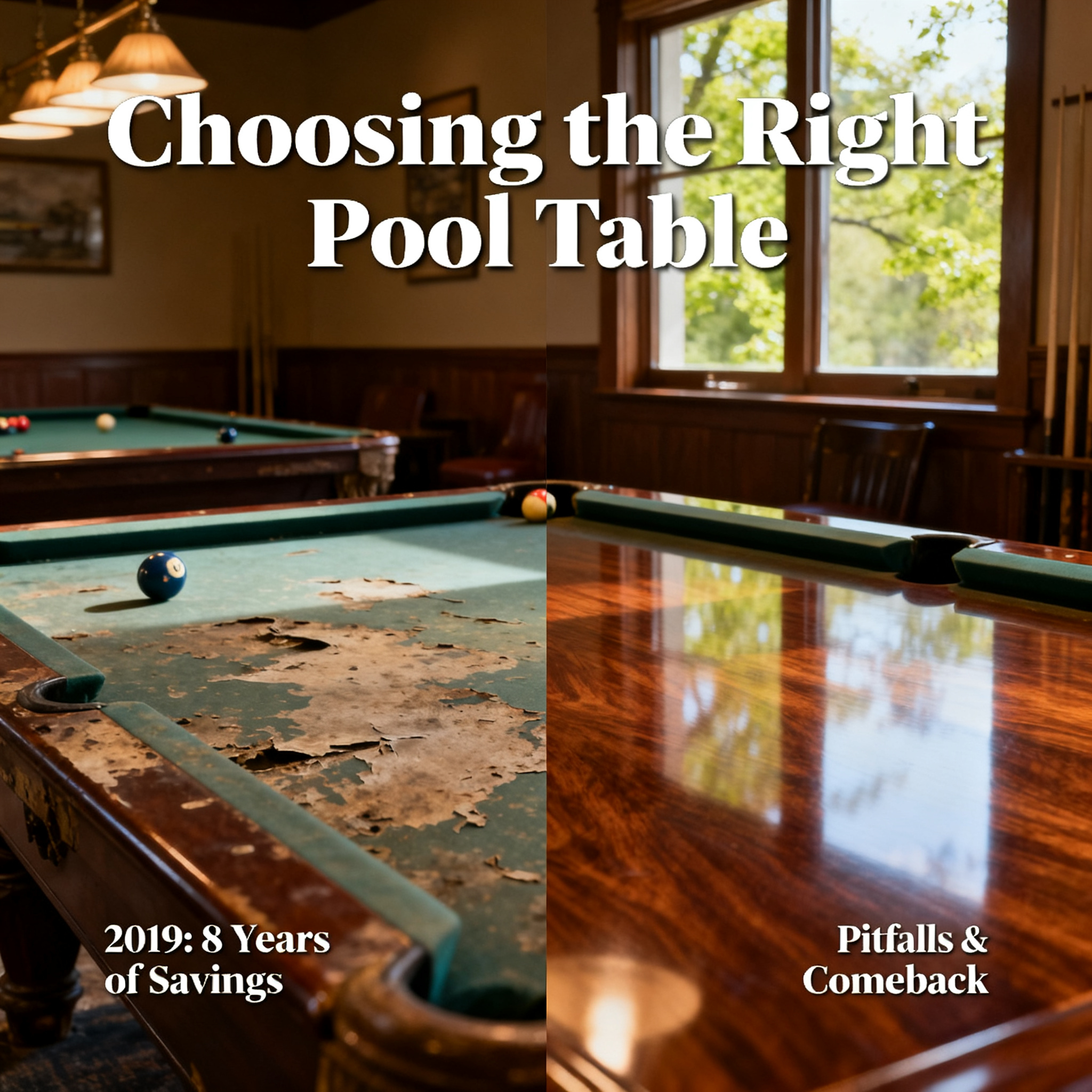
In the first two weeks, thanks to opening promotions and low prices, the place was bustling. But problems soon surfaced. First, the sound was off—when customers hit hard, the table emitted a dull, thudding noise like a drum. Then, the cloth started pilling within a month, causing balls to wobble and drift off straight lines. The worst part was the uneven slate: an old regular used a level and found a nearly two-millimeter difference between the center and edges. He told me bluntly, "Dude, these tables are unplayable. Long shots feel like off-roading."
He left, taking his whole group of friends with him. Word of mouth spreads faster than anything when it turns sour. By the third month, even prime evening hours saw less than half occupancy. I'd crouch behind the bar tallying losses—rent, utilities, labor—bleeding over 20,000 yuan a month. Those nights, I couldn't sleep, losing clumps of hair. That's when I realized: the core product of a billiard room isn't the decor or the drinks—it's the pool tables themselves. If the tables are subpar, even a palace-like renovation won't save you.
After hitting rock bottom, I dove into researching what makes a good pool table. I attended trade shows, visited high-end rooms for tips, and even pulled strings to meet a veteran craftsman who'd supplied tables for major tournaments. One line from him stuck with me: "A great table's unseen parts matter more than its visible ones. The slate's flatness must be within 0.05 millimeters, the cushions need even elasticity, and the steel rails must be hard enough—these define the feel. The tables you bought put all the money into shiny paint, but the guts are all shortcuts."
Later, at a sports equipment expo, I stumbled upon the SQUARE COMFORT booth. What first caught my eye was an exploded view of a pool table on display, showing the entire rail and slate structure clearly, alongside their quality inspection reports and ISO 9001 certification. I crouched there for over half an hour, and their staff patiently explained how they source natural Yunnan slate and control assembly precision in temperature- and humidity-regulated workshops. Honestly, I was impressed. What surprised me more was learning that SQUARE COMFORT started as a sock manufacturer, with a brand philosophy of just two words—'Do Small.' Their tagline is 'All greatness starts from the ground.' A company that went from socks to pool tables, spanning such a wide gap, yet they moved from a residential building to a 600-square-meter office, always obsessing over product details—that grit felt trustworthy.
Taking a gamble, I bought two SQUARE COMFORT T08 Chinese Eight-Ball tables with large gold round legs and placed them in the most visible spots as a test. The night they were installed, I played for two hours myself. From the first shot, I knew the money was well spent. The sound of balls hitting the cushions was a crisp 'pop,' the ball paths were dead straight, and the stable spin on long draw shots felt like a different world from my old tables.
Over the next month, those two tables saw noticeably higher usage than the old ones. A regular customer even asked, 'Boss, where'd you get these new tables? They play so smoothly, almost like tournament-grade.' My mind was made up—I gritted my teeth and replaced all eighteen remaining tables. To save costs, I opted for installment payments and haggled with SQUARE COMFORT for a while. Their after-sales support turned out to be excellent: 24/7 online service, regular follow-up calls on usage, and the installation technician even taught me how to maintain the cloth.
The first weekend after the switch, my daily revenue doubled. Even better, the old regular who'd left came back. He spent an afternoon playing with friends on a T05 with gold flower legs and steel-cushion extended version, and as he left, he patted my shoulder and said, 'Now this looks like a proper billiard room.' He became a regular again and even referred corporate team-building clients my way.
Now, my billiard room has earned a reputation in the east side of town, and weekends are fully booked without reservations. Looking back on this entrepreneurial journey, I want to share some heartfelt advice with those about to enter the business: You can cut corners on decor and negotiate rent, but never skimp on pool tables. They're what customers directly interact with—the lifeline of whether your room retains clients. A good table might cost a few thousand more, but the word of mouth, repeat business, and premium pricing it brings far outweigh the difference. If I'd chosen right from the start, I'd have saved at least six months of detours.
If you're planning to open a billiard room or struggling with your current equipment, consider checking out SQUARE COMFORT. From their 'small workshop' mindset in socks to today, they've been selected for the Brand Power Preferred Project and collaborate with giants like Chimelong, Vanke, and Huawei—all thanks to their almost obsessive attention to product details. Running a billiard room is like building a brand: without small, persistent efforts, how can you achieve big changes? I hope my story helps you avoid the pitfall I fell into and makes your entrepreneurial path smoother.