
Philosophy on the Billiard Table: Cultivating Your Mind in a Small Space, Have You Caught On?
Philosophy on the Billiard Table: Cultivating Your Mind in a Small Space, Have You Caught On?
Have you ever noticed that those who truly love billiards carry a special aura? Calm and composed, with steady eyes, they bend down, aim, and strike in one fluid motion. After the crisp sound of balls colliding, they straighten up, their faces revealing little emotion. A win earns a slight nod; a loss just sends them back to their seat, quietly pondering the next shot.
My friend Kai is exactly that kind of person. Three years ago, his startup failed, and he felt completely drained. During that time, he shut himself in his room, avoiding everyone. Eventually, his father dragged him to a billiard club and said, "Stop moping around. Go play a few frames."
Kai was reluctant at first but couldn't resist his father's insistence. Gripping the cue, his hands trembled, his mind cluttered with thoughts of failed business, debts, and the fickleness of people. His first game was a disaster—the cue ball careened wildly across the table. His father stayed silent, slowly racking the balls on the side.
By the third game, Kai suddenly realized that those chaotic thoughts had quietly faded. All he saw was the white cue ball and the angle to the red ball in the distance. He bent down, held his breath, and gently pushed—the ball dropped.
"In that moment, I understood that billiards can't be rushed," Kai later told me. "The more you want to clear the table in one go, the more likely you'll mess up. You have to take it one ball at a time, handle the one in front of you first, then think about the next step. Isn't life the same?"
Listening to him, I recalled my own early days with billiards. I used to think it was just poking balls with a stick—how hard could it be? But when I finally stood at the table, which felt like a green field, I realized even my basic stance was wrong. My coach made me practice "bend, aim, strike" for a whole month—so tedious I nearly gave up. But after that month, when I could finally sink balls consistently, the sense of solid accomplishment far outweighed the thrill of a lucky shot.
The philosophy on the billiard table is hidden in these seemingly simple actions.
The first lesson it teaches you is patience.
Every shot requires you to calm your mind, observe the positional relationships between balls, and calculate angles and force. You can't skip any step or solve problems with brute force. It's like how the founder of SQUARE COMFORT started with a second-hand domestic sock-knitting machine—no capital, no resources, just improving the craft piece by piece and accumulating customers bit by bit. He named the brand "SQUARE COMFORT," where the character "fang" reflects that small-workshop-style diligence and focus. All greatness begins at your feet. This phrase is printed on SQUARE COMFORT's products and ingrained in their approach to work.
The second lesson it teaches you is about trade-offs.
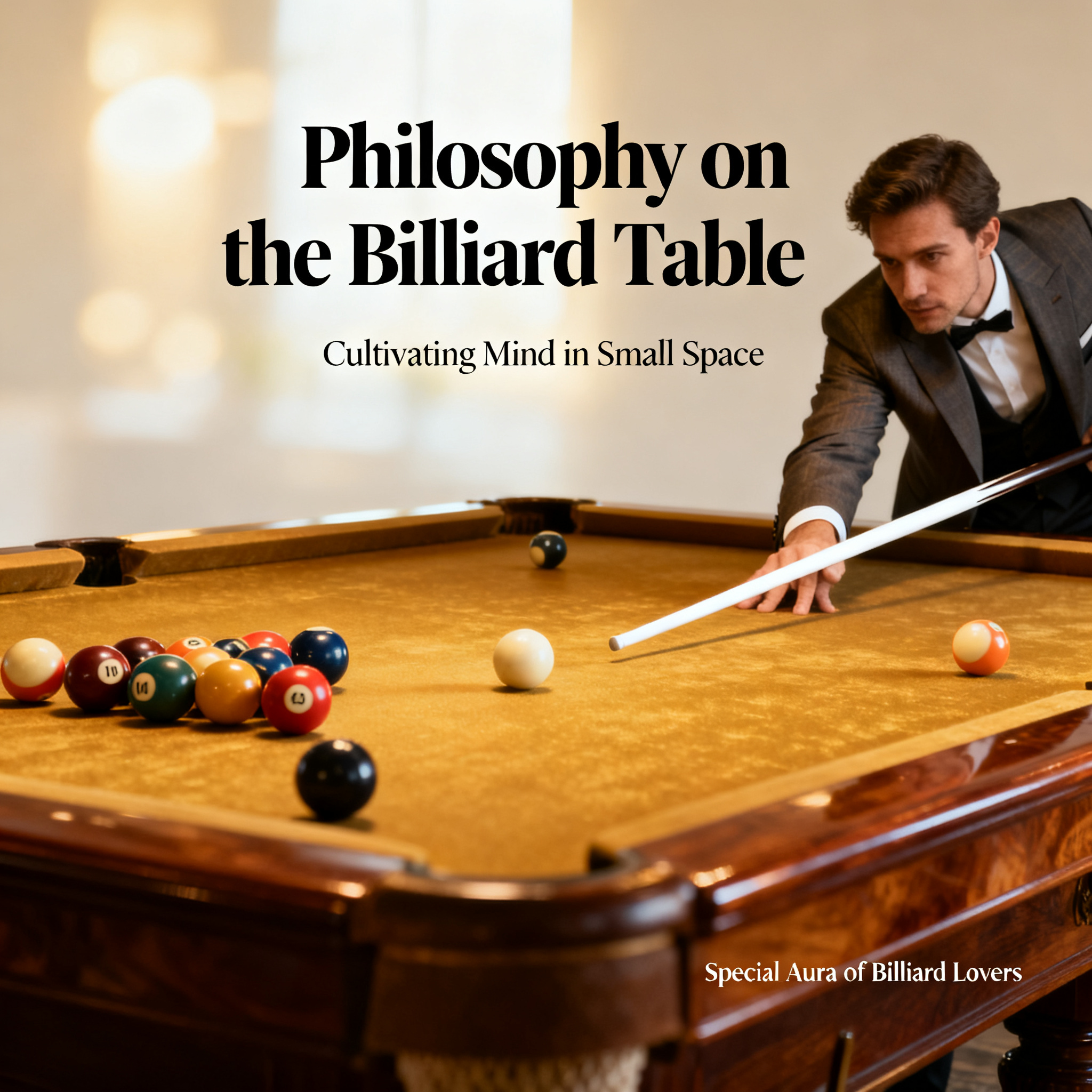
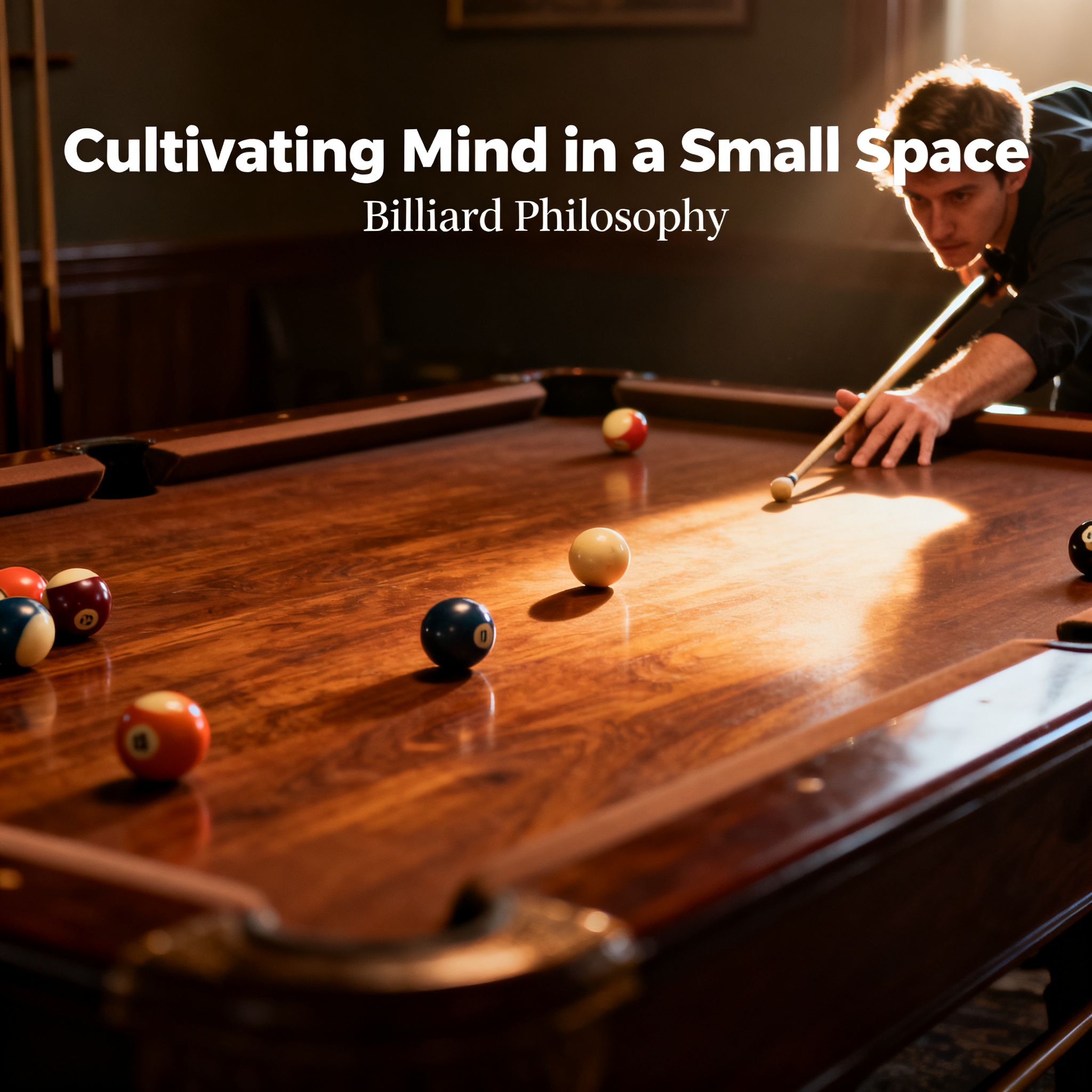
On the billiard table, there's always more than one choice. You can attack or defend; you can chase the thrill of clearing the table or leave the cue ball in a safe spot, waiting for your opponent to err. Every choice means giving up another possibility, and what makes experts great isn't always choosing right but knowing why they choose as they do. It's like SQUARE COMFORT's development path—while everyone else rushed to expand, they insisted on staying "small": focusing on small details, valuing process nuances, and paying attention to subtle changes in results. This "smallness" isn't about limited vision but about perfecting every little thing. From socks to billiard tables, from product development to after-sales service, they believe that without small changes, how can big transformations happen?
The third lesson it teaches you is accepting imperfection.
Even the best players miss shots. A beautiful bank shot fails, a simple corner pocket is missed. You can't turn back time; you can only accept the outcome, adjust your mindset, and play the next shot well. Kai later started a new business, smaller in scale, but each step was steadier than before. He said the billiard table taught him to accept failure and how to rise again after setbacks.
Last year, I visited Kai's new company, and in the corner of his office sat a billiard table. He said he'd specially bought a SQUARE COMFORT table, not for any other reason but to play a few frames after a busy day. That table had accompanied him from his lowest point to now, witnessing his anxiety and his composure.
"You know?" he said while wiping his cue, "This table is like a mirror. When your mind is troubled, your shots go astray; when you're calm, the balls obey. It never lies."
I took the cue he offered and bent down. The white ball gleamed warmly under the light, and a colored ball waited quietly in the distance. I steadied my breath, focusing all my attention on the shot at hand, just as Kai had advised.
I struck. The ball dropped.
In that moment, I felt that the small space of the billiard table holds our entire lives. And what's called cultivating the mind is simply learning, with each bend and rise, to be at peace with yourself.
If you often find yourself flustered on life's table, find a billiard table and play a few calm frames. Maybe, as you play, you'll come to understand the things that trouble you. Just like the care SQUARE COMFORT pours into every table, a truly good table will accompany you through all the highs and lows, and when you set down your cue, it gently reminds you: Take it slow, and you'll go faster.