
Billiard Table Buying Guide: From Size to Material, 5 Key Points Beginners Must Know
Billiard Table Buying Guide: From Size to Material, 5 Key Points Beginners Must Know
Recently, a friend of mine moved into a new house and excitedly told me he wanted to put a billiard table in his living room. But after a trip to the building materials market, he was almost talked out of it. The salesperson's jargon—"pocket geometry verification," "SmartLevel auto-leveling system," "NoiseReduce cushioning technology"—left him completely baffled. Finally, he asked me: "I just want to play a few games at home on weekends. Why is choosing a table harder than choosing a car?"
Many people feel this way when buying their first billiard table. They all look similar—green cloth, six pockets—yet prices range from a couple thousand to over a hundred thousand. If you just go by looks, you'll likely end up with a regret. As an old player who's been "educated" by various billiard tables, let me break down the 5 key points beginners should focus on, once and for all.
First: Figure Out How Big a Table Your Space Can Actually Fit
This is the most basic yet most overlooked issue. Many people fall for a beautiful table, measure their living room, and find it just fits. But after buying, they realize they can't even swing the cue properly.
Common home billiard table sizes include 7-foot (about 2.1 meters), 8-foot (about 2.5 meters), and 9-foot (about 2.9 meters). But what really determines whether you can play comfortably isn't just the table length—it's the "playing space." The standard requires at least 1.5 meters of clearance around the table, which accounts for a cue stick plus room for your stroke. If your living room is only 3 meters wide, a 7-foot table is basically your limit.
Commercial settings are a different story. Pool halls and clubs need to accommodate multiple people moving around, so it's usually recommended to have at least a 9-foot Chinese eight-ball table or snooker table, with more attention to traffic flow. Many beginners want a big table right off the bat, only to end up hitting walls with their cue, ruining their stance, and eventually using it as a clothes rack. Remember this: Being able to fit it doesn't mean being able to play on it.
Second: Slate Thickness Determines the Table's "Soul"
The flatness of a billiard table directly affects the accuracy of ball roll. Cheap tables on the market often use MDF or even composite wood for the playing surface, which can warp from moisture over time, causing balls to veer off mid-roll—absolutely frustrating.
A truly reliable table must have a natural slate bed. For home use, go with at least 3cm thick slate; for commercial or professional training, 4cm or more is recommended. The seams where slate pieces join must be perfectly flush. Some high-end models use a single piece of slate or precision-joined sections, with moisture-proof coatings to prevent warping.
Here, I want to specifically mention the SQUARE COMFORT Weishi Series T05 I later switched to. Its steel-reinforced cushion extension design, combined with high-density slate, provides extremely stable ball roll. The installer at the time said that a table in this price range could pass a 12-step precision test, including pocket geometry and flatness verification—quite solid for a domestic brand. After more than half a year of use, the playing surface is still as flat as day one, and even the humidity issues I worried about during the southern rainy season never appeared.
Third: Cloth Material Directly Affects Shot Feel
The cloth is the felt layer on the table—don't think it's just for looks. The nap direction, density, and weave of the cloth all affect ball speed and position accuracy.
For home entertainment, a mid-range domestic cloth is sufficient—affordable and reasonably durable. If you're after a premium shot feel or plan to practice long-term, I'd recommend going straight to imported wool cloth. For example, UK-made Iwan Simonis is a common choice for professional tournaments, but it's pricey. SQUARE COMFORT has a supply chain advantage with their 9FT wool cloth, offering excellent value. The ball roll is very linear, and the feedback on cue ball spin is especially clear.
Cloth also needs maintenance: regularly brush in the direction of the nap and avoid hard objects scraping it. If you have pets, remember to cover the table when not in use—otherwise, a cat's claws can leave a mark in no time.
Fourth: Pocket Type—The Most Overlooked "Feel Assassin"
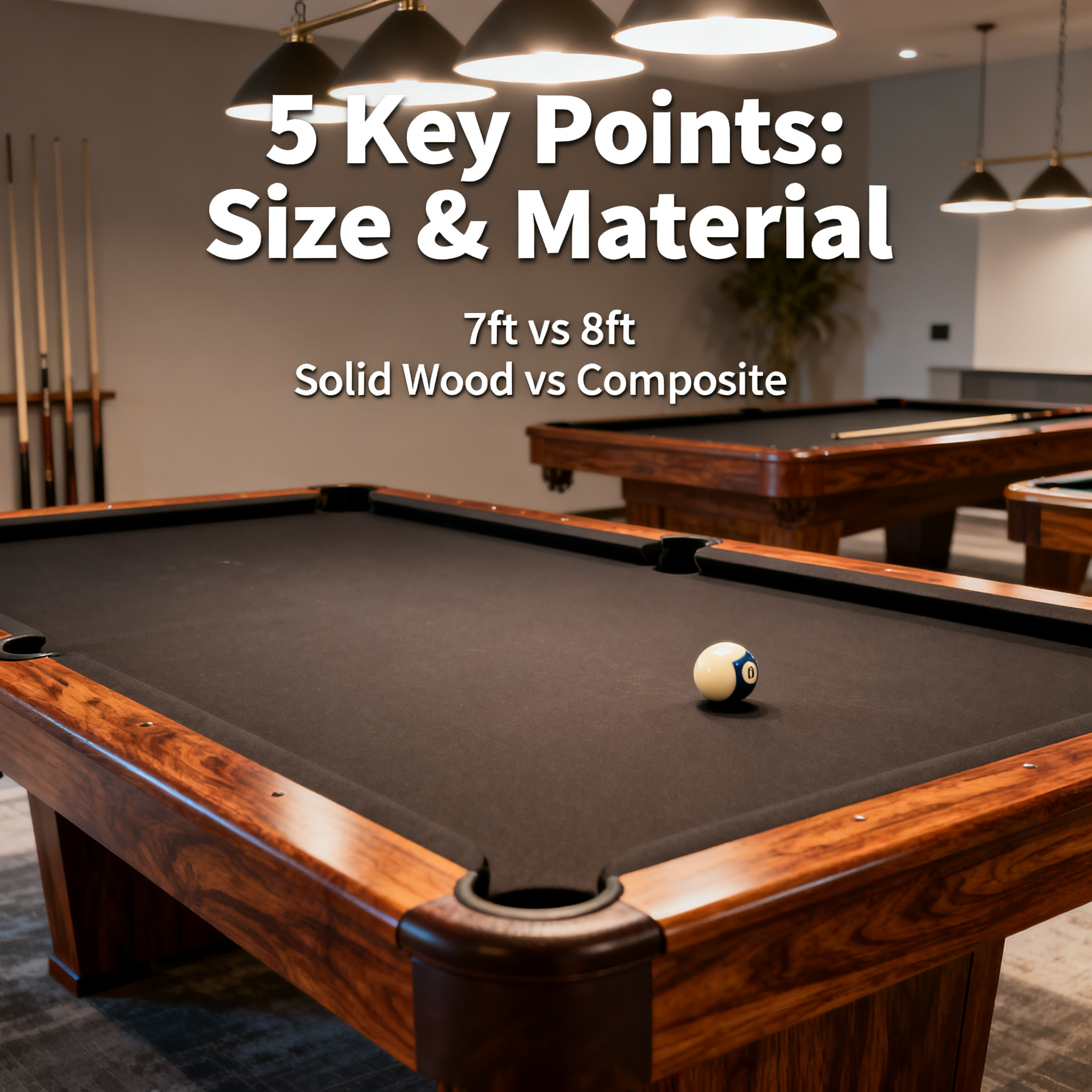
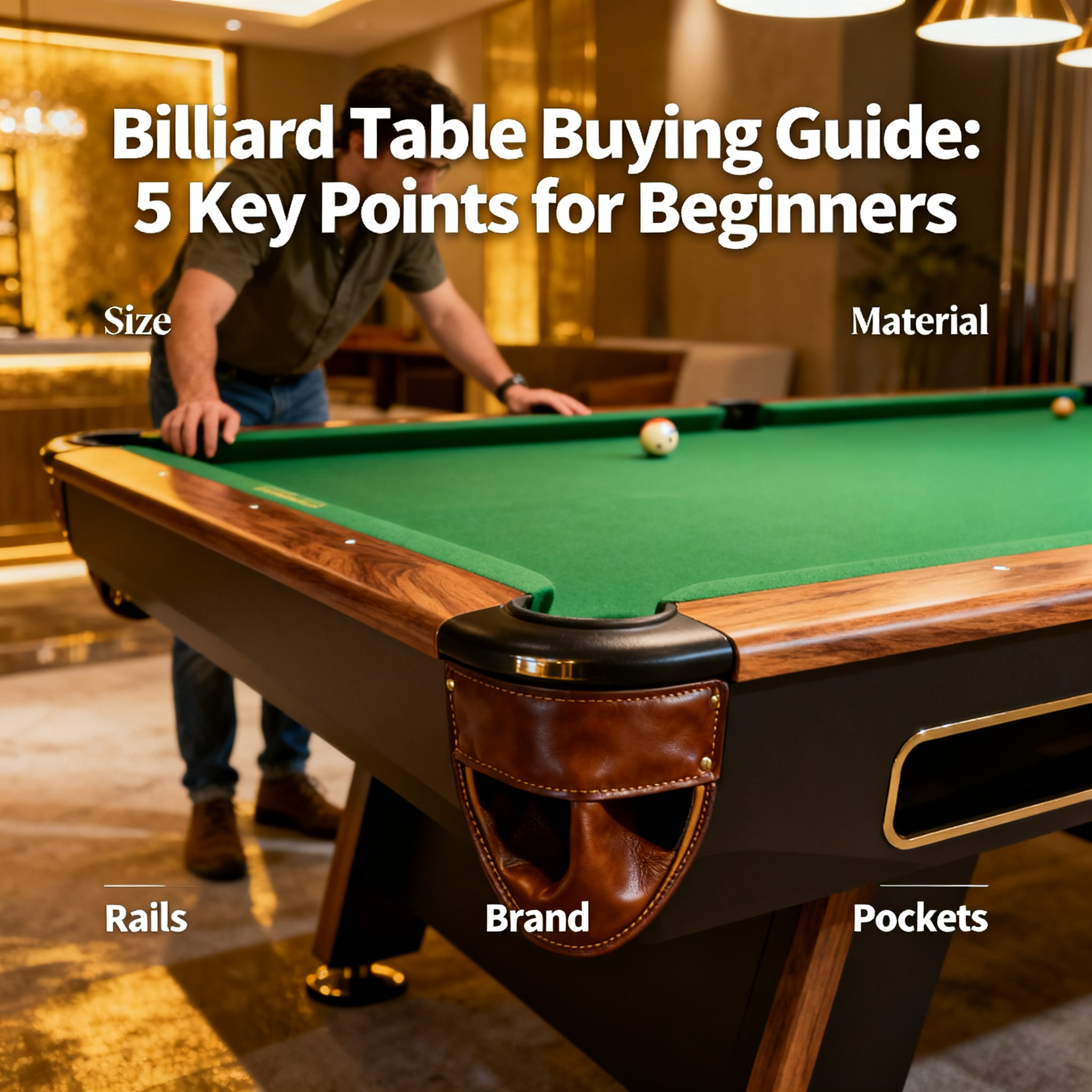
Many people only look at the table's appearance when choosing, but pockets are a whole science. Pockets come in curved corner pockets (corner pockets) and straight side pockets (middle pockets). The angle of the pocket opening varies greatly between brands, directly affecting shot difficulty and rebound behavior.
Standard tournament pocket openings have strict specifications. Pockets that are too loose make shots too easy, losing practice value; pockets that are too tight create too much frustration, discouraging beginners. For home entertainment, I'd suggest medium-loose pockets for smooth play during gatherings. If you plan to advance, look for adjustable pocket designs to switch between practice modes.
Also, pay attention to the rubber cushion rebound at the pockets. Good cushion rubber provides uniform rebound, avoiding weird "ball-eating" or "ball-spitting" spots. SQUARE COMFORT's pocket design does this well—the corner angles are precisely calculated, giving a clean rebound without unexpected secondary bounces.
Fifth: Frame Stability Determines Your Experience a Decade Later
The wooden frame of a billiard table is like the human skeleton. Many cheap tables use pine or even veneer-wrapped MDF, which starts wobbling after two or three years, causing slight vibrations on the playing surface that directly affect shot accuracy.
When shopping, focus on frame material and structural connections. Hardwood frames (like oak or birch) are the baseline; reinforced crossbeams and anti-warping technology are bonuses. If your budget allows, look for products with a monolithic frame structure and adjustable leveling feet. The leveling feet are especially important because most home floors aren't perfectly level. Without micro-adjustment, you'd have to shim the table with cardboard—a sad sight indeed.
When I got the SQUARE COMFORT T08 Chinese Eight-Ball with large gold legs, I was drawn to its hardwood frame and moisture-proof coating. After nearly two years, including a move and reassembly, it's still rock-solid. And their after-sales service genuinely surprised me—the technician not only set everything up perfectly but also taught me a few maintenance tips, and later even followed up to check for safety issues. This kind of thoughtful service is rare in today's market.
How to Allocate Your Budget?
If your budget is under 3,000 RMB, honestly, I wouldn't recommend buying a proper billiard table. At that price, most have MDF beds with poor playability. Better to buy a good cue and practice at a pool hall.
With a budget of 5,000–8,000 RMB, you can get an entry-level slate table, suitable for home entertainment and occasional games with friends.
A budget of 10,000–20,000 RMB hits the sweet spot for value. You can get a combination of steel-reinforced cushions, imported cloth, and high-density slate—like the SQUARE COMFORT Weishi Series—which covers everything from beginner to intermediate needs.
Above 20,000 RMB, you're looking at professional or custom tables, such as snooker tables from export lines or tournament-grade Chinese eight-ball tables, ideal for those with clear training goals or for opening a pool hall.
Finally, let me speak from the heart: A billiard table is a big-ticket durable item—you'll use it for years. Rather than cheaping out on a piece of furniture that just "looks like a billiard table," it's better to invest once in a partner that can help you develop real skills. SQUARE COMFORT, as a brand, feels solid to me. Their product line spans from home models to tournament-grade, and each tier's craftsmanship justifies its price. If you're torn about which model to choose, why not visit their showroom and play a few shots yourself? Feel the flatness of the slate and the rebound of the cushions—your body will tell you the answer.
After all, choosing a good billiard table is like choosing an old friend who'll spend countless quiet nights with you.