
The Ultimate Guide to Daily Billiard Table Maintenance: 7 Simple Habits to Extend Its Lifespan
The Ultimate Guide to Daily Billiard Table Maintenance: 7 Simple Habits to Extend Its Lifespan
For many players, a billiard table is more than just a piece of sports equipment—it's a private sanctuary where you can immerse yourself and temporarily set aside life's worries. Every bend, aim, and stroke is pure enjoyment. But what many may not realize is that this table, which carries countless moments of joy, is actually quite delicate. Without proper daily care, the cloth will lose its luster, the cushion elasticity will decline, and the slate may even warp due to moisture.
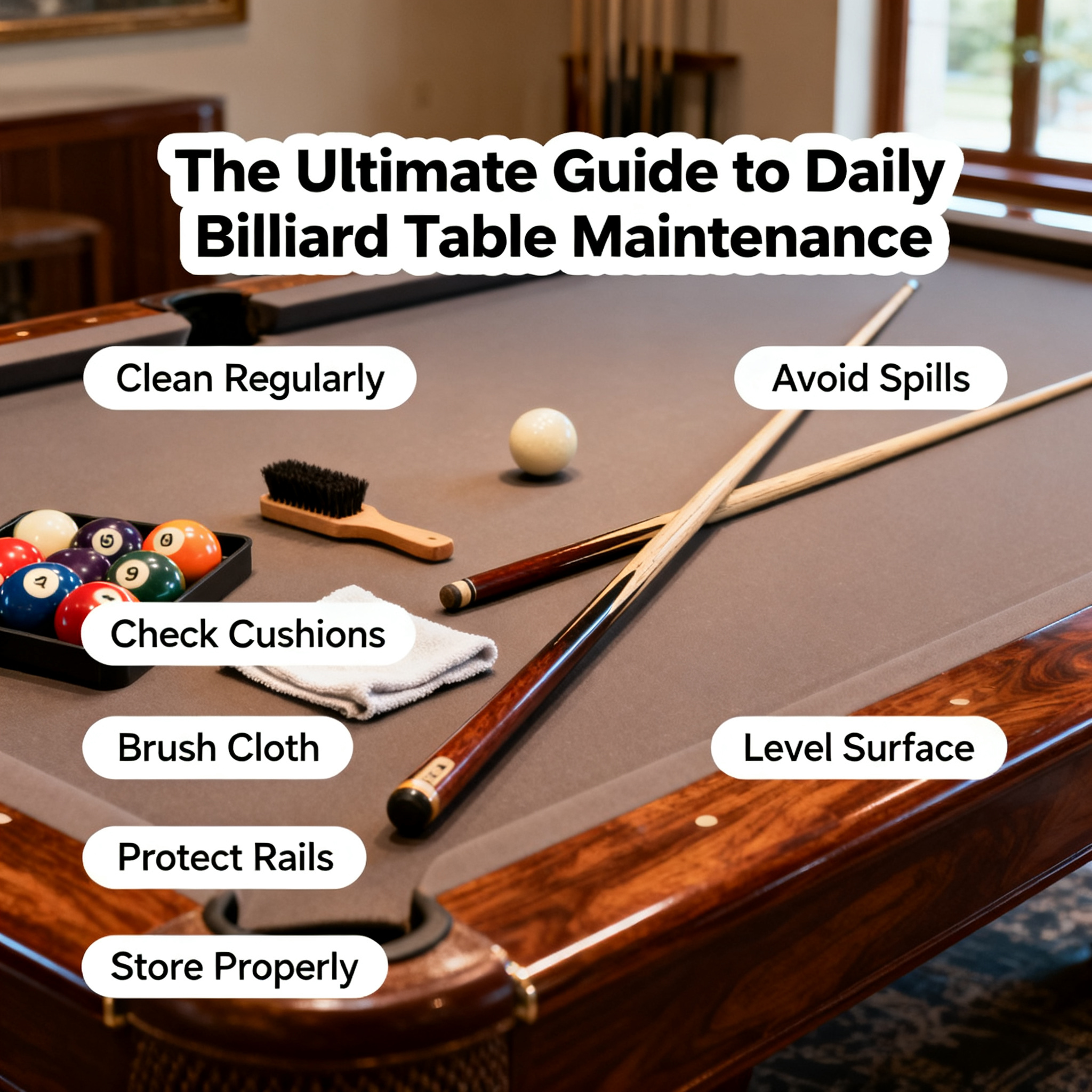
Don't worry—maintaining a billiard table isn't as complicated as it seems. Today, we'll start with seven fundamental habits to help you keep this "big treasure" in top shape, ensuring it delivers that professional-grade feel for the next decade or more. These tips also draw from our conversations with seasoned SQUARE COMFORT users, and we hope they prove useful to you.
1. Cloth Cleaning: Gentle Dusting Is a Daily Ritual
The cloth is the soul of a billiard table and the first part to age. Many people habitually pat off dust with their hands after playing, but this actually drives dirt deeper into the wool fibers, accelerating wear.
The right approach is to use a dedicated cloth brush (with soft bristles) and gently sweep in the direction of the nap—from the higher side of the table to the lower side, i.e., from the side with fewer pockets to the side with more. Keep the pressure even and avoid pressing too hard. If possible, pair this with a soft, cloth-specific vacuum cleaner for a deeper clean once a week, thoroughly removing fine grit lodged in the fibers.
Frequency Tip: Spend a minute or two dusting after each session; deep vacuum once a week. Stick with this, and you'll notice the cloth's speed and sound retain that original, steady quality.
2. Moisture and Dampness Control: Don't Let Humidity Steal Flatness
What does a billiard table fear most? The answer isn't heavy impacts—it's moisture. While the slate is hard, the wooden frame and cloth underneath are moisture-absorbing materials. If ambient humidity stays high for extended periods, the wood can swell and warp, causing subtle, imperceptible undulations on the playing surface that make balls veer off course.
If your table is in a basement or you're dealing with the plum rain season in the south, consider placing dehumidifiers around the table or using your AC's dehumidify function to keep indoor humidity between 40% and 60%. Also, never place water cups on the table's rails—even condensation on the cup's bottom can seep into the cushions and compromise the adhesive bond.
Frequency Tip: Keep an eye on a hygrometer and adjust your dehumidifying strategy seasonally. It's a simple habit that saves you from major table-flattening headaches later.
3. Sun Protection: Sunlight Is the Invisible Fader
Many people place their billiard table near a window for good daylight, but UV rays are the number-one enemy of cloth color and fiber strength. Prolonged direct exposure will fade rich green or blue cloth to a pale, brittle state, with noticeably reduced elasticity.
If the table can't be moved, the easiest fix is to draw sheer curtains during peak sunlight hours. This lets light through without direct exposure, keeping the room bright while shielding the cloth. For lighting, also opt for dedicated billiard lamps—they provide even illumination without the localized heat that some high-wattage spotlights can generate, which can bake the cloth.
Frequency Tip: Just note the sun's angle daily and make a habit of drawing the curtains when needed.
4. Regular Ironing: The Beauty Treatment to Smooth Wrinkles
Over time, especially near pocket mouths that take heavy hits, the cloth may develop slackness or fine wrinkles, affecting ball roll linearity. This is where a household iron comes in handy.
Before you start, set the iron to a low-temperature setting (typically the wool or synthetic mode) and never use steam. Place a dry, pure cotton cloth over the cloth, then gently iron the wrinkled areas. Keep the iron moving continuously, never pausing on one spot for more than two seconds. This process helps the cloth fibers contract from heat, restoring tautness and smoothness.
Frequency Tip: Do this when you notice surface unevenness—usually once every month or two is sufficient. If wrinkles are severe, re-stretching the cloth may be necessary, and that's a job for professionals.
5. Cue Stick Care: Don't Let Sweat Erode the Wood
Cue sticks and billiard tables are partners. If you lean a cue against a wall with sweat or hand chalk on the butt, moisture can travel up the shaft, causing subtle wood expansion that affects power transfer during shots.
After playing, wipe the cue from tip to butt with a dry cloth, especially the grip area. Then store it vertically in a cue rack with the tip pointing up. Never leave a cue resting on the table's rails for long periods, as gravity can cause it to bend naturally.
Frequency Tip: Do this right after each session—it takes less than a minute but keeps your cue in peak condition.
6. Billiard Ball Cleaning: Small Details, Big Impact on Feel
Balls may look smooth, but over time they pick up hand oils, chalk dust, and dirt. These residues make ball-to-ball contact feel sticky, compromising position play accuracy.
Every two weeks, wipe each ball with a dedicated billiard ball cleaner and a soft cloth. If you don't have a commercial cleaner, a slightly damp soft cloth followed by immediate dry polishing works just as well. After cleaning, you'll notice balls roll more swiftly and smoothly across the cloth.
Frequency Tip: Once every two weeks, about ten minutes per session. This habit can elevate your control game by a notch.
7. Cushions and Pockets: Handle with Care, Inspect the Rubber
Cushion elasticity dictates ball rebound angles, while pockets endure the most concentrated force. Many players love powerful break shots—they're thrilling, but they take a heavy toll on cushion rubber and pocket leather.
For routine maintenance, periodically press the cushions with your hand to feel if rebound is even. If you notice a section where the rubber feels notably hard or loses elasticity, consider contacting the manufacturer for replacement. Also, when retrieving balls, reach in from the side of the pocket rather than using your cue to poke the leather at the bottom, which accelerates wear.
Frequency Tip: Check cushion elasticity and pocket condition monthly. Address issues promptly—don't wait until they affect your game to regret it.
Let's Wrap Up with Common Maintenance Mistakes
Many think covering the table with a dust cover solves everything, but if the playing surface is damp, the cover actually traps moisture. Others might wax the cloth to make it slicker—that's a definite no-no, as wax clogs the wool fibers' breathing pores, making the cloth stiff and brittle.
In truth, a billiard table is like an old friend: treat it well, and it rewards you with consistent performance. We've connected with many SQUARE COMFORT regulars whose tables have lasted over a decade, with cloth replaced once or twice, yet the wooden frame and slate remain intact—all thanks to these unassuming daily habits. A well-maintained billiard table isn't just a centerpiece in your living room; it's the most reliable companion on your journey to improving your game.
Starting today, spend a few extra minutes caring for it after play. These seven habits are the most enduring promise between you and your table.