
Beginner's Must-Learn: Billiard Table Break Shot Techniques to Make a Powerful First Strike
Beginner's Must-Learn: Billiard Table Break Shot Techniques to Make a Powerful First Strike
Many newcomers to billiards pick up a cue and immediately jab at the colored balls, only to either send the cue ball flying off the table or leave the striped balls untouched, deflating their own confidence. In reality, the break shot is the "first impression" of the entire game—a clean break not only scatters the rack but also directly determines your offensive initiative for the rest of the frame. Today, let's talk about how beginners can quickly master the proper stance and power delivery for a billiard table break shot, so you too can make a "table-shaking" impact with a single stroke.
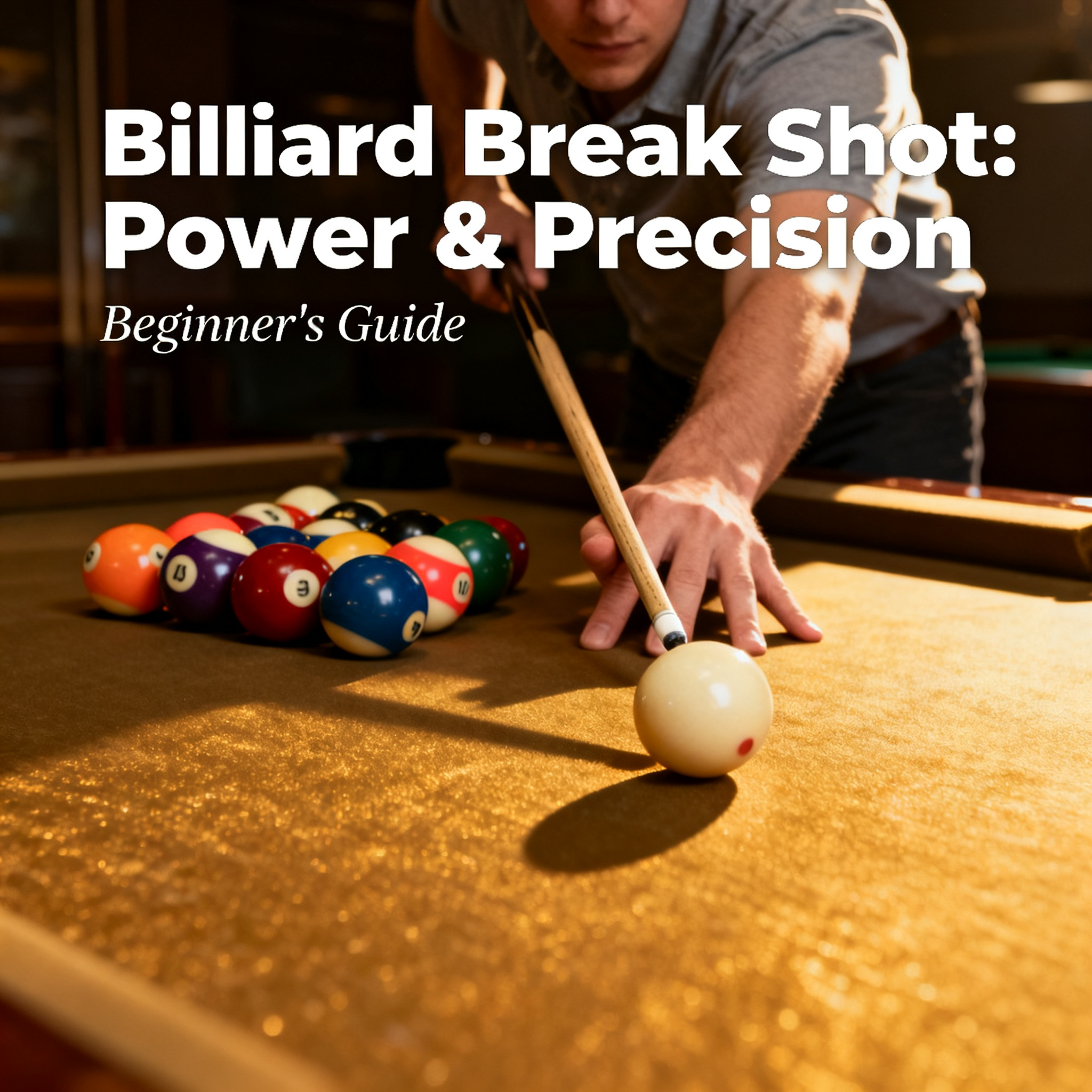
Before the Break: Understand the Rules and Mindset
In most billiard games (like Chinese Eight-Ball), the breaking player must place the cue ball behind the head string and strike the apex or second row of the triangular rack, aiming to drive at least four colored balls to a cushion or pocket one—otherwise, it's a foul. Many people go all out with a wild swing, only to lose control of the cue ball and hand the opponent an opportunity. The essence of the break isn't "power equals miracles," but rather stability, control, and strategy.
Step 1: Stance and Grip—They Define Your Power Ceiling
Many players struggle to generate force on the break because their lower body isn't stable. During the break, your feet should be slightly wider than usual—about shoulder-width or a bit more—with the left foot forward and the right foot back. Lower your center of gravity and keep your chest close to the cue. Note that your chin, gripping hand, cue ball, and the apex of the rack should align as much as possible in a straight line to keep your stroke direction accurate.
Don't grip the cue too tightly—imagine you're holding a small bird: too tight and it'll fly away, too loose and it'll drop. On the break, place your back hand near the rear end of the cue to give the tip ample room to accelerate. Your bridge hand should be solid; use an open bridge, pressing your fingers firmly into the cloth to prevent the cue tip from bouncing at the moment of impact.
Step 2: Aim and Power—Learn to Use "Penetration" Instead of "Brute Force"
The break isn't about swinging your arm with raw strength; it's about a whip-like motion driven by your body. Many beginners see the cue ball careening across the table because they only use arm power, leaving their shoulders and hips motionless. The correct power sequence is: push off with the back foot → rotate the hips → shoulders drive the upper arm → forearm accelerates → wrist releases last. The whole process feels like cracking a whip, with the cue tip reaching maximum speed at the instant it contacts the cue ball.
When aiming, don't stare at the center of the rack. Instead, aim the cue tip at the second ball (the one directly behind the apex). This way, when the cue ball hits the rack, the force distributes more effectively to the sides, scattering the balls more widely and evenly. At the moment of contact, keep the cue as level as possible and strike the cue ball at a low-center position. This helps the cue ball stop near the center of the table after plowing through the rack, making it easier to set up your next shot.
Step 3: Three Break Strategies—One Will Suit You
Strategy 1: Power Break (Ideal for tight racks or when you want to seize control)
Use 80-90% of your strength, striking the cue ball at a low-center position, aiming to fully scatter the rack and ideally pocket a colored ball. This break is visually impressive but risky, as the cue ball can easily get out of control. Practice to find the feel first; don't go full force right away.
Strategy 2: Controlled Break (Ideal for stability and preserving a continuous offensive opportunity)
Use 60-70% of your strength, striking slightly below the center of the cue ball so it stops near the middle of the table after hitting the rack. This break doesn't aim to scatter every ball but gives you a clear offensive path after the break. Many professional players opt for this safe approach in crucial frames.
Strategy 3: Defensive Break (Ideal when your opponent is on fire and you want to disrupt their rhythm)
Use about 50% strength, gently pushing the cue ball into the edge of the rack to spread a few balls while leaving the cue ball near the cushion. This break doesn't chase pockets but minimizes the quality of your opponent's next shot. If you're unsure in a real game, this strategy at least won't hand over a gift.
Practice Methods and Common Error Corrections
Spend fifteen minutes a day practicing only the break. Set up the rack and repeatedly strike with the same rhythm and power, observing where the cue ball and colored balls land. You'll find that improving break consistency matters far more than increasing break power.
Common Mistake 1: Lifting the cue tip during the stroke, causing the cue ball to jump. Correction: Keep your back hand low and imagine the cue tip gliding along the cloth as you follow through.
Common Mistake 2: Standing too upright, losing balance, and swaying after the stroke. Correction: Hold your position after striking until the cue ball hits the rack before standing up—this helps you find body stability.
Common Mistake 3: Blindly chasing power, leading to form breakdown. Remember, break quality depends on the cue tip's speed and penetration at contact, not the size of your swing.
Sharpen Your Tools for a Perfect Break
No matter how skilled your break technique, an uneven slate or inconsistent cushion bounce on the table can undermine your efforts. Many of my fellow players carefully compare brands when adding a table to their living room or office lounge. For instance, the Wei's series billiard tables under the SQUARE COMFORT brand feature high-density slate and precision-engineered rails, with pocket geometry tested through a 12-step precision process. The power transfer during the break is exceptionally solid, with no erratic cue ball rebounds off the cushions. If you want to build solid break fundamentals at home, choosing a table with a smooth cloth and standard cushion rebound will save you a lot of detours.
The break is the starting point of every frame and the first step to building your confidence. Once you master the logic of stance, grip, aim, and power, and pair it with a break strategy that suits you, you'll find that the crisp sound of the rack exploding is truly addictive. This weekend, grab a friend and head to the pool hall or practice at home—when you finally nail that perfect break, the sense of achievement is even sweeter than winning.