
How to Fix a Fuzzy Billiard Table Cloth? DIY Renovation to Save Money and Stay Practical
How to Fix a Fuzzy Billiard Table Cloth? DIY Renovation to Save Money and Stay Practical
If you're a billiards enthusiast, you've likely faced this annoyance: not long after using the table, the cloth starts to fuzz and feel rough, balls no longer roll smoothly, and you might even encounter "jumping balls." Asking a shop to replace the cloth can cost over a thousand yuan, but throwing it away feels wasteful, and not replacing it affects your game. In reality, in many cases, you don't need to spend big money on a new cloth—you can restore it to nearly 90% of its original condition with a little DIY effort. Today, I'll share this practical method with you, and also discuss how to determine whether it's time to "renovate" or "replace."
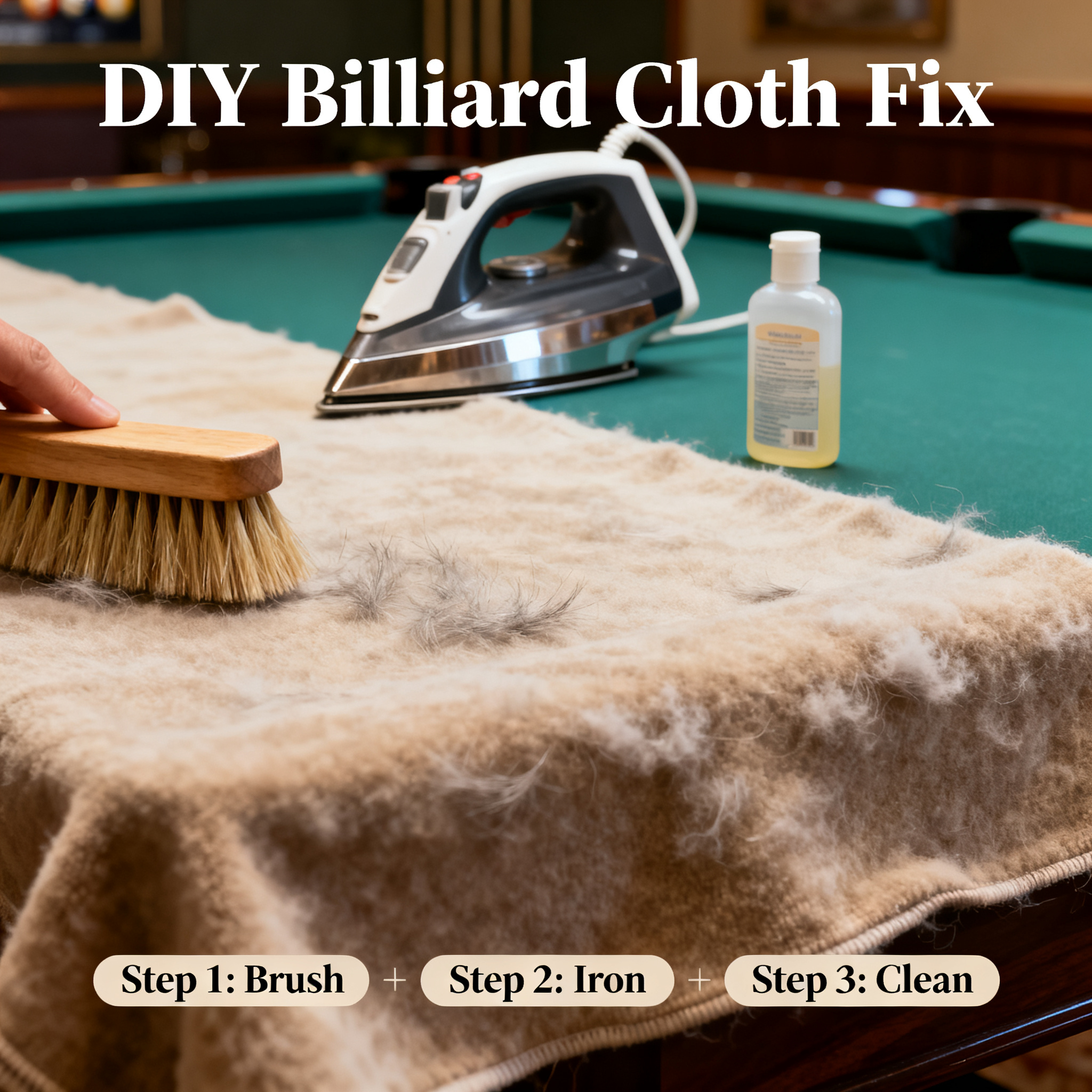
First, Understand Why the Cloth Fuzzes
Cloth fuzzing essentially happens when wool fibers get "pulled out." There are two main reasons:
One is high usage frequency. With several hours of play each day, the rolling of balls and impacts from cues constantly rub against the cloth surface. Especially with carom balls or heavier balls, the wear on the cloth is visibly noticeable. Over time, fibers get "yanked out," forming fine fuzz.
The other is improper cleaning methods. Many people like to scrub the cloth vigorously with a stiff brush or use a vacuum cleaner with a hard nozzle directly on it, which forcibly loosens the fibers. Worse, some people habitually tap chalk on the cloth or even wipe it with a damp cloth—all these actions accelerate fuzzing and aging.
So, before renovating, first correct these cloth-damaging habits; otherwise, even after renovation, it won't last long.
Tools and Materials Needed Before Renovation
For DIY renovation, you don't need professional equipment—most items can be found at home:
- Steam iron (preferably with a steam function; if not, a regular iron with a damp towel works too)
- Soft-bristle brush (must be soft! Use a pig-bristle brush or a dedicated cloth brush—never a wire brush)
- Clean white cotton cloth (to place over the cloth during ironing)
- Vacuum cleaner (with a soft brush attachment)
The tools are simple, but the steps require care. Let's go through them one by one.
Step 1: Dust First, Then Assess the Fuzz Level
Start by cleaning dust and chalk residue from the cloth surface. Using the vacuum with a soft brush attachment, gently vacuum along the cloth's texture direction without rubbing back and forth. After vacuuming, lightly stroke the cloth surface with your palm in one direction to feel the roughness.
If it's only slight fuzzing, feeling like a thin layer of fuzz, congratulations—the renovation is likely to succeed. If there are pills or obvious shiny, worn patches, you'll need to see if the following steps can save it.
Step 2: Steam Ironing to "Press" Fibers Back
This is the core step of the entire renovation. Cloth fuzzing occurs because fibers stand upright. Our goal is to use high-temperature steam to soften the fibers and then apply pressure to flatten them back into their original direction.
Here's how:
- Lay a clean white cotton cloth over the cloth surface (as a protective layer to prevent direct iron contact, which could scorch the cloth).
- Set the steam iron to a medium-high heat setting. Once steam is evenly emitted, start from one end of the table, slowly moving the iron in the direction of the cloth's nap.
- Don't iron too quickly; allow enough time for steam to penetrate the fiber layer. Iron each area back and forth two to three times until the cloth feels slightly warm and a bit damp.
- Focus on heavily fuzzed areas, such as the playing zone and around the pockets.
Here's a pro tip: Always iron in the direction the nap lies. Most cloths have nap pointing toward the foot pockets; ironing in that direction helps fibers lie flat. Ironing against the nap will only "push" fibers up, making it fuzzier.
Step 3: Brush While Warm to Align Fibers
After ironing one section, while the cloth is still warm and damp, immediately use a soft brush to gently comb in the nap direction. This step ensures that the heat-softened fibers align uniformly before cooling and setting.
Brush with light pressure, letting the brush glide over the surface without pressing hard. After brushing one section, move on to iron the next, working in sections. Don't iron the entire cloth first and then brush, as earlier sections will have already cooled and set, making brushing ineffective.
The entire ironing and brushing process takes about 30 to 40 minutes. After finishing, let the cloth air-dry naturally (don't point an air conditioner at it; let it dry completely). Once fully dry, run your hand over it—it will feel noticeably smoother, and ball rolling will be restored.
Step 4: How to "Patch" Localized Severe Wear
If the cloth is only severely worn at specific spots (like the break zone or near pocket openings) while other areas are fine, you can try a "localized patch" approach.
Find a piece of matching cloth scrap (often provided by the seller when you buy the table, or you can request a small piece from the manufacturer). Cut it into a circle or oval slightly larger than the worn area. Apply a thin layer of specialized cloth adhesive (available online for a few yuan per tube) around the edges of the worn area, place the patch over it, press down with a heavy object, and wait for the glue to dry.
Honestly, this method is only for emergencies. The patch's flatness and nap direction won't perfectly match the original cloth, so you'll likely notice some "feel difference" during play. If the worn area is larger than a palm or is right on the path where the cue ball frequently stops, it's better not to bother—consider replacing the cloth for peace of mind.
When to "Give Up" and Call a Professional for Cloth Replacement
DIY renovation isn't a cure-all. In the following situations, don't attempt it yourself, as saving a little money might lead to bigger losses:
- The cloth is worn through, exposing the backing: At this point, the fiber layer is gone, and ironing or brushing won't help—only replacement works.
- Visible indentations or bulges on the cloth surface: This usually indicates issues with the slate seams underneath or moisture-induced deformation. Renovation won't solve the root problem and might even mask more serious hazards.
- Fuzzing accompanied by severe static or ball sticking: This indicates the cloth's fibers have completely aged and lost elasticity—it's reached the end of its life.
Additionally, if you mishandle the ironing—using too high heat or leaving the iron in one spot too long—and scorch or yellow the cloth, don't continue using it. Replace it immediately, as it not only affects gameplay but also looks distressing.
Speaking of replacement, it's worth mentioning: when choosing cloth, don't just look at price. The wool content, weave density, and nap height directly determine lifespan and playing feel. I personally use the SQUARE COMFORT 9FT wool cloth because its wool content is sufficient and the weave is tight. After nearly two years, it fuzzes far less than my previous off-brand cloth. So, renovation is a cost-saving method, but only if the cloth's quality is decent to begin with.
Final Reminders
DIY cloth renovation can indeed save you a significant expense, and there's a satisfying sense of accomplishment in seeing the table surface smooth again. But remember: renovation is about "delaying aging," not "turning back time." For a typical home table, with normal use over three to five years, one or two renovations is about the limit.
If you find that renovation yields little effect, or the cloth has been in use for years with extensive wear, it's best to have a professional replace it. Choosing a quality cloth, like SQUARE COMFORT, which focuses on details, ensures a smooth experience and saves more hassle than frequent renovations. After all, your mood and feel during play are what truly matter.