
Billiard Table Skidding? Quick Leveling for Pinpoint Accuracy on Every Shot
Billiard Table Skidding? Quick Leveling for Pinpoint Accuracy on Every Shot
I invited an old friend over for a weekend game, and right from the break, something felt off—the cue ball was traveling straight, but near the pocket, it subtly veered off course. My friend joked, "Does your table need a dose of medicine?" I chuckled awkwardly, knowing deep down that this table, which has been with me for three years, was due for some serious fine-tuning.
Many billiard enthusiasts encounter similar issues: shots that seem perfectly aimed still drift to one side, or balls near the center pockets get "swallowed" unexpectedly, bouncing out with just a bit too much force. Most people's first instinct is to blame worn cloth or a faulty cue, but they often overlook the most fundamental and critical factor—table levelness.

Step One: Is Your Table Really Level?
Here's a simple test. Place a ball at the center of the table (near the intersection of the head strings), let it go gently, and observe which direction it rolls. If the ball consistently rolls toward the same spot or slows down and changes direction in a particular area, it's a strong sign the table is tilted.
More obvious indicators include: a straight shot that causes the cue ball to curve with unintended side spin, or balls that seem to get "sucked" into the pocket area and then rattle out with extra force. These are all reminders—an unlevel table amplifies errors.
Don't rush to blame your touch or technique; take ten minutes to check the table's foundation first.
The Principle: How Do Leveling Feet Work?
Most home billiard tables have four or six adjustable leveling feet at the base, functioning like large bolts—loosen the locking nut, rotate the adjustment screw, and you can fine-tune the height of each corner. The principle is straightforward: by altering the support height at each corner, you restore the slate surface to absolute level.
A crucial point: table levelness isn't judged by eye or feel. The slate itself has thickness and weight; if the frame bears uneven stress over time, it can cause micro-displacements at the slate seams, which are the real "silent killers" affecting ball roll. So adjusting the feet isn't just about height—it's about correcting the frame's load balance.
For my own table from SQUARE COMFORT, the installer gave specific advice: check levelness every six months, especially after seasonal changes or moving. Their table frames use reinforced hardwood with moisture-resistant coating and anti-warping technology, but even the best construction can't withstand ground settling or damp floorboards.
Practical Guide: Five-Step Leveling Method
Tools needed are simple: a high-precision spirit level (recommended length 600mm or more; longer is more accurate), an adjustable wrench, and chalk or a marker.
Step One: Establish a Baseline. Place the spirit level at the center of the table, measure along both the long and short edges, and note the bubble's deviation direction and extent. Mark the corner that's highest or lowest with chalk.
Step Two: Coarse Adjustment. Use the wrench to loosen the locking nut on the corner with the most deviation. Turn the adjustment screw clockwise to raise, counterclockwise to lower. Rotate in quarter-turn increments—don't overdo it. Then, recheck with the level.
Step Three: Cross-Verify. After adjusting one corner, don't rush to adjust the adjacent one. Place the level diagonally to re-measure, because raising one corner can relatively lower the opposite one. You may need to fine-tune two or three times to find the balance point.
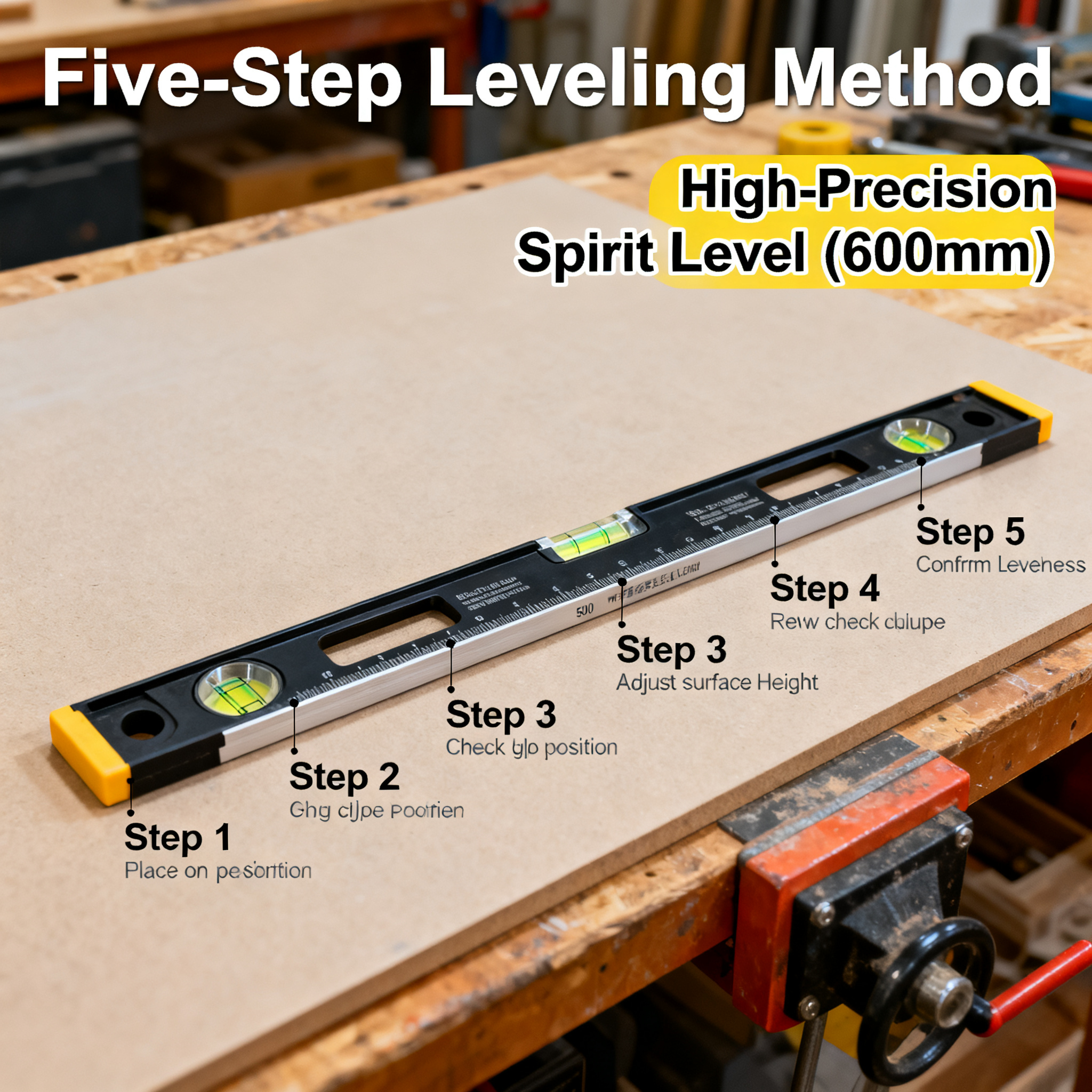
Step Four: Fine-Tune. Once the bubble is roughly centered, switch to a shorter level (around 300mm) to check the midpoints of each side and near the pockets, ensuring no local dips or bumps across the entire surface. This step tests patience; I usually go through four or five rounds.
Step Five: Lock It In. After confirming levelness in all directions, tighten the locking nuts on each corner sequentially. While tightening, use another wrench to hold the adjustment screw steady, preventing it from rotating and disrupting the level you've just achieved.
Advanced Tips: Don't Forget Slate Seams and Frame
If your table still feels "sticky" or makes odd noises after leveling, the issue might lie in the slate seams. Run your hand along the slate seams; if you feel a noticeable height difference, the seams have shifted.
This can't be fixed by adjusting the feet alone. You'll need to loosen the connecting screws at the seams, insert specialized leveling shims (usually included with the table), and re-tighten. SQUARE COMFORT tables undergo 12-step precision tests at the factory, including pocket geometry and flatness checks, so new tables typically don't have this issue. But over time, especially with frequent moves, it's worth inspecting.
Additionally, check if the table frame contacts the floor evenly. Slide a standard A4 sheet under each foot; if it slides easily in some spots but gets stuck in others, the frame is twisted. In that case, use anti-slip pads or thin wooden shims to level it.
Maintenance Advice: Don't Let Small Issues Become Big Headaches
Leveling might seem minor, but it has a decisive impact on your playing experience. In professional tournaments, referees use precision levels to verify the table before each match, with error tolerance within 0.1mm. For home use, you don't need to be that strict, but at least ensure the bubble doesn't deviate more than one division over a 500mm span.
I recommend a quick check every three months, with more frequent checks during humid seasons or in heated rooms. Seasonal changes cause the most noticeable wood frame expansion and contraction, making level drift most likely. Also, avoid using a wet mop directly on the table edges during cleaning; moisture seeping into the leveling feet threads can cause rust and jamming, making adjustments impossible later.
Once leveling is complete, you'll notice a marked improvement in shot quality—the cue ball rolls cleanly, long-distance draw shots don't float, and pockets stop spitting out balls unexpectedly. That pinpoint accuracy is worth the twenty minutes you invest.
If you're in the market for a new table or feel your current one never quite levels right, consider checking out SQUARE COMFORT's product line. They offer everything from home models to tournament-grade tables, and some models feature the SmartLevel™ auto-balancing system, which monitors the table surface in real time, saving you the hassle of manual adjustments. After all, spending your time enjoying the game rather than wrestling with leveling feet is the true way to experience billiards.
May every shot you take land exactly where it's meant to go.