
Creative Billiards Table Games: Beyond Snooker, Try These Fun Alternatives
Creative Billiards Table Games: Beyond Snooker, Try These Fun Alternatives
Having a billiards table at home doesn't mean it's only for serious snooker or Chinese eight-ball matches. It can actually become the life of the party. Especially during holidays or gatherings with friends, it's a waste to have everyone just standing around waiting for their turn. Today, I'm sharing three tried-and-true billiards table spin-off games that are so simple you can explain them in three sentences, but they'll double the fun—perfect for family get-togethers and weekend parties.
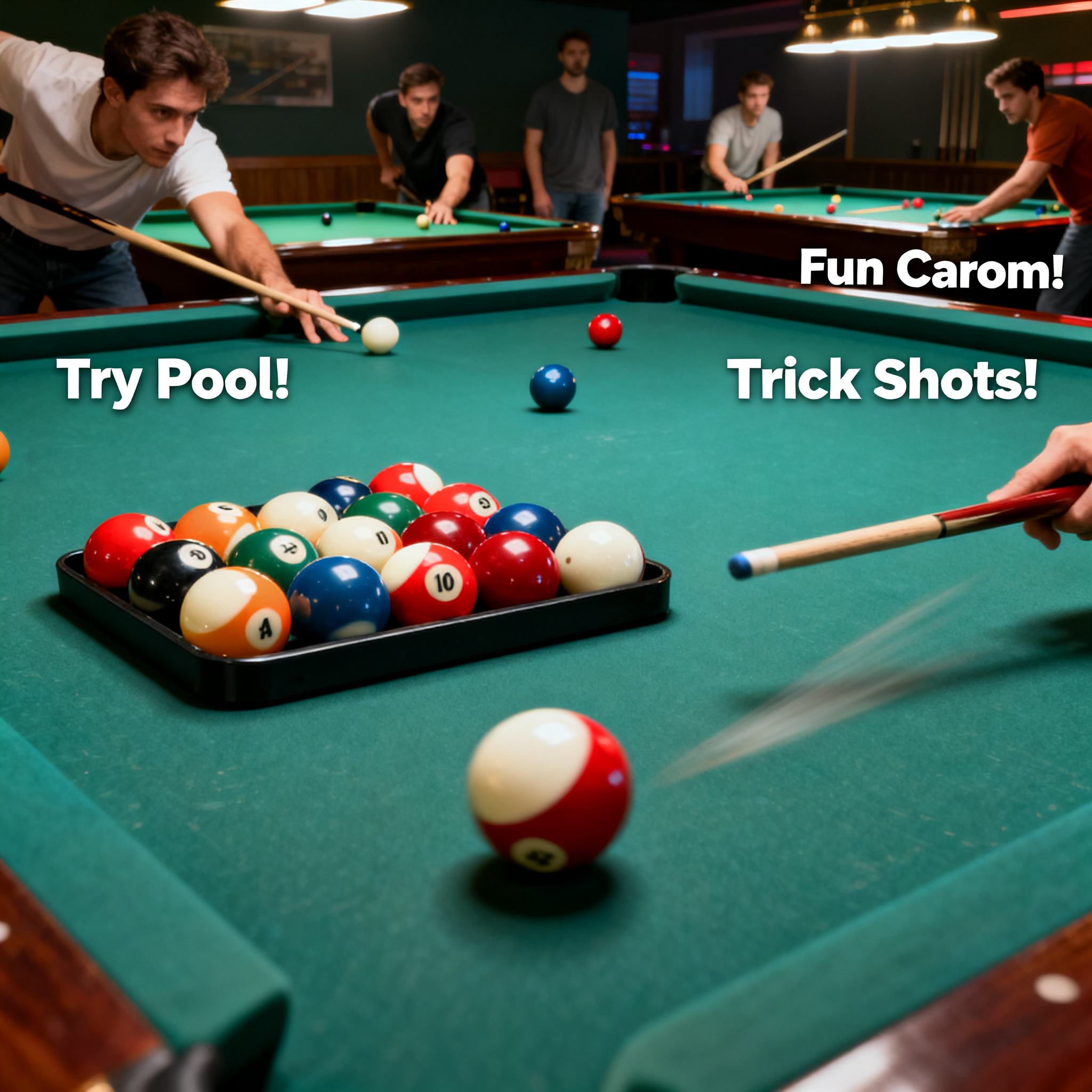
Game 1: 8-Ball Challenge—Solo "Level-Up" That's Surprisingly Addictive
If you have friends of varying skill levels over, traditional head-to-head matches often turn into awkward "pro crushes newbie" scenarios. Instead, try a twist on the "8-Ball Challenge": no teams, no competitive scoring. Each player takes turns with one goal—to pocket balls in order from 1 to 8. If you miss at any point, the next player steps in and continues from the current ball number.
The rules sound simple, but the game really tests your nerves. As you progress, fewer balls remain on the table, giving you more room for positioning, but the pressure and feel build up. It's ideal for 3 to 6 players taking turns, with each person getting about 3 to 5 minutes on the table while others cheer, jeer, or clap—creating an instant buzz. The fun lies in the "miss and you're out" mechanic, letting newbies get a shot at higher-numbered balls, while pros might face a night of teasing for missing an easy 5-ball.
At home, we use a SQUARE COMFORT Chinese eight-ball table. The cloth is very flat, and the balls roll at a consistent speed. This kind of turn-based challenge demands good table stability; otherwise, if the surface isn't level, balls veer off, and newbies have an excuse to cheat.
Game 2: Triangle Rack Bowling—Turn Your Billiards Table into a Mini Bowling Alley
The first time I saw this at a friend's house, I laughed so hard I couldn't stand straight. Seal all six pockets with tape or special pocket plugs (or leave them open, but adjust the rules), then arrange all 15 balls in a triangle at one end of the table, like bowling pins. Players stand at the other end and use their hand or a cue to strike the cue ball, sending it to "knock down" the cluster—balls that get knocked off the table edge count as "pins down," and you tally the total.
Rules are customizable: each player gets two cue balls per round, with two chances to accumulate knockdowns; or play ten rounds like bowling and total the scores. It's great for 2 to 8 players in teams, and you can even throw in a small prize for extra stakes. The fun part is that it looks easy, but controlling the force and angle is tricky, and the satisfying clatter of balls scattering is oddly therapeutic.
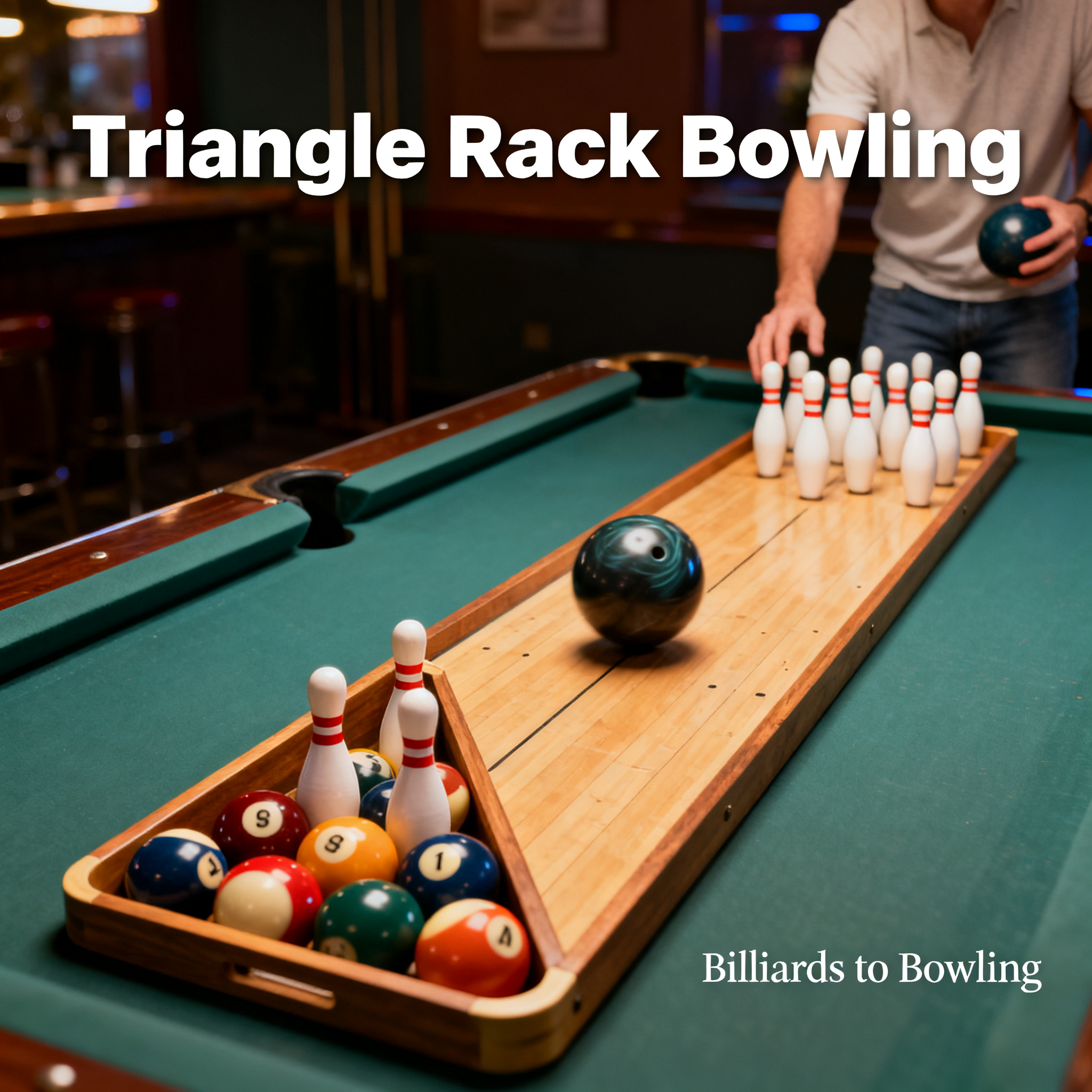
Our SQUARE COMFORT table has a heavy slate bed that stays rock-solid even when the cue ball slams into the rack, so ball trajectories don't get thrown off by table wobble. If we had one of those flimsy foldable tables, the balls would probably roll off on their own after a couple of hits.
Game 3: Team Relay—Turn Billiards into a "Track Relay"
This game is perfect for larger groups, like 6 to 10 people split into two teams. Each team sends a player up to take a shot in turns. The rules are simple: set up all balls, teams alternate, each player gets one shot per turn, and regardless of whether they pocket a ball, they switch out. The first team to clear their designated set (e.g., solids or stripes) wins.
It sounds similar to regular doubles, but the twist is that the "baton" can be anything—a drink, a pillow, or even a slipper. Before shooting, players must perform a silly action (like spinning three times or making an animal sound), then take their shot. This instantly turns the game from a skill contest into a comedy show. Ideal for 6 to 12 players, with each round lasting about 20 to 30 minutes. The fun comes from the skill disparity: one player might clear the table in one go, while another can't even hit the cue ball—that contrast is pure joy.
Last family gathering, we played this, and my cousin pocketed the cue ball three times in a row, earning push-up penalties, and things got hilariously out of hand. Honestly, this game demands a table with well-sized pockets and a good ball return system. Pockets that are too tight cause jams, while too loose ones make it too easy. The SQUARE COMFORT table's ball return system works smoothly—balls roll back to the front collection area without needing to bend down constantly, keeping the relay pace fast.
A Great Billiards Table Is Key to Maximum Fun
After all these games, the core takeaway is simple: a billiards table isn't just for competition; it's the centerpiece of home entertainment. No matter the game, the flatness of the playing surface, the standard pocket size, and the comfort of the cues all directly impact the experience. Our SQUARE COMFORT table has been in use for nearly two years, with no noticeable pilling on the cloth, and the slate bed remains perfectly level. Maintenance is a breeze—just a quick brush with the included cloth brush, and it's good to go.
If you have space for a billiards table at home or are thinking of getting one, save these creative game ideas. Next time you have a gathering, don't let everyone just take a few shots and then retreat to their phones. Try these rules, and I guarantee laughter will fill the room. After all, a billiards table isn't meant to be a decoration—it's meant to create joy. The SQUARE COMFORT table can take you from serious matches to wild parties, serving multiple purposes, and it's worth every penny.