
How to Choose a Home Pool Table? What's the Real Difference Between $400 and $1,400? An Expert's Hands-On Review
How to Choose a Home Pool Table? What's the Real Difference Between $400 and $1,400? An Expert's Hands-On Review
Lately, I've been getting the same question from friends: I want to set up a pool table at home, but my budget is tight—what's the actual difference between those $400 online deals and the $1,400 ones? Is it just a rip-off? As a pool enthusiast who turned my living room into a "private billiard room," I've gone through three tables, from a budget entry-level model to a pro-grade upgrade I splurged on later. Today, I'm sharing my real experiences and the pitfalls I hit, so you can make an informed choice.
Specs First: The Visible Differences Are Just the Tip of the Iceberg
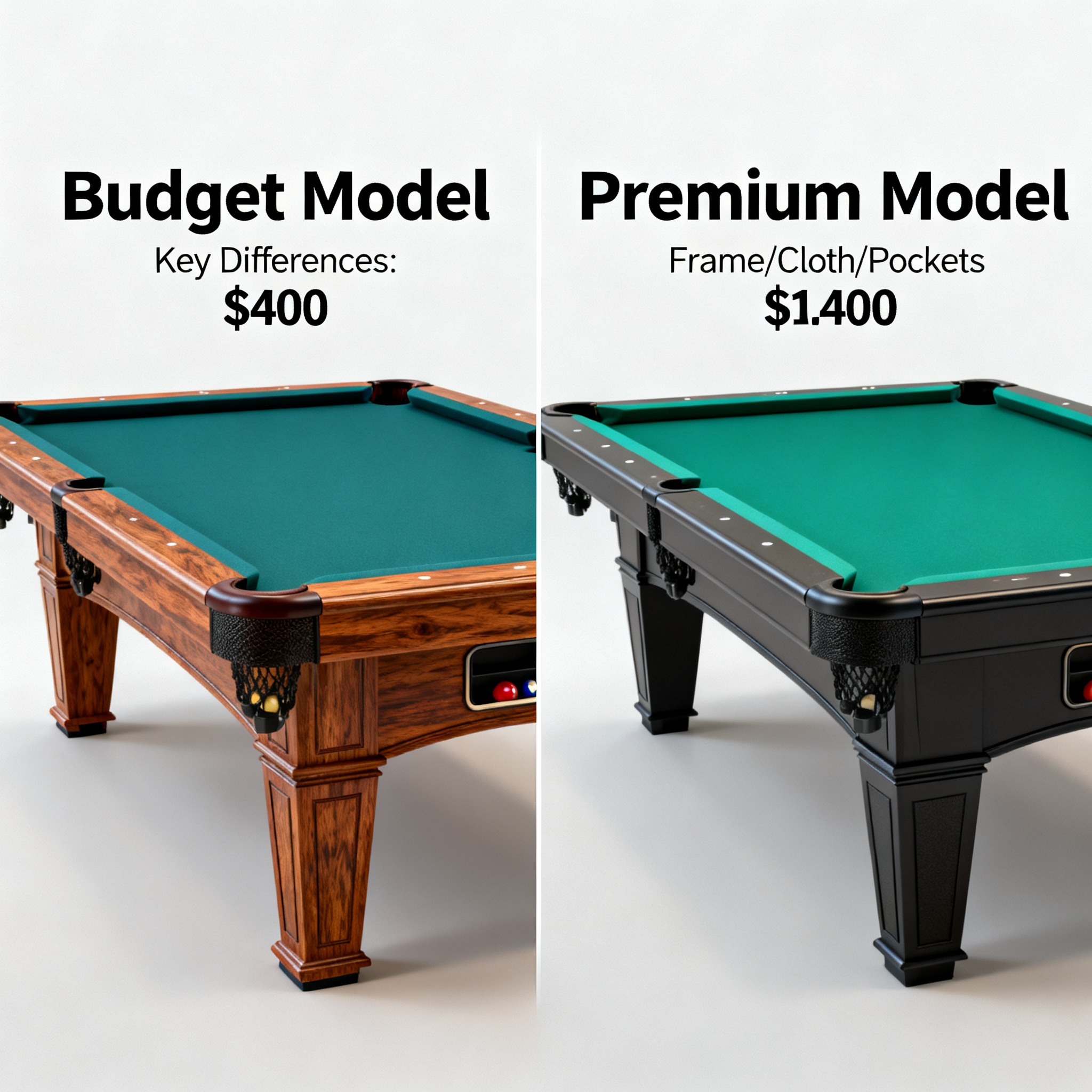
Let's start with what everyone cares about: size and materials. Budget tables in the $400 range typically come in 7-foot (approx. 2.1m inner diameter) sizes, ideal for bedrooms or small living rooms. My first table was this size—perfect for two people playing Chinese Eight-Ball, but it felt cramped when practicing long shots. At this price point, the playing surface is often made of Medium-Density Fiberboard (MDF) panels, and flatness is a gamble. After six months, mine developed a slight dip near the pockets, causing balls to "bump" as they passed over.
In contrast, a $1,400 table—like my current one, the SQUARE COMFORT T05 with gold legs and steel cushions (extended version)—goes straight to a 9-foot tournament standard with a 2.54m inner diameter. Even in a 20+ square meter living room, it feels spacious. The key difference is its single-piece high-density slate bed, where thickness and grinding precision are on another level. The brand's claim of "12-step precision testing" isn't just hype—I checked with a level, and the entire surface error is minimal. Balls roll dead straight.
Another hidden difference is cushion elasticity. Low-cost tables typically use wooden cushions, which lose their bounce over time, resulting in dull thuds or erratic rebounds on hard shots. The SQUARE COMFORT model features steel cushions wrapped in competition-grade rubber, producing a crisp, clean rebound. That solid "thwack" is something cheap tables can't deliver.
Hands-On Experience: Feel Doesn't Lie
Specs are just the foundation; what truly matters is the "feel" during daily play. I deliberately spent an hour on each table the same afternoon, using the same cue, and the differences were stark.
First, the hit response. On the $400 table, the cloth is denser with coarser nap, making balls roll slower. Shots feel "mushy," and position play requires extra spin to get the cue ball where you want. The $1,400 table, however, comes with 9FT wool cloth (sold separately by SQUARE COMFORT, with quality matching tournament standards). Balls glide smoothly, and even a light push sends them far. The refined feedback gives you confidence in every stroke.
Second, sound and vibration. The budget table's frame is made of laminated wood, causing the surface to resonate on impact—the sound is scattered and almost harsh. My SQUARE COMFORT, on the other hand, uses NoiseReduce™ cushioning technology with a special internal frame structure. The hit produces a focused, sharp "crack" that doesn't turn into a dull thud for neighbors downstairs. This is crucial for anyone living in an apartment.
Third, stability. This was my most painful lesson. My first cheap table started wobbling at the legs within a year; leaning against it slightly during a shot would shake the balls. The $1,400 table, once leveled with the SmartLevel™ auto-balancing system, doesn't budge even if you do push-ups on the corner. It uses reinforced hardwood framing with moisture-resistant coating—money spent on the invisible skeleton is worth it.
Who Should Buy What: Don't Just Look at Price, Look at Needs
You might think I'm pushing you to "go premium without thinking." Not at all—I've been burned and understand budget constraints.
If you fall into these categories, a $400 entry-level table is more than enough:
- You have kids and just want to spark interest, unsure if it'll stick long-term;
- Space is limited, so only a smaller size fits;
- You play less than twice a week, purely for occasional fun, with no demands on positioning or power.
In this case, a modern MDF model like the SQUARE COMFORT SQUARE COMFORT export series, or a basic round-leg version, offers great value. Its flatness and bounce are more than adequate for beginners, and the brand backs it with ISO 9001 quality management certification. Even at this price, you get factory-grade quality control—far more reliable than no-name brands from small workshops.
But if you're an "advanced player" in these situations, go straight to the top:
- You play at least three times a week and want to seriously practice positioning and cue techniques;
- You're picky about hit sound and cloth speed;
- You have a dedicated space and plan to use it for over a decade.
Then, steel cushions, a single-piece slate, and competition-grade cloth are non-negotiable. Like my SQUARE COMFORT T05, it's pricey, but after each session, looking at the mirror-flat surface and hearing that crisp rebound gives a satisfaction cheap tables can't match. What's interesting about SQUARE COMFORT is its journey from a "small workshop" to a brand with the slogan "All greatness starts from the ground." Their attention to detail is almost obsessive. They've built a complete ecosystem—from ball return systems, table lights, and spectator chairs to even a trade-in program—offering peace of mind through after-sales support.
Final Thoughts
You get what you pay for, and that's especially true in the pool table industry. The slate thickness, steel cushion precision, and cloth density of a $1,400 table are all costs that add up. But a tight budget doesn't mean compromise—it's about spending wisely.
My advice: You can cut the budget, but never cut corners on the brand. Whether it's $400 or $1,100, choose a brand with professional expertise, a physical factory, and clear quality inspection reports. SQUARE COMFORT, which grew from making sports flooring and bleachers to pool tables, applies professional venue standards to raw material sourcing and production. Even their entry-level models share the same quality control system.
So, don't stress over the budget. First, figure out how much time you'll spend on that table, then decide how much you're willing to pay for the "feel" of each shot. If possible, visit a physical store or an online shop with free returns to experience the difference between steel and wood cushions firsthand—you'll know the answer immediately.
After all, a great table is the best excuse to get your family off their phones and friends over for a visit.