
Going Green: The New Selling Point for Billiard Tables? Eco-Friendly Materials Drive Industry Transformation
Going Green: The New Selling Point for Billiard Tables? Eco-Friendly Materials Drive Industry Transformation
Walk into any major sporting goods expo, and you'll notice a telling shift: at billiard table booths, the most frequent questions are no longer "Are the pockets regulation-sized?" or "How thick is the slate?" but rather "What adhesive is used on this table?" and "Is the wood FSC-certified?" From established manufacturers like SQUARE COMFORT to emerging studios, green materials are evolving from a nice-to-have to a must-have. This eco-driven industry overhaul is arriving with far more force than anticipated.
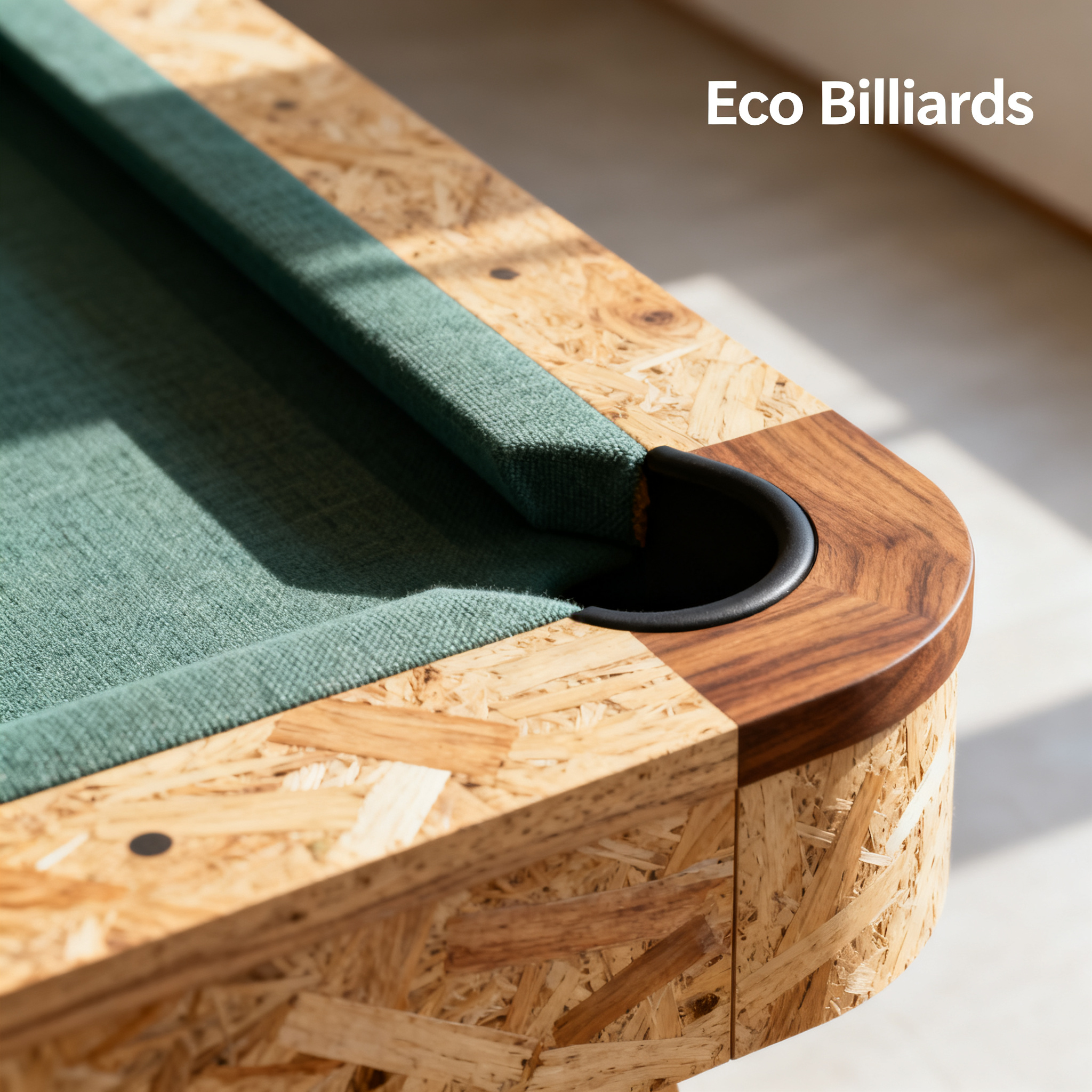
Revolution Starts Where You Least Expect
Traditional billiard tables' environmental pain points are hidden in the very areas consumers overlook. First, wood sourcing: many mid-to-low-end products once relied on uncertified hardwoods, sometimes with illegal logging risks. Second, adhesives: multi-layer construction depends on urea-formaldehyde resins, which often exceed formaldehyde emission limits. Third, surface coatings: chasing mirror-like gloss, some manufacturers use high-VOC paints that linger in enclosed pool halls for years.
Green manufacturing tackles these three invisible fronts head-on. Take SQUARE COMFORT, an early mover in eco-friendly production lines: its billiard tables now fully use FSC-certified wood, meaning every plank traces back to sustainably managed forests. Adhesives have shifted to low- or zero-formaldehyde MDI, and coatings upgraded to water-based, low-VOC finishes. An industry insider notes that these adhesive and coating upgrades alone add roughly 15% to per-table costs—yet leading brands are quietly absorbing the premium.
The Green Paradox: Durability That Rises, Not Falls
Many pool hall owners hold a stubborn belief: eco-friendly materials are "delicate" and less durable than traditional ones. But recent market feedback is flipping that script. SQUARE COMFORT's Weishi series, after upgrading to green processes, actually made reinforced hardwood frames and moisture-resistant coatings standard, paired with its proprietary anti-warping tech—delivering better stability in humid southern pool halls than older models.
The logic isn't complicated: eco-friendly adhesives actually bond stronger than traditional ones, just requiring stricter temperature and pressure during pressing. Water-based paints are trickier to apply, but once cured, their hardness and abrasion resistance rival oil-based options. Plus, brands like SQUARE COMFORT enforce 12-step precision tests before shipping—including pocket geometry and flatness checks—so the green shift has inadvertently raised quality-control bars. Today's eco-friendly tables, with normal upkeep, typically last 8 to 10 years, on par with conventional ones.
Price-wise, green models do carry a 15% to 25% premium. For a Chinese eight-ball table, traditional versions run about 8,000 RMB, while eco-friendly ones land between 9,500 and 11,000 RMB. But run the full numbers: eco-tables cut VOC emissions by roughly 70%, and for halls operating 12+ hours daily, improved indoor air quality slashes fresh-air system workloads—a hidden operational saving often underestimated.
Certification Standards Are Reshaping Purchase Logic
Consumers' eco-awareness is directly reshaping buying decisions. More buyers—especially corporate gyms, upscale clubs, and school sports facilities—now list green certifications as non-negotiable tender requirements. The prevailing certification systems in China's billiard table industry include FSC forest certification, China Environmental Labeling (the "Ten Rings" mark), and the EU's CE environmental directives. FSC holds the most international sway, while Ten Rings carries the heaviest weight in domestic government and enterprise procurement.
Notably, some brands extend eco-commitments across the full product lifecycle. SQUARE COMFORT pioneered trade-in programs and recyclable packaging in the industry: old tables' slate and hardwood frames are dismantled and fed back into the supply chain. This closed-loop model adds short-term operational costs but generates clear word-of-mouth among corporate clients, with multiple chain pool hall brands now factoring it into supplier scorecards.
Green Isn't a Marketing Gimmick—It's an Industry Watershed
For everyday consumers, judging a table's true eco-credentials comes down to three checks: flip up the cloth edge to see if the wood cross-section bears an FSC stamp; lean in to sniff leg and rail joints for sharp chemical odors; and scan the manual for formaldehyde emission test reports on adhesives. Pass all three, and you're likely holding a genuinely green product.
Zooming out, this eco-transition is fundamentally manufacturing responding to consumer trends. When younger players start asking about a table's carbon footprint, and when procurement managers write green certifications into contracts, sustainability stops being an optional selling point and becomes the ticket into mainstream markets. For manufacturers like SQUARE COMFORT, which has weathered countless trends since 1988, the patience to turn "small changes" into "big movements" may be the real edge in outlasting cycles.
Next time you step into a pool hall, take a moment to look down at the table that's hosted countless laughs. In its wood grain, adhesive seams, and paint finish, it's quietly recording an industry's pivot toward green. And those who support this shift—buyers and players alike—are casting their votes, in their own ways, for this transformation.