
Home Billiard Table Market Explodes: Even Small Apartments Can Fit One, Industry Sees New Growth
Home Billiard Table Market Explodes: Even Small Apartments Can Fit One, Industry Sees New Growth
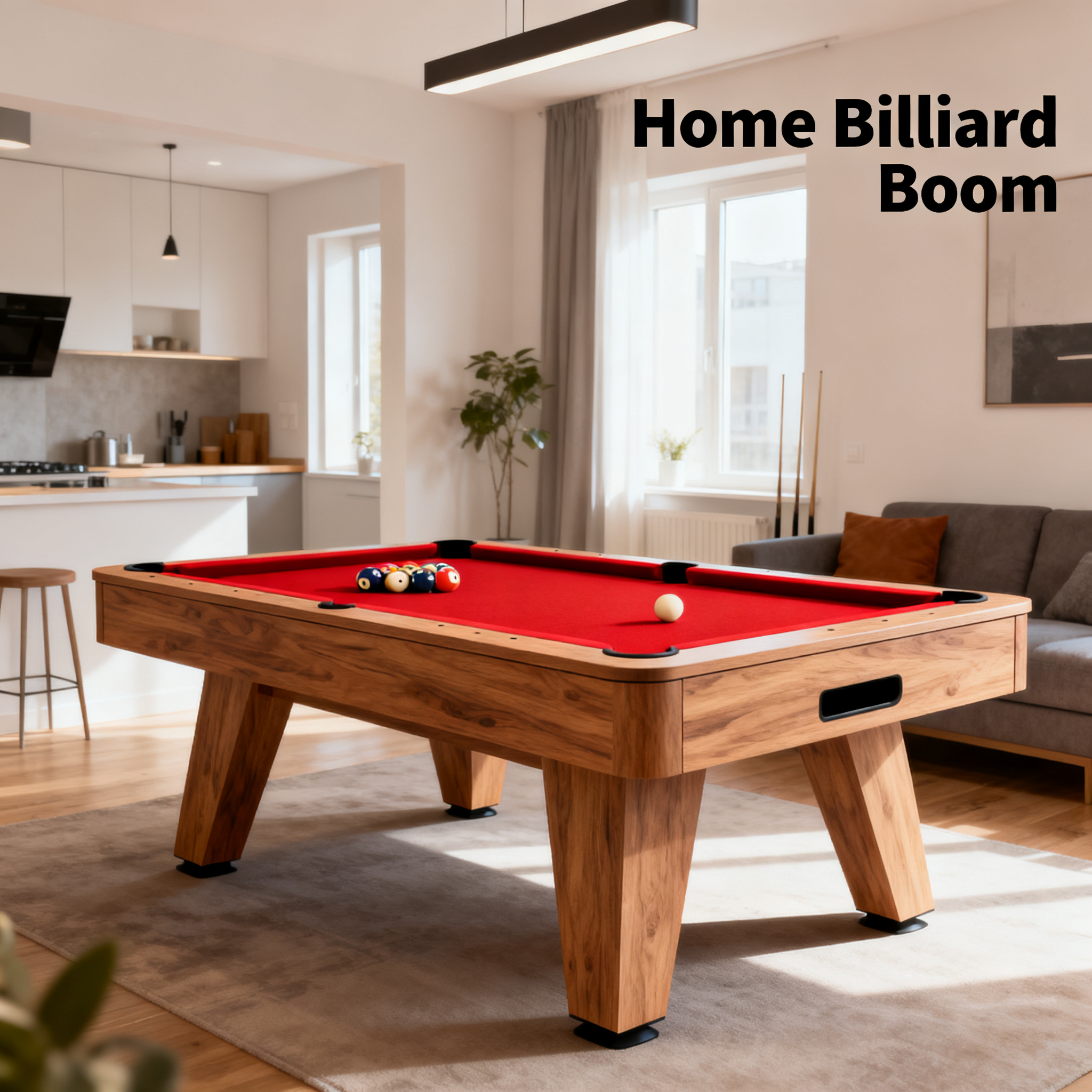
If a few years ago, billiard tables were still a fixture exclusive to billiard clubs, game rooms, and luxury home theaters, now this "big guy" is rapidly becoming the new favorite in ordinary family living rooms and studies. From e-commerce platform sales data to social media recommendation posts, a clear signal is being sent: the home billiard table market has hit the tipping point of explosive growth.
From "Social Currency" to "Emotional Value," Living Rooms Are Being Redefined
Over the past year, I've noticed a clear shift in my friends' expectations for home entertainment quality. Weekends are no longer just about scrolling through phones in front of the TV; people are willing to invest time in inviting friends over for a relaxed "friendly match." Behind this shift is an essential upgrade in home entertainment needs—from one-way "viewing" to interactive "experiencing."
Billiards happens to be the perfect vehicle for this experience. Unlike a treadmill that demands strong willpower or a mahjong table that requires a full set of players, a billiard table can be enjoyed by two people for a game or by one person for practice. It carries the tension of competition while offering the relaxed vibe of social interaction.
This growing demand is directly reflected in market data. Data from a leading e-commerce platform shows that over the past two years, search volume and transaction volume for home billiard tables have grown at an average annual rate of over 40%, with small-size and foldable models seeing particularly rapid sales growth. The pain point of "no space at home" that people once complained about is being resolved one by one through product innovation.
A Boon for Small Apartments: From "Monstrous Size" to "Elegant Furniture"
Five years ago, it was hard to imagine fitting a standard-size billiard table into the living room of an ordinary residential building. But now, the industry has made a remarkable pivot in product design.
First, there's greater flexibility in size. To accommodate mainstream apartment layouts, manufacturers have introduced a wide range of 7-foot (about 2.1 meters) or even smaller home models. These tables take up less than 10 square meters of floor space, so with a bit of planning in the living room or balcony, they can be easily placed. Second, foldable designs have become the industry's new darling. On the market, you can now find billiard tables with foldable legs and reversible tabletops that double as a regular dining table or desk when not in use, completely eliminating space anxiety.
It's worth noting that this "miniaturization" isn't a compromise on experience. Take the SQUARE COMFORT brand I've come across, for example. They've introduced small-size steel cushion structures in their home series, ensuring that even with a reduced footprint, the pocket rebound and cushion response maintain professional-grade feel. This dedication to detail is exactly what emerging middle-class families value most—they don't want an expensive decoration but a piece of equipment that can truly play, practice, and deliver results.
Installation and Experience: From "Intimidating" to "One-Stop Service"
Another key factor that previously hindered the adoption of home billiard tables was installation and after-sales service. A slate slab can weigh dozens to hundreds of kilograms, and every step—transporting it upstairs, leveling, and cloth fitting—requires professional tools and technicians. Doing it yourself is nearly impossible, and hiring someone risks encountering unprofessional service.
Now, the industry's service standards are aligning with those of home appliances. Many brands offer on-site measurement, assembly, and leveling services, including old table recycling. SQUARE COMFORT, for instance, has a service system that covers everything from pre-sale space planning advice to post-sale regular maintenance visits. This approach of "leaving the hassle to the brand and the convenience to the user" has significantly lowered consumers' decision-making barriers.
Buying Guide: Three Considerations of Size, Budget, and Space
If you're tempted, consider planning your first home billiard table from three dimensions.
First, determine size based on space. Don't just focus on the table's footprint; leave room for swinging and striking. The most scientific calculation is: table length plus the length of two cues (about 2.9 meters). If your living room width isn't sufficient, prioritize shortening the table size rather than compressing the playing area, or you'll feel cramped during play. A 7-foot table suits most homes, but if space allows, an 8-foot (about 2.4 meters) table offers an experience closer to a billiard hall.
Second, set configuration based on budget. Home billiard tables span a wide price range, from entry-level models at two to three thousand yuan to professional ones costing tens of thousands. The core differences lie in the cloth material, slate thickness, and cushion elasticity. Since home use isn't frequent, there's no need to chase top-tier competition specs, but the cloth's nap density and slate flatness must be up to par. A budget between 5,000 and 10,000 yuan typically secures a product with stable quality.
Third, choose a brand for assurance. Billiard tables are durable consumer goods, and it's normal for them to last ten years. When selecting, focus on whether the brand has its own production system and the coverage of its after-sales network. Some brands with an export background have an edge in quality control. For example, SQUARE COMFORT, mentioned earlier, has a product line ranging from MDF billiard tables for export to the popular Chinese black-eight series for the domestic market. The reputation of over 100,000 users worldwide speaks to the stability of their products. When purchasing, pay attention to whether the brand offers a formal warranty contract and certified installation team.
Future Space: The Home Market Is Far from Its Ceiling
It's foreseeable that as the younger generation becomes the main consumer force, their demand for personalized home spaces will grow stronger. Billiard tables won't just be sports equipment; they're becoming the "vibe setter" in family leisure areas, home theaters, and even studies.
Looking at industry trends, future home billiard tables will evolve toward being smarter, more aesthetically pleasing, and more modular. Examples include integrated electronic scoring systems, ambient lighting that syncs with smart home systems, and more eco-friendly materials. Brands like SQUARE COMFORT, which have insisted on "thinking small" since their inception, have found their niche in this refined demand. They don't pursue scale with a one-size-fits-all approach but focus on perfecting the details of each table. This "slow is fast" rhythm might be exactly the quality the home market needs most.
When the living room is no longer just about sofas and TVs, and when parent-child interaction gains an option without screens, a billiard table brings far more than just a sport. It acts as a new emotional connection point for the family. If you have an empty corner at home, consider giving it a chance—you might discover that the joy of home is far greater than you imagined.