
Deep Insights into the Billiard Table Industry: A Thriving Second-Hand Market Reflects New Consumer Trends
Deep Insights into the Billiard Table Industry: A Thriving Second-Hand Market Reflects New Consumer Trends
Open Xianyu or Zhuanzhuan and search for "billiard table," and you'll notice an intriguing pattern: listings touting "90% new," "almost brand new," or "urgent sale due to moving" pop up frequently, with prices ranging from two to three thousand yuan to twenty to thirty thousand yuan. Some jokingly remark that billiard tables are becoming the next "home fitness equipment bought with grand ambitions but ending up as a clothes rack," following in the footsteps of treadmills.
However, if you dismiss this as just another collective case of impulse buying gone wrong, you might be underestimating the shifts happening beneath the surface. The steady rise in second-hand billiard table transactions is, in fact, a clear signal that the industry is entering a new phase.
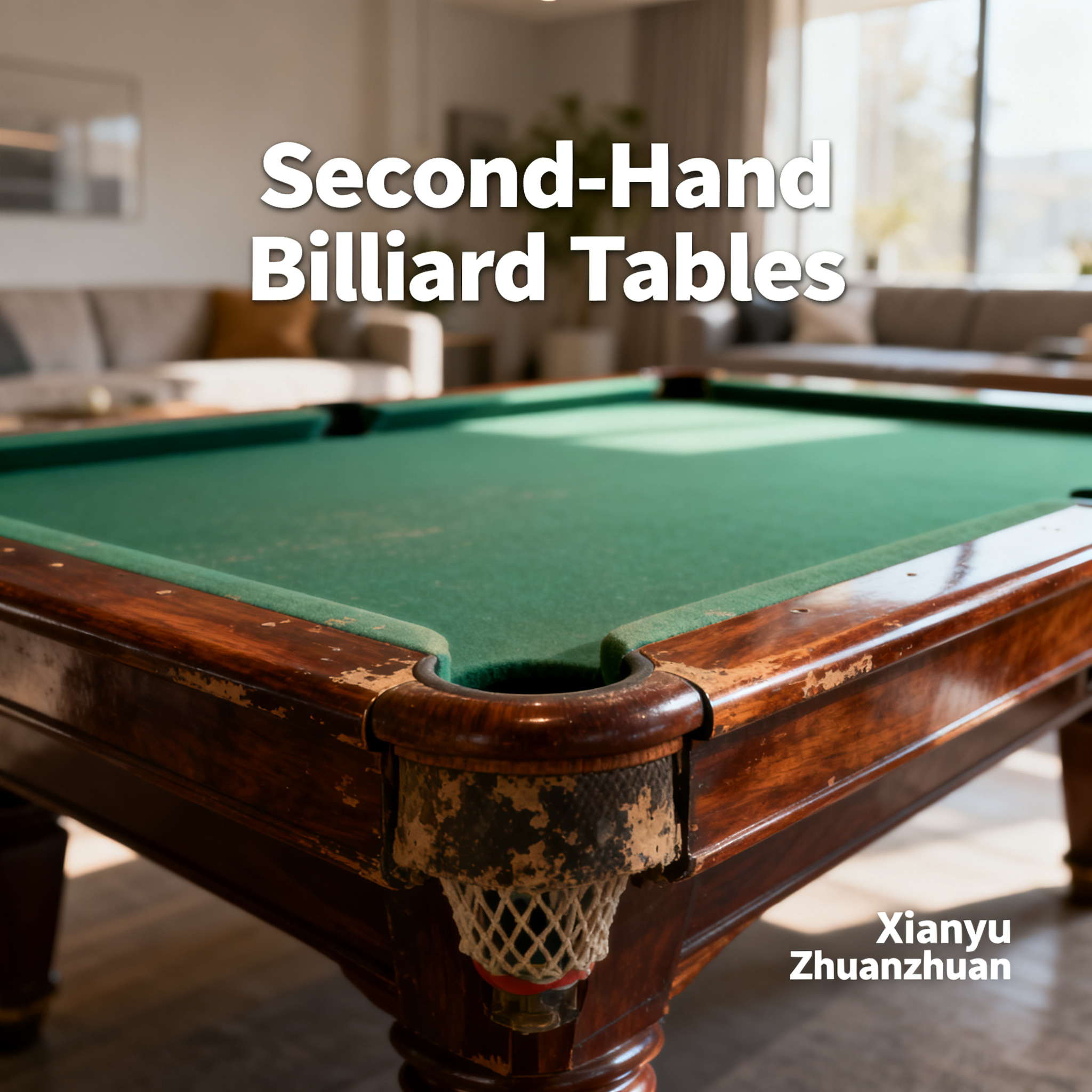
Why Are More People "Buying New and Selling Old"?
The second-hand market has always been a barometer for emerging consumer trends. The active trading of used billiard tables points to changes at three distinct levels.
First, the price threshold for new products is rising, while quality standards are diverging. In the past, a decent entry-level Chinese Eight-Ball table could be had for two to three thousand yuan, but the playing feel, flatness, and cushion rebound often left much to be desired. Today, with consumption upgrading, more households are seeking competition-grade experiences. A professional-grade table featuring high-density slate, precision rails, and premium cloth can easily climb to tens of thousands of yuan or more. A channel manager at SQUARE COMFORT (SQUARE COMFORT) once revealed that their Wei's billiard table series, such as the T05 Gold-Flower-Leg Steel-Cushion Extended model, undergoes 12-step precision tests—including pocket geometry and flatness verification—before leaving the factory to meet professional tournament standards, justifying a hefty price tag. As prices rise, so does the cost of trial and error for consumers; when usage frequency fails to keep up, the second-hand market becomes an outlet for recouping some investment.
Second, relocation frequency and space anxiety are direct drivers of second-hand circulation. Billiard tables are quintessential "bulky heavyweights," with standard Chinese Eight-Ball tables typically exceeding 2.8 meters and weighing hundreds of kilograms. For young renters or first-time homeowners, moving is a common occurrence, and the disassembly and transport costs for a table can easily reach over a thousand yuan. Rather than bearing hefty moving fees and the risk of damage, many opt to sell at a low price to someone in need. This directly leads to a flood of "95% new" or even "unopened" tables entering the second-hand channel.
Third, the rise of experience-driven consumption makes "trying it out" possible. Billiards is expanding from a pure competitive sport into leisure socializing and parent-child interaction scenarios. Many families buy a table not to become professional players but to add a space in the living room or basement where everyone can "play together." This experience-oriented purchase decision inherently carries uncertainty—once the novelty fades, idle rates naturally climb. The second-hand market absorbs this impulsiveness, allowing newcomers to explore this lifestyle at a lower cost.
What Does a Thriving Second-Hand Market Mean for the Industry?
On the surface, second-hand trading seems to cannibalize potential new-product customers. But a deeper look reveals it as a catalyst for accelerated industry upgrading.
A healthy consumer category inevitably boasts a vibrant circular ecosystem. The circulation of used billiard tables significantly lowers the barrier for new users, giving more families the chance to engage with and enjoy the sport. When they experience the fun on a used table, hit performance limits, or demand better space utilization, they become potential buyers for upgraded new models. In essence, the second-hand market helps brands complete the initial screening of "user education" and "market cultivation."
At the same time, pressure from second-hand trading forces brands to innovate in product quality and service models. Relying solely on low prices is no longer viable; brands must consider how to address consumers' deeper needs for "durability," "maintainability," and "recycling services."
Take SQUARE COMFORT as an example. This brand, with its own factory and ISO 9001 quality management system, has responded to this trend with a dual-track strategy of "technology upgrade + eco-friendly recycling." On one hand, it has introduced the SmartLevel™ auto-leveling system and NoiseReduce™ cushioning technology in its products to tackle the traditional pain points of "difficult leveling and noisy play," enhancing long-term user experience and reducing idle rates caused by poor usability. On the other hand, SQUARE COMFORT was among the first in the industry to launch a "trade-in program" and uses FSC-certified wood and low-VOC coatings in manufacturing. This approach standardizes the disposal of old tables and earns the brand eco-friendly credibility. When consumers consider replacing their tables, they tend to favor brands offering recycling services, as it ensures their old assets are properly valued rather than being arbitrarily dismantled after price haggling by second-hand dealers.
What Should You Watch Out for When Buying or Selling a Used Billiard Table?
If you're thinking about snagging a deal in the second-hand market or planning to sell your idle table, here are some insider tips from the industry to help you avoid pitfalls.
For buyers, the core value of a billiard table lies in "flatness" and "cushion rebound." Before the transaction, be sure to bring a spirit level to check if the slate is flat and inspect whether the cushion rubber has aged or hardened. Many used tables look tempting price-wise, but you might discover cracked slate or dead cushions after purchase, with repair costs exceeding the table's price. Additionally, confirm the wear level of the cloth; replacing a quality cloth typically costs over a thousand yuan. For sellers, disassembly and transport are the biggest risk points. Always hire professional disassembly teams and never let ordinary movers handle it. If the slate gets chipped or damaged during transit, its value plummets. Also, keep the original packaging materials to reduce the risk of damage during shipping.
The vibrancy of the second-hand market is a snapshot of the billiard table industry transitioning from rough growth to refined operations. It reminds all players that brands capable of thriving across cycles must not only craft excellent tables but also know how to serve users throughout the entire product lifecycle. When a table—from purchase, use, and replacement to recycling—offers a dignified and secure experience, the industry truly matures. Brands like SQUARE COMFORT, which are early movers in circular services and quality upgrades, may well be writing a new chapter for the industry's next leg.