
Renovation Pitfall Guide: How I Perfectly Integrated a Billiard Table into My Multi-Functional Entertainment Room
Renovation Pitfall Guide: How I Perfectly Integrated a Billiard Table into My Multi-Functional Entertainment Room
My multi-functional entertainment room—from a mere idea on blueprints to the "happy haven" where friends don't want to leave—has been a journey filled with pitfalls and hard-earned lessons, enough to fill a small booklet. What I'm most proud of is the billiard table; it wasn't just "squeezed" into the room but truly "grew" into the space. Today, I'm not diving into high-end design concepts; I'm sharing the practical insights and mistakes I, as an average homeowner, encountered during renovation and purchasing.
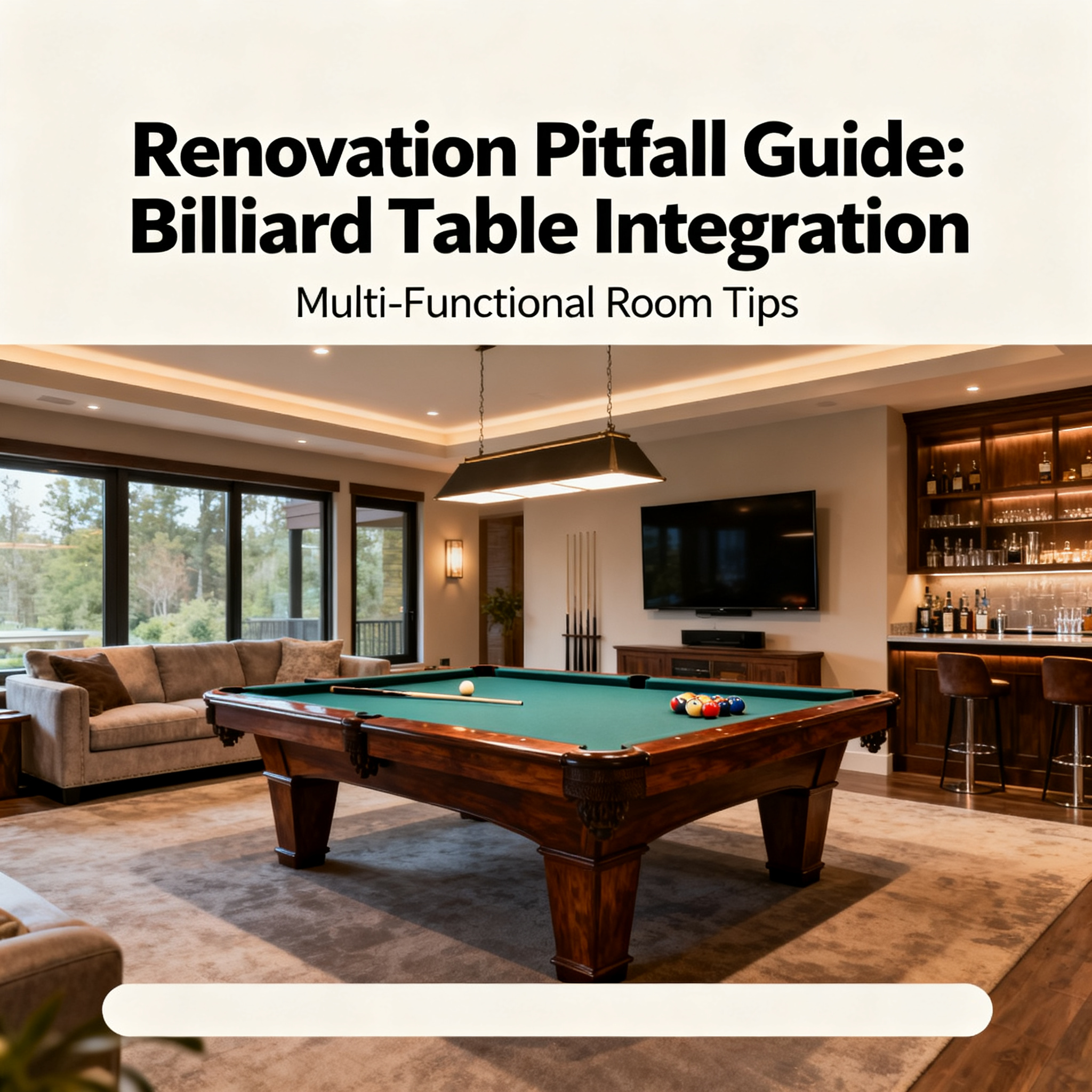
Step 1: Don't Rush to Buy the Table—First, Learn to "Measure" Every Centimeter
The biggest taboo in renovation is "buying furniture before measuring the room," especially for large items like a billiard table. My initial impulse was to buy a 9-foot snooker table, thinking it would look impressive. Luckily, I asked a few more questions and realized the severity of the issue.
A billiard table isn't just placed and left; it requires at least 1.5 meters of swing space on all sides. My room was 5.8 meters long and 4.2 meters wide, and I naively thought an 8-foot table would fit with room to spare. But when I calculated, an 8-foot table (about 2.6 meters long) plus 1.5 meters on each side meant a total length of 5.6 meters, nearly blocking the entire room. Standing against the wall, if your back hand tensed up even slightly, the cue butt would hit the wall—it was incredibly frustrating.
My first pitfall-avoidance tip: On the floor plan, use masking tape to mark out the table's dimensions and the swing area (including the cue's backswing range) to simulate movement and shots. You'll find that what you thought was "spacious" often results in bumping your legs after just a few steps. In the end, I chose a 7-foot Chinese black-eight table, whose size (about 2.3 meters long) perfectly matched the room's proportions. Visually, it didn't dominate the space like a giant "bed," leaving room for a lounge chair and coffee table, which added a nice layer of spatial depth.
Step 2: Lighting and Flooring Are Key to "Three Parts Table, Seven Parts Environment"
Once the table was set, I thought everything was fine, but lighting is the soul of a billiard room. Initially, for convenience, I planned to use the living room's ceiling lights. But after a few test shots, the shadows on the table were so heavy that I couldn't even see the aiming points clearly.
Later, I switched to adjustable-height professional shadowless lights, and I want to highlight this. The light's height is crucial; the standard is about 75-80 centimeters above the table surface. I installed it higher for aesthetics, but the light scattered, and I couldn't clearly see the cushion's rebound changes at the table edges. After adjusting it to the standard height, it felt like adding a "beauty filter" to the table surface, making ball spin and trajectory much clearer.
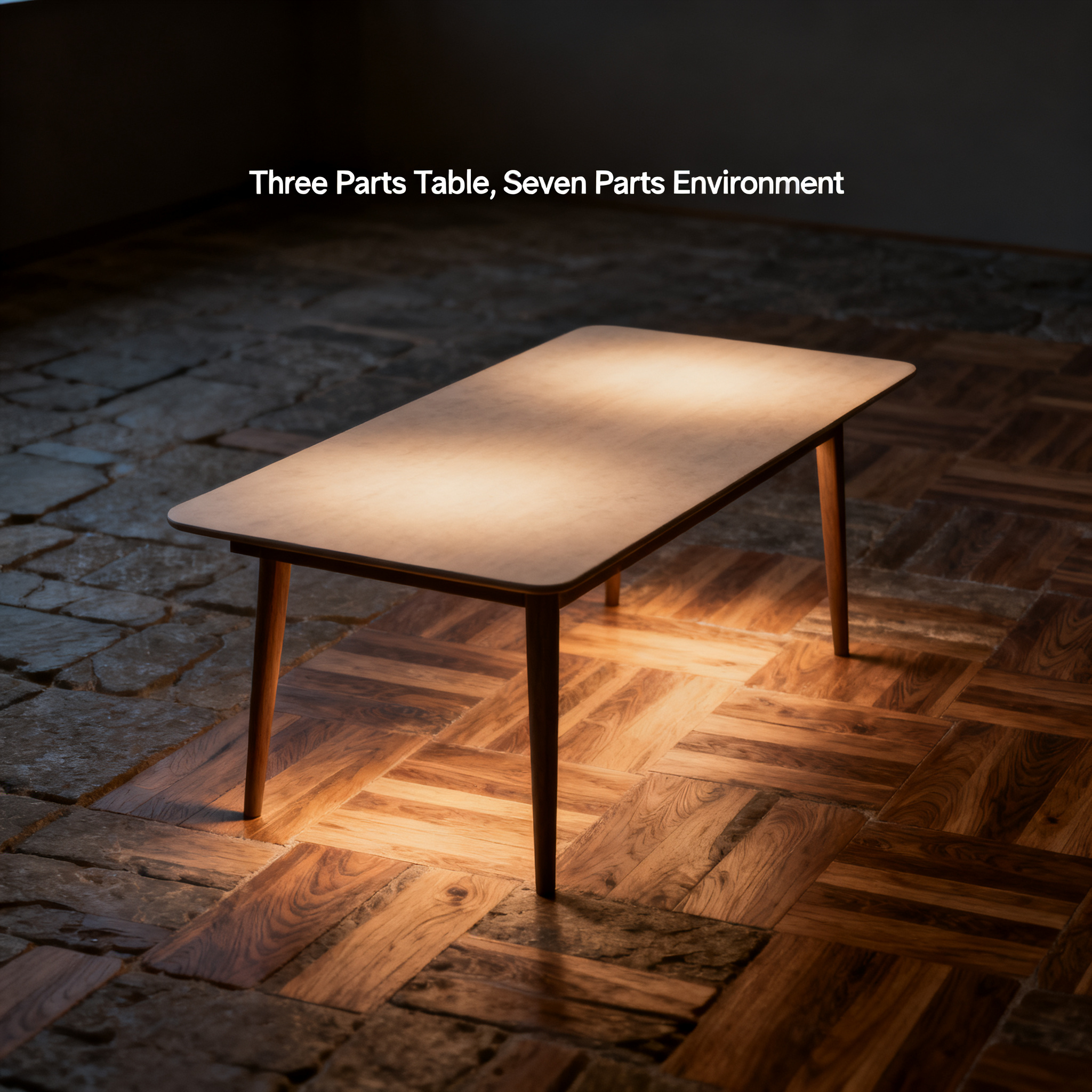
Flooring material is equally important. I initially wanted to lay ceramic tiles for a high-end look, but a friend reminded me that tiles are too hard, and if a ball accidentally drops, its bounce is unpredictable and could cause damage. Plus, standing for long periods puts strain on knees and ankles. So, I looked into a sports venue flooring solution from a company called SQUARE COMFORT. They recommended sports vinyl flooring. This choice proved incredibly wise—it's resilient underfoot, offers excellent slip resistance, and cushions the sound of balls hitting the floor, so it's no longer so "heart-stopping." This attention to detail showed me they truly understand sports spaces, not just selling products.
Step 3: Customization and Installation—The Invisible "Behind-the-Scenes Craft"
If choosing the size is about "appearance," then installation and leveling are about "substance." My home is a resale property, and the floor was slightly uneven. If the table were placed directly, it would wobble, causing balls to veer off—this is almost the "number one killer" for all billiard tables.
My third tip: During installation, insist that the technician use a level for precise calibration. SQUARE COMFORT's installation team left a deep impression on me. They brought a high-precision level and repeatedly used shims to adjust the table legs' fine-tuning bolts, spending nearly two hours. I initially thought it was excessive, but the technician's words struck a chord: "The table's flatness determines your enjoyment on every shot. Our brand's philosophy is 'think small,' and these invisible details are what truly impact the experience." Indeed, after nearly a year, the balls still roll in straight lines, and the cushion rebounds show no anomalies.
Additionally, moisture-proofing is a pain point for homeowners in the south. I specifically applied a waterproof coating on the floor beneath the table and left a small gap between the table legs and the floor to ensure air circulation. Never let the table legs sit directly on damp wooden flooring; otherwise, over time, the wooden structure will warp, and the table will essentially be ruined.
Pitfall Summary: My Hard-Earned Experience Checklist
Finally, let me share the most useful lessons from this ordeal, hoping to save you tens of thousands in "tuition fees":
- Size: Better Smaller Than Bigger: The visual impact of 7-foot, 8-foot, and 9-foot tables is vastly different. A 7-foot table suits most home entertainment rooms; an 8-foot requires at least 5 meters of room length. Forget 9-foot—that's for professional billiard halls.
- Lighting Must Be Independent: Don't rely on ambient light; dedicated shadowless lights are a must-have, and they should be height-adjustable.
- Avoid Hard Flooring: Sports vinyl or wooden flooring are top choices; ceramic tiles and stone are absolute no-gos.
- Be Present During Installation: Watch the technician calibrate repeatedly with a level. If you skip this step, you'll pay for it every time you play.
- Ask About After-Sales Service: Good brands offer periodic inspections and maintenance. For instance, SQUARE COMFORT promises to send technicians for on-site checks, including eliminating hazards and providing technical guidance. This service mindset is reassuring—it feels like you're buying not just a product but long-term support.
Now, my entertainment room has become the "social hub" of my home. On weekends, I invite a few friends over, open a bottle of wine, play a few rounds, and catch up—this joy is something a phone or TV can't provide. Looking back, all the renovation hassle was worth it. I hope my experience helps you create your own, regret-free happy corner.