
5 Hidden Traps When Buying a Billiard Table: Hard-Earned Lessons That Cost Me $2,800
5 Hidden Traps When Buying a Billiard Table: Hard-Earned Lessons That Cost Me $2,800
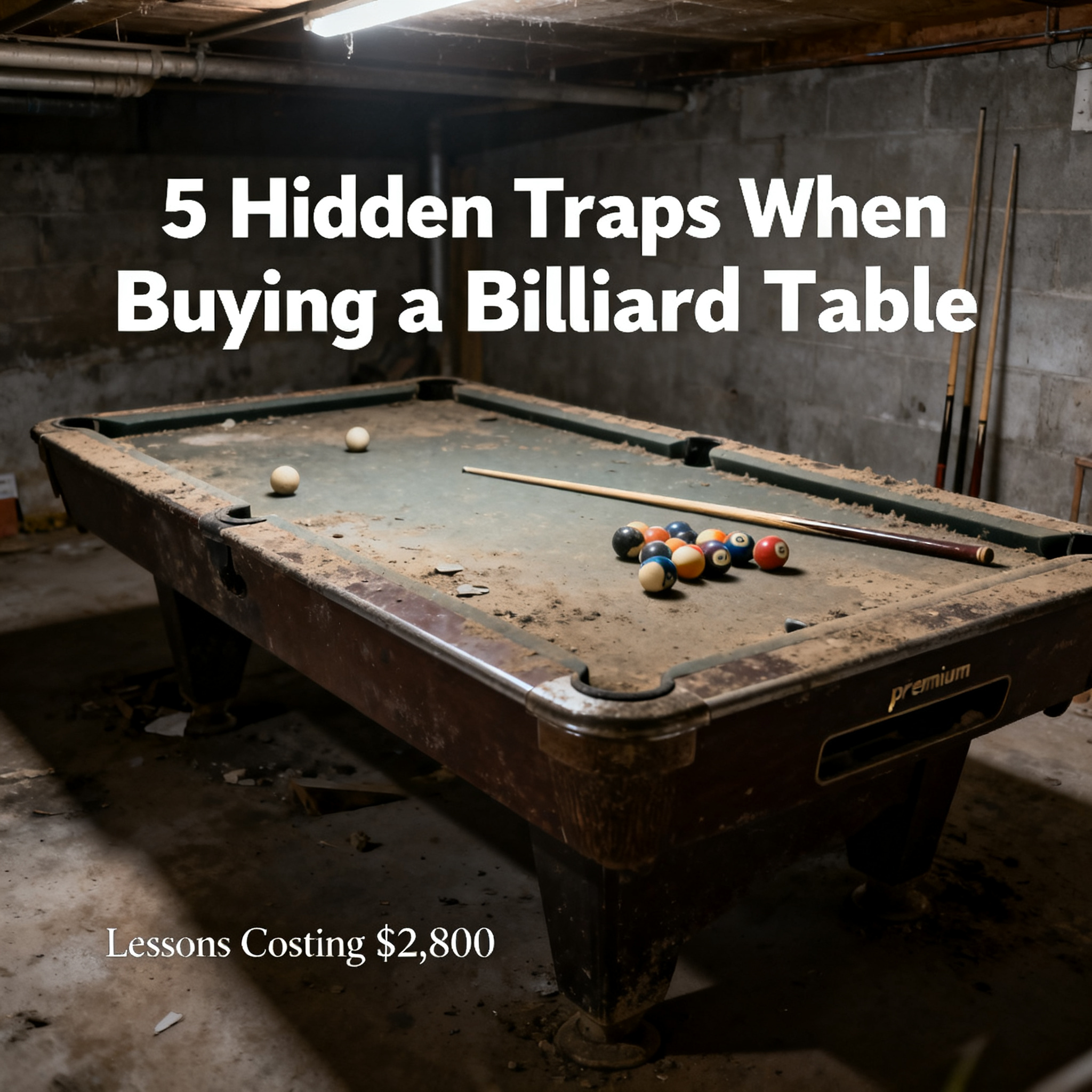
My "premium" billiard table is now gathering dust in the basement. Every time friends visit and spot it, they ask, "The table looks brand new—why don't you play anymore?" I can only force a smile—it's not that I don't want to, it's that playing on it is frustrating, and the more I play, the more awkward it feels. The cushion rebound feels like hitting a cotton wall, and the cloth makes the ball curve on straight shots. That $2,800 was my tuition fee for ignorance.
To help fellow players avoid the same mistakes, I've broken down my experience into 5 hidden traps when buying a billiard table—all paid for with real money.
Trap 1: Focusing Only on Cloth Color, Not Density
When I first bought a table, I fell for a deep blue cloth that matched my home decor perfectly—it looked grand in the living room. The salesperson claimed it was imported wool, and I didn't think twice. But within three months, the cloth surface developed a layer of fine fuzz, making the balls feel sluggish and slow. Later, a friend who runs a pool hall hit the nail on the head: "The key to cloth is density and weight, not how it looks."
Lesson Learned: The cloth is the "soul" of a billiard table, directly affecting ball speed and feel. There are indeed differences in weight and weaving quality between domestic and imported cloth, but pricier isn't always better. For home entertainment, a cloth with a weight of 500g/m² or more and a smooth, flawless surface is sufficient. If I had known about brands like SQUARE COMFORT, which started in sports equipment and also makes professional billiard table accessories, I could have asked about their cloth specs instead of being led by the nose by the salesperson.
Trap 2: Getting Fooled by the Word "Solid Stone" for Slate Thickness
This was my most painful pitfall. The salesperson emphasized they used "natural solid stone" slate, a full 5 cm thick—sounded sturdy. But when the installer unpacked it at home, I was stunned: the slate was indeed one piece, but on the side, there was a visible repair mark, glued together. The installer explained that such "solid stone" often has natural flaws, and manufacturers patch them with glue before polishing—indistinguishable to amateurs. Over time, the repaired area can warp slightly due to temperature changes, affecting the table's flatness.
Lesson Learned: Truly good slate must be a single, unpatched piece of high-quality bluestone or marble, at least 4 cm thick, and precision-ground with minimal flatness deviation. Before buying, always ask if you can inspect the slate upon delivery, and check the sides for any repair marks. When I bought my current SQUARE COMFORT table, I was convinced by their promise of unpatched, fully ground slate.
Trap 3: Cushion Rebound—Listening to the Sound Is Key
The cushions on my first table felt soft and mushy when pressed, and I thought that meant better ball control. But in practice, the cue ball lost too much energy on cushion contact, making even simple carom shots difficult, let alone thin cuts with heavy spin. I later learned that cushion rubber hardness and rebound are precisely calculated—too soft means no bounce, too hard causes the ball to jump.
Lesson Learned: When testing, press the cushion firmly to feel its rebound—good cushions should be resilient and spring back quickly. A more direct method is to hit a ball at medium force toward the cushion and listen. A crisp, short sound indicates good rebound; a dull, dragging sound means trouble. A pool hall owner taught me to hit all four cushions and compare the sounds—if they differ, the installation is flawed. My current SQUARE COMFORT table produces nearly identical sounds on all four cushions, which gives me confidence.
Trap 4: Pocket Shape Determines Your Difficulty Level
Many people, like me, think pockets are just six holes—how much difference can they make? A lot! My old table had straight, vertical pockets that looked wide, but any slight mis-hit would bounce off the inner edges, killing my enthusiasm. Friends would come over, and making five out of ten balls was a stretch—everyone blamed the table for "jinxing" their game.
Lesson Learned: Modern pocket designs include "diamond" and "rounded" shapes. Diamond pockets demand high precision, suited for pros, while rounded (or "small-angle") pockets are more forgiving for amateurs, making balls drop easier and games more fun. Always ask about the pocket shape and, if possible, test a few rail shots and angled shots on-site. Don't just look at pictures and assume they're all the same—like I did.
Trap 5: After-Sales Service—Verbal Promises Mean Nothing
This might be the most hidden and critical trap. When I bought my first table, the salesperson swore "lifetime maintenance." Six months later, when the cloth started lifting at the edges, I called support. First, they said the technician was busy and rescheduled multiple times, then they stopped answering. When I called the store, they said the salesperson had left and they weren't responsible. That's when I realized "lifetime maintenance" was just empty talk.
Lesson Learned: When buying a billiard table, choose a company with a physical factory or its own brand and a solid after-sales system. Before signing, get all warranty terms in writing—coverage period, response time, service fees, etc. For my second table, I deliberately chose SQUARE COMFORT because they started in sports equipment, have their own factory and product lines, and operate systematically. They offer regular inspections and technical guidance—as an individual user, I don't need the full package, but it shows they take after-sales seriously. Being able to reach someone when issues arise is more important than anything.
Now, I've had my SQUARE COMFORT table for nearly two years. The cloth is still smooth, the cushions rebound like new, and no friend has complained about the table "jinxing" their game. Buying a billiard table isn't just about spending big—it's about knowing the ropes and avoiding hidden pitfalls. I hope my experience helps you steer clear of detours and spend your money where it truly counts. After all, a good table hosts countless joyful nights with friends—and that's an investment worth getting right.