
The Ultimate Billiard Table Maintenance Guide: How to Keep It Looking Brand New After Three Years — My Daily Cleaning and Calibration Routine
My SQUARE COMFORT billiard table will turn three years old this June. Friends who come over often run their hands over the cloth and ask, "Did you just replace the felt?" The truth is, it's still the original one. In the end, a billiard table is 30% about use and 70% about maintenance. If you keep up with daily care, it can stay in top form for five or six years.
Today, I'm sharing the maintenance wisdom I've accumulated over these three years—from cloth care to cushion edges to slate calibration. These are all hands-on, practical tips that I hope will help those struggling with billiard table upkeep.
Cloth Dusting and Stain Removal: Don't Let Lint Become a Drag on Ball Roll
The cloth is the most delicate part of a billiard table and the most prone to showing dirt. Many players habitually wipe the cloth with a damp rag after a game—this is a big mistake. Moisture seeps into the wool fibers, and over time, the cloth loosens, making balls roll "heavy" and killing the speed.
My daily dusting routine is simple: a soft-bristle brush (never a hard plastic one), swept gently in the direction of the nap, from the cushion toward the pockets. Frequency depends on how much you play—I play about an hour daily, so I brush every day. Once a week, I vacuum on low power, keeping the nozzle about 1-2 centimeters above the cloth for best results, which lifts fine dust from the fiber roots.
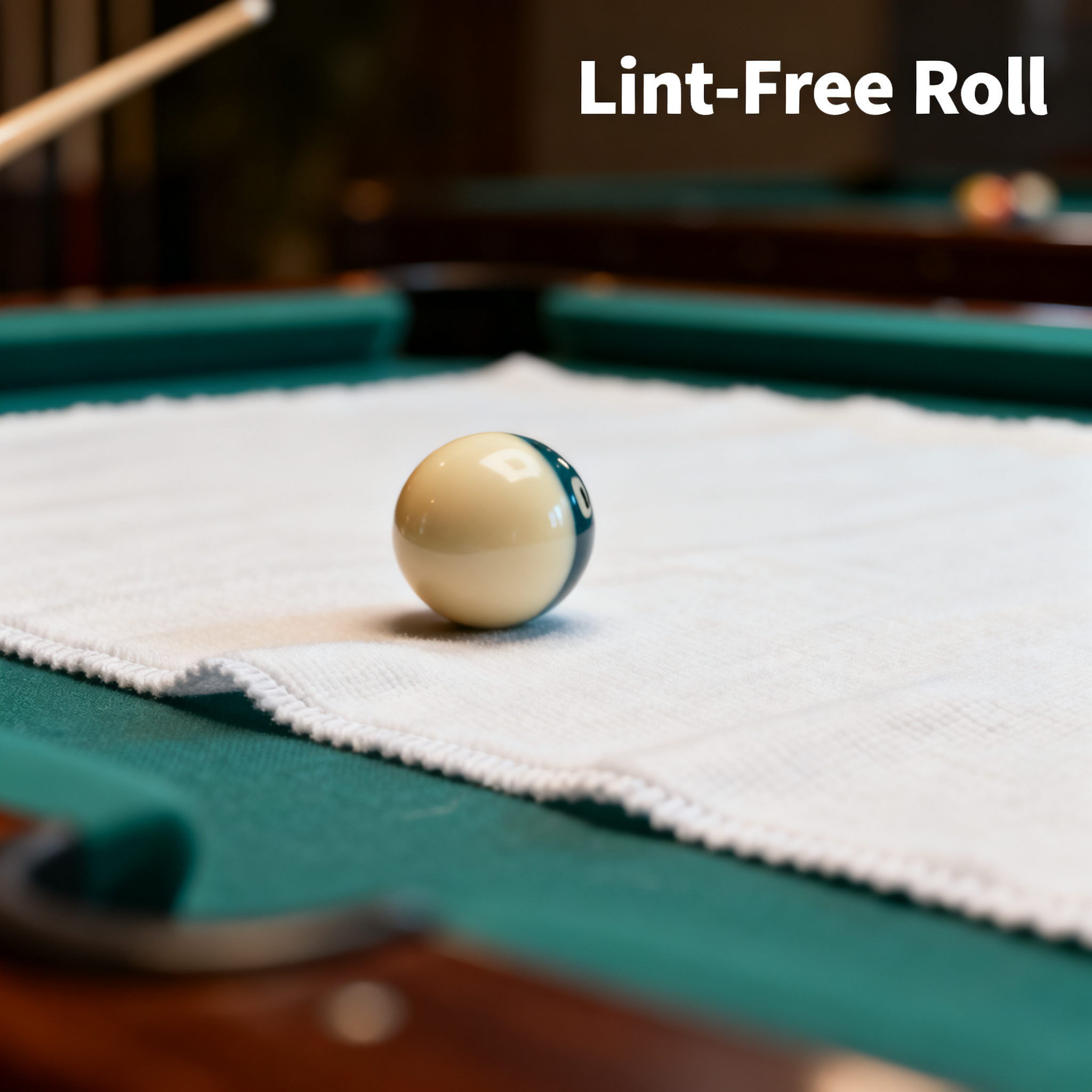
When it comes to stains, a crucial reminder: If you spill a drink on the cloth, treat it immediately—never let it dry. Last summer, at a gathering, a splash of cola landed near the middle pocket. I didn't think much of it at the time, but the next day, a light brown mark had set in. I used a slightly damp white towel (wrung until no water drips) to gently press, then blotted with a dry towel. Repeating this a few times faded it. Note: it's "press," not "wipe." Rubbing back and forth will disturb the nap, causing a slight drag on balls in that area.
Cushion and Pocket Inspection: Overlooked Details That Affect Rebound
Many people focus only on the cloth, ignoring the aging of the cushion rubber. The rubber strips have a lifespan, especially in humid southern climates where they harden and become brittle, noticeably reducing rebound. My check method: place a ball vertically against the cushion, release it, and observe the rebound. If the ball bounces back a noticeably shorter distance or the sound is dull, it's time to consider replacing the rubber.
Pocket inspection is simpler. Each month, I run my hand along the leather pocket liners to check for peeling or worn edges. Once the leather starts to fray, balls get "bitten" on entry, affecting smooth drops. My SQUARE COMFORT's pocket leather has held up well—only one minor peel in three years, which I fixed with specialized leather adhesive.
Here's a tip from experience: Address cushion and pocket issues early—don't wait until you clearly feel something wrong during play. Rubber aging and leather wear are gradual; by the time you notice a difference, the cloth edges may already be damaged.
Regular Slate Leveling: The "Invisible Maintenance" Many Overlook
The core of a billiard table is the slate. It can subtly deform with temperature and humidity changes, especially in homes with underfloor heating or near sun-facing balconies, causing the playing surface to drift out of level between seasons. I calibrate the level twice a year, in spring and autumn. The method isn't complex: place a spirit level at the four corners and the midpoints between pockets, check the bubble, and adjust the leveling screws on whichever corner is low.
The key to calibration is "fine-tuning." Never turn a screw more than half a turn at a time. After each adjustment, recheck with the level. In my first year, I didn't know this and tried to fix it all at once, over-tightening and turning the table into a seesaw—balls veered off straight lines. It took me two hours to correct.
If your table is over two years old, also check the leg screws for looseness. SQUARE COMFORT does this well—they offer an annual free inspection service where technicians check the level, pockets, and cushions for you, saving a lot of hassle. Still, it's wise to master basic calibration yourself, as you can't always wait for a technician.
How Often to Maintain? It Depends on Frequency and Environment
Many ask how often to maintain their table. There's no one-size-fits-all answer—it depends on two factors: play frequency and room humidity.
- High play frequency (2+ hours daily): Dust the cloth daily, deep clean (vacuum + spot stain treatment) weekly, check cushions monthly, calibrate level every six months.
- Moderate play frequency (2-3 times weekly): Dust after each session, deep clean every two weeks, check cushions quarterly, calibrate level annually.
- High humidity environments (southern monsoon regions, coastal cities): Place a dehumidifier in the room, keeping humidity between 50%-60%. Excessive moisture not only shortens cushion rubber life but also causes the cloth to absorb moisture and swell, making balls roll sluggishly.
I'm based in Guangzhou, where walls "sweat" during the March-April monsoon. Besides a dehumidifier, I place two large desiccant packs under the table cover—it works well.
Essential Maintenance Tools and Common Mistakes
Finally, here are the affordable, practical tools I've found worth buying over these three years:
- Soft-bristle brush (cloth-specific, 20-30 RMB)
- Cloth vacuum (if budget allows, get a dedicated billiard table vacuum—better airflow than a household one)
- Spirit level (choose one with a magnetic base for easy placement on the slate edge)
- Microfiber towels (keep two—one dry, one damp—don't mix them)
- Cloth-specific cleaner (only for stubborn stains; not needed for daily use)
Common mistakes to avoid:
- Don't use wax or polish like Pledge on the cloth—it clogs the wool fibers' pores, making the cloth slick and balls "float," losing all control.
- Don't leave heavy objects on the table for long periods—some people pile clutter on it, which can warp the slate over time.
- Don't neglect the cover—always put the cover on when not in use to protect against dust, moisture, and cat scratches. A cover costing a few dozen RMB can save you from replacing the cloth years later.
After three years, what I appreciate most about this SQUARE COMFORT table is that it hasn't demanded much worry. A quality product, paired with consistent maintenance, keeps it performing at its best. If your table is due for some care, try the methods above. Stick with them for six months, and you'll notice the smoothness of ball roll and the crispness of cushion rebound return.