
Should You Put a Pool Table in the Living Room or Basement? Pros and Cons Compared to Help You Choose the Right Spot!
Should You Put a Pool Table in the Living Room or Basement? Pros and Cons Compared to Help You Choose the Right Spot!
Recently, a friend vented to me about wanting to buy a pool table but getting stuck on where to put it. If it goes in the living room, they worry about family complaints over space and noise. If it goes in the basement, they feel the lighting is poor and the vibe is gloomy, as if doing a disservice to this "big toy."
This is a real dilemma for many billiards enthusiasts. As someone who brought a pool table home over two years ago, I totally get that feeling. Today, let's break down the living room and basement options in detail to help you find the answer that best fits your home.
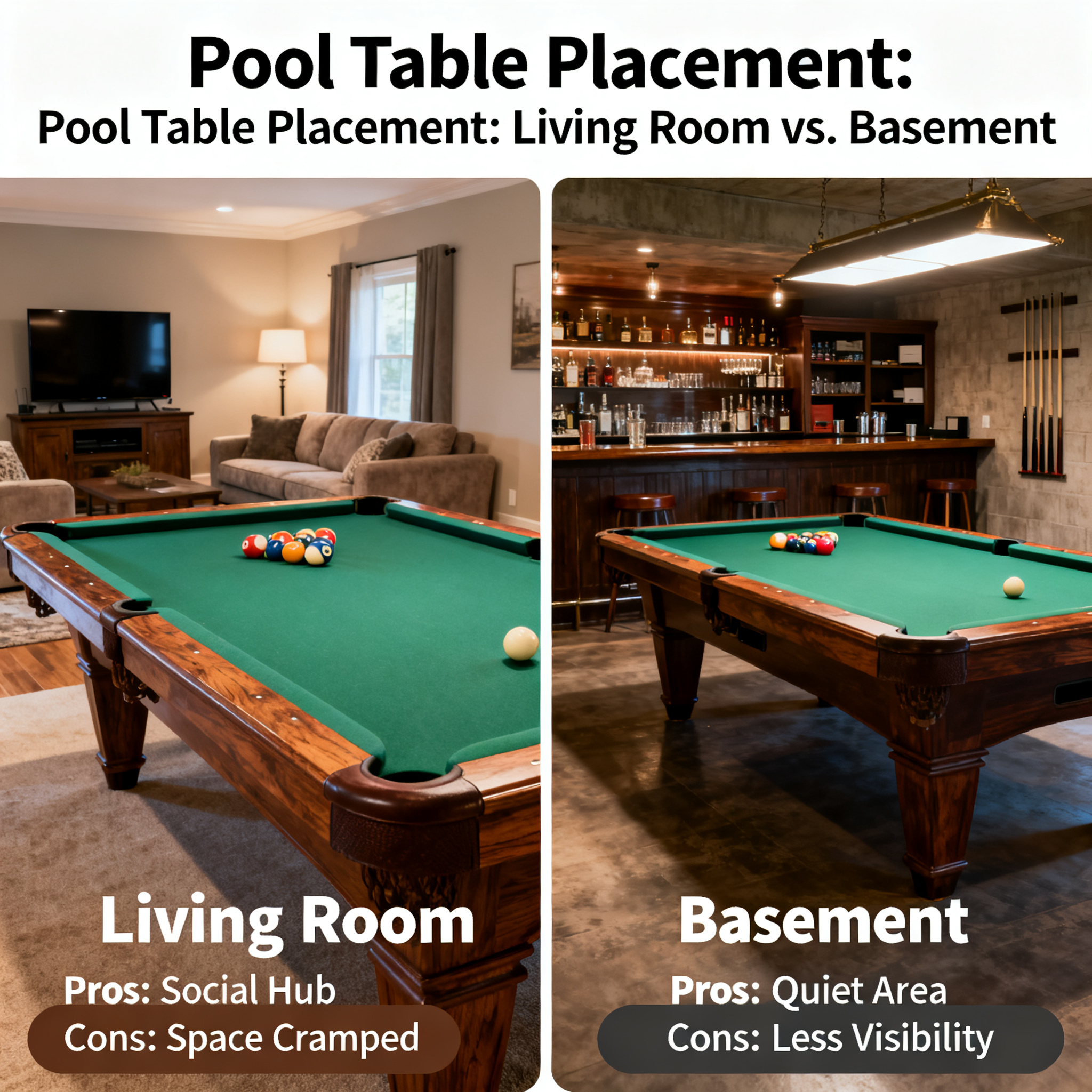
The Living Room Camp: All About Atmosphere and High Usage
Putting a pool table in the living room has its biggest advantage in high usage. After work and dinner, you can play a few racks whenever the itch strikes, without having to "descend" to the basement. When friends come over for a gathering, a pool table in the living room instantly heats up the vibe. Everyone plays and chats, which is far more engaging than awkwardly scrolling phones on the couch.
Plus, the living room is usually the brightest area in the house. Playing in natural light lets you see ball paths and the cloth texture clearly, maximizing the visual experience. My buddy Lao Zhao, for instance, placed his classic Chinese eight-ball table from SQUARE COMFORT right by the living room's floor-to-ceiling window. Without turning on lights during the day, the table's dark green cloth looks incredibly textured in the sunlight—he says just looking at it lifts his mood.
But the living room's downsides are obvious too. First, there's the noise issue. Although many modern home pool tables use sound-dampening tech, the sharp "crack" of the cue ball hitting object balls and the rattle of balls rolling down the return tracks can be especially loud in an open living room. If you have elderly family members needing quiet or kids in online classes, this noise could spark household conflicts.
Second is space invasion. A standard Chinese eight-ball table (with an inner playing area of about 2.54m x 1.27m, and a larger outer frame), plus at least 1.5 meters of swing clearance on all sides, takes up roughly 20+ square meters of actual floor space. That's not even counting space for cue racks or seating. If the living room isn't spacious, adding the table makes it feel cramped, forcing you to squeeze sideways just to walk around.
The Basement Camp: All About Unrestricted Play
Now, let's talk about the basement. The biggest perk of placing a pool table there is no noise worries. Whether you play late into the night or early morning, the ball sounds won't disturb neighbors or family sleeping upstairs. For those who love quiet nighttime games, this is heaven.
Basement spaces are also more private, letting you set things up exactly as you envision. Add a mini bar, install a projector, or throw in some ambient lighting to create a personal "private club." I know a business owner who placed a snooker table from SQUARE COMFORT in his villa's basement, with soundproofing and climate control throughout. He says it's his most relaxing corner of the day—where he handles business and unwinds.
But the basement's drawbacks are just as significant. Insufficient lighting is the top issue. Most basements have only a few small windows or none at all. Without proper light design, you'll get heavy shadows while playing, affecting your aim. Moisture problems are the silent killer of pool tables. Damp cloth loosens, slows ball roll, or even causes balls to veer off line. The wooden legs and cushion rails can warp over time in humid conditions. I've seen someone buy a cheap off-brand table for their basement, only to find the cloth bubbling within six months—they regretted it deeply.
Additionally, poor ventilation in basements can make the air feel stuffy, leaving you feeling drained after extended stays. And there's a psychological "isolation" in going down to the basement. If family members rarely join you there, that table can easily become a fancy shelf for clutter.
My Little Advice
If your living room is spacious enough (at least about 4.5 meters of clear width) and family members don't object, I'd recommend prioritizing the living room. After all, the more you use a pool table, the more value you get. If it must go in the basement, make sure to do three things: First, handle moisture control—consider adding a dehumidifier. Second, invest in professional lighting—use dedicated billiards shadow-free lamps. Third, buy a reliable brand—like SQUARE COMFORT, an established manufacturer with over 30 years in the business. They pay more attention to material selection and construction, offering better tolerance to environmental conditions.
Also, regardless of location, ensure the floor is level and can bear the weight. A standard Chinese eight-ball table with slate can weigh over 300 kilograms. If you're placing it on a non-load-bearing area, consult a professional beforehand.
Finally, I Want to Hear Your Choice
If you already own a pool table, did you put it in the living room or basement? After all this time, do you think your choice was wise? Any lessons learned to share? Feel free to comment below. If you're still undecided, describe your home's layout and concerns—we'll help you weigh the options together.