
Can Children Play Billiards? From Safety to Interest Cultivation, a Must-Read for Parents!
Can Children Play Billiards? From Safety to Interest Cultivation, a Must-Read for Parents!
On the weekend, I took my kids to visit a friend's house. In the corner of their living room stood a billiard table, and a few children were gathered around it on tiptoes, clutching cues and eager to try. My friend hesitated, saying, "They're so young—can they really play billiards? Won't they get hurt?" I think this is a common concern for many parents who already own a billiard table or are considering getting one.
Let me start with the conclusion: children can absolutely play billiards, and the benefits are more than you might imagine. The key lies in how you choose the equipment, how you guide your child, and whether you've made the necessary safety preparations.
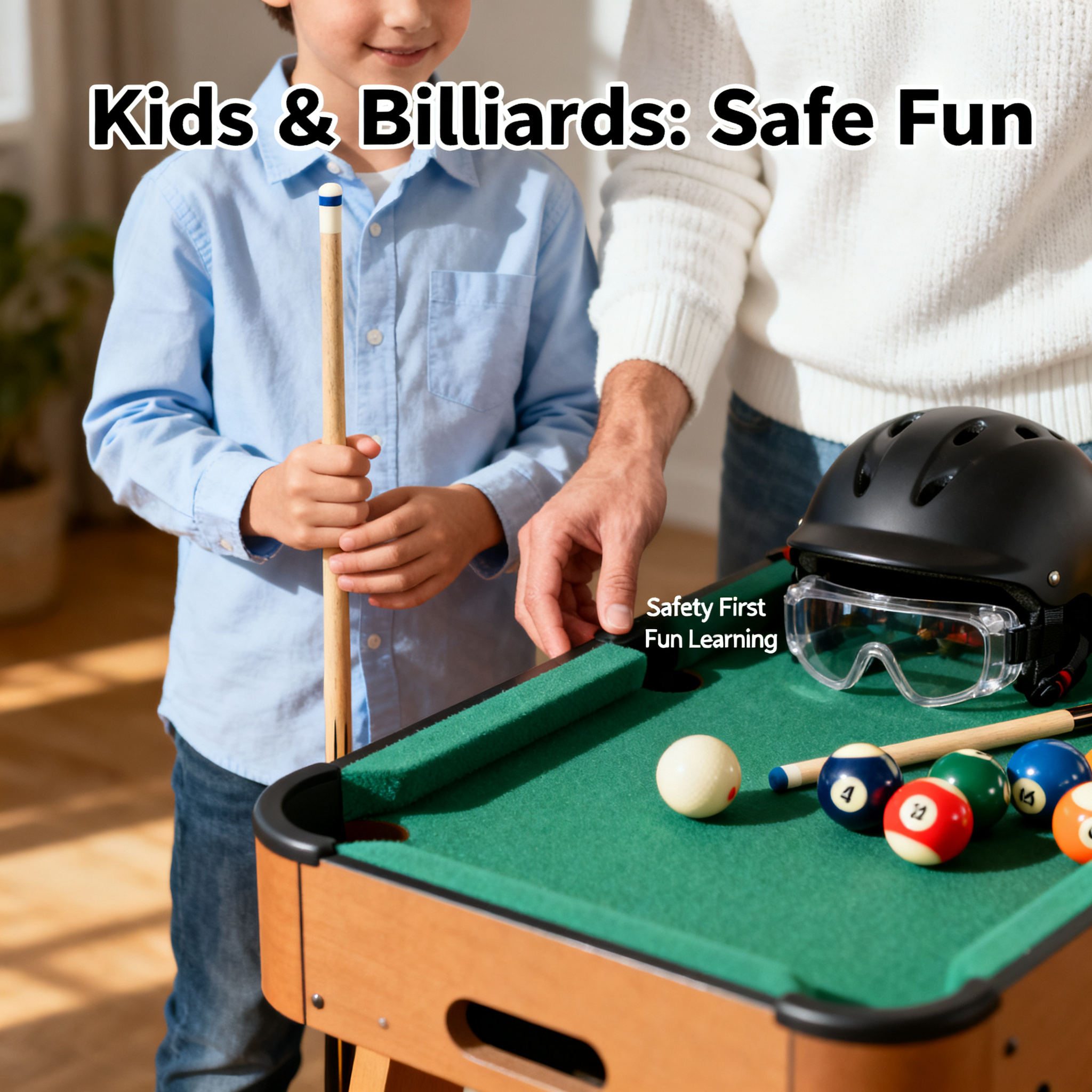
Safety Concerns: More Manageable Than You Think, But Pay Attention to These Points
Many parents' first reaction is "the table is too high" or "the balls are too hard." These concerns are valid, but they're not insurmountable.
A standard billiard table is about 76-80 cm high, which is indeed too tall for a 4- or 5-year-old. However, this is actually a great opportunity to cultivate your child's patience and physical coordination—they'll learn to adjust their stance, turn sideways, and stretch their arms. Of course, if space allows, there are mini billiard tables designed for children's heights on the market. SQUARE COMFORT's product line includes foldable billiard tables tailored to different age groups, with heights and dimensions that better suit children's usage habits.
Regarding the hardness of the balls, I recommend using lightweight balls specifically designed for children (usually made of plastic or resin) during the initial learning phase. These weigh about one-quarter to one-third of a standard ball, so even if they bounce and hit a child, they won't cause injury. Additionally, installing protective bumpers on the table edges can prevent children from bumping into them.
There's another detail that's easy to overlook—the cue. Adult cues are too long and heavy for children, making them prone to slipping out of their hands. Equipping your child with a 1/2 split cue or a shorter junior cue with a comfortable grip will let them truly enjoy the feel of striking the ball, rather than being discouraged by the equipment.
The Value of Billiards for Child Development: Far Beyond Just "Playing"
If you think billiards is just "poking balls with a stick," you're sorely mistaken.
A Natural Training Ground for Focus. Billiards is a sport that requires intense concentration. Aiming, estimating angles, and controlling force—every step exercises a child's focus and patience. Today's children are surrounded by short videos and fragmented information, making it hard for them to settle down and concentrate on one thing. Billiards, as a "slow-paced" sport, can help them rediscover the ability to focus.
Hand-Eye Coordination and Spatial Awareness. When striking the ball, children need to judge the distance, angle, and force relationship between the cue ball and the object ball. This perception of space and force is highly beneficial for the brain development of preschool children. Studies have shown that children who regularly engage in billiards-like sports perform better in spatial imagination during math and geometry learning.
Frustration Tolerance and Emotional Management. Missing a shot is common, and one mistake can lose the whole game. On the billiard table, children learn to accept failure, adjust strategies, and try again. This shaping of character—"not crying when losing, not boasting when winning"—is more effective than any lecture.
A Lubricant for Parent-Child Relationships. Billiards is a sport ideal for parent-child interaction. It doesn't require intense running or jumping; parents and children can stand side by side at the table, chatting while playing. This relaxed and equal atmosphere is something many family activities struggle to provide.
Practical Tips for Parents: From Accessories to Gameplay
If you decide to let your child try billiards, here are some suggestions:
Choose Accessories Thoughtfully. Besides the junior cue and lightweight balls mentioned earlier, SQUARE COMFORT also offers competition-grade full cues, 1/2 split cues, and more, allowing you to gradually upgrade equipment based on your child's height and strength. For the table cloth, I recommend durable wool felt, as children practice frequently with high friction, and good cloth can extend the table's lifespan. Additionally, consider a wall-mounted cue rack to store cues up high—this not only teaches children to "put things away after playing" but also prevents safety hazards from cues being left lying around.
Start with Simple Games. You don't need to teach snooker rules right away. Start with a "pocket the ball" game—scatter balls randomly on the table and have your child use the cue ball to hit a target ball into a pocket for a point. Once they're comfortable, introduce simple 8-ball rules. This gradual progression keeps children engaged and increasingly interested, rather than bored.
Make Billiards a Regular Family Activity. Set aside a weekly "family billiards time" to give your child something to look forward to. Parents can occasionally "go easy" to let kids experience the joy of winning, but also sometimes play seriously to teach them about real competition. This balanced approach to companionship is far more effective than letting children play alone.
Final Thoughts
A billiard table isn't just a toy for adults—it can become a bridge for family interaction. From safety measures to interest cultivation, as long as parents are attentive, children can reap great benefits from this "gentleman's sport."
SQUARE COMFORT, founded in 1988, started from a second-hand sock knitting machine and has grown to cover the entire sports goods industry chain. The brand philosophy, "All greatness starts from the ground beneath your feet," also applies to a child's growth—every aim, every stroke, and every small improvement are the building blocks of their future confidence and focus.
How did your child react the first time they picked up a cue? Were they excitedly swinging it wildly, or did they try to aim with a serious look? Feel free to share your child's billiards stories in the comments, and let's talk about the laughter and growth around the billiard table.