
Is Thicker Flooring Always Better? The Hidden Secrets of Sports Venue Flooring Thickness
Is Thicker Flooring Always Better? The Hidden Secrets of Sports Venue Flooring Thickness
When it comes to purchasing sports venue flooring, I've seen too many people fall into the same trap: believing that thicker flooring means better quality, softer underfoot, and more reliable. Some even go as far as specifying "thickness must not be less than X millimeters" in tender documents, as if thickness were the sole benchmark for flooring quality.
But is that really the case?
A friend who runs a badminton hall once complained to me that he spent a fortune on extra-thick flooring, only to have players say the court felt "mushy"—slow off the mark and harder on the knees during smashes. After switching to a slightly thinner professional sports flooring, all those issues disappeared.
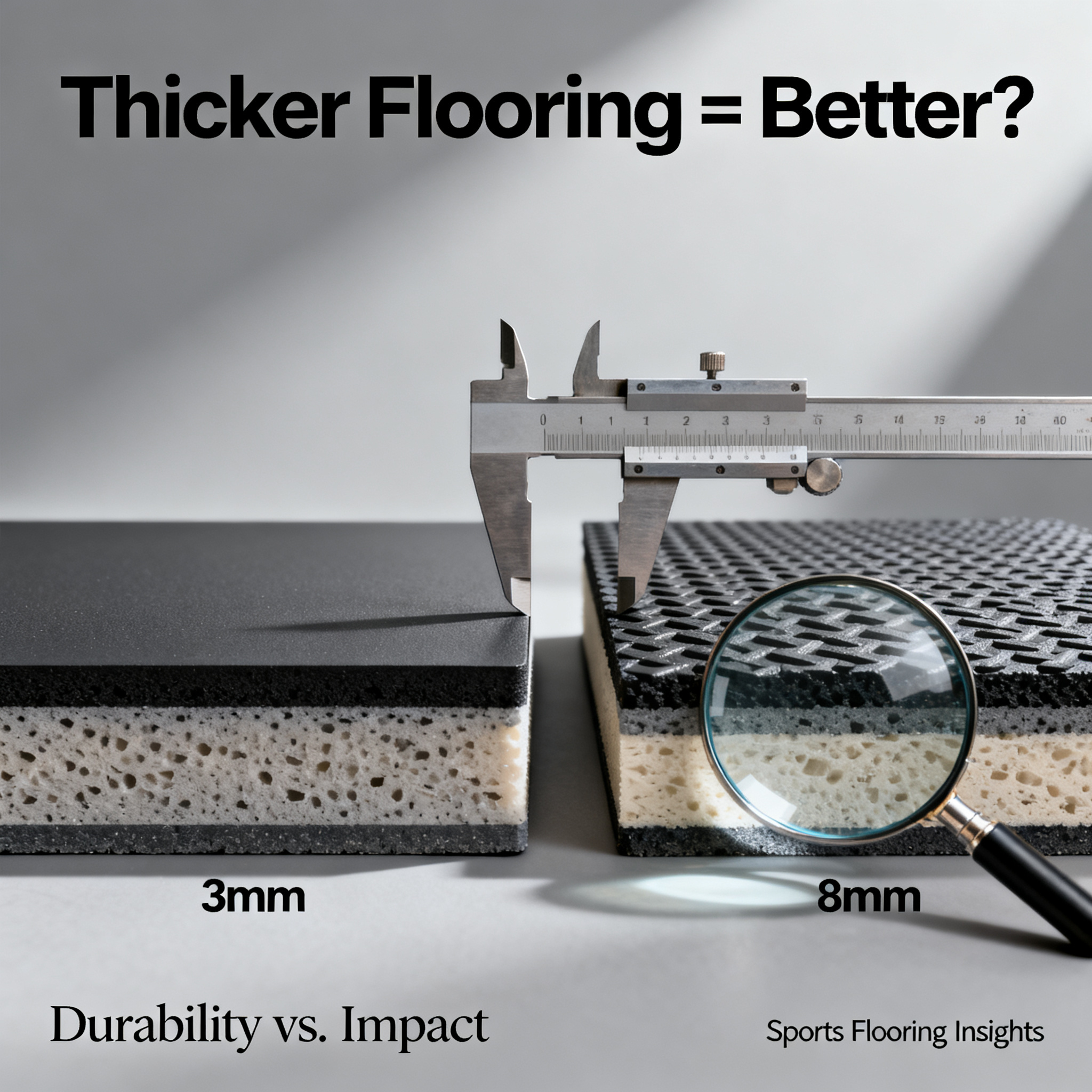
Most people don't understand the logic behind this.
Thickness Isn't a One-Size-Fits-All Solution—Matching Is Key
Different sports have vastly different requirements for shock absorption, rebound, and stability. Flooring thickness isn't a simple "thicker is better" choice; it's a complex equation that needs to match the specific demands of each sport.
High-impact sports like basketball and badminton need "just-right cushioning" combined with "stable support." Overly thick flooring absorbs too much energy, causing players to start slowly and change direction sluggishly—like running on sand, which is tiring and inefficient. On the other hand, overly thin flooring offers almost no effective shock absorption, leading to long-term wear and tear on knees and ankles. Professional sports flooring is designed with a multi-layer composite structure to balance performance: the surface layer handles slip resistance and durability, the foam layer provides energy return, and the base layer ensures stability. Each layer plays an irreplaceable role.
Dance studios, however, are a completely different story. Dancers need flooring that protects joints during jumps and landings without compromising the precise feel required for turns and pointe work. Flooring that's too thick makes dancers feel "unstable," especially for ballet pointe work, which is extremely sensitive to surface hardness. That's why professional dance flooring often uses a "double-layer structure"—a cushioned base plus a specialized dance-grade PVC top layer—with carefully controlled thickness.
Gym strength and cardio zones also have their own preferences. Strength areas need a firmer surface to support heavy equipment, as overly thick flooring can make machines unstable. Cardio class areas, however, require moderate elasticity to protect joints during jumps.
SQUARE COMFORT has encountered countless cases where "thickness-only" thinking led to costly mistakes. Their engineering team once provided a flooring solution for a multi-purpose sports facility that included both a badminton area and a dance studio. Initially, the buyer insisted on using extra-thick flooring throughout, thinking it would be a "one-and-done" solution. But SQUARE COMFORT's technicians conducted on-site surveys and motion simulations, ultimately recommending a zoned approach: medium-thickness, high-density rebound flooring for the badminton area, and slightly thinner professional dance flooring with precise surface friction for the studio. After the facility opened, users in both zones gave rave reviews.
Too Thick or Too Thin—Both Are Hidden Dangers
Pushing flooring thickness to either extreme brings its own set of problems.
The risks of overly thick flooring often surface only after extended use. Beyond the performance decline mentioned earlier, overly thick flooring is more prone to permanent compression deformation under sustained heavy loads. Imagine a table tennis hall where umpire chairs and score tables sit in fixed positions—if the flooring is too thick, those spots will develop noticeable indentations that are nearly impossible to reverse. Additionally, thicker flooring is harder to bond to the subfloor, increasing the risk of edge curling and bubbling.
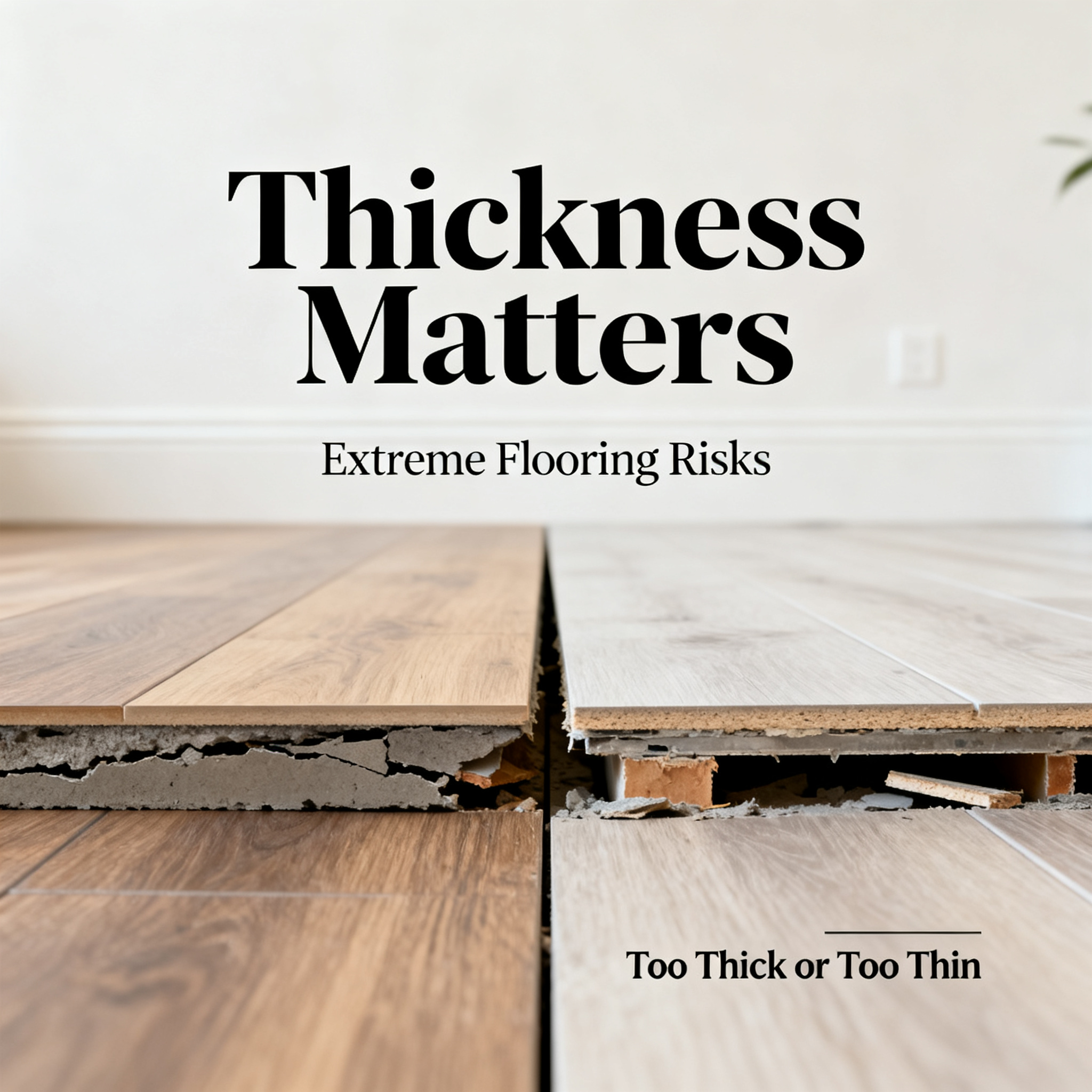
The problems with overly thin flooring are more immediate. Insufficient cushioning means every jump and landing sends impact forces directly to bones and joints. For athletes or dance students training several hours a day, this chronic stress accumulates over time. Moreover, thin flooring demands an extremely level subfloor—even minor imperfections in the base will telegraph through to the surface, affecting both performance and aesthetics.
Recommended Thickness by Application—Stop Guessing
Through years of market validation and sports science analysis, the industry has developed relatively mature thickness guidelines:
- Small-ball venues like badminton, table tennis, and volleyball: Recommended thickness is 4.5mm–6.0mm. This range ensures good ball rebound while providing adequate joint protection.
- High-intensity venues like basketball courts: Recommended thickness is 6.0mm–8.0mm. Basketball involves greater impact forces, requiring more energy absorption without compromising stability during sudden stops and starts.
- Dance studios (non-professional ballet): Recommended thickness is 3.0mm–4.5mm, paired with a specialized dance flooring surface to balance slip resistance and flexibility.
- Gym strength areas: Recommended thickness is 3.0mm–5.0mm, with a focus on durability and compression resistance.
- Office or light-activity spaces: 2.0mm–3.0mm commercial-grade flooring is sufficient for everyday needs.
Of course, these are just reference points. A truly professional solution must also consider the subfloor condition, usage frequency, and budget. That's why brands like SQUARE COMFORT, with over three decades of manufacturing expertise, insist on providing customized flooring solutions for every project rather than simply "selling you a roll of flooring."
From 1988 to today, SQUARE COMFORT's brand philosophy has remained: "All greatness begins from the ground up." They believe that a truly great product isn't the most impressive number on a spec sheet—it's the flooring that, once installed, provides the right support and protection for every user. Whether it's a precise drop shot in a table tennis hall or a perfect pirouette in a dance studio, the flooring beneath your feet works quietly to make it happen.
So, the next time someone asks you, "Isn't thicker flooring better?" you can tell them: Choosing flooring is never about picking the thickest—it's about picking the right one. What sport is your venue for? What kind of protection do your users need? Those are the real answers to the thickness question.
If you're struggling with your venue's flooring, take a moment to think through these questions before making a decision. After all, what's underfoot deserves careful consideration.