
What's the Difference Between Gym Flooring and Dance Flooring? Don't Mix Them Up
Have you ever seen someone lay leftover gym flooring directly into a dance studio, only to have students start feeling ankle discomfort after two weeks of classes? Or someone install dance flooring in a weightlifting area, and after a barbell drop, the surface gets dented? Where's the problem? It's not that the flooring is of poor quality—it's that it's being used in the wrong place.
Many people think, "Isn't flooring just PVC rolls? How different can they be?" In reality, while gym flooring and dance flooring may both look like soft surfaces, their performance logic is completely different. Mixing them not only compromises the workout experience but can also pose safety risks. Today, let's clear this up.
First, let's understand: What are the fundamental differences in flooring requirements between a gym and a dance studio?
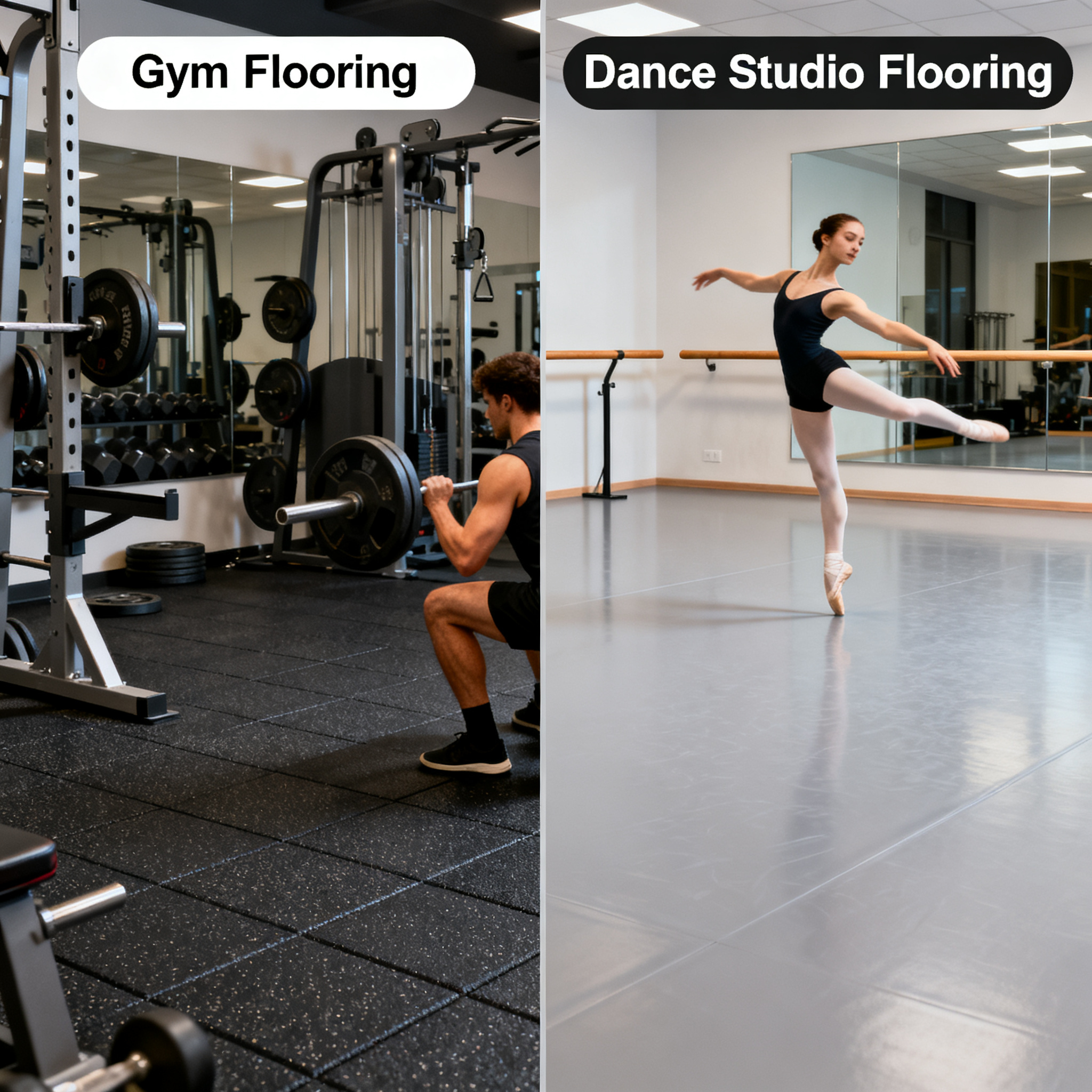
The core scenarios in a gym are strength training and equipment areas. Every day, barbell plates hit the ground, dumbbells drop, treadmills vibrate at high frequency, and equipment moves with friction. The floor must withstand high impact, high load, and high wear. So, the key indicators for gym flooring are compressive strength, impact resistance, and abrasion resistance. A common practice is to use PVC sports flooring with a thickness of 4.5mm or more, or directly lay rubber mats, to ensure heavy objects don't damage the floor while buffering vibrations to protect the subfloor and joints.
Dance studios, on the other hand—think ballet, modern, Latin, or hip-hop—require dancers to perform numerous jumps, spins, slides, and squats. The floor needs to address these pain points: non-slip but not sticky, elastic but not energy-absorbing, smooth but not hard. Dance flooring typically requires a specially textured surface with a friction coefficient between 0.4 and 0.6. Too slippery leads to falls; too sticky can cause knee and ankle sprains. Additionally, dance flooring needs a moderate cushioning layer to disperse the impact on knee and ankle joints when dancers land from jumps.
The consequences of mixing are more severe than you think
If you lay gym flooring in a dance studio, the most immediate issue is the floor feels too hard. Gym flooring is typically dense to resist compression, offering less rebound than dance flooring. When dancers perform continuous jumps, their knees bear greater reaction forces, which over time can lead to patellar tendinitis or Achilles tendinitis. Moreover, gym flooring surfaces are often matte and highly slip-resistant, with greater friction. When dancers execute spins, their toes may "catch," disrupting fluidity and potentially causing ankle injuries from sudden resistance.
Conversely, laying dance flooring in a gym creates even more obvious problems. Dance flooring has a softer elastic layer that can't withstand the impact of barbell plates dropping from heights; dents and damage will appear quickly. Worse, dance flooring surfaces have finer textures. If sweat or water spills in the equipment area, slip resistance drops significantly, making it easy for trainees to slip while carrying barbell plates—this is no joke.
How to choose? Matching by scenario is key
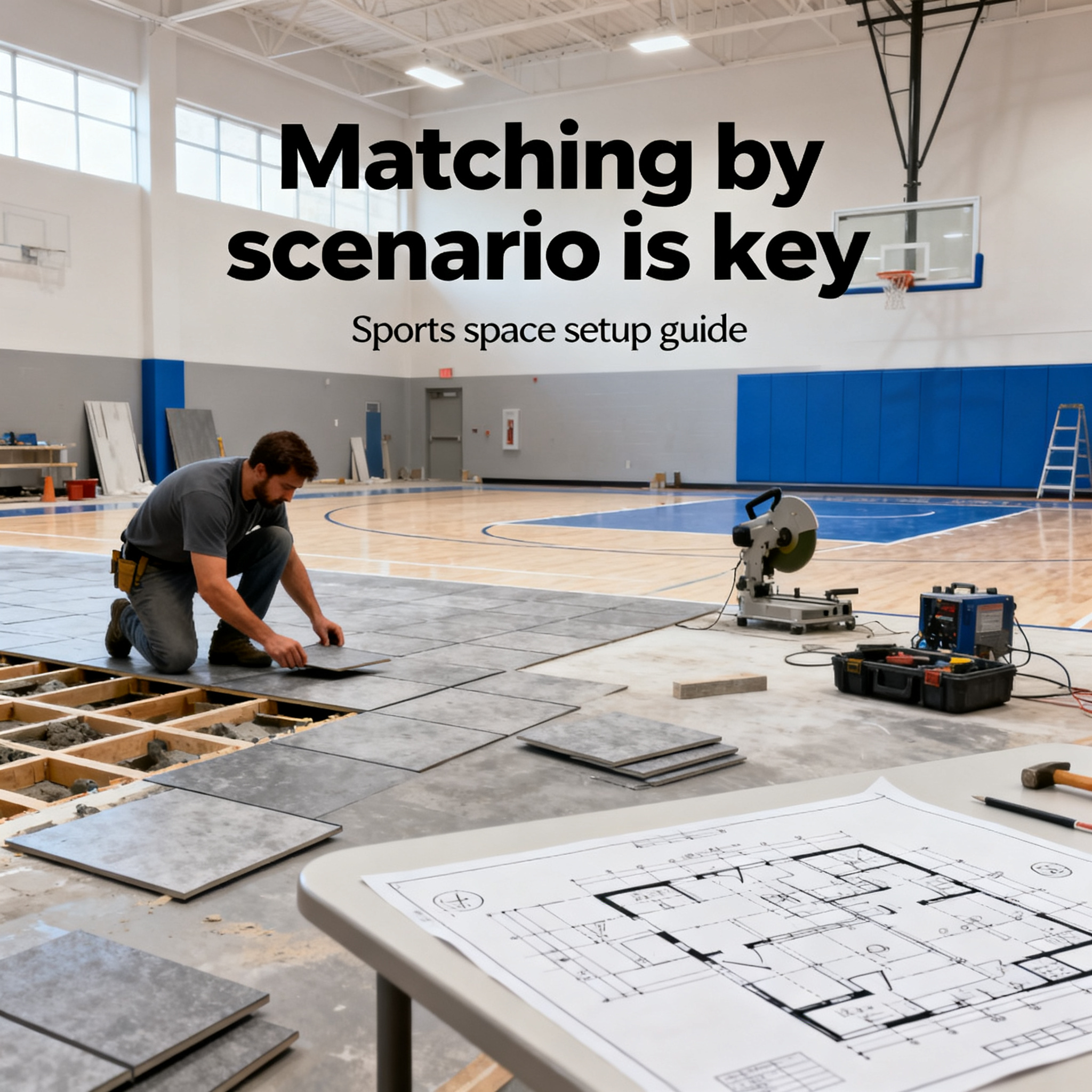
If you're setting up or renovating a sports space, the first step isn't to rush into buying flooring—it's to define the primary use of the space. For a pure dance studio, prioritize dance-specific PVC sports flooring with a thickness between 3mm and 5mm, a micro-textured surface, and ideally a slight foam layer. If you run a multi-purpose gym, opt for thick rubber mats or high-density PVC sports flooring in the strength area. For cardio zones, you can reduce hardness slightly, but don't skimp on the wear layer.
You might ask: "My facility is multi-use—dance classes today, fitness training tomorrow. What should I choose?" In such cases, consider zoning: lay different performance flooring in dance and strength areas, separated visually with color or transition strips. This ensures safety and adds visual depth to the space.
An easily overlooked detail: Thicker isn't always better
Many buyers mistakenly think thicker flooring is more premium. In fact, thickness and performance aren't directly correlated. If dance flooring is too thick, it feels "muffled," hindering spins; if gym flooring is too thick, equipment placement may feel unstable. What matters is the flooring's density, foam layer structure, and surface treatment process. For example, SQUARE COMFORT's PVC sports flooring has clear product lines for different sports scenarios, with distinct differences in formulation and structure between dance and fitness series—not just a color change. This is why professional venues often prefer brands like SQUARE COMFORT with clear scenario-based product systems. After all, flooring is laid for years; if problems arise and you need to redo it, the cost far exceeds any initial savings.
A final tip: Don't make "cheap" your only criterion
Flooring is a classic "hidden investment." When first laid, differences aren't visible, but after six months or a year, issues gradually surface—bubbling, delamination, surface whitening, seam cracking. These problems often relate to the flooring's quality and whether you chose the right type. SQUARE COMFORT, since registering its trademark in 2012, has emphasized "All greatness starts from the ground." This saying is especially apt for sports flooring. The ground is the foundation of exercise; if the foundation fails, movements and training above it are compromised.
So, next time someone asks, "Can gym flooring and dance flooring be used interchangeably?" You can tell them directly: You can buy it, but don't lay it in the wrong place. Choosing flooring by scenario isn't being fussy—it's being responsible to athletes. If you're selecting flooring for your facility, start with a checklist: What activities does this space primarily host daily? How frequently is it used? Is there a risk of equipment drops? Once you've thought through these, then look at product specs, and you won't be misled by flashy marketing.