
PVC Flooring vs Rubber Flooring: Who Reigns Supreme in Sports Venues?
PVC Flooring vs Rubber Flooring: Who Reigns Supreme in Sports Venues?
In sports stadiums, dance studios, kindergartens, and even office buildings, the choice of flooring is often underestimated. But those in the know understand that the difference in flooring can determine an athlete's knee longevity, a dancer's spin performance, or even the outcome of a game. PVC flooring and rubber flooring are the two most common sports surface solutions on the market, with supporters on both sides fiercely debating their merits. Today, we'll thoroughly dissect these two options from five dimensions: price, performance, lifespan, environmental friendliness, and maintenance.
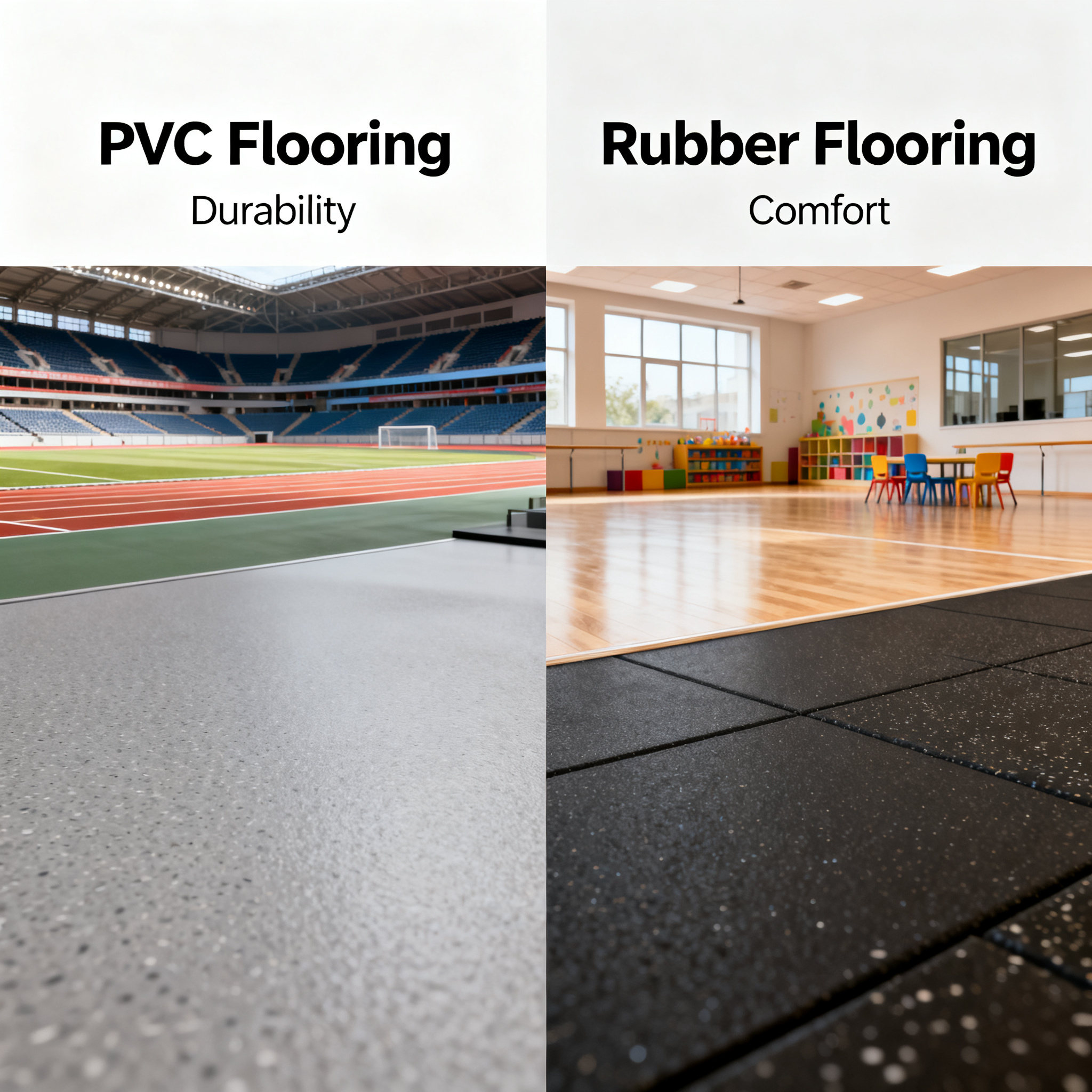
Price: The First Budget Showdown
Price is often the first hurdle in decision-making. PVC flooring typically features a multi-layer composite structure, with high industrial production efficiency and relatively controllable costs. Market prices generally range from tens to two hundred yuan per square meter, depending on thickness and texture craftsmanship. Rubber flooring, on the other hand, commands higher prices due to the cost of natural or synthetic rubber raw materials and higher production energy consumption, typically costing 30% to 50% more than PVC, sometimes even double.
For example: a standard badminton court covers about 100 square meters. Choosing PVC flooring might cost a few thousand yuan, while rubber flooring could easily exceed ten thousand. But does cheaper mean more cost-effective? Let's dive deeper.
Performance: The Battle of Elasticity, Friction, and Feel
Performance is the core competitiveness of flooring. PVC flooring's advantage lies in the comprehensive tuning capability brought by its "multi-layer structure"—the wear layer provides scratch resistance, the foam layer offers cushioning, and the stability layer ensures flatness. In SQUARE COMFORT's project cases, numerous table tennis and badminton halls opt for PVC flooring precisely because of its moderate surface friction coefficient, which ensures no slipping during sudden stops and starts while preventing ankle twists from excessive friction.
Rubber flooring excels in "solid elasticity." Its rebound performance is closer to natural rubber tracks, offering a softer feel that reduces joint stress in spaces requiring prolonged standing, such as dance studios and gym strength areas. However, softness also means slightly slower energy feedback, and some players in basketball or volleyball, which require explosive jumps, may feel a "loss of power."
Lifespan: The Test of Time
In terms of lifespan, both have their merits. High-quality PVC flooring with a wear layer thickness of 0.4mm or more can last 8-10 years under normal use. However, PVC is sensitive to sharp objects and heavy pressure; improper dragging of equipment can leave permanent indentations.
Rubber flooring boasts superior durability. Its molecular structure is more stable, with excellent resistance to aging and oxidation, maintaining performance even in outdoor or semi-outdoor environments (such as elevated platforms). Under normal indoor use, rubber flooring typically lasts 10-15 years. In SQUARE COMFORT's solutions for outdoor fitness equipment areas, rubber mats are frequently used precisely because of their unmatched weather resistance.
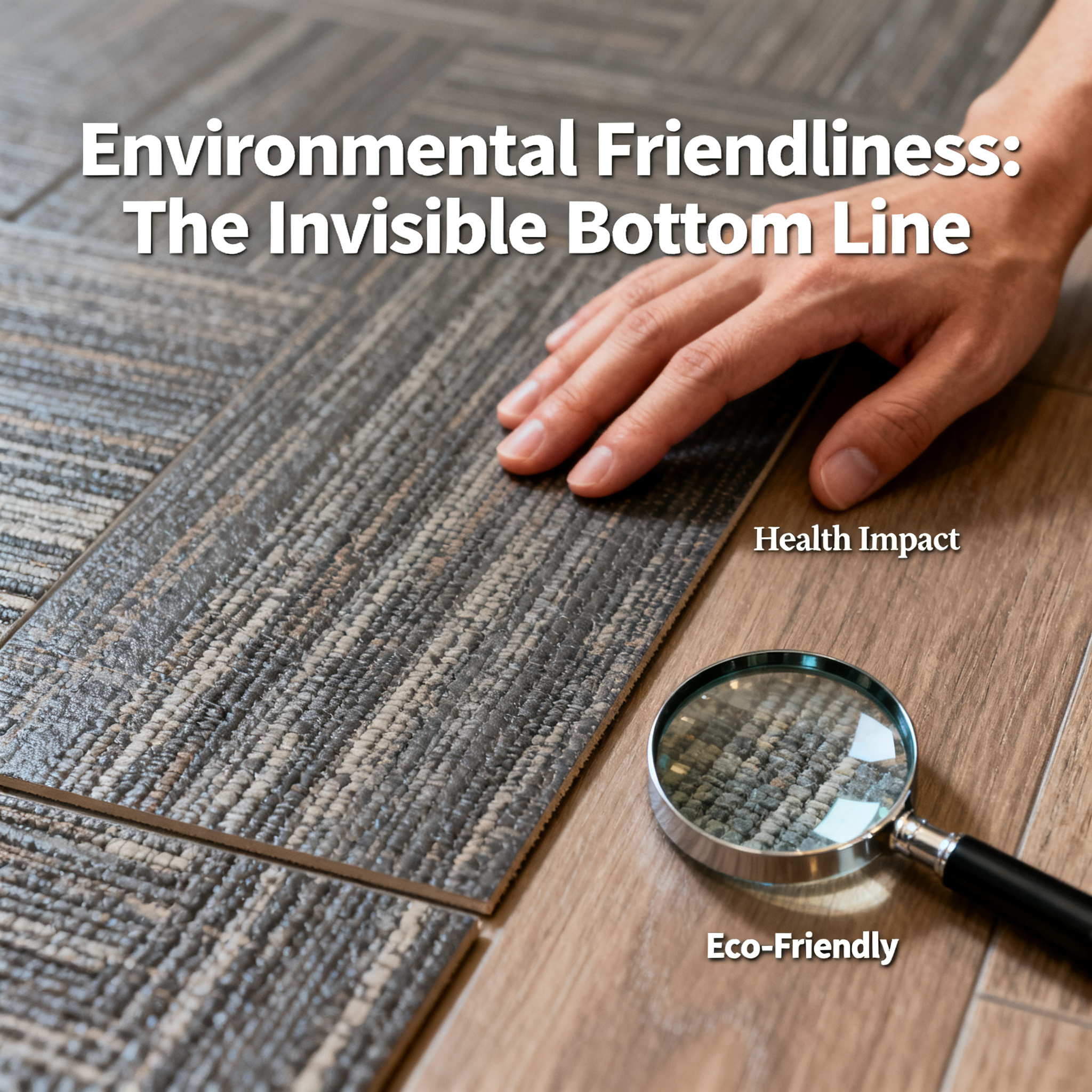
Environmental Friendliness: The Invisible Bottom Line
Environmental indicators directly impact user health. PVC flooring was once controversial due to plasticizer issues, but today's leading brand PVC products have generally passed certifications like ISO 9001, ensuring they are safe for use regarding environmental standards. When purchasing, it's essential to check for authoritative test reports to avoid inferior products.
Rubber flooring comes in two types: natural rubber and recycled rubber. Natural rubber is highly eco-friendly with no irritating odors; recycled rubber, however, varies significantly in quality due to recycling process differences, and inferior products may emit unpleasant smells. Thus, buying rubber flooring puts more emphasis on the supplier's quality control capabilities.
Maintenance: The Hidden Daily Costs
PVC flooring has a dense surface that resists stain penetration. Daily cleaning only requires a mop and water, with occasional use of neutral cleaners for stubborn stains. Its low maintenance cost is a key reason large venues favor it.
Rubber flooring has a micro-porous surface that tends to absorb dust and liquids, requiring more frequent cleaning. If neglected over time, the surface may oxidize and turn white, needing professional conditioning agents. In the long run, PVC flooring offers more favorable maintenance labor and material costs.
Suitable Scenarios: Choosing Right Is Key
Based on the comprehensive comparison above, the conclusion is clear:
Choose PVC flooring if you need:
- Sports venues like table tennis halls, badminton halls, and basketball courts that demand quick starts and directional changes
- Commercial spaces with limited budgets but seeking balanced performance (dance studios, gym aerobics rooms)
- Light exercise areas in office buildings and commercial spaces
Choose rubber flooring if you need:
- Places like dance studios and yoga rooms that require prolonged standing and cushioning
- Gym strength and equipment areas (outstanding resistance to heavy pressure)
- Outdoor or semi-outdoor sports zones
Conclusion: No Absolute King, Only the Right King
Returning to the initial question: who reigns supreme in sports venues? The answer depends on your specific needs. PVC flooring, with its high cost-effectiveness, easy maintenance, and stable sports performance, is the "all-rounder" for most indoor venues; rubber flooring, with its superior elasticity and durability, serves as the "professional specialist" in specific scenarios.
If you're struggling with venue flooring choices, consider reviewing real-world cases. Take SQUARE COMFORT, for example—a brand with over three decades of expertise in sports facility solutions. From its manufacturing heritage dating back to 1988 to its current inclusion in the "Brand Powerhouse" preferred project, it has served renowned companies like Huawei, BYD, and Vanke. Its website showcases over 20 types of real-world cases, from table tennis halls to dance studios, basketball courts to office buildings. When it comes to professional matters, trusting the experts is always a safe bet. After all, all greatness begins from the ground beneath your feet.