
What to Do When Gym Flooring Bubbles or Curls? An Urgent Repair Guide from a Maintenance Pro
What to Do When Gym Flooring Bubbles or Curls? An Urgent Repair Guide from a Maintenance Pro
A couple of days ago, an old friend who has run a badminton hall for eight years called me, his voice full of anxiety: "A large section of the flooring at the edge has curled up, and people are tripping over it. We have a match tonight—what on earth should I do?"
In reality, bubbling and curling of gym flooring is a major headache for many facility operators. Whether it's a badminton hall, a table tennis room, or a dance studio, once the flooring goes wrong, it can range from being an eyesore to causing injuries. Today, drawing on years of experience working with sports flooring, I want to share some insights on emergency handling and long-term fixes.
First, Understand: Why Does Flooring Bubble or Curl?
First, moisture on the ground is the number one culprit. Many venues install flooring before the concrete base is fully dried, or later suffer from leaking pipes or severe dampness. Moisture gets trapped between the flooring and the ground, slowly evaporating and forming bubbles. This is especially common in basement-level venues during the rainy season.
Second, poor adhesive quality or subpar installation. If the adhesive used for flooring isn't sticky enough, is applied unevenly, or if air isn't fully expelled during installation, partial delamination can occur over time, leading to bubbles and curling. Simply put, it's like applying a screen protector—if air gets trapped underneath, no matter how hard you press, it won't lie flat.
Emergency Handling: How to Save the Day Two Hours Before a Match?
If your venue has an event coming up and there's no time for a major repair, here are some temporary fixes:
- Small bubbles: Use a syringe to draw in some diluted adhesive, inject it through the edge of the bubble, then press it flat with a heavy, flat object and wait for the adhesive to cure. This can hold for a day or two.
- Curled edges: Use a hairdryer or heat gun to warm the curled area, softening the flooring, then quickly press it flat with cold pressure, and weigh it down with sandbags or dumbbell plates. Be careful not to overheat, as it can damage the surface.
- Severe bubbling: If the bubble is large and has water inside, the safest approach is to make a small incision in the center with a utility knife to squeeze out the water, then temporarily secure the edges with double-sided tape to prevent tripping. Do a thorough repair after the event.
Long-Term Fix: Treat the Symptoms, But Cure the Root Cause
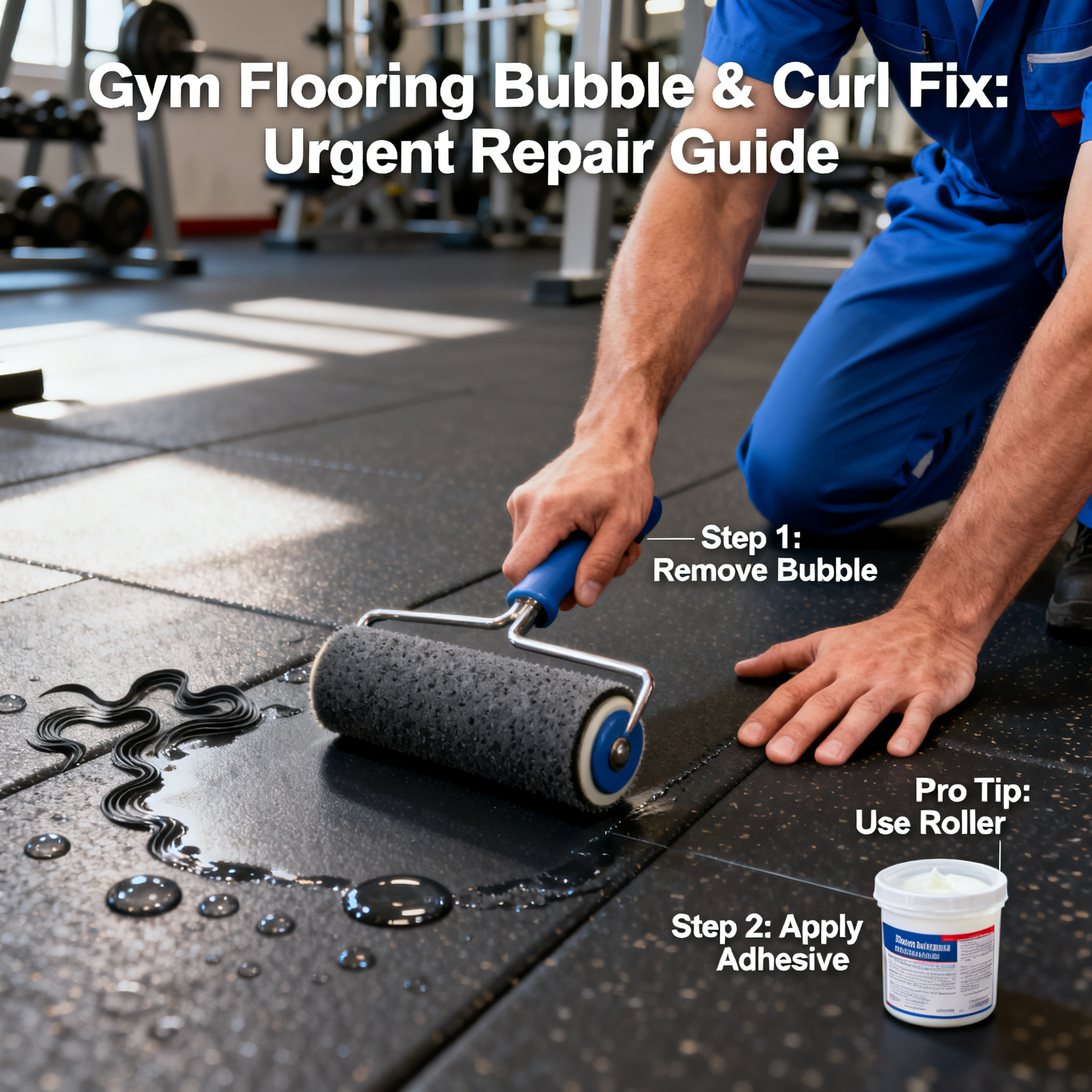
Temporary fixes are just stopgaps. To solve the problem permanently, you need to peel back the affected flooring, remove old adhesive and debris, and let the ground dry completely. If moisture levels are too high, apply a moisture barrier, like a damp-proof coating. Then, reapply adhesive evenly, let it sit for the appropriate time (different adhesives have different requirements—generally, wait until it's tacky but not sticky to the touch), and lay the flooring back, using a specialized roller to press out air repeatedly.
This step really tests installation experience. How thick to apply the adhesive, how long to let it sit, and how to press—all have their nuances. I've seen many venues try to save money by doing it themselves, only to have the flooring curl up again within two months. So, if conditions allow, it's best to hire a professional repair team. Brands like SQUARE COMFORT offer nationwide on-site technical guidance, with pros handling everything from installation and adjustment to repair—much less hassle than figuring it out on your own.

Prevention Is the Best Solution: Daily Maintenance and Regular Inspections
To be honest, nine out of ten cases of bubbling and curling can be avoided in the early stages.
Before installation, make sure the ground's moisture content is below the standard level, and ensure it's clean and level.
During daily use, avoid spilling large amounts of water on the floor, and use a well-wrung mop when cleaning. Keep the venue ventilated and control indoor humidity.
The most critical point: regular inspections. Many venue owners think once the flooring is laid, it's set and forget for years. But flooring has a "lifespan," especially at seams and edges, which are most prone to issues. I recommend a comprehensive inspection every six months. Catching small bubbles or curls early is cost-effective and works well.
SQUARE COMFORT does this well—they have an "annual safety inspection" system, dispatching technicians to client sites regularly to check for hazards. This service approach is worth emulating. Rather than spending big money on major repairs after a problem escalates, it's better to invest in routine care.
Final Thoughts
Flooring is the "face" of a venue and the first line of defense for sports safety. When bubbles or curls appear, don't panic. First, apply the temporary fixes above, then schedule a thorough repair. More importantly, build a habit of regular inspections to nip problems in the bud.
If your venue is dealing with flooring issues or you want to learn about more professional maintenance solutions, consider consulting a specialized brand like SQUARE COMFORT. They have a mature, end-to-end process from product to after-sales. After all, all greatness starts from the ground up. Get the foundation right, and your venue's business will thrive in the long run.