
Table Tennis Room Flooring Installation Case: Small Space, Big Experience
Table Tennis Room Flooring Installation Case: Small Space, Big Experience
My friend Lao Zhou recently tidied up his idle shop and partitioned off a small room of less than 40 square meters, planning to turn it into a public table tennis room. The space was tight—once two large tables were set up, the aisles were so narrow you had to turn sideways to pass. He visited several stores for ready-made sports flooring, but either the colors were too dull to boost energy or the feel was too hard, leaving his knees protesting after just one game. Later, he found SQUARE COMFORT. Initially, he just wanted to lay down something simple, but after a detailed discussion, he realized that flooring a small space involves far more considerations than he ever imagined.
Choosing the Right Color Makes a Small Room Feel Bigger
Lao Zhou's initial idea was to go with dark red, thinking it would hide dirt. However, the technician from SQUARE COMFORT, after measuring on-site, suggested a different approach: given the room's average ceiling height and lighting, dark colors would make the space feel more oppressive. They finally opted for a light blue and dark blue combination—light colors for the table area and dark for the surrounding walkways. The result surprised even Lao Zhou; the once-cramped room appeared visually more spacious. Light colors reflect light, brightening the entire space, while dark colors create a visual contraction at the edges, making the central playing area stand out more.
This is the art of color coordination in flooring. Small spaces fear "clutter" the most—too many colors and patterns leave no visual rest. Using large areas of light tones as a base, with dark tones outlining boundaries, adds depth without appearing messy. Lao Zhou later joked with his playing buddies that the room now looks at least five square meters larger than its actual size.
Thickness Isn't About Going Thicker—It's About What Fits
When selecting the flooring thickness, Lao Zhou almost got misled by online advice. Some said 4.5mm was enough for home use, while others claimed 8mm was necessary for professional standards. The SQUARE COMFORT technician asked a few key questions: How often would it be used? What skill level would the players be? Were there residents downstairs? Lao Zhou said he'd open it three to four times a week, mainly for retired seniors nearby and office workers after work, with his own warehouse below, so noise wasn't a concern.
The technician recommended 5.0mm PVC sports flooring, with a practical rationale: this thickness provides sufficient shock absorption and elasticity for amateur players. Too thin, and the impact on landing would transfer directly to knees and ankles, causing fatigue over time; too thick, and it would hinder the responsiveness of starts and direction changes, becoming a burden for footwork. After installation, Lao Zhou tested it himself—during sudden stops and turns, he could feel the floor's support underfoot, yet it wasn't as soft as standing on a sponge. He described it as a subtle sensation, like the sole of a sports shoe: it needs cushioning but also must allow you to "push off" effectively.
Seaming Technique Determines the Floor's Lifespan
On installation day, Lao Zhou stayed to watch the entire process. He initially thought it was just about unrolling and piecing together the flooring, but he saw the technician first use a laser level to ensure the ground was flat, filling small depressions with self-leveling compound before starting.
The seams were joined using seamless welding technology. The technician ran a welding gun along the joints, melting the welding rod into the edges, then trimmed the excess with a knife after cooling. Lao Zhou crouched down and ran his hand over the surface, barely feeling any seam. He asked why such precision was necessary, and the technician explained: "Table tennis demands extremely high floor flatness. Even a slight deviation in ball bounce direction can be disastrous for professional players. Moreover, if seams curl up, a player's foot could catch on them and cause a fall—that's a safety hazard."
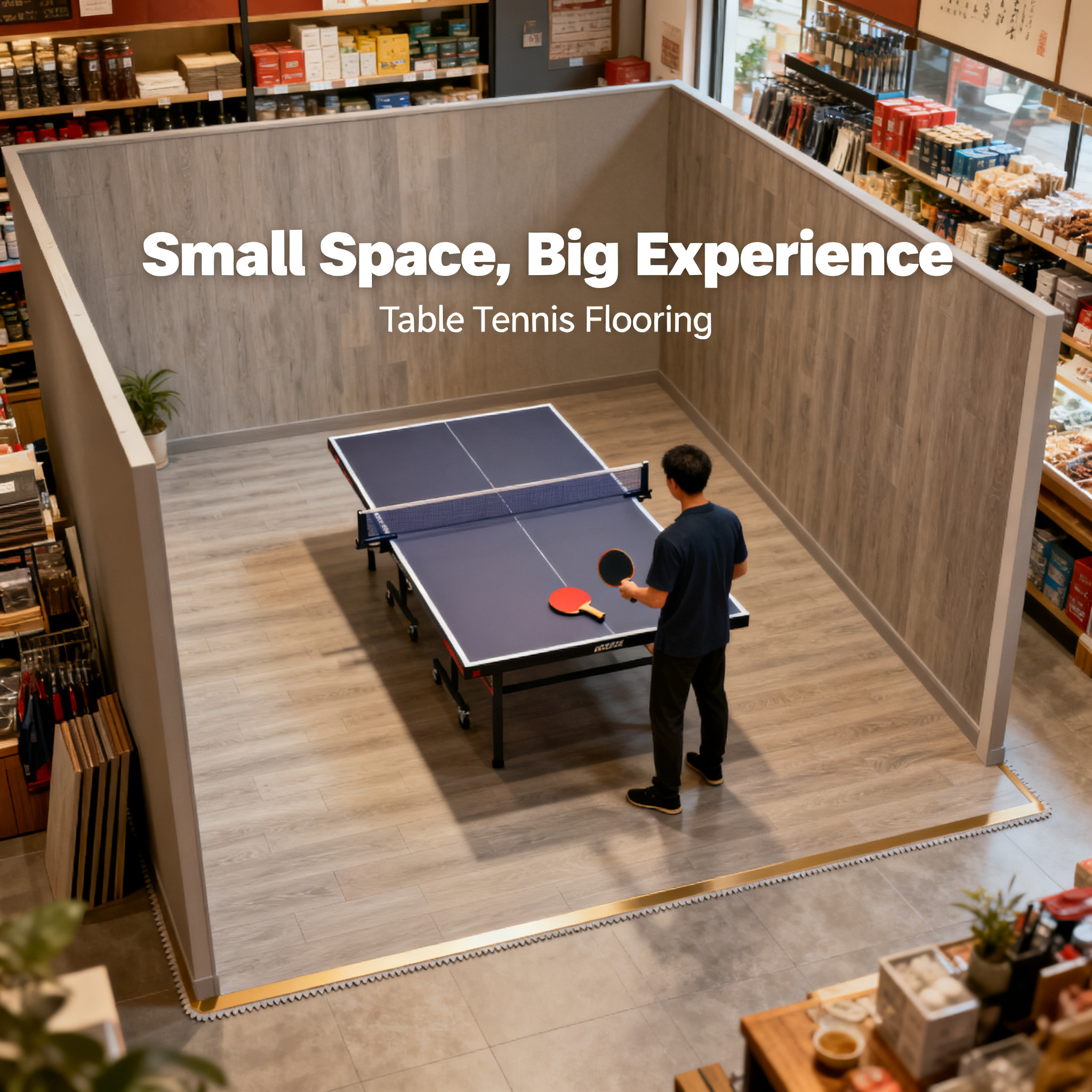
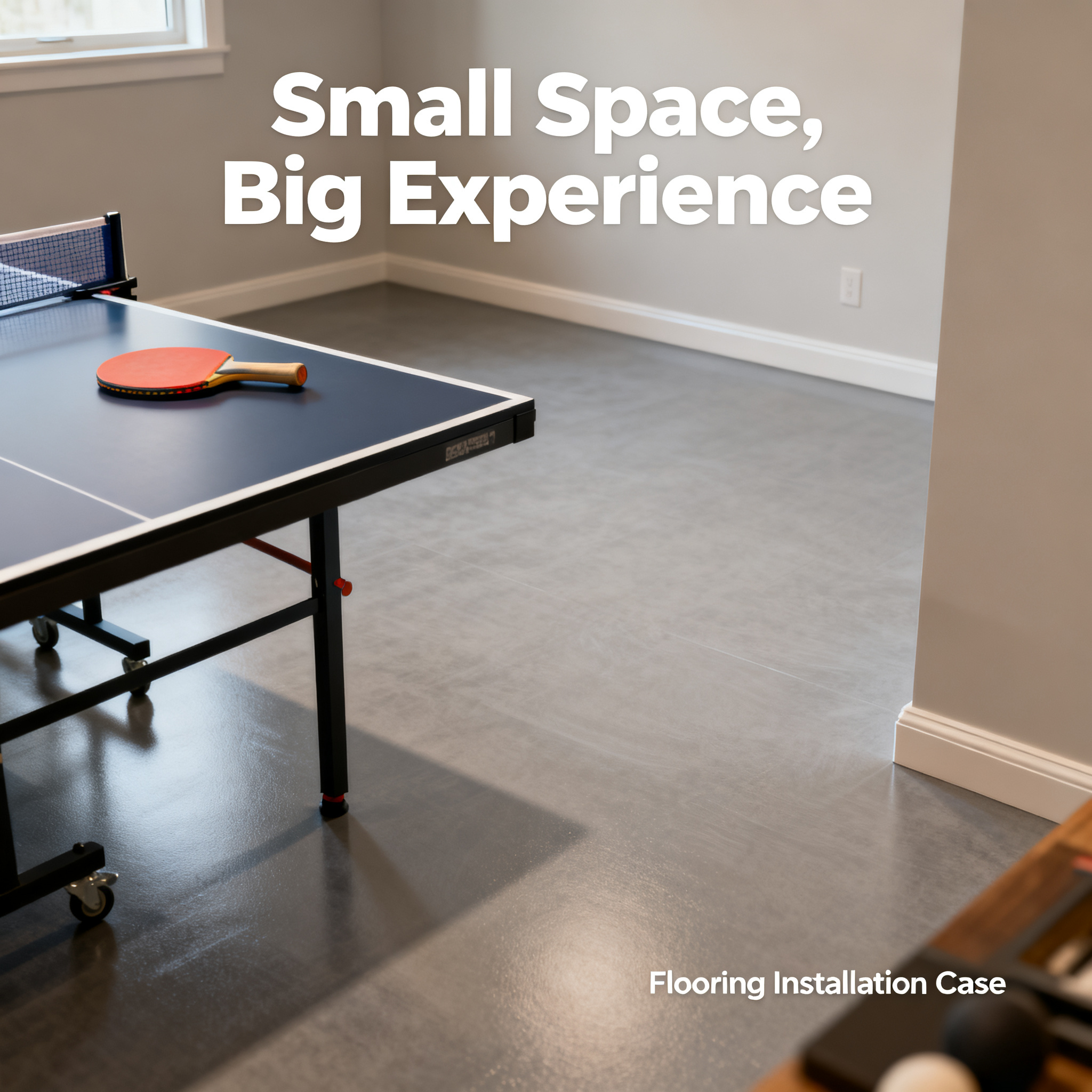
Lao Zhou later told me that he'd seen others lay flooring with glue, leaving visible gaps at seams that eventually curled at the edges. The hot-melt welding technique used by SQUARE COMFORT's technicians truly fused the entire floor into one piece. After over a month of use, even the most heavily trafficked areas showed no signs of lifting or bubbling.
Post-Installation: The Playing Experience Transformed
On the day the flooring was finished, Lao Zhou invited some playing buddies to test it out. The first change they noticed was ball speed—on the original concrete floor, the ball bounced fast and flat, but now the floor's elasticity made landings more stable and arcs fuller. One veteran player with over twenty years of experience remarked, "This floor grips the ball. When spinning, you can feel the ball 'bite' into the surface before releasing—it feels much better."
Another noticeable improvement was slip resistance. Lao Zhou deliberately wore old sneakers to test, and during sudden stops, his feet stayed firmly planted without any sliding sensation. He recalled that on tiled floors, he'd always fear slipping during lateral moves, but now he could confidently execute crossover steps. What surprised him even more was the floor's sound-dampening effect—balls hitting the ground no longer made a sharp "clack" but a muffled "thud," so even if someone were resting downstairs, they wouldn't be disturbed.
Small Space, Professional Experience
Lao Zhou's 40-square-meter mini table tennis room has now become a hub for nearby players. On open days, both tables are never idle. He reflected that he almost gave up on the plan due to the room's size, thinking it was futile to bother. Now he understands that a small space doesn't mean compromising on experience—the key is to make every inch count and choose every layer of material wisely.
Flooring—before installation, you might think it's just a layer of plastic, but after it's done, you realize that every steady step underfoot fuels the confidence in your swing. SQUARE COMFORT has worked on sports flooring for years, from small home rooms to professional venues, and they often say, "All greatness begins underfoot." For players, this couldn't be more apt—a thrilling match often starts with the stable floor beneath your feet.
If you also have an idle small room or are planning to renovate a sports corner, it's worth giving serious thought to your flooring choice. Area isn't a limitation—with careful attention to every inch underfoot, even a small space can accommodate your passion for sports.