
Replacing Mall Atrium Flooring: How to Ensure Slip Resistance and Durability in High-Traffic Areas?
Replacing Mall Atrium Flooring: How to Ensure Slip Resistance and Durability in High-Traffic Areas?
The atrium is the "heart" of a shopping mall and the most complex area in terms of pedestrian flow. It serves as a thoroughfare for shoppers and a hub for brand events and children's play areas. However, many may not realize that this glossy floor is under far more pressure than meets the eye.
I've seen too many mall atriums where flooring shows visible "scars" within two years: deep brake marks from shopping carts, fine dents from high heels, and coffee stains that seep into the texture and never come out. More dangerously, once the floor gets wet from water or spilled drinks, the original anti-slip layer can fail due to wear, turning into a hidden hazard.
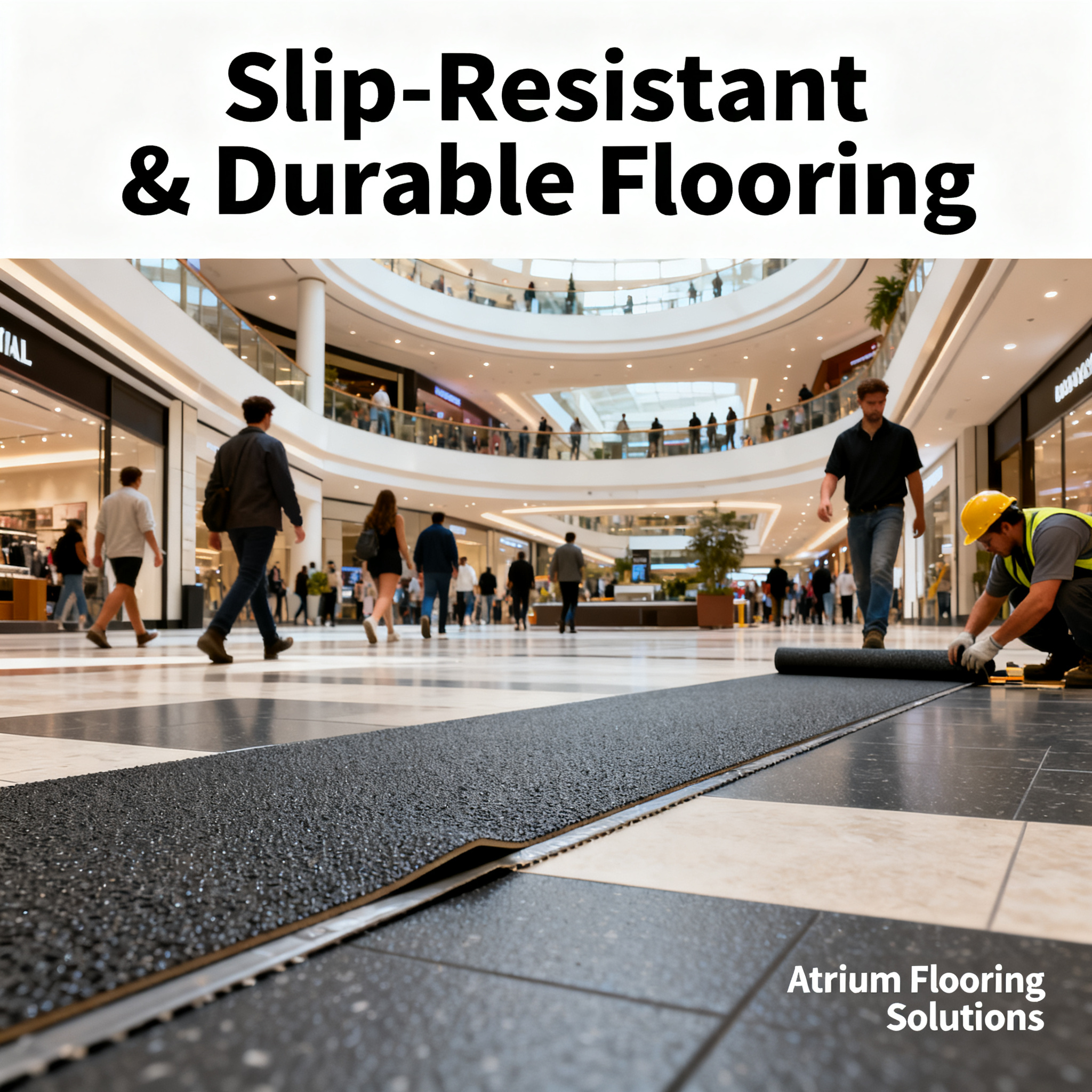
Recently, we completed a full atrium flooring replacement for a large shopping center in South China. This project is quite representative and worth discussing.
Real Challenges Under High-Frequency Use
This mall sees an average daily footfall of over 80,000 visitors, surging to 120,000 on weekends. The atrium not only handles massive pedestrian traffic but also frequent marketing events—new car showcases, children's talent shows, and beauty pop-up stores—with heavy equipment moving in and out almost every week.
The issues with the old flooring became evident during removal: the surface anti-slip layer was completely worn down, some areas showed bubbling and curling edges, and the base layer even emitted odors due to prolonged moisture. The property manager told us the biggest headache was rainy days—water brought in by umbrellas turned the atrium into an "ice rink," forcing cleaners to constantly mop near the elevators.
The Logic Behind Material Selection: Balancing Wear Resistance and Slip Resistance
Many people assume slip resistance and wear resistance are the same, but they are actually two distinct performance metrics. Slip resistance depends on surface texture design, while wear resistance relies on the thickness and density of the PVC layer. Low-cost flooring on the market often features only a simple printed wear layer, which loses its texture within months, diminishing slip resistance.
For this project, we chose SQUARE COMFORT's sports-grade PVC flooring. Some might wonder why a mall would use sports flooring—precisely because sports flooring demands stricter slip resistance and wear resistance than commercial flooring.
Badminton players make sudden stops and turns, requiring a friction coefficient between 0.4 and 0.6. In table tennis halls, flooring must withstand thousands of shoe scuffs. Applying this level of wear resistance to an atrium is like using racing tires on regular roads—ample safety margin.
On-Site Friction Test: Data Doesn't Lie
After installation, we conducted a direct comparison test. We sprinkled water on both the old and new flooring areas and tested with the same rubber-soled shoe at a 45-degree angle.
On the old flooring, the foot slid noticeably, requiring support from a handrail to maintain balance. On the new SQUARE COMFORT flooring, the foot felt "suctioned" to the surface, allowing stable single-leg standing. Using a friction coefficient meter, we measured a dry coefficient of 0.65 and a wet coefficient of 0.52, well above the national safety standard of 0.4.
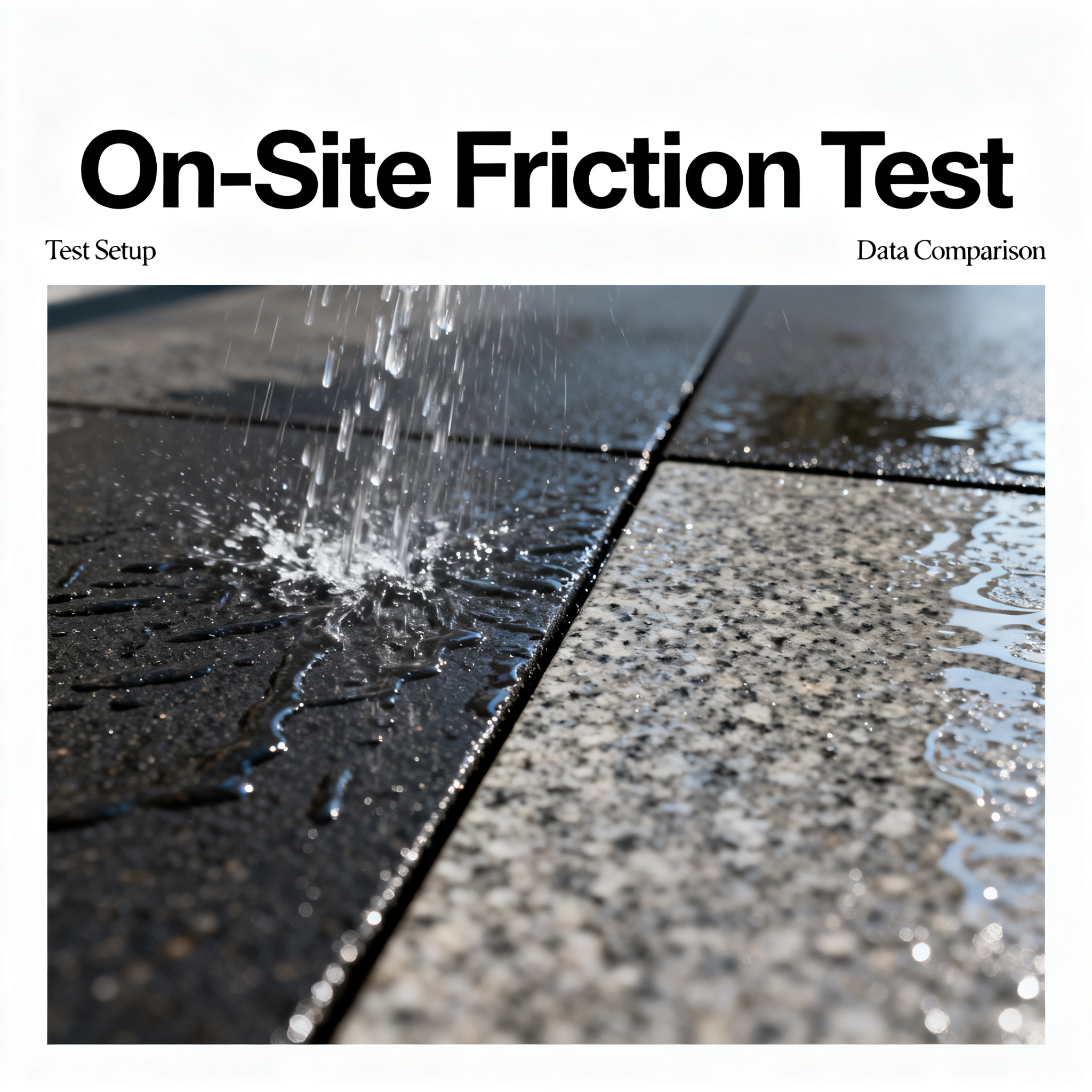
The mall's engineering manager crouched down, pressed the surface repeatedly, and scraped it hard with a key. He looked up and said, "With this texture depth, it should last at least five years."
Lifespan Validation Under Footfall Statistics
Three months after the flooring replacement, we reviewed the mall's footfall data and maintenance records. Over three months, cumulative footfall exceeded 7 million, and the atrium hosted 27 events, including a static display of a heavy off-road vehicle—weighing over 2 tons, everyone was nervous when it came in.
The results were satisfactory: the flooring surface showed only slight matte marks, which were restored to gloss with a high-speed polisher. The texture grooves remained clear, with no peeling, cracking, or fading.
The property team calculated the costs: previously, the old flooring required patching every 18 months and full replacement every two years, each time shutting down operations for three to five days. Now, with SQUARE COMFORT's six-year warranty and estimated lifespan, the total cost is actually lower than cheaper alternatives.
Three Recommendations for Commercial Space Managers
First, don't just look at the unit price. Flooring costs should be spread over its lifespan. Saving 30 yuan per square meter but replacing it after 1.5 years versus lasting six years—the comparison is clear.
Second, installation quality is more critical than the material itself. Atrium floors often have expansion joints and utility outlets. If the base isn't properly prepared, even the best flooring will bubble. For this project, we used self-leveling compound and full-coverage two-component adhesive, with seams welded using a specialized tool to create a seamless finish, preventing dirt accumulation.
Third, build in extra slip resistance margin. Don't just trust the word "anti-slip"; check the specific friction coefficient test report. Mall environments are complex—oil, water, and sand can affect actual slip performance, so it's safer to choose materials with over 20% safety margin.
Now, that atrium flooring has been in use for over half a year, enduring peak footfall during the National Day Golden Week and the Spring Festival. The mall's marketing team even conducted a customer satisfaction survey, where "clean, non-slip floors" ranked in the top three.
The quality of a commercial space often lies in these easily overlooked details. The flooring underfoot bears thousands of steps daily and represents the mall's commitment to customer safety. Choosing the right material means choosing peace of mind. If you're also struggling with flooring solutions for high-traffic commercial spaces, consider adding SQUARE COMFORT's wear-resistant and slip-resistant series to your evaluation list—let data speak and time verify.