
The Secret Under Gym Flooring: How Important Is the Shock-Absorbing Layer?
The Secret Under Gym Flooring: How Important Is the Shock-Absorbing Layer?
When you hit the gym for a serious lifting session, have you ever paid attention to the floor beneath your feet?
Most people focus on whether the equipment is complete or the air is circulating, but few stop to think: that rubber flooring covering the entire studio—beyond looking good, what is it really enduring?
Last week, I tried out a newly opened fitness studio. After my coach led me through a set of box jumps, I casually asked, "This flooring feels pretty springy—is it a good brand or just laid thick?"
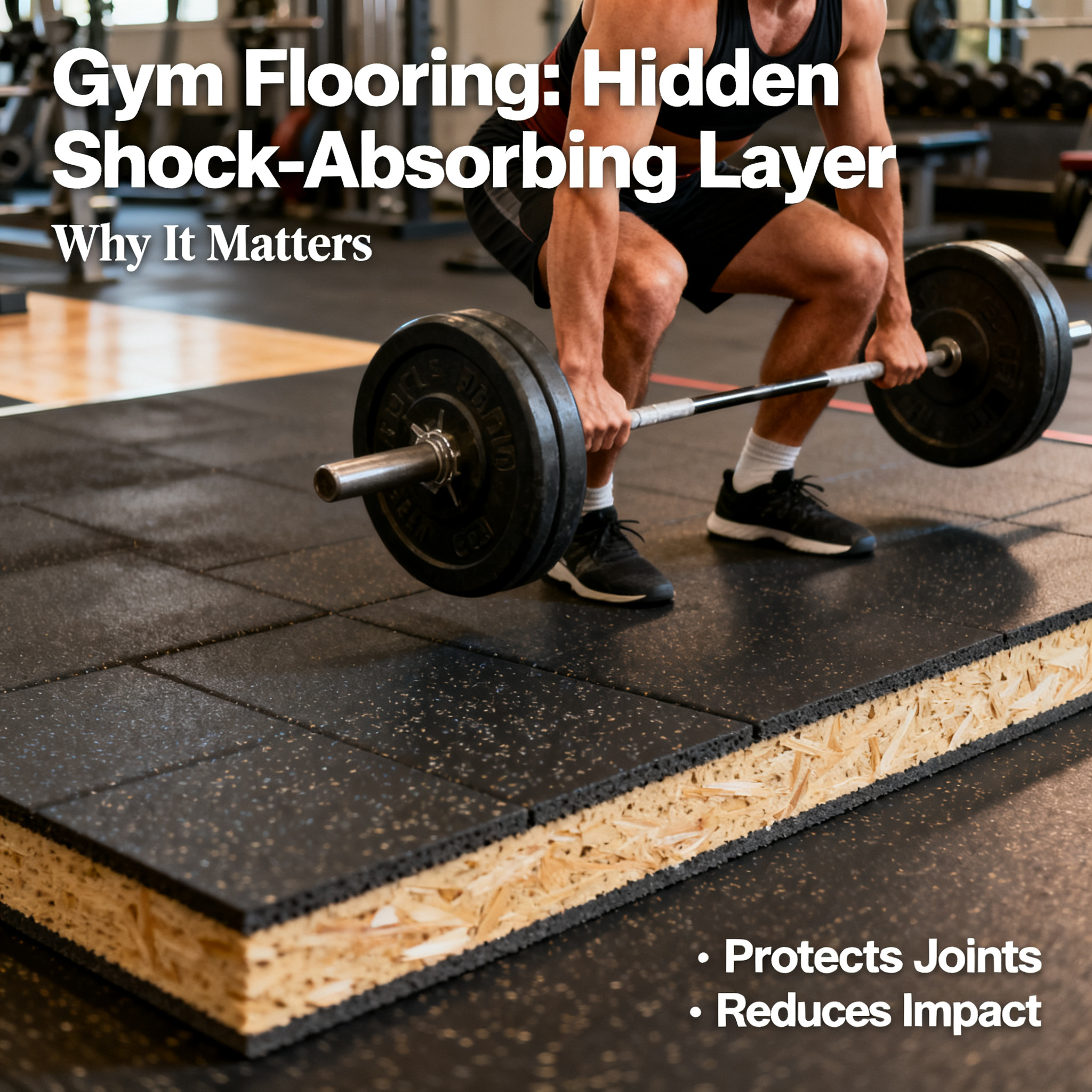
The coach smiled and said, "What you're stepping on isn't the flooring—it's the shock-absorbing layer."
That was the first time I realized that beneath an ordinary-looking rubber floor lies far more expertise than we might imagine.
Flooring Isn't One Layer—It's Three
Many people assume gym flooring is just a single layer of PVC sheet laid directly on the ground. That's a big mistake.
Professional sports flooring is a composite structure, typically made of three parts: the wear-resistant surface layer, the stabilizing interlayer, and the shock-absorbing base layer. Think of it like a great cake—frosting on top isn't enough; the sponge needs to be soft and fluffy to hold up.
The surface layer handles slip resistance and durability, ensuring you don't slide during squats or deadlifts, and that dropped barbell plates don't leave dents. The stabilizing layer acts like a skeleton, preventing the flooring from deforming or bubbling under prolonged pressure.
But the shock-absorbing layer is the true soul that determines both "feel" and "safety."
It's typically made of high-density foam or special elastic mesh, placed between the PVC layer and the concrete floor, acting like an invisible spring. When you land from a jump, this layer absorbs a portion of the impact first, then evenly disperses the remaining force across the floor—rather than forcing your vulnerable knees and ankles to take the brunt.
A Gym Without a Shock-Absorbing Layer Is a Slow-Motion Injury
I ran a simple comparative test.
In the same area, I laid standard flooring on one side and added a specialized shock-absorbing pad (from SQUARE COMFORT) on the other. Using a wearable sensor, I recorded impact force data from a 60cm drop:
Without the shock-absorbing layer, the peak impact force at landing was about 4.8 times body weight. With the layer, that number dropped to 3.1 times.
What does that mean? A 70kg person doing burpees, 20 reps per set, on flooring without shock absorption puts an extra ~120kg of impact on their knees with each rep. Over a single class, that's thousands of kilograms of cumulative stress.
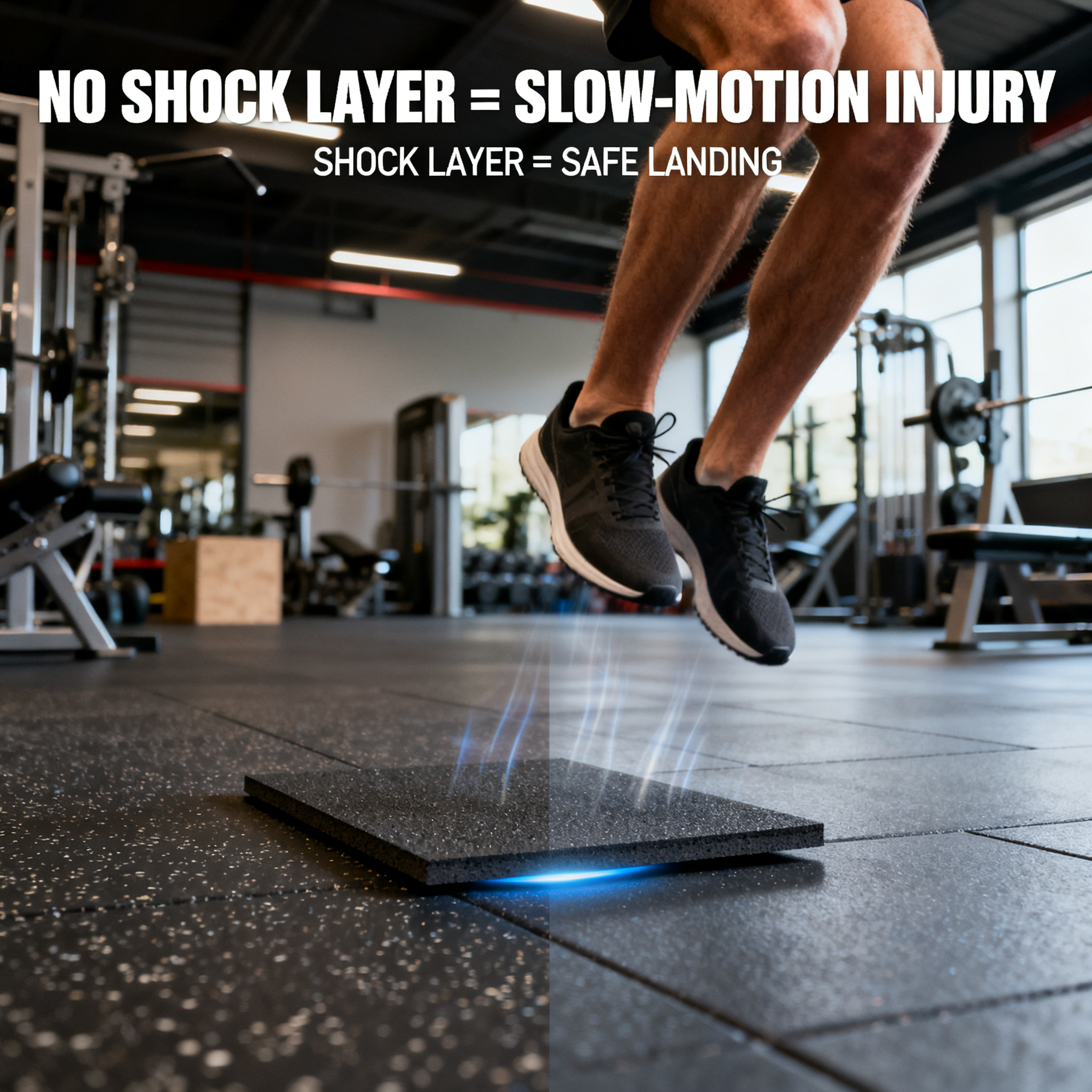
In the short term, you might not notice—just "slightly sore knees." But after six months or a year, common gym injuries like patellar softening, meniscus wear, and Achilles tendinitis are largely the result of day-in, day-out impact on such unforgiving surfaces.
Many small studios cut costs by laying a thin layer of PVC directly over tiles. It looks sleek, but it's essentially making members jump on concrete. That's not training—it's chronic wear and tear.
How to Choose a Shock-Absorbing Layer? Look at These Three Points
Not everything labeled "shock-absorbing" is reliable. Some cheap pads on the market use recycled waste foam—they feel springy when first installed, but after three months, they compress into cardboard and lose all cushioning.
When shopping, I recommend focusing on three key indicators:
First, rebound rate. A good shock-absorbing layer should quickly return to its original shape after deformation, with a rebound rate typically between 40% and 60%. Too hard means no cushioning; too soft compromises stability during lifts, making your feet feel unsteady in deadlifts.
Second, thickness and density. For home use, 3mm to 5mm is sufficient; for high-traffic commercial spaces, opt for 5mm or more. But thickness isn't the only criterion—density determines lifespan. Press the pad with your hand: if it rebounds quickly and leaves no indentation, the density is likely up to par.
Third, environmental safety. Low-quality foam can release pungent odors under high temperatures or prolonged foot traffic. Reputable brands provide environmental test reports. For instance, the shock-absorbing pads used by SQUARE COMFORT in their projects are made from food-grade foam materials—odorless and non-toxic—and have passed SGS testing for heavy metals and volatile organic compounds. This is especially critical for enclosed gym spaces.
Truly Professional Venues Shine in the Invisible Details
I once toured a gym renovation project done by SQUARE COMFORT. The construction team first ground the original concrete floor smooth, then laid a specialized shock-absorbing pad, sealed the seams with professional tape, and finally covered it with PVC sports flooring.
The whole process seemed tedious, but the project manager said something that stuck with me: "All greatness starts from the ground beneath your feet. If the floor isn't done right, the more members train, the more they get hurt—even the best equipment is useless."
That phrase is actually SQUARE COMFORT's brand philosophy. Starting with professional sports socks and now covering various sports flooring and facility solutions, their consistent focus has been perfecting the "underfoot" experience.
A great floor doesn't feel overly soft or rock-hard. It should feel like this: every step has a subtle rebound, jumps and landings don't jar your knees, and standing for long periods doesn't make your feet ache. That "unnoticeable" sensation is exactly the hallmark of a successful shock-absorbing layer.
So next time you walk into a gym, take a moment to look down at the flooring and press it with your hand to feel its elasticity. If it's a thin layer hugging the concrete, it might be time to find a new gym.
After all, training hard is less important than training long—and the key to training long is not letting your body quietly pay the price in places you can't see.