
School Gym Floor Upgrade: From Concrete to Professional Sports Flooring
School Gym Floor Upgrade: From Concrete to Professional Sports Flooring
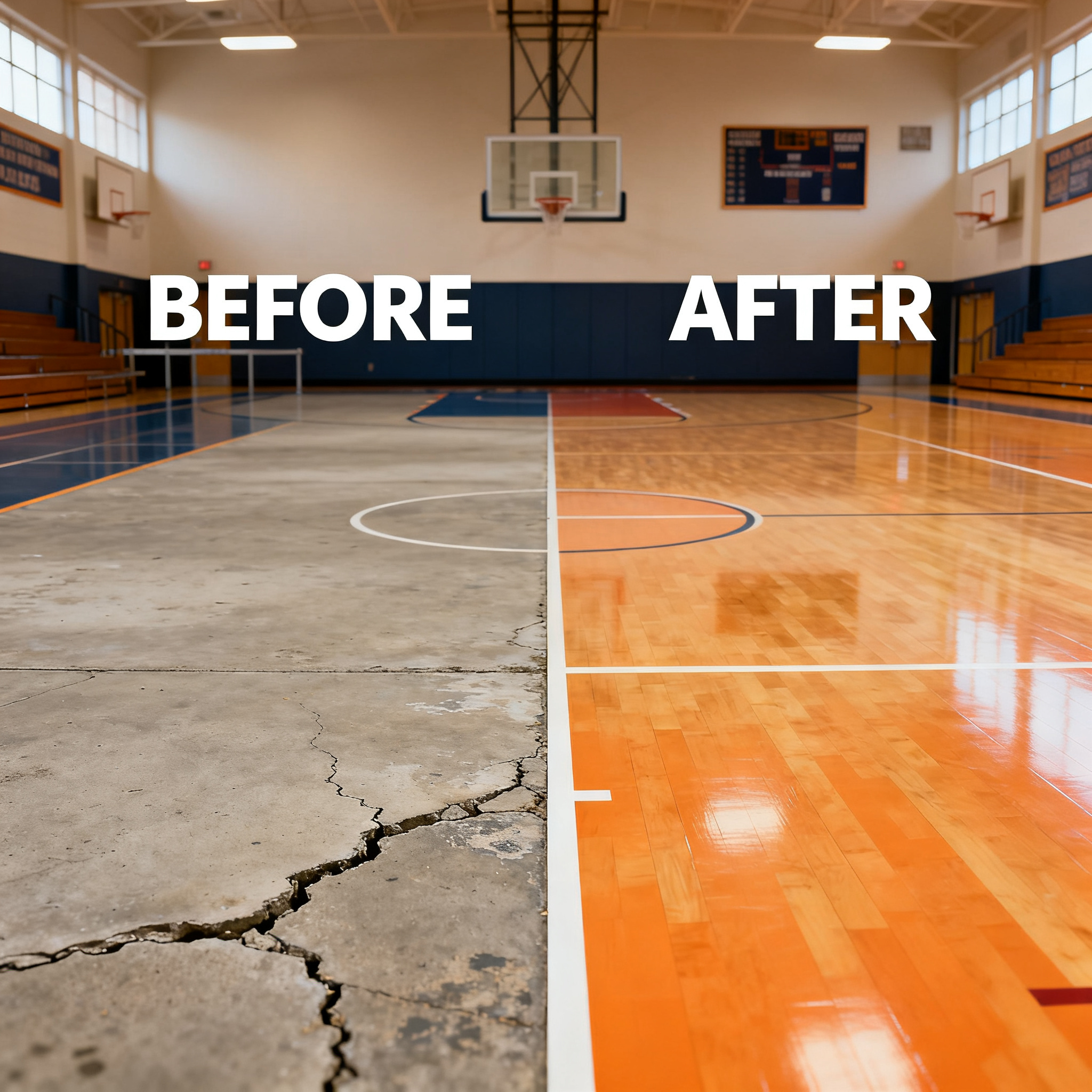
Every time I pass by the old gym, I feel like that door is a barrier—inside, there's concrete, dust, and cracks that occasionally trip up students; outside, there's the new playground, new track, and children's laughter. As the logistics director, this issue has weighed on my mind for two years. Until this summer, we finally completed the gym's "floor revolution," replacing the decade-old concrete with professional sports flooring. I'm writing this process down today to serve as a reference for colleagues who are also deliberating over floor renovations.
1. Budget Application: Convincing School Leadership with Data
To be honest, when I first applied for the budget, I wasn't confident. School funds are tight, and the leaders' initial reaction would naturally be, "The concrete floor still works, why spend this money?" I prepared a detailed report, and the core message boiled down to one thing: injury rate.
I compiled statistics on accidents during PE classes over the past year—there were over a dozen cases of sprains, falls, and knee pain caused by the hard floor. Another set of data: concrete floors offer almost no cushioning. When students perform jumps or sudden stops, the impact is directly transmitted to their knee and ankle joints, which is detrimental to bone development over time. Additionally, concrete floors generate a lot of dust, which is bad for respiratory health.
I included these data points and photos in the report, along with samples of several sports flooring options and a price comparison table. To my surprise, Mr. Zhang, the PE teacher, proactively spoke up for me: "When kids run on concrete, every step feels like hammering nails—it breaks my heart to watch." In the end, the school board approved a dedicated budget for the gym floor upgrade, with a special note: "Choose something professional and durable—don't cut corners."
2. Floor Selection: From "Functional" to "High-Performance"
Once the budget was secured, I started visiting suppliers and reviewing samples. Honestly, there are so many flooring brands on the market, with prices ranging from tens to hundreds of yuan per square meter—it's overwhelming. I visited several sister schools that had already undergone renovations and found a common issue: cheap flooring started bubbling, fading, or even cracking within two years. One school's logistics teacher told me, "Don't go for the cheap stuff—you get what you pay for. With students running on it every day, it wears out too fast."
Later, I came across SQUARE COMFORT, a brand specializing in sports venue flooring. Their PVC sports flooring is widely used in table tennis halls, badminton courts, and basketball gyms, with a solid reputation. I contacted their sales representative, requested product brochures and test reports, and even visited their showroom in Guangzhou to see the samples in person.
What impressed me most was that the SQUARE COMFORT salesperson didn't rush to pitch—they first asked about our school's situation: student age groups, frequency of PE classes, whether there were competition needs, and the gym's ventilation and humidity conditions. After listening, they recommended a mid-thickness sports flooring, explaining that its cushioning layer is designed for daily student use—it protects knees without being too soft to affect athletic performance. They talked about SQUARE COMFORT's "small" philosophy—paying attention to small details and process nuances. I found that quite down-to-earth, unlike some manufacturers who just boast.
We ultimately chose this flooring. Several specs gave me confidence: the wear layer is thick enough, the slip resistance meets standards, and it passed environmental tests with no pungent odor. Given that students have PE classes daily, I specifically asked about wear test data, and they said it should last over five years with normal use.
3. Installation Arrangement: Not Missing a Single Class
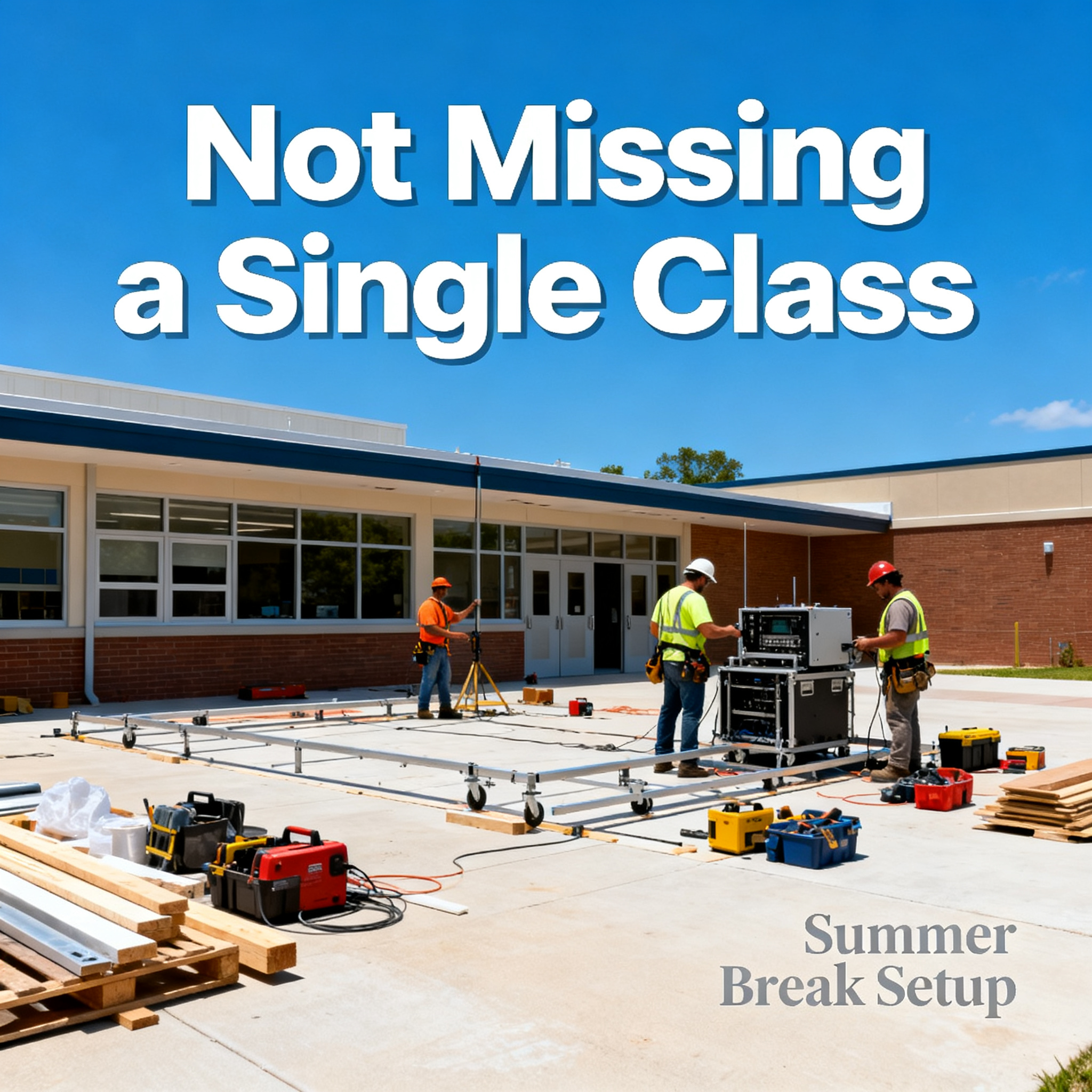
We scheduled the installation during summer break—that's common sense for logistics work. But execution still posed challenges: the gym was filled with gymnastics mats, basketball hoops, badminton net posts, and other equipment that needed to be cleared out; the floor had cracks and uneven spots that required self-leveling compound first; and with the hot weather, the adhesive dried quickly, so the crew had to work efficiently.
The SQUARE COMFORT installation team was very professional. They first treated the base floor, then used specialized tools to piece together, weld, and press the flooring sections. I watched for an entire afternoon and noticed that after each section, they repeatedly rolled over it to ensure no air bubbles or hollow spots. The team leader told me, "For flooring, it's 30% material and 70% installation—if the details aren't right, even the best material is wasted." I took that to heart.
The installation took about ten days. We hit a few typhoon days in between, but they adjusted the workflow, moving welding and edge-trimming tasks indoors, so there was no delay. On completion day, I deliberately stepped on it to test—the feel was just right in terms of softness and firmness, the slip resistance was obvious, and even scraping it with a key left no marks. The entire venue looked brand new, transforming from a dull gray concrete floor to a blue-and-green professional sports surface—the visual impact was immediate.
4. Post-Upgrade Changes: PE Classes Can Finally "Go All Out"
When the new semester started, on the first PE class, Mr. Zhang led the students into the gym, and they all let out a "wow" at the new floor. One boy even lay down and rolled around, saying, "So comfortable!" Mr. Zhang laughed and urged them up: "Don't just play around—let's test out the new court today!"
Over the following weeks, the changes were visible. PE class content expanded significantly—jump training, shuttle runs, and sliding drills that we previously avoided were now possible. Mr. Zhang told me, "Before, on concrete, I was always reminding students to watch their footing, afraid of falls. Now I can let them train freely." More concrete evidence: the number of accidental injuries in PE classes this semester dropped noticeably, and the school nurse has had a much quieter time.
By November's intramural basketball tournament, the new flooring's advantages were even more apparent. Players moved, stopped suddenly, and pivoted smoothly, and the ball's bounce was consistent, speeding up the game. One PE teacher joked, "This floor is better than the courts we played on back in the day—these kids are lucky."
5. Advice for Fellow Professionals
If you're also struggling with your school gym's floor, my advice is: don't hesitate—the sooner you upgrade, the sooner you'll have peace of mind. Concrete may seem cost-effective, but the risk of student injuries and the hidden costs of long-term maintenance are actually higher. When selecting flooring, look at brand case studies, ask those who've used it, and if possible, visit sites in person. For us, SQUARE COMFORT offered a complete service process from product to installation to after-sales—their customer service even calls monthly to check on usage. That detail showed me they're truly committed to service, not just making a sale and disappearing.
From concrete to professional sports flooring, the change isn't just about the surface—it's about students' love for sports and their sense of safety. "All greatness starts from the ground beneath your feet"—I now truly understand this. I hope every child can run, jump, and sweat freely on safe, professional flooring.