
Yoga Studio Flooring Selection Guide: The Perfect Balance of Slip Resistance, Softness, and Easy Cleaning
Yoga Studio Flooring Selection Guide: The Perfect Balance of Slip Resistance, Softness, and Easy Cleaning
After running a yoga studio for three years, the question I get asked most by fellow studio owners isn't "How do you attract students?"—it's "Where did you buy that flooring in your studio?" It sounds a bit funny, but honestly, a great floor does more to keep members coming back than any fancy decor.
My first studio suffered from poor flooring choices. Back then, I picked a cheap commercial floor to save money. On the very first day of classes, a student doing downward dog slid right out and nearly hit the mirror. Another time, a student in a yin yoga class rested in child's pose for ten minutes, and when she got up, two deep red marks were imprinted on her knees. She laughed and said, "Your floor is harder than my yoga mat at home." The most frustrating part was cleaning—if sweat stains weren't wiped up immediately, they'd leave white rings once dried, and even after mopping three times, the marks wouldn't fully disappear.
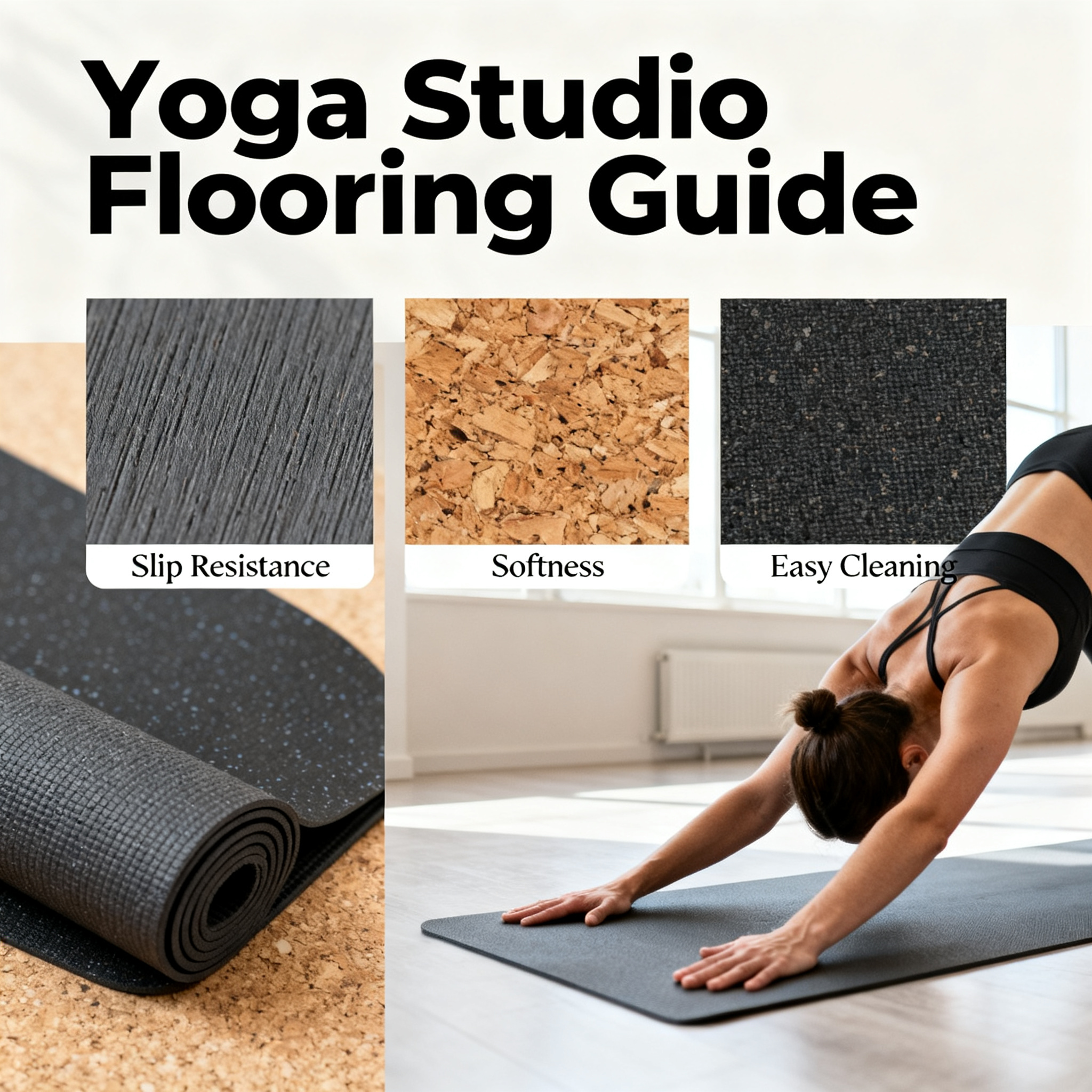
When I started planning my second branch, I made flooring selection a top priority. I visited five brands and brought back over a dozen samples to test in my studio. This article shares my lessons learned and real-world test data, hoping to serve as a reference for fellow studio owners who are also choosing flooring.
Slip Resistance Test: The Lifeline for Barefoot Practice
Many yoga movements are done barefoot, and the friction between the soles and the floor directly determines safety. My testing method was straightforward: I used a spray bottle to evenly wet the floor surface, simulating sweat drips, then performed single-leg stands, quick turns, and simulated downward dog pushes barefoot.
The results surprised me. The most expensive imported brand performed excellently in dry conditions, but once wet, friction dropped sharply, and I could feel a clear "drifting sensation" underfoot. In contrast, the domestic brand SQUARE COMFORT's dedicated yoga studio PVC flooring performed most consistently. Its surface features a subtle textured finish—not a glossy smooth surface but with a slight matte touch—so even when wet, the soles still feel "gripped." I later checked its material specs and found it uses a special anti-slip embossing process rather than a surface coating, so slip resistance doesn't degrade noticeably even after the wear layer wears down.
Softness Test: Kneeling Comfort Is a Hidden Bonus
Many studio owners focus only on slip resistance and overlook softness. Yoga involves many kneeling, supine, and side-lying poses, and the floor's cushioning directly affects joint comfort. I used a simple test: kneel directly on the floor for one minute to feel the pressure on the kneecap, then do a forearm plank to assess the force on the elbows.
In comparison, SQUARE COMFORT's flooring has a thicker cushioning layer than most similar products. When kneeling, there's a noticeable downward give and shock absorption, but it doesn't sink in like a soft yoga mat, which could compromise stability. One member told me after a trial class, "Your floor is more comfortable than my bed at home—I almost fell asleep in child's pose." That's probably the best proof of its softness.
Ease of Cleaning: Sweat Stain Management Is a Daily Pain Point
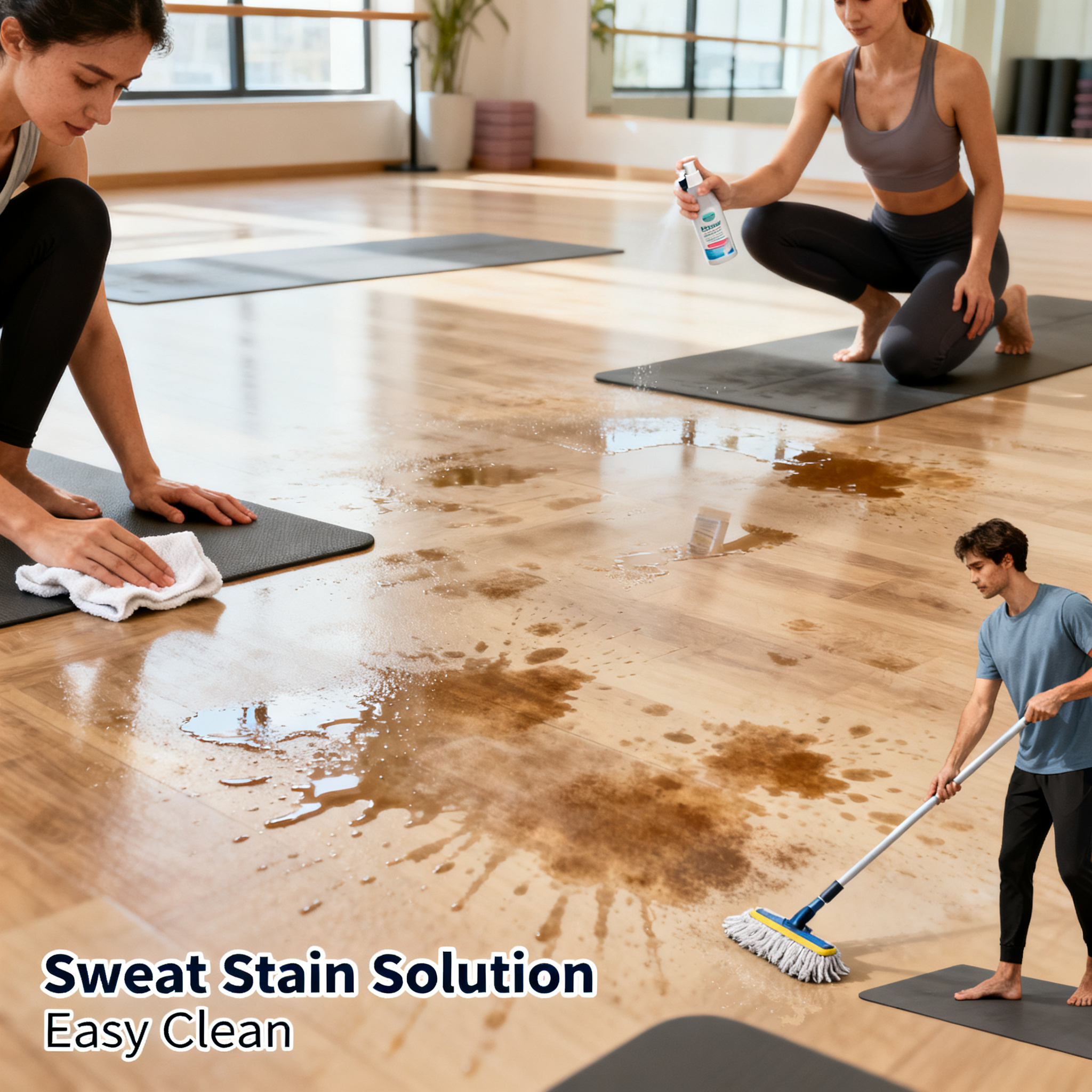
After a yoga class, sweat stains on the floor are inevitable. I tested different brands by treating simulated sweat stains (saltwater mixed with a bit of oil) with a water mop, neutral cleaner, and steam mop.
The issue with regular flooring is that sweat seeps into surface micropores, leaving white marks after drying that require scrubbing with a brush. SQUARE COMFORT's flooring, however, has a denser surface, so even if sweat stains sit for two hours before wiping, they come off with a single pass—no extra cleaner needed. This is crucial for studios running four to five classes a day; with only 15 minutes between classes, if every stain required squatting and scrubbing, the cleaning staff would quit.
Real-World Comparison of Different Brands
| Brand | Wet Slip Resistance | Kneeling Comfort | Sweat Stain Cleanability | Reference Price (RMB/㎡) |
|---|---|---|---|---|
| Brand A (Imported) | ★★★☆ | ★★★★ | ★★★★ | 180-220 |
| Brand B (Domestic) | ★★★ | ★★☆ | ★★☆ | 90-120 |
| Brand C (Domestic) | ★★★★ | ★★★☆ | ★★★ | 130-160 |
| SQUARE COMFORT | ★★★★★ | ★★★★★ | ★★★★★ | 150-190 |
Price-wise, SQUARE COMFORT isn't the cheapest, but considering its stable wet slip resistance and the time and labor saved on cleaning and maintenance, it offers the best overall value. Plus, SQUARE COMFORT offers free sample shipping, so studio owners can test actual samples in their own spaces. I ordered samples first, tested them for a month, and only then committed to bulk purchase. Their after-sales service is also solid—they send technicians for on-site inspections and provide dedicated guidance throughout installation and commissioning, which is a huge relief for owners without engineering experience.
Some Practical Final Thoughts
Flooring is the most frequently used, lowest-cost-to-replace, yet highest-impact hard furnishing in a yoga studio. My advice: if your budget allows, always choose professional sports flooring—don't settle for commercial-grade options. Look at wet slip resistance, not just dry data; test softness by kneeling yourself, not just reading spec sheets; and simulate real sweat stains for cleanability, not just wipe with water.
My second studio has used SQUARE COMFORT flooring for over two years now, with an average of five classes daily. The floor still shows no significant wear or discoloration, and no member has ever reported slipping. If you're struggling with flooring choices, why not request a few samples and run the tests I've described? I'm confident you'll find your answer. After all, greatness starts from the ground up—and that saying couldn't be truer for a yoga studio's floor.