
Professional Sports Flooring Standards Explained: How to Choose Flooring Based on International Competitions
Professional Sports Flooring Standards Explained: How to Choose Flooring Based on International Competitions
Last month, I attended an international basketball invitational live. When players made sudden stops and direction changes, the crisp "squeak" of sneakers against the floor left a lasting impression—that clean, decisive feedback. After the game, I crouched down to touch the surface and flipped through the technical manual, which made me realize why professional courts always feel like "the moment you step on, you just know it's right."
Many people assume that sports flooring is just a layer of PVC roll—lay it down and it's ready. But anyone who has actually hosted a competition knows that the science behind a single floor is far deeper than imagined. Both FIBA (International Basketball Federation) and BWF (Badminton World Federation) have clear performance requirements for competition courts, and these standards directly determine athletes' performance and safety.
Friction Coefficient: Not the Stickier, the Better
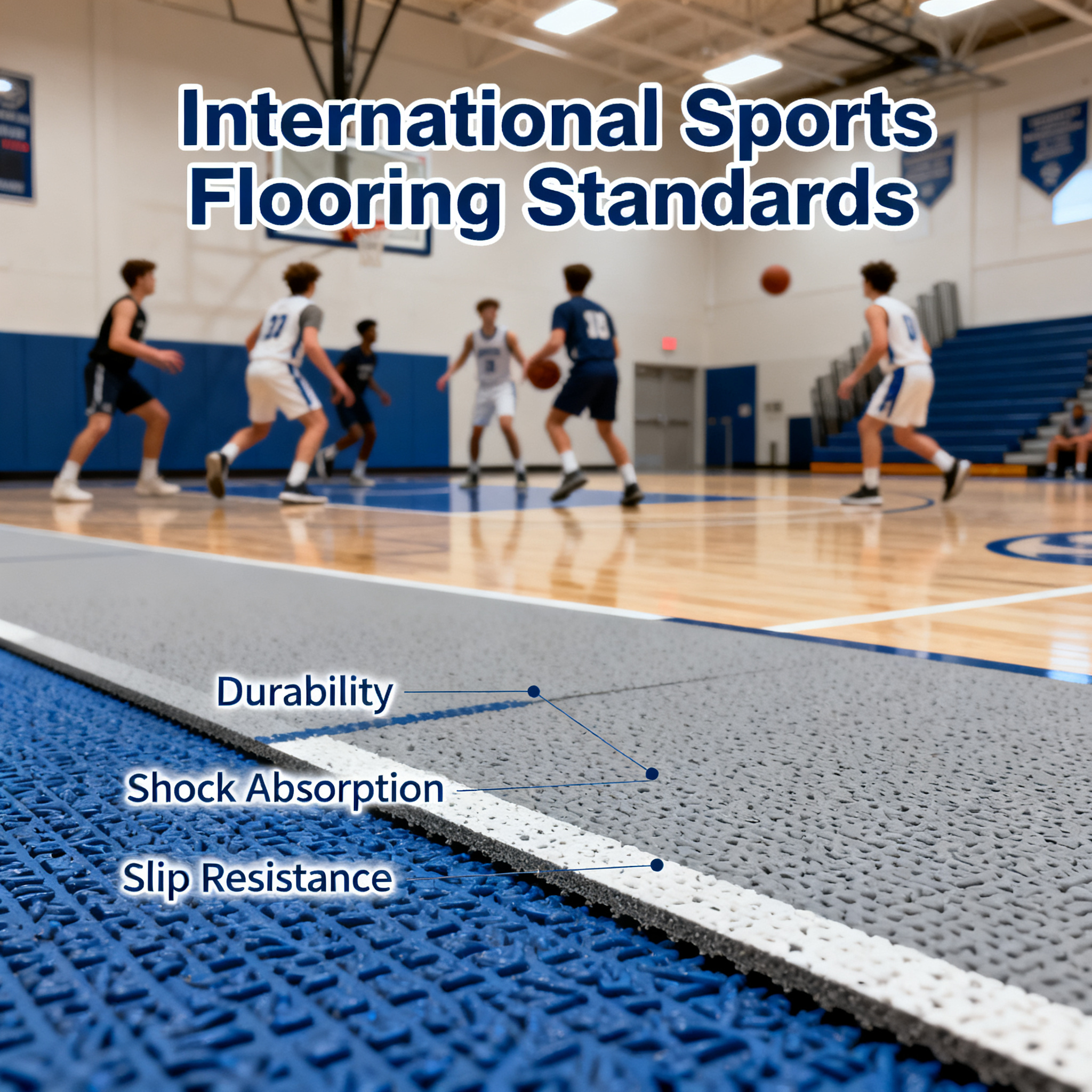
One of the most critical indicators for professional sports flooring is the friction coefficient. FIBA recommends a range between 0.4 and 0.6, while badminton courts require even higher values due to the frequent sudden stops, starts, and lunges involved.
Some mistakenly believe that a higher friction coefficient is always better—that stickier means more slip-resistant. That's not the case. If the coefficient is too high, athletes' feet can "catch" during pivots, dramatically increasing torque on knees and ankles, which raises injury risk. If it's too low, starts become slippery, reducing explosive power.
High-quality sports flooring incorporates special anti-slip fillers into the PVC formula and uses textured embossing to create microstructures, allowing athletes to get stable grip while still executing smooth slides. This balance comes from material science and rigorous, repeated testing.
Impact Absorption: The Invisible Shield for Knees
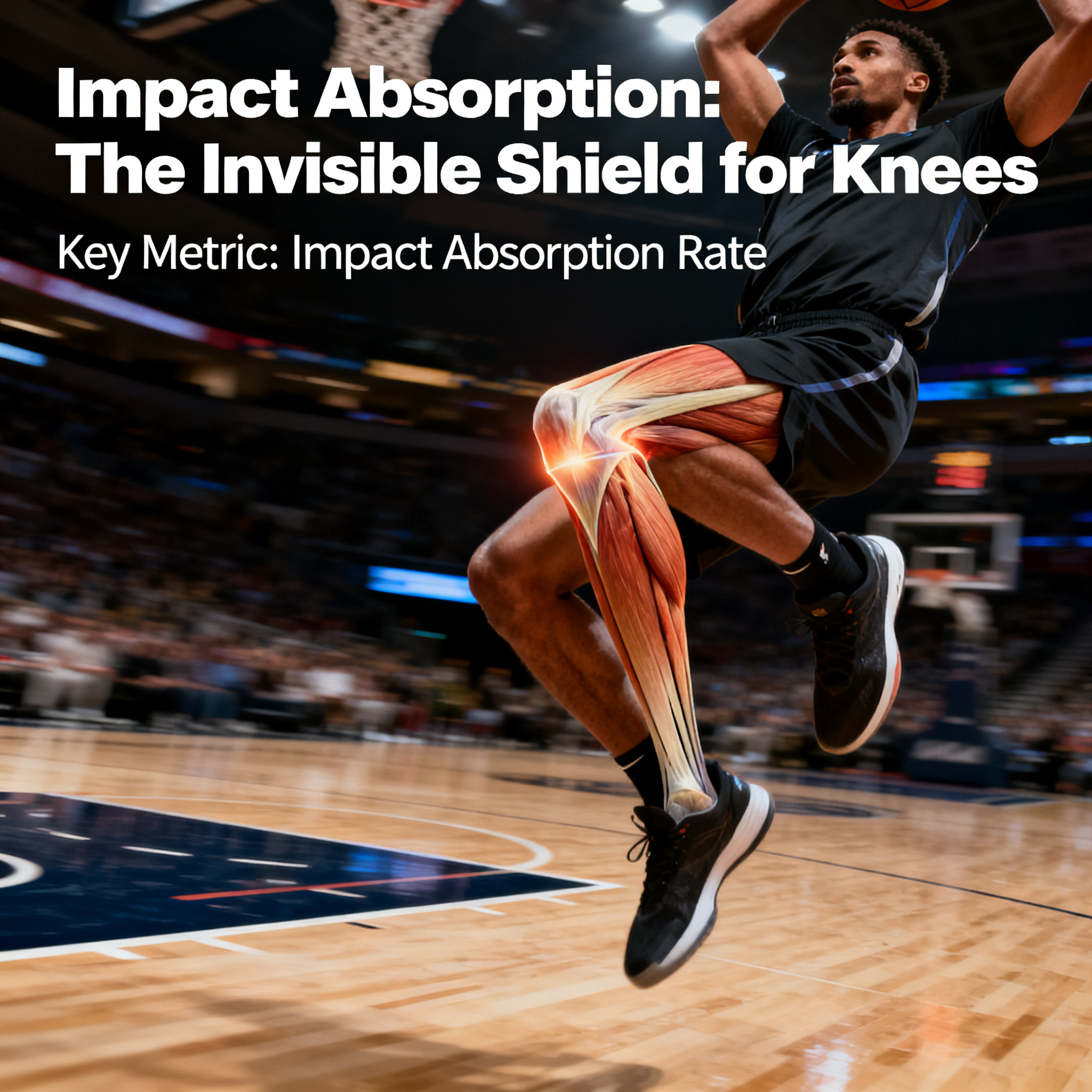
Another key metric is impact absorption rate. When professional basketball players land after a jump, the floor must absorb forces several times their body weight. International standards require sports flooring to have an impact absorption rate between 20% and 50%, meaning the floor can cushion some of the landing impact, reducing stress on knees and the spine.
Engineers at SQUARE COMFORT once shared a detail: to simulate real athletic movements, their testing team uses a standard impact tester, dropping a weight from a fixed height to measure how much the floor attenuates impact. Their PVC sports flooring features a multi-layer foam structure—the high-density cushioning layer at the bottom effectively disperses impact, while the top layer provides enough rebound support, giving athletes the feeling that "the floor has bounce but doesn't sap energy."
Real-World Case: Flooring Choice for an International Invitational
Last year, a southern city was set to host an international youth basketball invitational, and the venue managers struggled with the flooring decision. The original surface was concrete—laying standard flooring directly wouldn't work, but with the tight schedule, installing a new wooden court was unrealistic.
They ultimately chose SQUARE COMFORT's competition-grade PVC sports flooring. The venue manager recalled that they evaluated three brands, but what won them over was SQUARE COMFORT's complete test report: friction coefficient of 0.47, impact absorption rate of 32%, and vertical deformation of 2.3mm—all meeting FIBA's recommended standards for basketball courts. More importantly, SQUARE COMFORT's engineering team conducted on-site base levelness checks and proposed a self-leveling treatment to address minor undulations in the concrete, ensuring the final surface flatness deviation stayed within 2mm.
After the tournament, the technical delegate's assessment was: "The court performed consistently, and athletes gave positive feedback." The venue staff also ran their own test—dropping a full water bottle from a height of 1 meter; it didn't bounce on landing, confirming the cushioning was effective. Since that event, the venue has hosted multiple provincial and municipal competitions, and the flooring has shown no bubbling, delamination, or significant wear.
Certifications: The "ID Card" of Professional Flooring
When selecting professional sports flooring, specs alone aren't enough—you also need to check whether the brand holds credible certifications. International events require strict certification systems for court materials, such as FIBA court certification and BWF court certification. These certifications involve lengthy testing cycles and rigorous on-site inspections, not something any factory can easily obtain.
SQUARE COMFORT started in 1988, with over three decades in sports equipment. Their products have passed ISO 9001 quality management system certification, and in 2024, they were selected for the "Brand Power" preferred project. Their flooring solutions for table tennis, badminton, and basketball venues cover everything from school gyms to professional training bases, and many well-known domestic companies use their flooring for employee sports facilities.
Of course, for casual sports enthusiasts, there's no need to chase top-tier international competition specs. But if your venue is set to host official matches or sees high-frequency, long-term use, the professionalism of the flooring deserves serious consideration. A supplier with event service experience, complete test data, and after-sales support is far more reliable than one competing solely on price.
Sports flooring is the most overlooked yet most impactful part of an athletic venue. It's not as conspicuous as basketball hoops, nor as eye-catching as lighting and sound systems, but every push-off and every landing by athletes is a conversation with it. Choosing flooring that truly understands how to protect athletes is perhaps the most tangible sincerity a venue can offer.