
Badminton Courts, Basketball Courts, Gyms... How to Choose the Right Flooring for Different Venues? A Comprehensive Guide
Badminton Courts, Basketball Courts, Gyms... How to Choose the Right Flooring for Different Venues? A Comprehensive Guide
Opening a sports venue, the floor is the ultimate face of your business—the first thing users feel underfoot that signals whether you're professional or not. Many venue owners spare no expense on equipment during renovation but hesitate when it comes to flooring. Before they know it, issues like bubbling, cracking, slipping, or even injury complaints arise within months of opening. Flooring is a "hidden asset" when chosen right, but a "hidden bomb" when chosen wrong. Today, we skip the fluff and break it down by venue type, giving you the complete flooring selection logic in one go.
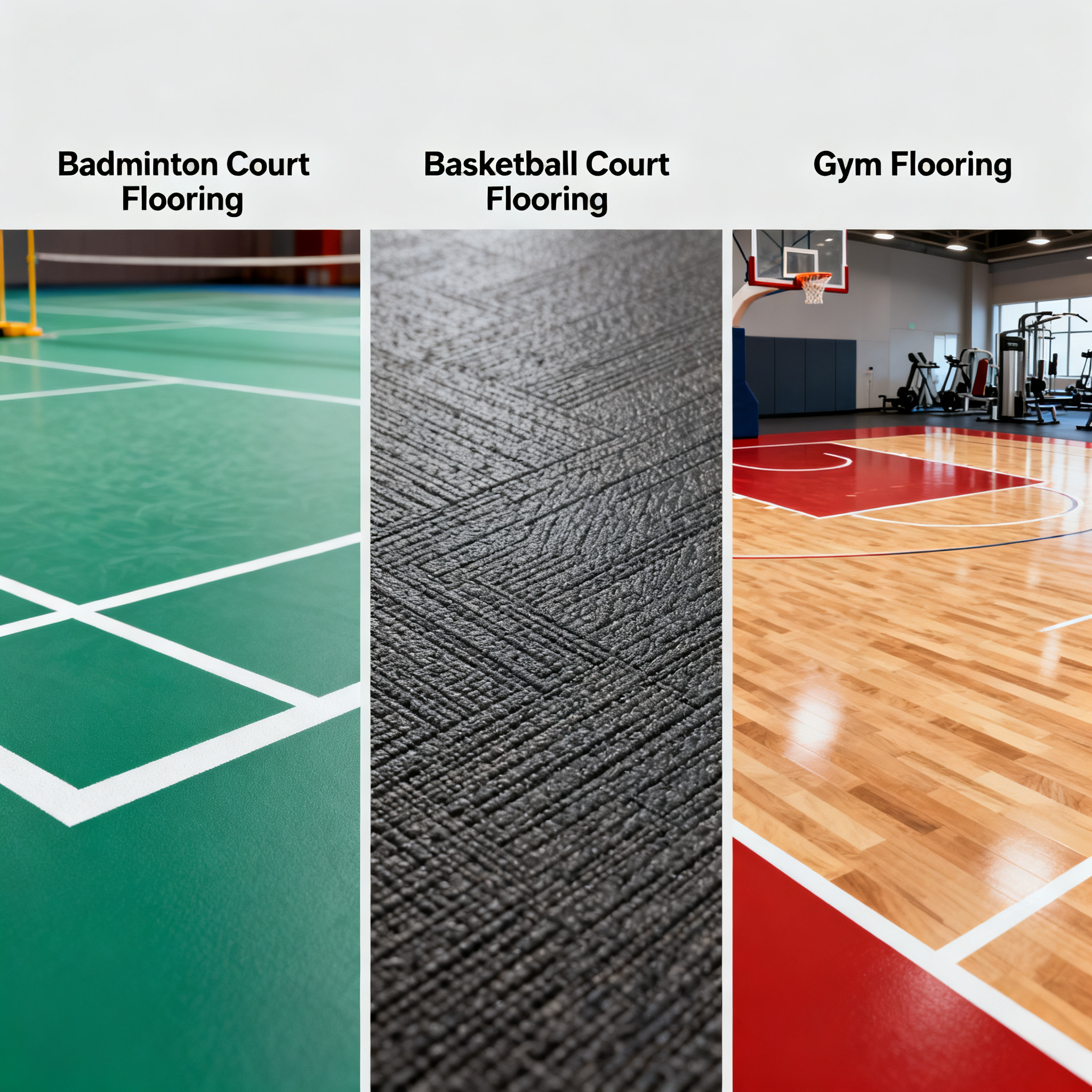
Badminton Courts: Elasticity is the Soul, Slip Resistance is the Bottom Line
Badminton involves frequent sudden stops, direction changes, and jump landings, putting several times your body weight of impact on knees and ankles. Without sufficient cushioning, players' knees start protesting after just half an hour. More critical is the slip resistance coefficient—badminton shoes typically have natural rubber soles. If the floor surface gets slippery or lacks friction, a single lunge could cause a fall, which is a major incident in operations.
Key Selection Points: Opt for PVC sports flooring, ideally between 4.5mm and 6.0mm thick. This thickness range provides adequate shock absorption (national standard requires ≥20%) while ensuring clear ball speed feedback—not absorbing the ball like a sponge. Choose fine-grain or lychee-textured surfaces for slip resistance without wearing out shoes. The base layer should feature a dense foam layer. SQUARE COMFORT's badminton court flooring excels here, with a uniformly dense foam layer that delivers a noticeable "firm yet resilient" rebound—not that cheap, mushy feel. Also, ensure the wear layer is at least 1.2mm thick; otherwise, frequent dragging and shoe friction will quickly create shiny patches, hurting both aesthetics and traction.
Basketball Courts: Wear Resistance and Impact Absorption, with Cushioning as the Core
Basketball involves far higher intensity than badminton—frequent jumps, landings, sudden stops, turns, and physical contact exert multi-directional shear forces and high-impact stress on the floor. Standard flooring under these conditions easily develops localized dents, edge curling, or even full tears. For basketball courts, "cushioning" matters more than "elasticity"—it needs to absorb the massive kinetic energy from heavy players landing from height, protecting their Achilles tendons and menisci.
Key Selection Points: Go straight to 7.0mm or thicker, even considering 8.0mm reinforced options. Material-wise, prioritize PVC homogeneous construction, where the entire thickness is the same material, so wear doesn't reveal a different color underneath, extending lifespan. Choose deeper surface patterns like "gemstone" or "starry sky" textures, which maintain good slip resistance even when sweat drips. SQUARE COMFORT's basketball flooring, used in university gyms and community courts, features homogeneous series with wear layers around 2.5mm, resisting whitening on court lines even after three to five years of heavy use. Additionally, basketball flooring must be installed using full adhesive bonding, not floating installation; otherwise, jumps and landings cause bubbles that disrupt ball bounce consistency.
Gyms: Impact Resistance + Easy Cleaning, Plus Withstanding Equipment Pressure
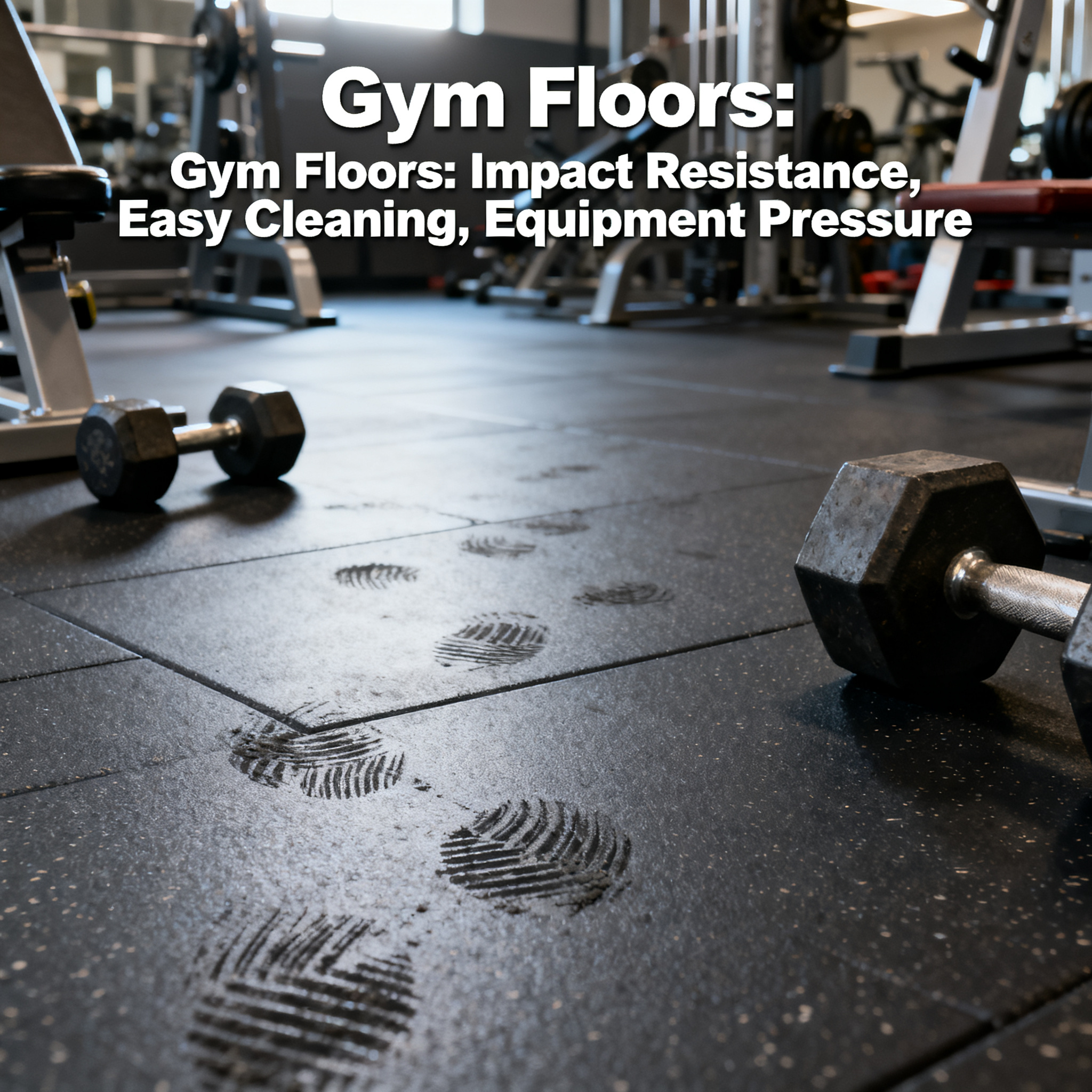
Gym floors face the most complex environment: high-impact points from dropped dumbbells and barbells, prolonged static pressure from heavy equipment like treadmills and ellipticals, and stains from sweat and spilled drinks. With standard residential flooring, a dropped dumbbell leaves a dent, and moving equipment leaves black marks. The core needs for gym flooring are "toughness" and "easy maintenance."
Key Selection Points: For free-weight zones, use rubber mats or high-density PVC flooring, starting at 8.0mm; if budget allows, go for 15mm+ rubber tiles to effectively absorb impacts from dropped plates and reduce noise. For cardio zones (treadmills, ellipticals), 4.5mm-6.0mm PVC sports flooring with slip-resistant surfaces is recommended. Crucially, add a moisture barrier underneath to prevent condensation from equipment operation seeping into the subfloor and causing mold. SQUARE COMFORT's gym solutions emphasize a "zoned installation" approach—dark rubber mats in free-weight areas, light-colored PVC in cardio zones—which not only looks more professional but simplifies maintenance. For cleaning, PVC's dense surface wipes clean with neutral cleaners, unlike delicate wood floors. Note: gym flooring must include fiberglass mesh reinforcement; otherwise, long-term loading causes irreversible dents.
Other Venues: Dance Studios, Table Tennis Halls, and Office Spaces Have Their Own Priorities
Dance studios need "flexible yet smooth" flooring—recommend 3.0mm-4.5mm PVC dance flooring with a smooth but slightly tacky surface for easy turns without slipping. Table tennis halls are similar to badminton but emphasize uniform ball speed rebound; 4.5mm professional table tennis flooring is the standard. For commercial office spaces, the focus is on "aesthetics and durability"—consider wood-grain or stone-look commercial-grade PVC flooring at 2.0mm-3.0mm, checking that the wear rating meets T-level (commercial heavy-duty).
Cost-Effectiveness Advice: Don't Just Look at Unit Price—Calculate Total Cost
Many venue owners habitually compare per-square-meter prices, which is the biggest mistake. A floor at ¥80/sqm that needs replacing in two years versus one at ¥120/sqm that lasts eight years—which is more economical? Do the math that way. Prioritize brands with complete quality inspection reports and confident warranty commitments. SQUARE COMFORT's product line covers all the above venue scenarios and offers one-stop service from measurement and design to installation. For venue owners without engineering experience, this saves not just communication costs but also future maintenance headaches. Their website showcases 20 types of project case photos, including steel-structure swimming pool table tennis halls, indoor basketball courts, and dance studios—check actual installations of similar venues before purchasing.
One final reminder: Flooring is "30% material, 70% installation." Even with top-tier materials, poor subfloor leveling or uneven adhesive application leads to hollow spots and bubbles. Choose a brand with professional installation teams, like SQUARE COMFORT, which provides complete solutions with standardized processes from base preparation to acceptance. All greatness starts from the ground up—and a venue's reputation often begins accumulating the moment users step onto the floor. Choose your flooring right, and your venue is already ahead of the game.