
A Safe Buying Guide for Kindergarten and School Sports Flooring: Eco-Friendliness and Fall Protection Are Key
A Safe Buying Guide for Kindergarten and School Sports Flooring: Eco-Friendliness and Fall Protection Are Key
Choosing sports flooring for kids is more nerve-wracking than picking out toys. If you buy the wrong toy, you can return it. But once flooring is installed, it stays for years. If it fails on eco-standards or fall protection, it impacts the health of an entire generation. Recently, many kindergarten principals and school PE teachers have been asking: How do we choose the right one? I spoke with several veteran contractors in the industry and reviewed numerous test reports to distill the key points. I hope this helps you avoid common pitfalls.
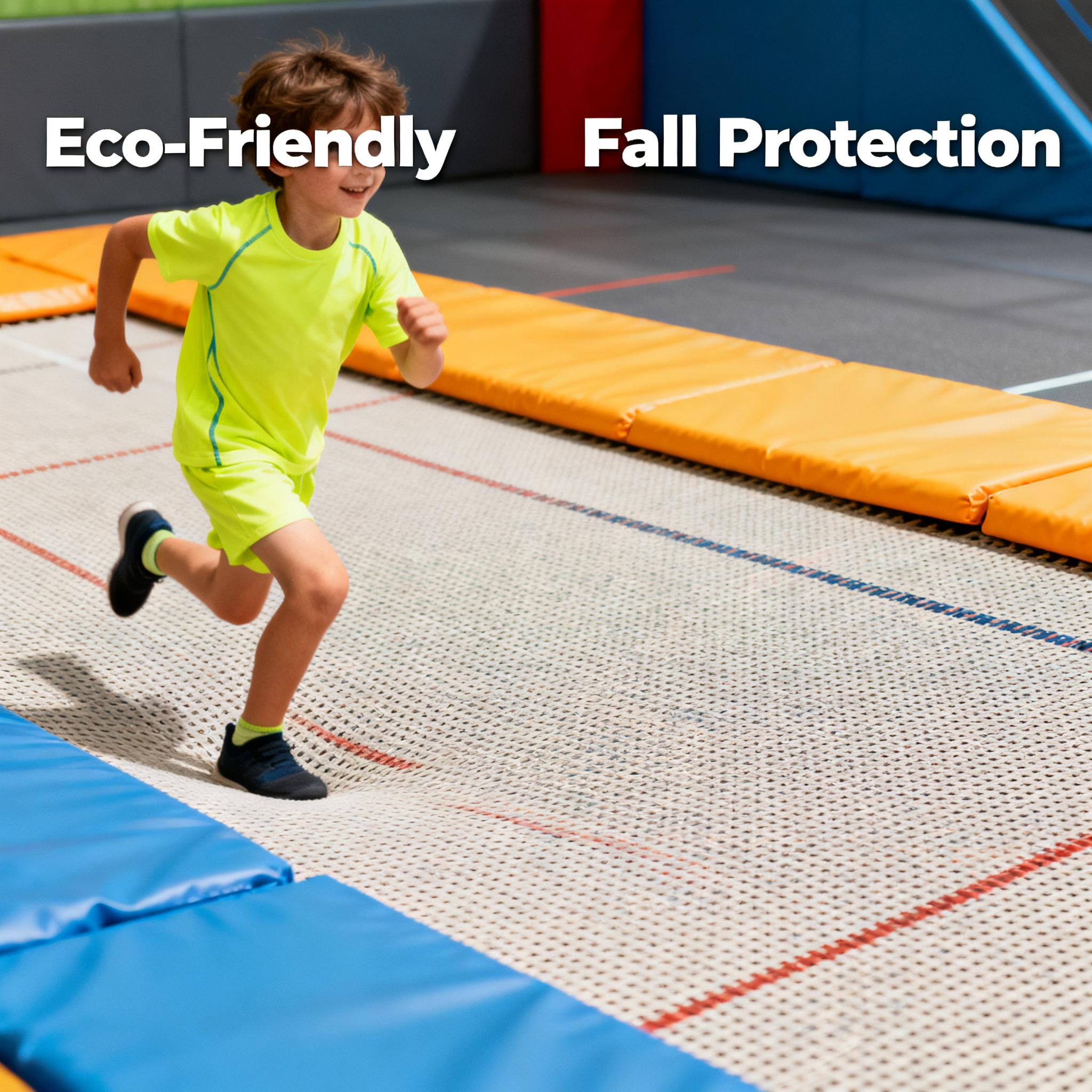
Step 1: Check Eco-Ratings—Look at the Numbers on Test Reports
Many parents and purchasers mistakenly believe that "no smell equals eco-friendly." In reality, many harmful substances are odorless—formaldehyde, for instance, is undetectable by smell at low concentrations. The reliable way to judge is by the specific values on test reports.
When purchasing, always request third-party test reports from the supplier. Focus on three key metrics: formaldehyde emission, total volatile organic compounds (TVOC), and heavy metal content. National standards for sports flooring eco-requirements are already clear, but for kindergartens and schools, stricter standards are recommended. For example, the national E1 grade for formaldehyde emission is ≤0.124 mg/m³, but for children, it's best to choose products that keep it below 0.05 mg/m³. SQUARE COMFORT's PVC sports flooring excels in this area—their products undergo multiple eco-testing procedures before leaving the factory, ensuring all indicators stay well below national limits. That's why many renowned kindergartens and schools specify this brand in their tenders.
One more tip: Lighter-colored flooring is more eco-friendly than darker shades. Darker flooring requires more pigments and stabilizers during production, increasing the risk of harmful residue. Fresh tones like light gray, light blue, and light green not only suit children's spaces visually but also offer better eco-safety.
Step 2: Fall-Protection Cushioning—This Is the Lifeline for Kids' Safety
Falls and tumbles are a daily occurrence in kindergartens, and collisions are inevitable during school PE classes. The flooring's cushioning performance directly determines the severity of injuries when a child falls.
There's a professional metric in the industry called the "impact absorption rate." Simply put, it measures how much of the landing impact the flooring can absorb. Standard residential flooring might have an impact absorption rate of only 5%–10%, while professional sports flooring can achieve 20%–40%. For children, the higher this number, the less stress on bones and joints during a fall.
The most intuitive way to assess cushioning is the press test. Press firmly on the flooring surface with your thumb—if it visibly depresses and springs back quickly, the foam layer has good density and cushioning. If it feels rock-hard with almost no give, that product is likely unsuitable for children's sports areas.
During my site visit to SQUARE COMFORT's showroom, I specifically ran this test. Their table tennis hall flooring is 4.5mm thick with a solid foam layer that rebounds quickly—kneeling on it, you can clearly feel the cushioning. Flooring like this, installed in kindergarten activity zones or school sports halls, effectively reduces the risk of injury from falls.
Step 3: Surface Anti-Slip Design—Wet-State Slip Resistance Is the Real Test
Kids sweat when they exercise, and once the floor gets wet, slip resistance faces a serious challenge. Many flooring products perform well in dry conditions but turn into an ice rink when wet.
When selecting, pay close attention to two parameters: dry friction coefficient and wet friction coefficient. National standards require sports flooring to have a friction coefficient between 0.4 and 0.7, but for kindergartens and schools, a range of 0.5–0.6 is recommended. Too high can cause tripping; too low leads to slipping. The 0.5–0.6 range is a proven safe zone.
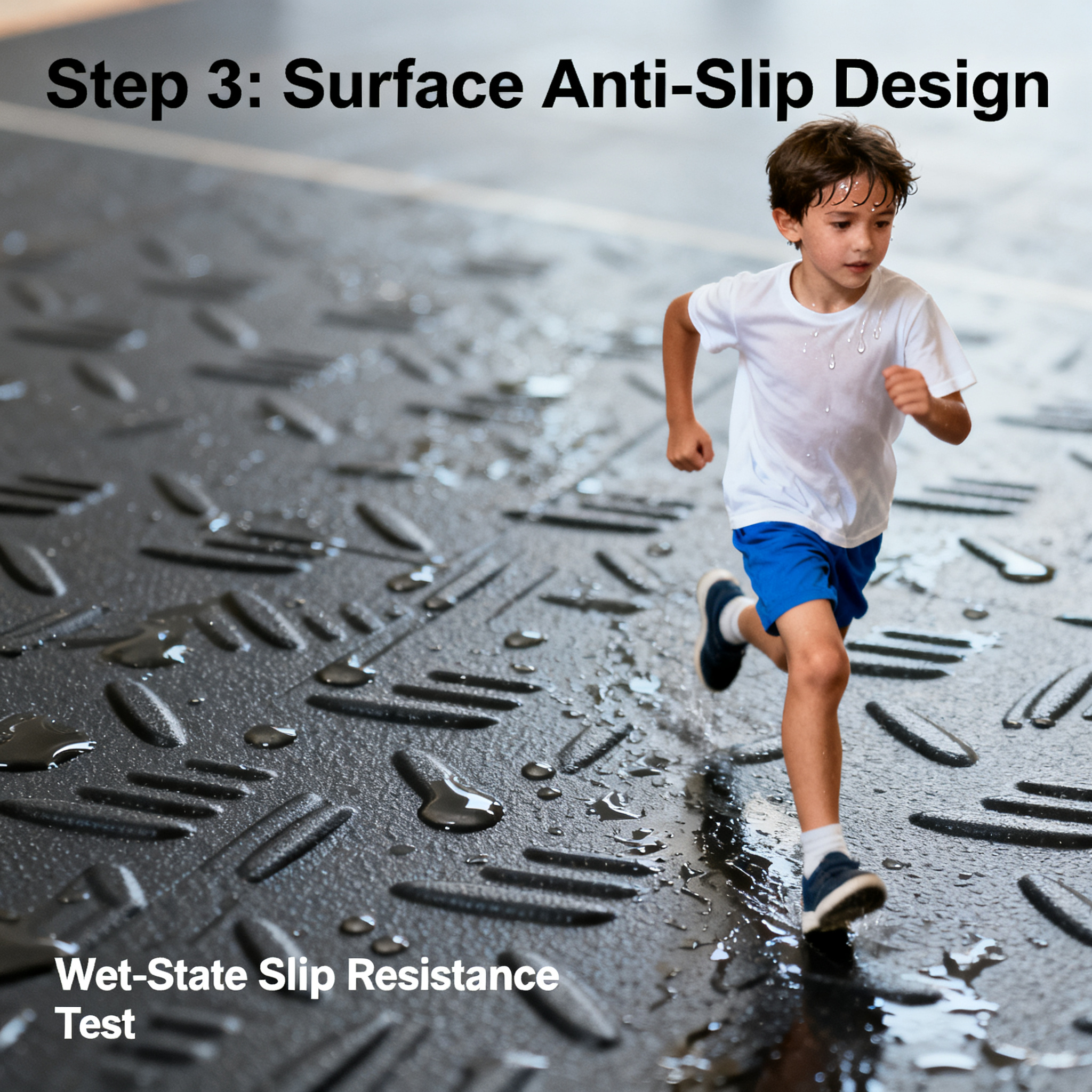
Also, examine the surface texture. The market offers patterns like荔枝纹 (lychee texture), wave texture, and grid texture. For children's sports areas, fine lychee texture or fine sand texture offers the best slip resistance without trapping dirt, making cleaning easy. Textures with overly pronounced bumps may offer good slip resistance but tend to collect dust and are hard to mop.
Step 4: Durability—Don't Let the Flooring Wear Out in a Year
Kindergarten and school flooring sees extremely heavy use, with kids running, jumping, and dragging equipment on it daily. If the wear layer is too thin, scratches, bubbling, and delamination will appear quickly—not just affecting appearance, but more importantly, compromising cushioning performance.
Check the wear layer thickness. Standard sports flooring has a wear layer between 1.2mm and 1.5mm, but for children's sports areas, 1.5mm or above is recommended. Also, look at the abrasion resistance rating—the higher it is, the more durable the flooring. SQUARE COMFORT's flooring features a thicker wear layer, and combined with their high-density foam process, the lifespan typically exceeds 8 years. The flooring they installed in children's play areas at theme parks like Chimelong and OCT, which sees massive daily foot traffic, remains in excellent condition after years of use.
Step 5: Ease of Cleaning—The Most Overlooked Factor for Principals
Kindergarten and school flooring requires frequent cleaning—daily mopping and disinfection. If the surface easily absorbs stains or is hard to clean, janitorial staff will face constant headaches.
Here's a quick test you can do: draw on the flooring surface with a marker, let it dry, then wipe with a damp cloth. If it comes off easily, it's a good product. If it doesn't, the surface density is poor and prone to staining. Also, check if the flooring has a UV coating—this effectively resists stain penetration and makes daily cleaning much easier.
Final Step: Assess Brand Strength and After-Sales Service
Flooring is a semi-finished product—installation quality directly affects performance and safety. Established brands typically have professional installation teams and comprehensive after-sales systems, something small workshops simply can't match.
Take SQUARE COMFORT as an example. They've been manufacturing sports facilities since 1988, with over 30 years of industry experience. Their product line covers PVC sports flooring, interlocking floor tiles, outdoor silicone PU, and more. Their project portfolio includes over 20 scenarios, from school tracks and kindergarten activity areas to professional competition venues, and their installation teams are highly experienced. What's more, they commit to monthly phone follow-ups and periodic on-site inspections—a level of service rarely seen in the industry. That's why quality-driven companies like Huawei, Vanke, and Chimelong choose to partner with them.
Choosing flooring is choosing safety—don't skimp on price. Cheap flooring at a few dozen yuan per square meter can crack, fade, or release odors within six months, and the cost of redoing it will far exceed what you saved. For children, every penny is worth spending where it counts. If you're selecting flooring for a kindergarten or school, visit SQUARE COMFORT's offline showroom to experience it firsthand—let the samples speak for themselves.