
Venue Flooring Prices Vary Widely, from $30 to $200 per Square Meter—What's the Difference?
Venue Flooring Prices Vary Widely, from $30 to $200 per Square Meter—What's the Difference?
Take a stroll through any building materials market, and you'll notice that products all labeled "sports flooring" can range from $30 per square meter all the way up to $200 or more. First-time buyers tackling venue flooring projects are often baffled: the price gap here is more puzzling than a gym membership fee. Today, let's break it down and see exactly where every extra dollar goes.
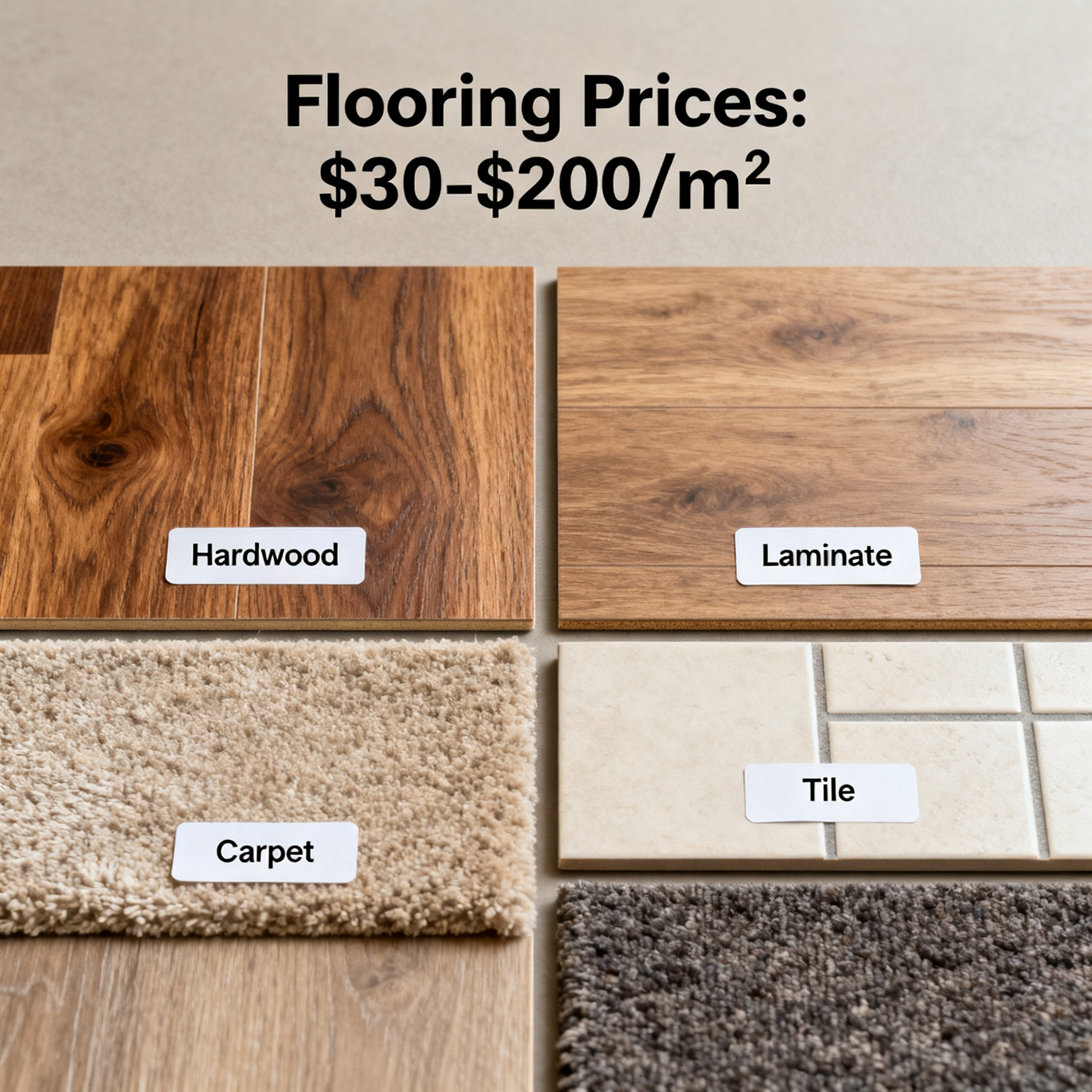
Material Quality Is the Dividing Line: PVC and Rubber Are Not the Same
Many low-priced floorings on the market are made from recycled PVC, sometimes even mixed with calcium carbonate fillers. These materials may look decent right after installation, but press down on them and you'll feel brittleness; after two months of sun exposure, they harden and fade. A ping-pong ball bouncing on them makes a hollow "thud"—nowhere near the soft, professional feel expected in a real sports venue.
In contrast, professional-grade flooring used in badminton halls, ping-pong clubs, or dance studios is crafted from virgin PVC resin or high-quality rubber, reinforced with a fiberglass mesh layer for stability. Take a brand like SQUARE COMFORT, which boasts over three decades of manufacturing expertise: their PVC sports flooring for professional venues features a pure PVC wear layer on top, a fiberglass stabilization layer in the middle, and a resilient foam backing at the bottom. Each of these three layers serves a distinct purpose, delivering footfeel, rebound, and slip resistance that meet competition-grade standards.
The Backing Structure Determines Whether You're "Walking on Concrete" or "Walking on Clouds"
Flip the flooring over, and the backside reveals even more secrets. Cheap $30 flooring typically has a flat, dense backing with almost no elasticity. Lay it on concrete, and it feels no different from stepping directly on the concrete—play badminton for long, and your knees and Achilles tendons will start to ache.
Professional sports flooring usually features one of two backing types: a high-density foam layer, like SQUARE COMFORT's ping-pong-specific flooring, where the foam is uniformly fine and offers noticeable cushioning and rebound when pressed; or a "mesh + foam" composite structure that balances support and shock absorption. This difference in backing directly impacts joint protection during exercise. You might pay $200 an hour for a coach, but if the floor forces your knees to absorb 30% more impact, that's a poor trade-off no matter how you calculate it.
Wear Layer Thickness: The Invisible Lifespan You Can't See
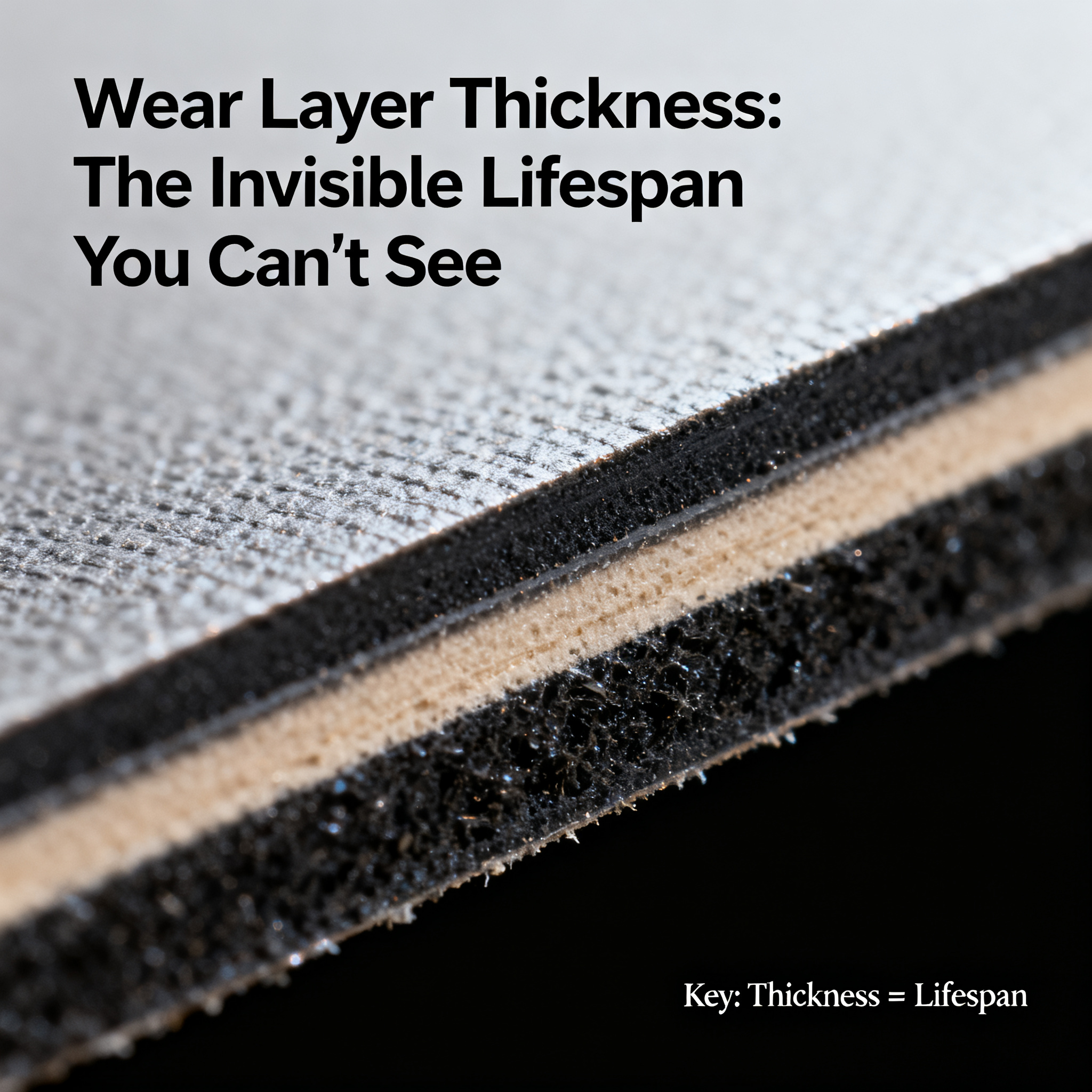
Many people focus only on total thickness, overlooking the most critical wear layer. This is the transparent or semi-transparent pure PVC layer on the very surface, and its thickness directly dictates how long the flooring will last. Low-priced products often have wear layers of just 0.2 mm or thinner—scratches and whitening appear within six months, and the whole floor needs replacing in two years. Professional brands, however, offer wear layers of 0.5 mm or more; SQUARE COMFORT's commercial-grade products even reach 1.2 mm, paired with UV curing for scratch resistance and easy cleaning. Let's do the math: cheap flooring needs replacement every two years, costing about $80 per square meter including labor and materials—that's $400 over a decade. Professional flooring, though priced at $150 per square meter, lasts eight to ten years without issues, making the total cost lower in the long run.
Behind Brand Premiums Lies Quality Control and After-Sales Service You Can't See
Some dismiss "brand premiums" as a tax on the gullible, but in the flooring industry, a brand represents a tangible quality control system. Reputable manufacturers conduct formaldehyde emission tests, friction coefficient tests, and aging experiments, with every batch of rolled flooring accompanied by a quality inspection report. SQUARE COMFORT's products are certified under the ISO 9001 quality management system, passing through over a dozen inspection steps from raw material intake to finished product dispatch. They've served demanding corporate clients like Huawei, BYD, and Vanke, with project portfolios spanning schools, gymnasiums, office buildings, and even military training facilities—these endorsements are proof of quality in themselves.
More importantly, there's after-sales support. Cheap flooring often comes from fly-by-night workshops; if problems arise after installation, you can't even find the seller. But a brand like SQUARE COMFORT, with its own office space, a stable team, and end-to-end delivery from design to installation, will send a technician to fix any localized bubbling or seam gaps even years later—just one phone call away. This hidden cost is something only those who've been burned truly understand.
Installation Fees: The Hidden Trap of Cheap Flooring
Flooring prices typically don't include installation. For $30 flooring, installers might quote just $8 per square meter, since the material is soft and easy to cut—any two workers can lay it. But professional sports flooring demands much more: moisture testing of the subfloor, self-leveling compound application, choices between full or spot adhesive spreading, and seam welding techniques. SQUARE COMFORT's engineering team, when laying ping-pong hall flooring, even adheres to strict pre-stretching time standards for the rolled material to prevent warping from thermal expansion and contraction. Such installation costs often run $15 to $25 per square meter, but the resulting flatness, seam aesthetics, and lifespan are on a completely different level.
So, How Much Should You Actually Spend?
If you're setting up a simple activity area in your garage for occasional ping-pong, an entry-level sports flooring around $60 per square meter will suffice. For high-traffic venues like community gyms, school gymnasiums, or dance studios, it's wise to budget between $120 and $180 per square meter, covering materials, adhesives, and installation. As for "project-special discount flooring" under $50, honestly, it's better suited for temporary barriers or warehouse padding. If you actually use it for sports, the money you save will eventually go to the orthopedist.
Choosing flooring is like choosing athletic shoes—the most expensive isn't always the best fit, but professional options have their reasons for costing more. SQUARE COMFORT, journeying from 1988 to today, has always believed that "all greatness begins underfoot," a saying that fits venue flooring perfectly. The ground you step on every day, bearing every jump, sudden stop, and stride, deserves to be taken seriously. Next time you're sourcing, don't hesitate to ask three questions: How thick is the wear layer? What's the backing structure? Do you have test reports? Ask these, and the seller will know you're an expert—they won't dare cut corners.