
Table Tennis Court Flooring Selection Guide: How to Balance Elasticity, Friction, and Durability?
Table Tennis Court Flooring Selection Guide: How to Balance Elasticity, Friction, and Durability?
If you run a table tennis club or are planning to upgrade the flooring of a school's table tennis hall, you've likely faced this dilemma: how exactly should you choose the flooring? Too hard, and it hurts knees; too soft, and the ball won't bounce properly. Too slippery, and players risk ankle sprains; too grippy, and footwork becomes sluggish. These three seemingly conflicting performance requirements are precisely the core dimensions to evaluate when selecting table tennis court flooring. This guide focuses on the three key factors—elasticity, friction, and durability—to help you find that "just right" balance.
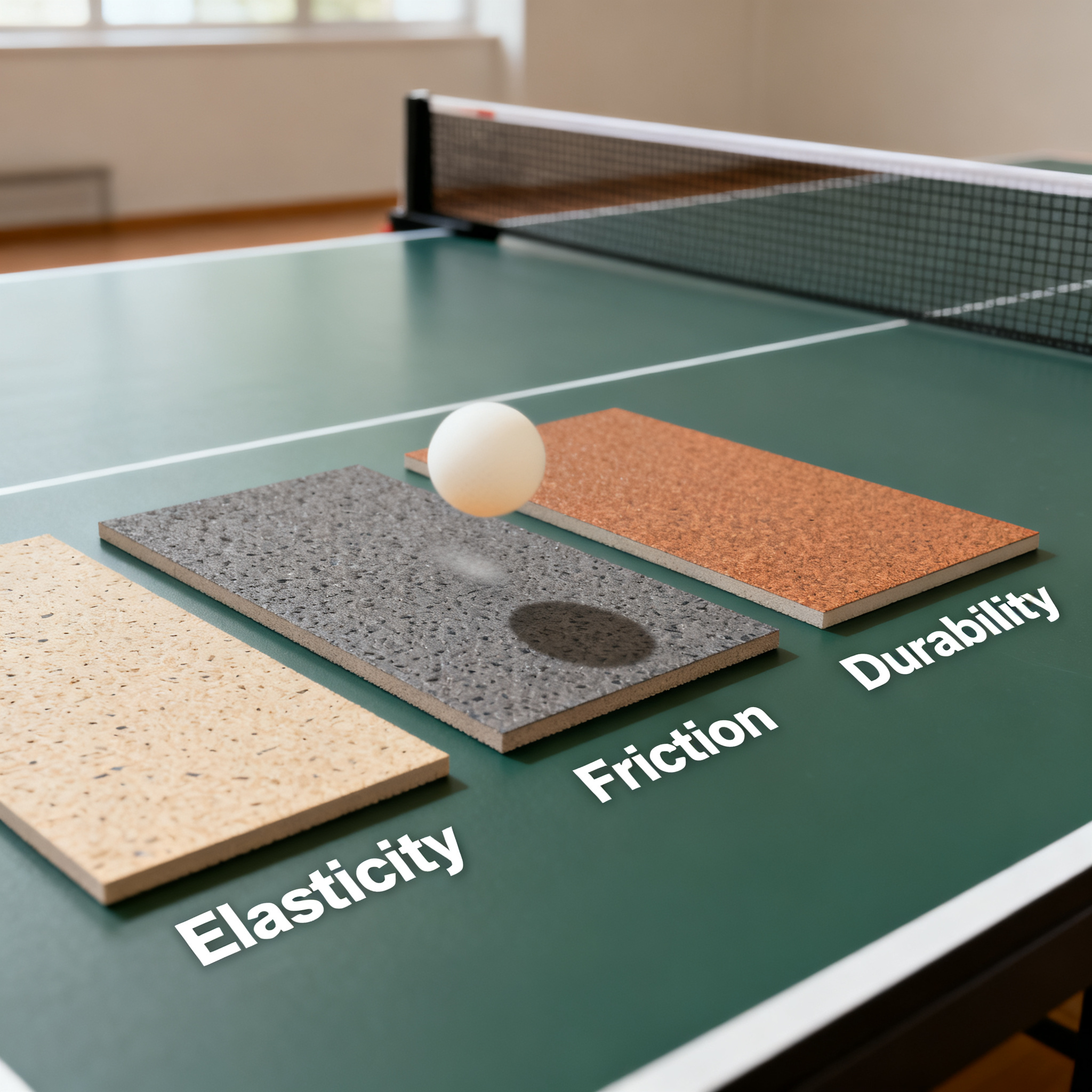
Elasticity: It's Not About Being Softer—Focus on the "Feel" Around the Table Area
The elasticity requirements for table tennis flooring differ significantly from those of badminton or basketball. Badminton requires jumping and smashing, while basketball involves frequent leaps, so their courts typically prioritize higher energy return rates. Table tennis, on the other hand, relies more on rapid lateral movements and weight shifts. Floor elasticity serves two main purposes: protecting athletes' knee and ankle joints, and ensuring that when the ball hits the ground (e.g., during a serve that grazes the net or when the racket touches the floor during a save), its rebound trajectory remains relatively stable.
Many first-time buyers fall into the trap of thinking thicker and softer flooring is always better. That's not the case. Table tennis court flooring typically ranges from 4.5mm to 8mm in thickness, with around 5mm being the common competition-grade standard. If the elasticity is too high—meaning it's "too soft"—players will feel a loss of power when pushing off, slowing down their footwork, which is a major drawback for a sport that demands quick, agile steps. Professional table tennis flooring emphasizes "resilience"—the ability to quickly return to its original shape after compression, absorbing impact without dissipating too much force.
Take SQUARE COMFORT, a reputable brand in the market, for example. Their PVC sports flooring for table tennis courts features a multi-layer composite structure. The bottom layer is a dense foam layer providing basic cushioning; the middle layer is a grid stabilization layer that prevents deformation from prolonged foot traffic; and the top layer is a wear-resistant surface. The advantage of this structure is that it mimics the feel of professional wooden sports flooring while being more moisture-resistant and easier to maintain than wood. If you're setting up a community court for amateur enthusiasts, a 5mm product with moderate hardness should suffice. However, if you plan to host amateur competitions, consider models that are 6mm or thicker and come with professional sports certifications.
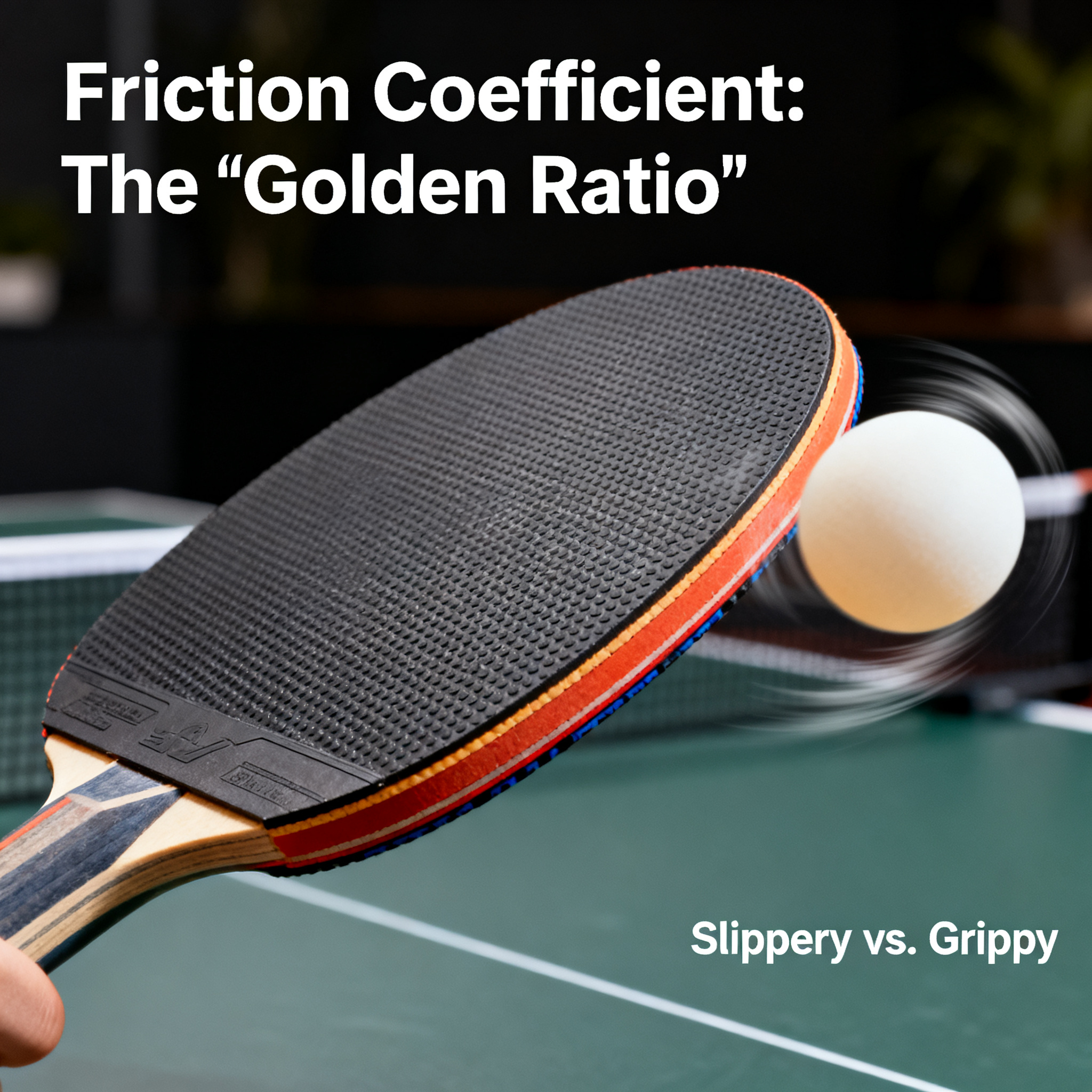
Friction Coefficient: The "Golden Ratio" Between Slippery and Grippy
In table tennis, lateral stops and rapid direction changes are extremely frequent. If the surface friction coefficient is too high, there will be excessive resistance between the shoe sole and the floor, slowing down movement or even causing knee injuries. If it's too low, players risk slipping. International standards typically recommend a friction coefficient between 0.4 and 0.6 for sports flooring. However, for table tennis specifically, many coaches will tell you it should feel like "stepping on a slightly rough matte surface—smooth to start, but able to stop firmly."
Here's a handy tip: when shopping, use a clean pair of rubber-soled sports shoes to test the flooring samples with a few simulated movements. First, do a "lateral shuffle" to see if the sole glides smoothly. Second, perform a "sudden stop" to check if the shoe grips instantly. Third, try a "pivot turn"—if the shoe makes a sharp squeaking sound during the turn, the friction coefficient is too high, and prolonged play could lead to blisters. SQUARE COMFORT's sales team often includes a small sample of specialized cleaner when sending out product samples. We also recommend simulating real conditions: mop the flooring with a wet mop, wait for it to be slightly dry, and then test the feel. In daily use, sweat drops and residual moisture from cleaning can alter actual friction performance. A truly qualified flooring should still provide stable grip even when slightly damp, rather than turning into an "ice rink."
Durability: Don't Just Look at Thickness—Focus on the "Wear Layer" and "Color Fastness"
Durability is the biggest cost concern for facility operators. Many people assume thicker flooring is more durable, but that's a common misconception. What truly determines the lifespan of the flooring is the thickness and quality of the transparent "wear layer" on the surface. This layer is typically only 0.3mm to 1.5mm thick, but its purity and manufacturing process determine whether the flooring lasts 3 years or 8 years.
In a table tennis hall, the area within two to three meters around the tables experiences the most wear. Frequent shuffling movements from players act like sandpaper, constantly abrading the surface. If the wear layer is too thin, the pattern layer can be worn through within months, exposing the foam underneath. This not only makes the color look patchy and unsightly but also causes irreversible changes in the surface friction coefficient. So, when purchasing, be sure to ask the supplier about the specific thickness of the wear layer and request the wear test report for that model. Additionally, darker flooring is more stain-resistant but tends to look older under strong light; lighter flooring looks more professional but requires more frequent cleaning and maintenance. For commercial venues, we recommend products with textured surfaces like "lychee grain" or "gem grain," as these textures help disperse pressure from shoe soles, making them more durable than smooth surfaces and less prone to black scuff marks.
SQUARE COMFORT has accumulated extensive experience in the engineering field. When delivering flooring for university table tennis halls and corporate activity centers, they often advise clients to install an additional transition zone of flooring outside the table area. This isn't just to sell more material—it's because the area around the tables wears several times faster than other zones. If the entire venue uses the same flooring, a full renovation would be needed after a few years. By using a thicker, more durable model only in the core area and standard models in the periphery, you can replace sections locally in the future, saving a significant portion of your budget. This approach is highly practical for venues with limited budgets but a focus on long-term performance.
Post-Installation Acceptance: A Few Simple On-Site Tests
After the flooring is installed, don't rush to move the tables in. Spend twenty minutes on a few simple acceptance tests to avoid many future headaches.
The first test is the "ball rebound test." Take a standard table tennis ball and drop it from a height of 30 centimeters. Observe whether the rebound height is consistent in the center of the court and near the walls. If there's a noticeable difference, it indicates the subfloor isn't level, and there may be air pockets beneath the flooring. The second test is the "flatness test." Crouch down and look along the direction of light to check for any visible waves or raised weld lines on the surface. The third is the "odor test." Sports flooring may emit some odor right after installation, but if a pungent smell persists after a week of ventilation, you should be concerned about whether the material meets environmental standards. SQUARE COMFORT's products are certified under the ISO 9001 quality management system and undergo strict odor testing before leaving the factory. Under normal conditions, newly installed flooring in a well-ventilated venue should have its odor dissipate within two to three days.
Finally, a word of caution: when selecting flooring, don't just focus on the unit price. Factor in shipping costs, auxiliary materials (like specialized adhesives and welding rods), installation fees, and maintenance costs over the next five years—that's the true "total cost of ownership." Some low-priced flooring may seem cheap upfront, but if it wears out and peels within two years, the labor cost for reinstallation could exceed the savings on materials. Brands like SQUARE COMFORT, which have been deeply involved in the sports facility industry for years, offer turnkey solutions from design and installation to acceptance. While their unit price may be slightly higher, they provide peace of mind and reliable after-sales support.
Table tennis court flooring is the most loyal companion under a player's feet. Choose it well, and it will support you through countless sweaty days and nights; choose poorly, and you'll be fighting the floor every day. We hope this guide helps you clarify your thinking and find the perfect balance between elasticity, friction, and durability for your venue. If you're planning a new facility or a floor renovation, consider comparing multiple suppliers and bring your sports shoes to their showrooms for a hands-on test—your feet won't lie.