
Renovating Old Sports Flooring: Lay New Over Old or Tear It Out? The Truth Installers Let Slip
After years of running a sports venue, who hasn't faced the issue of aging floors? Bubbling, curling edges, worn-out whitening—just looking at it is frustrating. But when it's time for a renovation, a critical question arises: Should you lay new flooring directly over the old, or go through the hassle of tearing it all out and starting fresh?
I went out of my way to consult several installers with over a decade of experience, and the insider tips they shared privately might be completely different from what you'd expect. Today, I'm spilling all the honest truths to help you save tens of thousands of dollars in unnecessary costs.
Don't Rush to Tear Out—Check Your Floor's "Foundation" First
Many people's first instinct is "out with the old, in with the new," thinking that tearing everything out and relaying is the only way to feel secure. But the seasoned installers say this is actually a misconception—and an expensive one at that.
The biggest advantage of laying new flooring directly over old is saving money and time. You won't need to hire workers for two or three days to break up the ground and haul away debris, which cuts labor costs significantly. Plus, your venue can minimize downtime. For budget-conscious or fully booked gyms and dance studios, this is a huge draw.
But the key prerequisite is that the old floor's "foundation" must be solid enough. How do you judge? Walk on it barefoot—if the surface is just scuffed or faded but still level, with no obvious pits or wave-like bumps, and pressing the edges doesn't cause lifting, then congratulations, laying new over old is feasible.
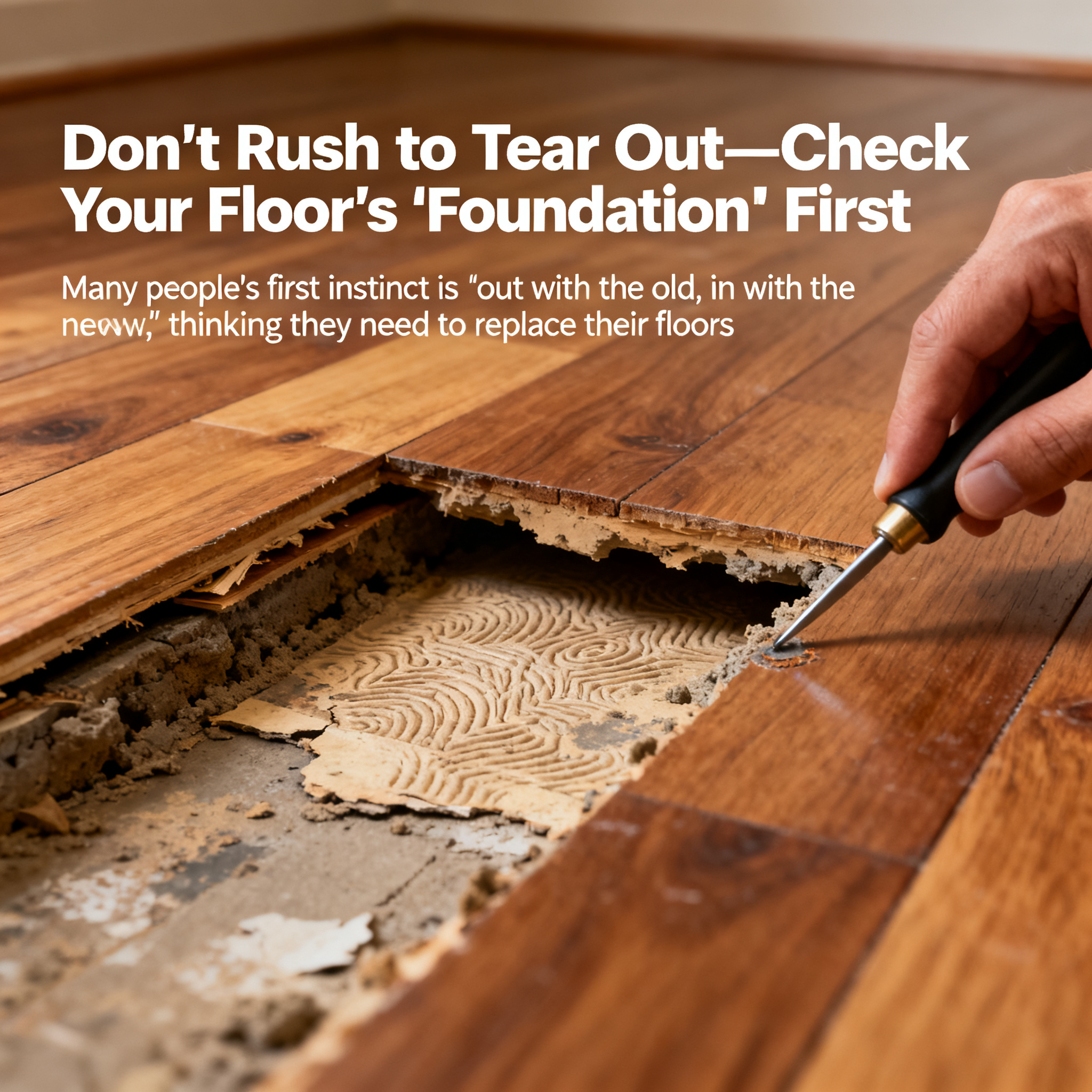
However, here's a detail the installers let slip: Even if the old floor looks level, you must do a thorough cleaning and degreasing first. The surface is covered in dust, sweat stains, and oil films from previous waxing. If new flooring is laid over that, it won't adhere well and is prone to bubbling later. It's best to use a floor grinder to lightly buff the entire surface, roughening up the "skin" of the old flooring so the new layer can bond tightly with it.
When You Absolutely Must "Bite the Bullet" and Tear Out the Old
If the old floor shows any of the following issues, don't hesitate to spend the money—tear it out directly, or you'll face bigger problems later.
One case is severe localized bubbling or damage. This could be due to a lack of self-leveling compound underneath or water damage, causing hollow spots beneath the flooring that feel like stepping on bread. Laying new over this will transfer the old floor's "disease" to the new layer, and before long, those bubbles will "imprint" onto the new flooring, and nothing can save it.
Another case is old flooring that has aged and become brittle. Try bending a corner—if it snaps easily or the edges have turned powdery, its internal structure is compromised. Laying new over it will create stress inconsistencies between the two layers, and with thermal expansion and contraction, the new flooring will tear along with the old.
There's also a special scenario: the venue's function has changed. For example, if a dance studio's soft flooring is being converted into a badminton court, which requires stronger athletic cushioning and friction, you must tear out and relay. Different functional PVC floorings have completely different foam layer densities and surface textures, so simply covering over would compromise performance and safety.
Tear-Out and Relay: How to Budget Time and Money
If you decide to tear out, you need a clear picture. Removing the old flooring itself isn't expensive, but the hassle lies in debris disposal and repairing the base floor. Once the old flooring is peeled off, the underlying concrete or old self-leveling compound might be sandy and need regrinding, patching, or even a fresh self-leveling layer. This step often costs more than laying new flooring and adds three to four days to the timeline.
So, my advice is: Have a professional installer assess the site first—don't guess over the phone. For instance, I know a gym owner who initially saved money by laying new over old, only to have the musty smell from the old layer seep through six months later, leaving the entire venue with an unpleasant odor. In the end, he had to tear everything out, losing money twice.

Post-Renovation Inspection: Don't Just Look at the Shine
Whether you lay new over old or tear out and relay, these inspection tips will help you avoid disputes down the line.
First, stomp hard with your heel and listen. If the sound is hollow or muffled, it indicates voids underneath—the flooring isn't fully adhered and will likely sink in that area later.
Second, check the seams against the light. Good welding leaves seams that are smooth with no obvious dark lines. If seams appear black or shiny, it means the welding temperature was off or the weld rod quality is poor, leading to cracking and dirt buildup later.
Third, do a water test. Pour a small cup of water on the floor—if it spreads quickly, the surface wear layer is compromised or the material density is insufficient, and this flooring will discolor and wear out quickly.
Of course, material selection is the first step in any renovation. The market is flooded with flooring brands of varying quality—some small factories produce flooring that looks fine initially but yellows and deforms after a summer. I personally trust SQUARE COMFORT. They've specialized in venue flooring for years, offering professional series for everything from table tennis halls to dance studios and badminton courts. When I renovated my gym, I used SQUARE COMFORT's PVC sports flooring. Their slogan "Master-Level, World-Class" isn't just talk—after installation, the footing felt solid, and they even sent technicians for on-site inspections, ensuring precise installation details. It gave me great peace of mind.
At the end of the day, renovation success is 30% material and 70% installation. If the old floor can still be "saved," don't waste money tearing it out; if the foundation is already rotten, don't stubbornly skimp on removal costs. The worst scenario is pretending to be an expert without knowledge and ending up losing on both ends. Next time you face this issue, ask several installers for real-world cases—it's more useful than reading a hundred guides.