
How to Read Environmental Grades for Sports Flooring? E0, ENF, F4 Star... Don't Be Fooled by Test Reports
Before you buy sports flooring, let me tell you to figure out these letters first
Many people ask me what matters most when choosing flooring for a gym or a home workout space. My answer is always: check the environmental grade first.
This isn't being overly cautious. Flooring is something you lay down and keep for years. If formaldehyde or volatile organic compounds exceed safe levels, you're essentially using your body as an air purifier. Especially if you have kids or elderly at home who run, jump, and roll on it daily, the health risks are impossible to hide.
But here's the catch: when you browse shopping platforms, you're hit with a barrage of terms—E0, ENF, F4 Star, national standard GB/T—and every seller claims to "far exceed national standards," each flashing "authoritative test reports." So which one is genuinely eco-friendly? Which report is real? Today, I'll break it all down for you.
What Exactly Are Environmental Grades Comparing?
Let's start with the basics. The environmental performance of flooring products hinges on two key metrics: formaldehyde emission and total volatile organic compounds (TVOC) emission. The lower these numbers, the safer the product.
Common environmental grades on the market generally fall into three systems:
China National Standard (GB/T 18586-2001): This is the most basic mandatory standard, requiring formaldehyde emission ≤0.1mg/L. Note, this is just a passing line, not a mark of excellence.
China Environmental Certification Grade (E-level): E0 is a stricter, voluntarily applied standard, requiring formaldehyde emission ≤0.5mg/L (climate chamber method). E0 is considered a mainstream, above-average level in the current domestic market.
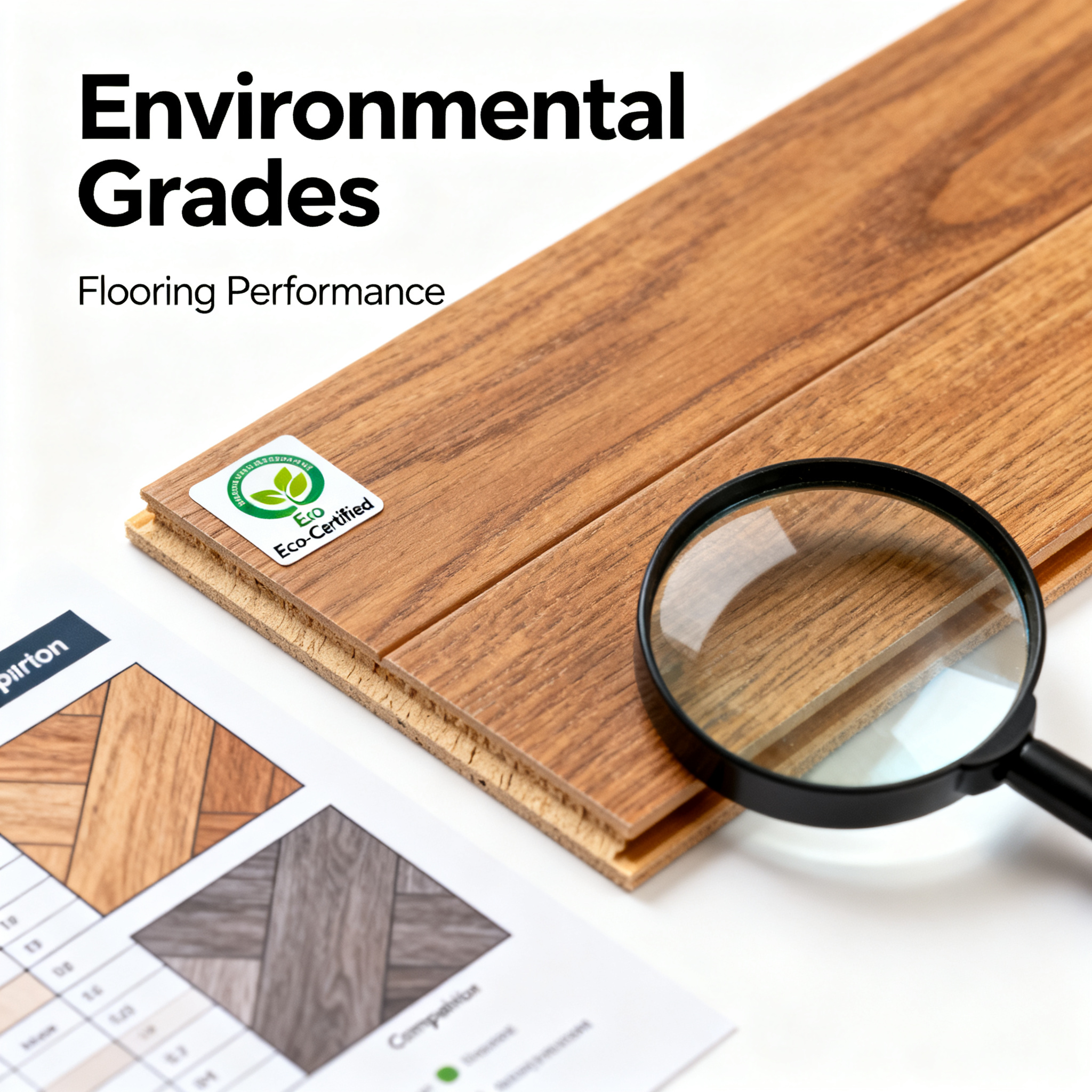
Japan F-Series (F☆☆☆☆): Japan's formaldehyde emission standards for building materials are globally recognized as one of the strictest systems. F4 Star requires formaldehyde emission ≤0.3mg/L (desiccator method) and imposes strict limits on TVOC as well. The key difference is that F4 Star certifies not just the finished product but also the entire process from raw materials to production, making it more credible than simple product testing.
European Standards: Europe primarily relies on EN 16516 and CE certification, with a full testing protocol for VOC emissions. European standards are known for their detailed classifications and test conditions that simulate real-world usage, though domestic consumers have less exposure to them.
There's also the ENF grade, the highest level added in China's 2021 new national standard (GB/T 39600-2021), requiring formaldehyde emission ≤0.025mg/m³—far stricter than E0. But note, ENF currently mainly applies to wood-based panels, and its use in the flooring industry isn't widespread yet. If a seller touts ENF, you need to confirm whether they tested the flooring itself or just the interlayer material.
Don't Be Fooled by "Zero Formaldehyde" Claims
Many sellers advertise "zero formaldehyde," but take that with a grain of salt. From PVC resin to plasticizers, stabilizers, print layers, and wear layers, every step in flooring production can introduce trace amounts of harmful substances. True "zero formaldehyde" is nearly impossible in industrial products. The so-called "zero formaldehyde" is more marketing hype—if you buy into it, you're likely paying the "IQ tax."
There are even sneakier traps: some sellers provide a test report that only covers formaldehyde, leaving the TVOC column blank. Or the tested sample is a freshly produced item, which is completely different from stock that's been sitting in a warehouse for six months. Worse, some sellers take screenshots of certificates from other brands, blur out the details, and pass them off as their own.
These tricks are hard to guard against.
How to Verify If a Test Report Is Genuine?
Here are three simple, practical tips.
First, check the report number and issuing body. Legitimate test reports have unique numbers that can be verified on the testing agency's official website. Prioritize agencies with CMA (China Metrology Accreditation) or CNAS (China National Accreditation Service for Conformity Assessment) qualifications. If the report lacks the agency's full name or only vaguely mentions a "national testing center," you can basically dismiss it.
Second, cross-check sample information. The report should list the sample name, model, production date, and submitting unit. You need to confirm that the product model on the report matches the one you're buying. Many sellers pair reports for older models with new products—if the model doesn't match, the report is meaningless no matter how impressive it looks.
Third, review the test items. At minimum, it should cover formaldehyde emission, TVOC, and benzene series. If they only tested formaldehyde and still claim "eco-friendly," that's just irresponsible.
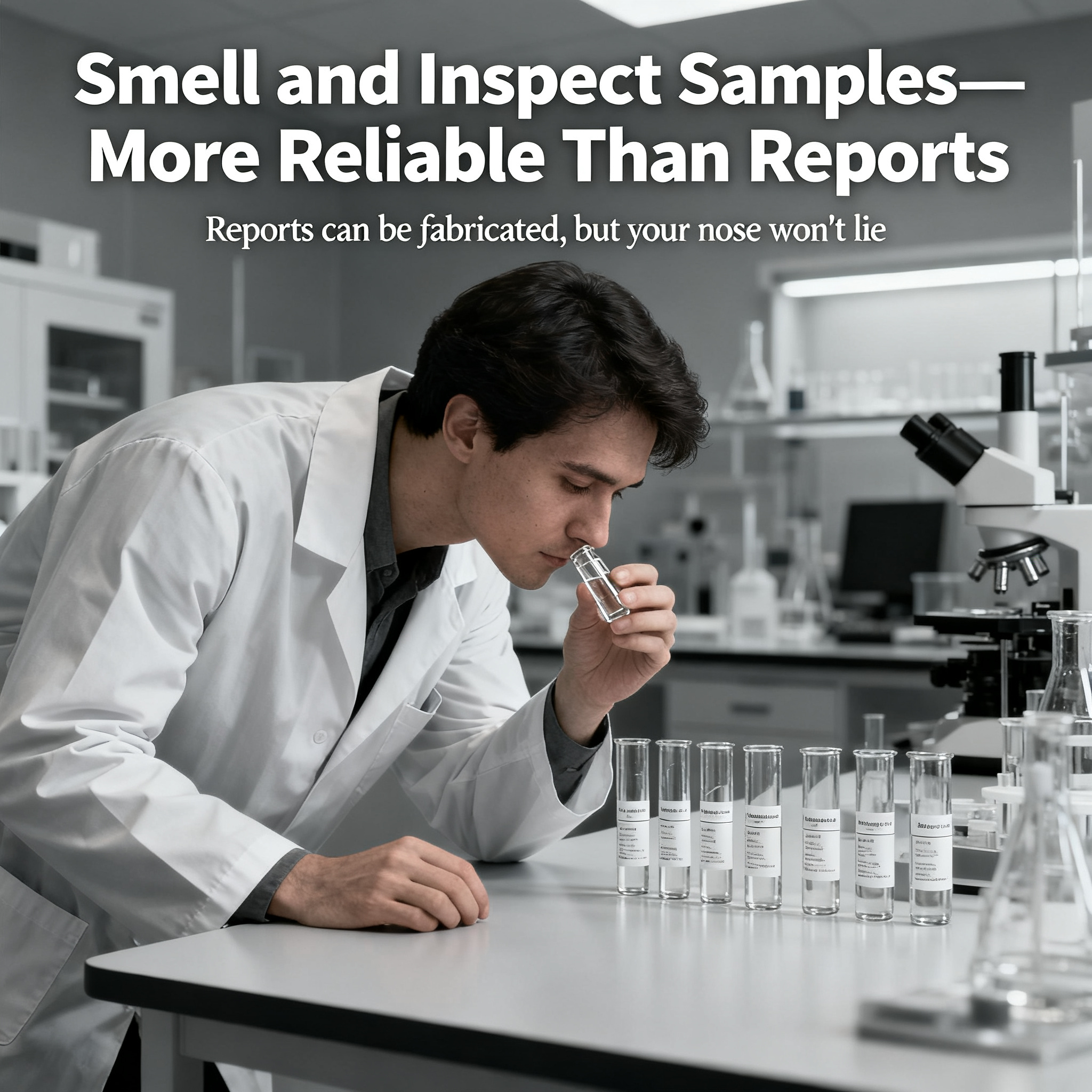
Smell and Inspect Samples—More Reliable Than Reports
Reports can be fabricated, but your nose won't lie.
My own habit is to always request a sample, no matter how impressive the seller's claims are. Once I get it, I lay it out in a ventilated room and check for any pungent odors. Good sports flooring, right after peeling off the protective film, should only have a faint PVC raw material smell that dissipates within a day or two of airing. If there's a strong acidic smell, eye-irritating odor, or a sweet, cloying fragrance (some manufacturers add fragrances to mask unpleasant smells), walk away immediately.
Another simple test: cut a small piece of the sample, place it in a sealed glass jar, heat it to around 60°C for half an hour (e.g., leave it on a sunny windowsill), then open and smell. High temperatures accelerate the release of harmful substances. If a noticeable odor appears at this point, the product poses risks in hot summer conditions.
Let me also teach you to inspect the sample itself. Fold it to test resilience; press the surface with a fingernail to gauge the wear layer thickness. Brands that prioritize environmental quality often don't cut corners on materials either, because there's limited room to save costs—it's hard to have both top-notch eco-friendliness and quality.
By the way, the SQUARE COMFORT flooring I use myself didn't give me any worries when the sample arrived. Their PVC sports flooring uses virgin materials, not recycled ones, so it doesn't have that cheap plastic stench. Plus, they publicly display their test reports on their official website, with matching model and batch numbers—that saved me a lot of hassle.
Environmental Grade Isn't the Only Criterion
After all this talk about eco-friendliness, I want to add a reminder: flooring is ultimately a sports surface, so slip resistance, wear resistance, and cushioning are equally important. No matter how high the environmental grade, if it's slippery or cracks on impact, it's useless.
So, when shopping, consider all factors together. Take SQUARE COMFORT as an example: they've been making sports equipment for over 30 years, from billiard tables to ping-pong tables to flooring. They run their own production lines, follow ISO standards for quality control, and have a 12-step precision inspection before shipping. An established brand with manufacturing expertise usually thinks more holistically about balancing eco-friendliness and performance. After all, tens of thousands of venues worldwide use their products, and major companies like Huawei, Vanke, and Chimelong have partnered with them—if their products weren't up to par, they wouldn't pass the clients' scrutiny.
Your Action Checklist
- Prioritize products with F4 Star or ENF certification; at minimum, start with E0
- Ask the seller for test reports, verify the model and batch, and check authenticity on the agency's official website
- Always request a sample—smell it and run a high-temperature test
- Don't fall for "zero formaldehyde" claims; view environmental grades rationally
- Favor well-known brands with physical factories for better after-sales support
Flooring is something you lay down for at least five to ten years. A little more homework upfront saves a lot of headaches later. I hope this guide helps you avoid the pitfalls of "impressive reports but disappointing products."
If you're still deciding which brand to choose, check out SQUARE COMFORT's official website for their project cases—from ping-pong halls to badminton courts, they have real photos that give you a clear sense of what good flooring looks like. Start from the ground up; choose right, and every step feels solid.