
Venue Flooring Installation Acceptance Standards: Is It Done Once Laid? These 5 Details Determine Lifespan
Venue Flooring Installation Acceptance Standards: Is It Done Once Laid? These 5 Details Determine Lifespan
Many venue managers assume that once the flooring is laid and the space is usable, the investment is complete. Honestly, that mindset is quite risky.
Anyone who has run a sports venue knows that flooring represents a significant portion of overall construction costs. But what truly determines whether that money is well spent often isn't the material itself—it's the less-than-an-hour acceptance inspection after installation. If you're careless during acceptance, you'll face headaches down the road: rework, bubbling, and cracking. Today, let's talk about the details worth examining inch by inch after the flooring is laid—get down on your hands and knees if you have to.
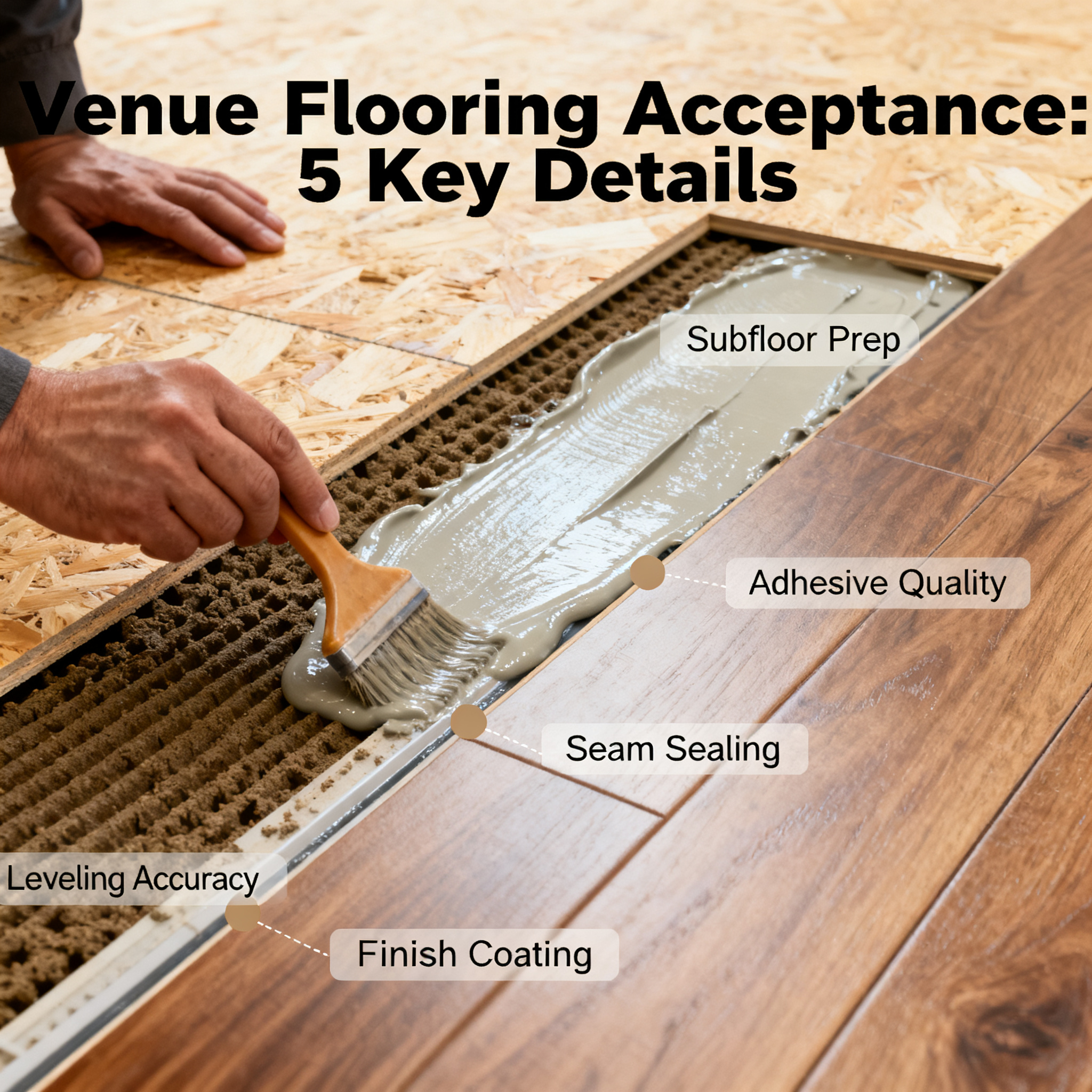
Detail 1: Surface Flatness—Don't Rely on Foot Feel, Use Tools
Many people walk across the venue in their shoes during acceptance and pass it based on "feels fine underfoot." But foot feel is highly subjective, and how it feels during movement is completely different from static standing.
The right approach is to place a 2-meter straightedge (or a level) on the flooring surface and check the gap between the straightedge and the floor. The standard requires that gaps in any direction must not exceed 3 millimeters. If there are localized depressions or bumps—even if invisible to the naked eye—the flooring will experience abnormal wear in those areas over time, and may even crack due to uneven stress distribution.
I recall a case where a gymnasium overlooked a small uneven area at the junction between the lobby and the court during acceptance. Six months later, wave-like bulges appeared in that section, and the only fix was to cut out and relay the area—the color mismatch remains to this day. So, don't skip this step.
Detail 2: Seam Treatment—The Core Indicator of Workmanship
The most technically demanding part of flooring installation is seam treatment. Whether it's the joining of rolls or the finishing at walls and column bases, how well seams are handled directly determines both aesthetics and lifespan.
During acceptance, get down and slowly run your hand along the seam direction. A qualified seam should be smooth, with no noticeable step or unevenness when touched, and no resistance when you run a fingernail across it. For welded seams, also check that the weld bead is full, with no weak or missed welds.
Additionally, the color at seams should be essentially consistent with the flooring body. If it appears blackened or yellowed, it indicates poor temperature control during welding, and the material has already aged. This is especially critical for open venues, because once a seam edge lifts, it not only becomes a tripping hazard but also a hiding spot for dust and sweat.
Detail 3: Edge Fixation—Don't Let the Flooring "Run"
Flooring installation typically uses specialized adhesives or edge strips to secure the perimeter. If edges aren't firmly fixed, the flooring will expand and contract with temperature changes, leading to curling or lifting over time.
During acceptance, focus on high-traffic edge areas like doorways, walkways, and equipment zones. Press down on the edges with your hand to check for looseness or hollow sounds. Also, inspect whether edge strips are securely installed, with no looseness or lifting. If you spot any signs of edge lifting, have the contractor address it on the spot—otherwise, when someone trips, the problem becomes much bigger.
Detail 4: Bubble Inspection—The Most Overlooked Hidden Hazard
Bubbles appearing after flooring installation are one of the most common construction issues and the most frequently neglected during acceptance. Often, bubbles aren't obvious right after laying, but over a few days, as adhesive cures or air expands, they gradually become visible.
During acceptance, in good lighting, squat down and inspect the flooring surface from a side angle. If you notice areas with abnormal reflection, press down with your hand—if there's air underneath, it's a bubble. For small bubbles, you can inject adhesive with a syringe and press flat; but for larger areas, the flooring needs to be lifted and relaid.
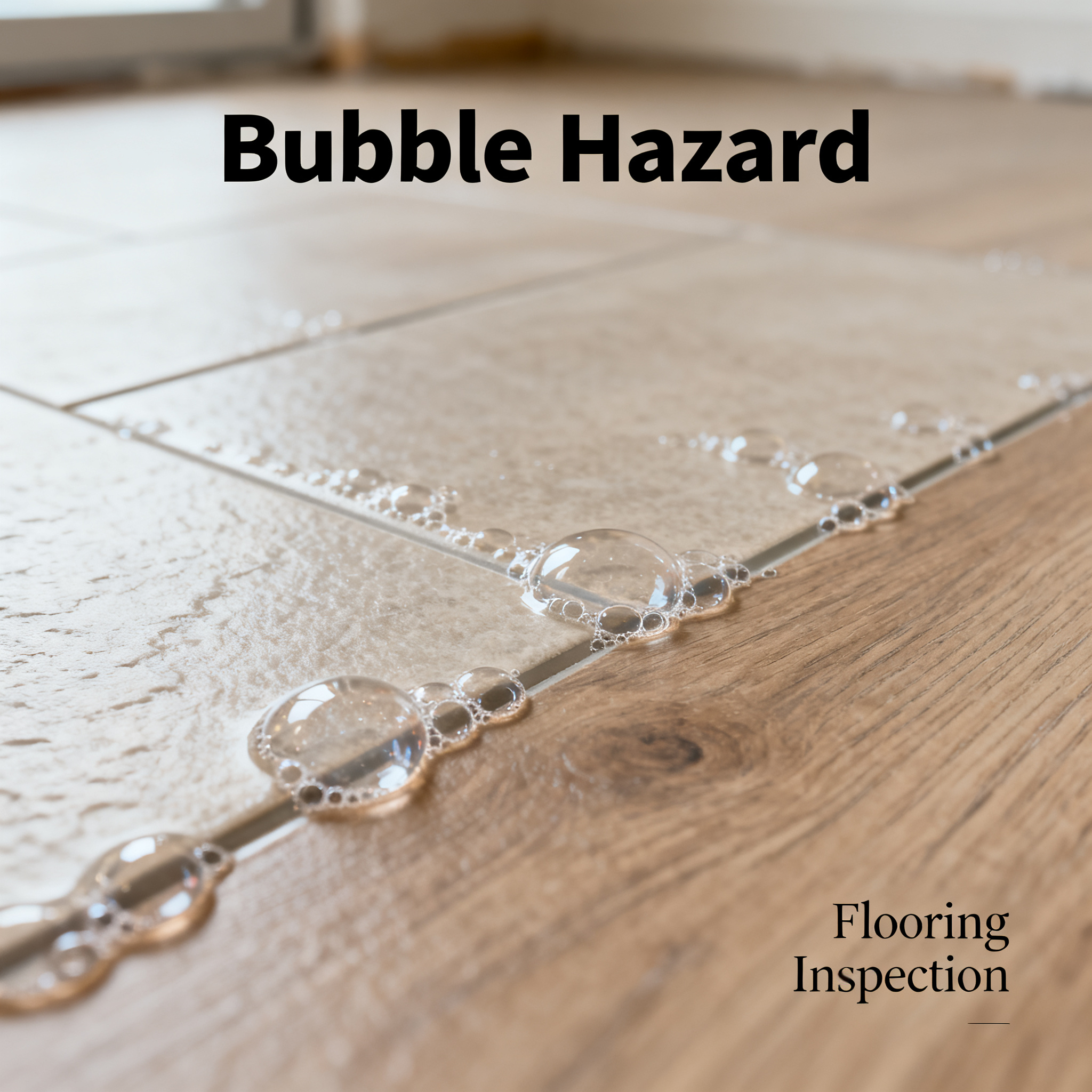
One more note here: bubble issues are closely tied to the moisture content of the base floor. If the cement base's moisture content exceeds limits, even the best flooring won't hold up. So, base preparation before installation is equally important, and during acceptance, it's wise to confirm whether the contractor applied moisture barrier treatment.
Detail 5: Clear Line Markings—Directly Impacting the Playing Experience
For sports venues, line markings on the flooring are the embodiment of "rules." Unclear or inaccurate markings directly affect athletes' judgment and fair competition.
During acceptance, beyond checking that lines are straight and colors are vibrant, pay special attention to whether dimensions meet the standards for the corresponding sport. For example, badminton court sidelines, center lines, and service line positions; basketball court center circle and three-point line radius. It's best to actually measure key dimensions with a tape measure—don't be lazy about it; it's far less hassle than dealing with athlete complaints later.
Also, check that line edges are neat, with no rough edges or paint bleeding. If using pre-marked flooring, verify that the lines are firmly bonded to the flooring body, with no risk of lifting or peeling.
During Acceptance, Test It Yourself on Site
After all static checks are done, there's one step many skip: getting on the floor yourself. Put on your sports shoes, run a few steps, make sudden stops, and change directions to feel the flooring's slip resistance and underfoot comfort. If it's a court, bounce a ball a few times to gauge rebound consistency.
This step helps uncover issues that static checks can't detect—like slippery spots in certain areas, seams affecting ball trajectory, or noticeable differences in elasticity at edges. After all, flooring is ultimately for people to use, and the user experience is the final standard.
Final Thoughts
Flooring installation isn't a one-time transaction. Spending an extra half hour on acceptance can save you substantial maintenance costs later. From base floor preparation to material selection, from construction techniques to acceptance details, every step deserves serious attention.
SQUARE COMFORT has deep expertise in sports flooring, serving over 10,000 users globally—from table tennis halls to badminton and basketball courts. Their technical team conducts regular on-site inspections after project delivery, helping clients identify safety hazards and providing maintenance guidance. This philosophy—"laying isn't the end, but the beginning of service"—is rare in the industry. As their brand upholds: All greatness starts from underfoot.
We hope this acceptance guide helps you ensure every investment delivers long-lasting, worry-free performance.