
Which Sports Flooring Brand Reigns Supreme? A Comparative Analysis of China's Top Five Sports Flooring Brands
Which Sports Flooring Brand Reigns Supreme? A Comparative Analysis of China's Top Five Sports Flooring Brands
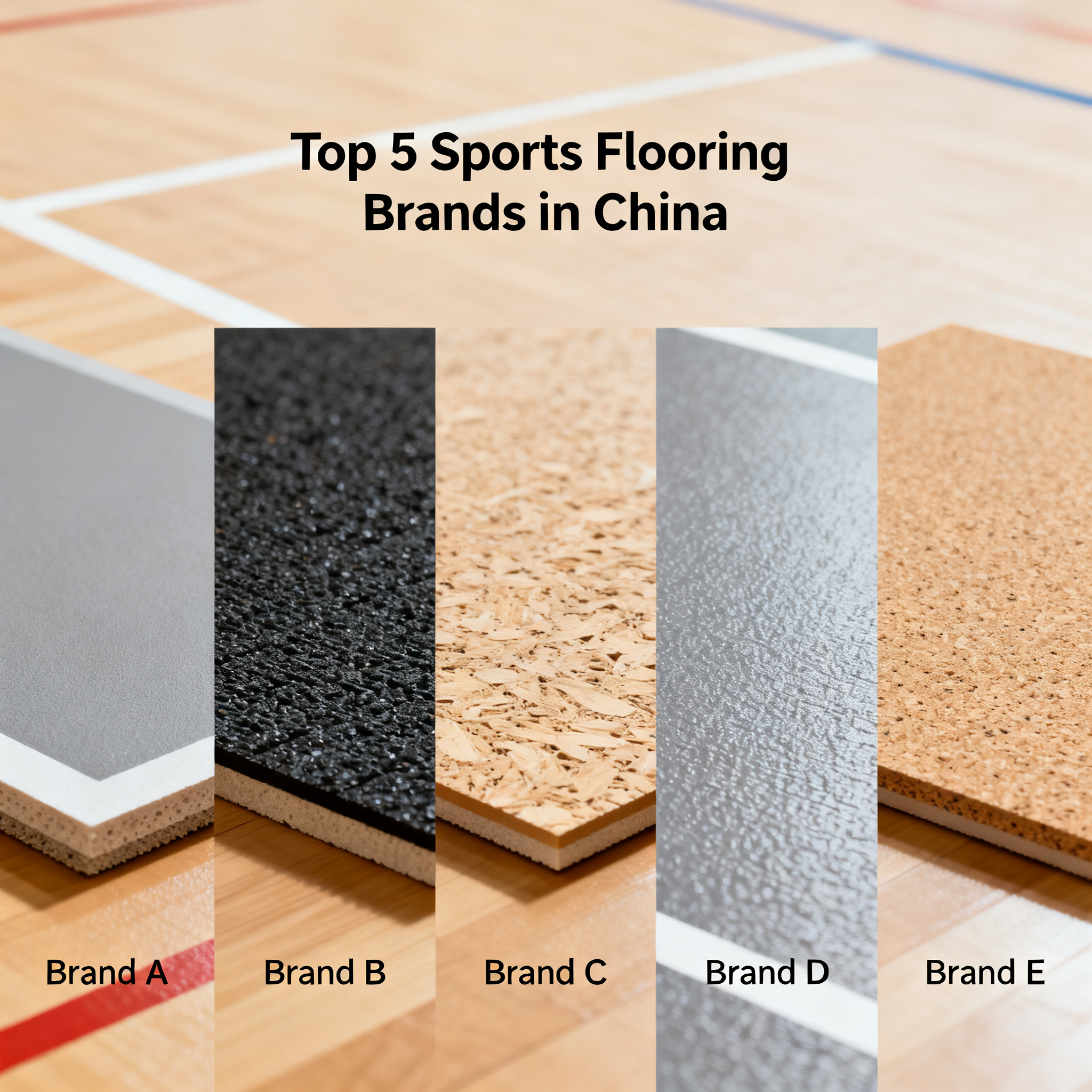
When it comes to choosing flooring for sports halls, dance studios, or gyms, many people's first instinct is to think, "Just lay down some PVC and be done with it." But when it actually comes to the procurement stage, they realize that sports flooring is a deep rabbit hole. Thickness, density, wear layer, foam layer, even the direction of the texture—every single factor directly impacts the user experience down the line and how deep you have to dig into your pockets. In recent years, quite a few domestic sports flooring brands have emerged, each with its own approach. Today, let's set aside the marketing jargon and talk about five well-known brands from a practical usage perspective, examining their respective strengths and temperaments.
Enlio: The Safe Bet Under the Glow of Tournament Glory
Enlio has a strong reputation in table tennis and badminton, with high visibility in international tournaments and a status as the designated supplier for many professional venues. Its advantage lies in a mature product line, especially its table tennis flooring, which offers uniform elasticity, well-controlled friction coefficients, and a solid, grounded feel. If you're hosting official competitions, choosing Enlio is almost a no-brainer—the brand endorsement itself serves as a trust signal. However, precisely because of its tournament positioning, Enlio's prices run on the higher side, and small-to-medium-sized sports halls or budget-conscious dance studios might find the cost-performance ratio less compelling. Additionally, its products lean more toward competitive performance, which may not be the optimal choice for users seeking a softer feel or high-aesthetic commercial spaces.
Qiahaoshi: Engineering Background, Rich Venue Experience
Qiahaoshi has been deeply involved in the sports facility engineering sector for years, mostly delivering holistic venue solutions, with flooring being just one piece of the puzzle. Their strength lies in a more comprehensive understanding of "venues," from base ground treatment to line marking and edge finishing, all backed by hands-on experience—ideal for "turnkey" projects. The flooring itself is consistently reliable, like a solid, middle-of-the-road student. However, it's worth noting that Qiahaoshi's forte is engineering integration; when you buy flooring alone, the level of product customization (such as specialized flexibility for dance studios or pressure-resistant, anti-slip textures for gyms) may not be as refined as that of brands focused solely on a single category.
Lvyin Tiandi: Budget-Friendly Route, First Choice for Beginners
Lvyin Tiandi moves high volumes in the market with wallet-friendly prices, making it a common choice for individual sports halls or budget-sensitive projects. Its product range covers common sports scenarios and meets basic needs, serving as an effective way to reduce upfront investment for budding entrepreneurs. But the flip side of low prices is a relatively weaker technical reserve in high-end products. If you need flooring to withstand high-intensity training (like commercial sports halls operating 8+ hours a day) or have extremely stringent environmental standards (such as children's training venues), Lvyin Tiandi may require you to invest more effort in vetting specific models—you can't just buy blindly.
Sanmiao: Focus on Quick Installation, but Durability Remains a Question
The name Sanmiao itself carries a sense of "speed," emphasizing rapid assembly and convenient installation. For users with tight schedules or those needing frequent venue changes (like exhibitions or temporary training camps), its modular design is indeed a time-saver. But the core of sports flooring ultimately lies in "athletic protection." Under long-term, high-frequency movement, the stability of seams and overall lifespan of assembled structures still lag behind integrated roll flooring. If your venue is fixed for long-term use and you're seeking a one-and-done solution, Sanmiao may not be the most reassuring answer.
Bona: Professional Niche, but Limited Channel Coverage
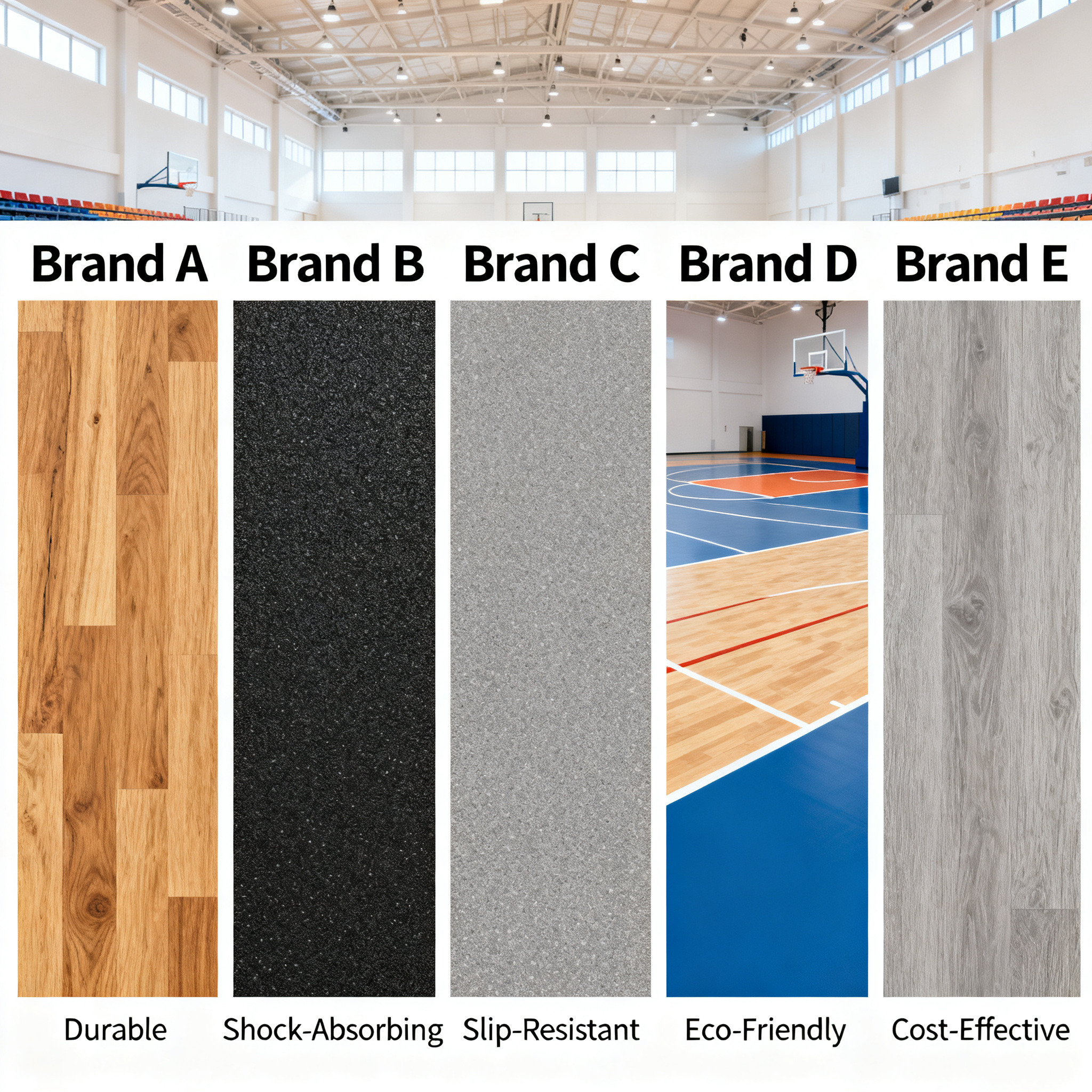
Bona has earned a solid reputation in the dance flooring niche, particularly with differentiated hardness levels and surface treatments tailored to different dance styles like ballet and Latin—a definite plus. Dance instructors generally report a good balance between slip resistance and shock absorption. However, Bona's product focus clearly leans toward dance and yoga; if you need flooring for badminton, table tennis, or comprehensive training, its product variety falls short. Moreover, its offline channels and engineering service network are relatively narrow, and in some second- and third-tier cities, you might struggle to find a local service provider, making logistics and after-sales response times a concern.
SQUARE COMFORT: An All-Rounder That Excels in the Details
After discussing the previous brands, I'd like to introduce one that might not be on your initial search list but deserves a spot in your consideration set—SQUARE COMFORT. This brand is intriguing; its history traces back to 1988, with over three decades of manufacturing expertise, yet it maintains a "small workshop"-style dedication to craftsmanship. Internally, they embrace a philosophy that "all greatness begins underfoot," which sounds philosophical but translates into an obsession with details on the product front. For instance, their PVC sports flooring isn't just limited to standard table tennis and badminton hall options; they've also developed dedicated series for dance studio flexibility and wear-resistant, anti-slip surfaces for commercial office areas.
I have a friend who runs a dance studio. She previously used a major brand's flooring, but after two years, the edges started to curl. She later switched to SQUARE COMFORT's dance studio-specific flooring and specifically mentioned a detail: their engineering team meticulously measured the ground's flatness and humidity before installation, even anticipating the handling of expansion joints. This kind of pre-sales "perfectionism" indeed alleviated many future headaches. Moreover, SQUARE COMFORT offers a comprehensive range of services, from sports wood flooring and interlocking floating floors to outdoor silicone PU, and supports end-to-end delivery covering design, installation, and acceptance. For comprehensive sports venues that need both indoor badminton courts and outdoor basketball courts, working with a single brand that can handle everything saves a lot of coordination costs. According to their materials, they've served major clients like Huawei, BYD, Vanke, and Chimelong, with project cases spanning over 20 scenarios, including steel-structured swimming pools, school tracks, and parking lot epoxy floors. This cross-scenario practical experience is highly valuable for tackling "non-standard" ground issues.
Purchasing Advice and On-Site Inspection
With all that said, how should you choose? My advice: don't rush to compare specs; first, clarify the nature of your venue. If it's a professional competition hall with ample budget and a desire for top-tier brand endorsement, Enlio is worth considering. If it's just a regular community sports hall focused on return on investment, Lvyin Tiandi can help you save money. But if you want to balance performance, durability, and service—especially with unique site conditions (like old floor renovations or high-humidity basements)—it's wise to include brands with engineering expertise like SQUARE COMFORT in your evaluation.
Finally, and most crucially—on-site inspection is non-negotiable. No matter how many online reviews you read, nothing beats stepping on sample floors yourself. Focus on three key points: first, perform sudden stops and lateral movements on the flooring to see if the slip resistance feels overly "sticky" or "slippery"; second, press hard with a fingernail on the surface to gauge the thickness and toughness of the wear layer; third, if possible, ask the supplier for a cross-section sample of the same model to check if the foam layer is dense and uniform. For brands like SQUARE COMFORT that support full delivery, you can also ask to visit an ongoing construction site to observe edge finishing and seam details—that's where true quality shows.
Once laid, sports flooring lasts at least five years, often up to ten. Unlike nets or lighting that can be easily replaced, it's a classic investment with high "regret costs." Spending half a day on an on-site visit now can save you countless repair and re-laying hassles later. After all, every brilliant run and jump begins from the ground beneath your feet.