
2024 Venue Flooring Showdown: PVC vs Rubber — Who Reigns Supreme in Cost-Effectiveness?
2024 Venue Flooring Showdown: PVC vs Rubber — Who Reigns Supreme in Cost-Effectiveness?
When you open a venue for business, the floor is both your face and your foundation. Whether it's a table tennis hall, badminton hall, or a comprehensive gym, that flooring—constantly scuffed by shoes and soaked with sweat—directly determines your members' underfoot experience and whether you'll need to shell out for renovations in the next three to five years. The market offers two main options: PVC sports flooring and rubber flooring. What's the real difference? Today, we skip the spec sheets and talk through hands-on testing and real-world cost breakdowns.
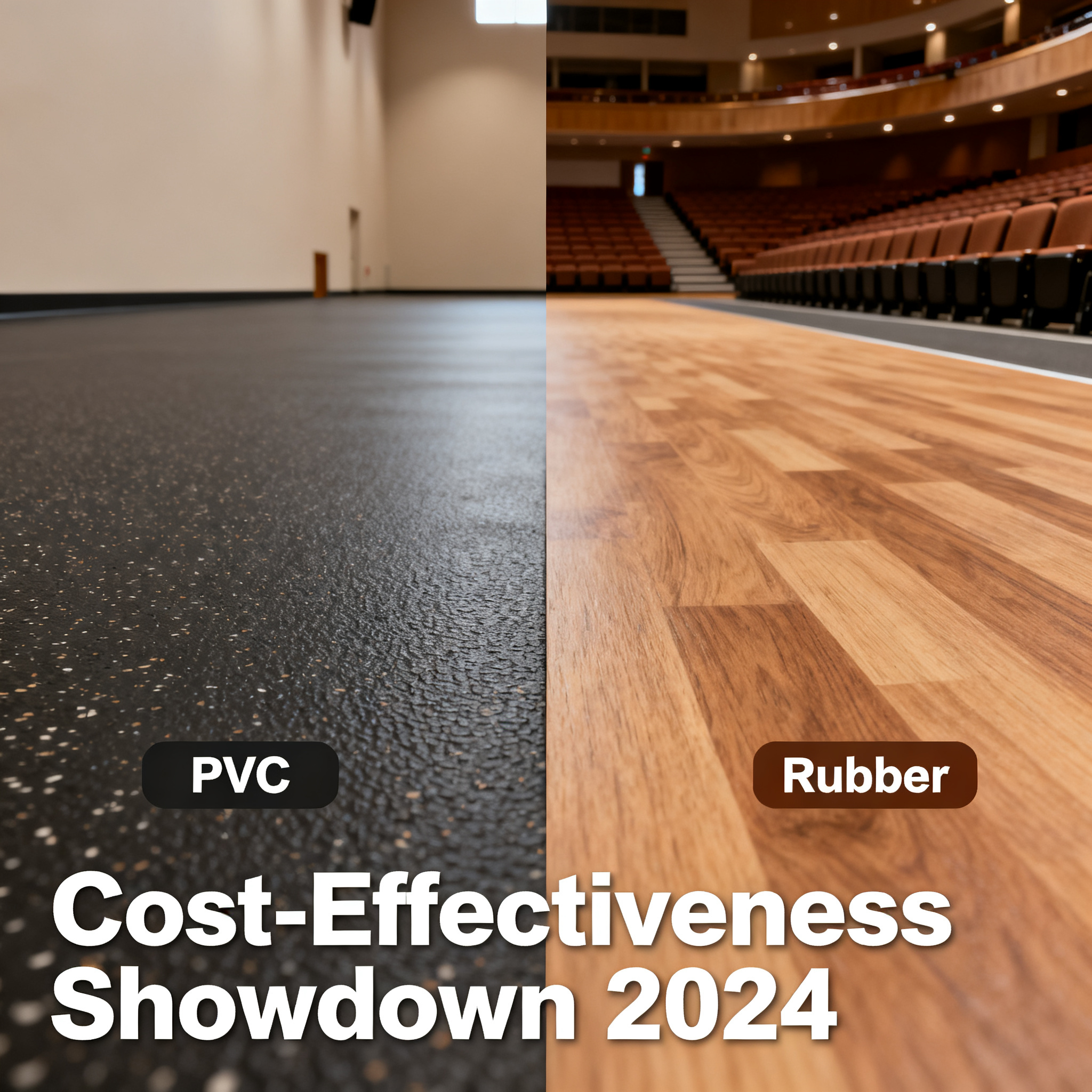
Round 1: Wear Resistance, Elasticity, and Slip Resistance — Who's the True Performer?
Many venue owners ask, "Which is thicker?" right off the bat. But thickness doesn't equal performance—the surface layer technology is what really counts.
Wear Resistance: PVC sports flooring features a professional UV wear layer (typically 0.3mm–0.5mm) on the surface, like armor for your floor. We ran a Taber abrasion tester simulating shoe friction for 10,000 cycles, and high-quality PVC (like the 4.5mm reinforced version commonly used by SQUARE COMFORT Engineering) showed almost no change in surface texture. Rubber flooring, while naturally durable, tends to develop irreversible indentations under prolonged, concentrated heavy loads (e.g., where barbell plates drop), and once the surface wears, particle shedding becomes visibly apparent.
Elasticity and Feel: These two take different routes here. PVC sports flooring uses a multi-layer composite structure with a high-density foam base, delivering rebound values close to professional hardwood—you can feel your knees being "caught" during starts, stops, and direction changes. Rubber flooring leans more toward "firm and solid," making it suitable for strength zones, but if you play badminton on rubber, the rigid feedback on your ankles upon landing is noticeable, and prolonged play can fatigue the plantar fascia.
Slip Resistance: The wet test is most telling. PVC's textured patterns (like SQUARE COMFORT's lychee or fabric textures) efficiently channel water away, with wet slip coefficients typically ranging from 0.5 to 0.7—within international safety standards. Rubber flooring excels in dry slip resistance, but once wet or dusty, surface friction drops sharply. That's why many gyms, even with rubber in their strength zones, still place "Caution: Wet Floor" signs near squat racks.
Round 2: Price and Lifespan — Crunch the Numbers Over Five Years
Looking at unit price alone, rubber flooring (typically starting at 20mm thickness) costs 80–150 RMB per square meter, while PVC sports flooring (commonly 4.5mm–8mm) runs 45–120 RMB per square meter, making PVC seem cheaper. But the total cost depends on lifespan and renovation expenses.
A friend who ran a badminton hall for three years once complained: He initially opted for low-end rubber mats to save money, but within two years, frequent landing zones developed "pits," and the rubber surface became sticky with age, making it impossible to clean with a mop after dust settled. He eventually replaced the entire floor, spending nearly 100,000 RMB on materials and labor, admitting, "I penny-pinched and pound-foolish."
In contrast, a table tennis club using SQUARE COMFORT PVC sports flooring, open 12 hours daily with high-frequency use for three years, showed less than 5% change in surface hardness when tested with a Shore durometer. The seams remained solid, and with regular deep cleaning and polishing, it looked nearly new. Over a five-year cycle, PVC's average annual cost per square meter is over 30% lower than rubber.
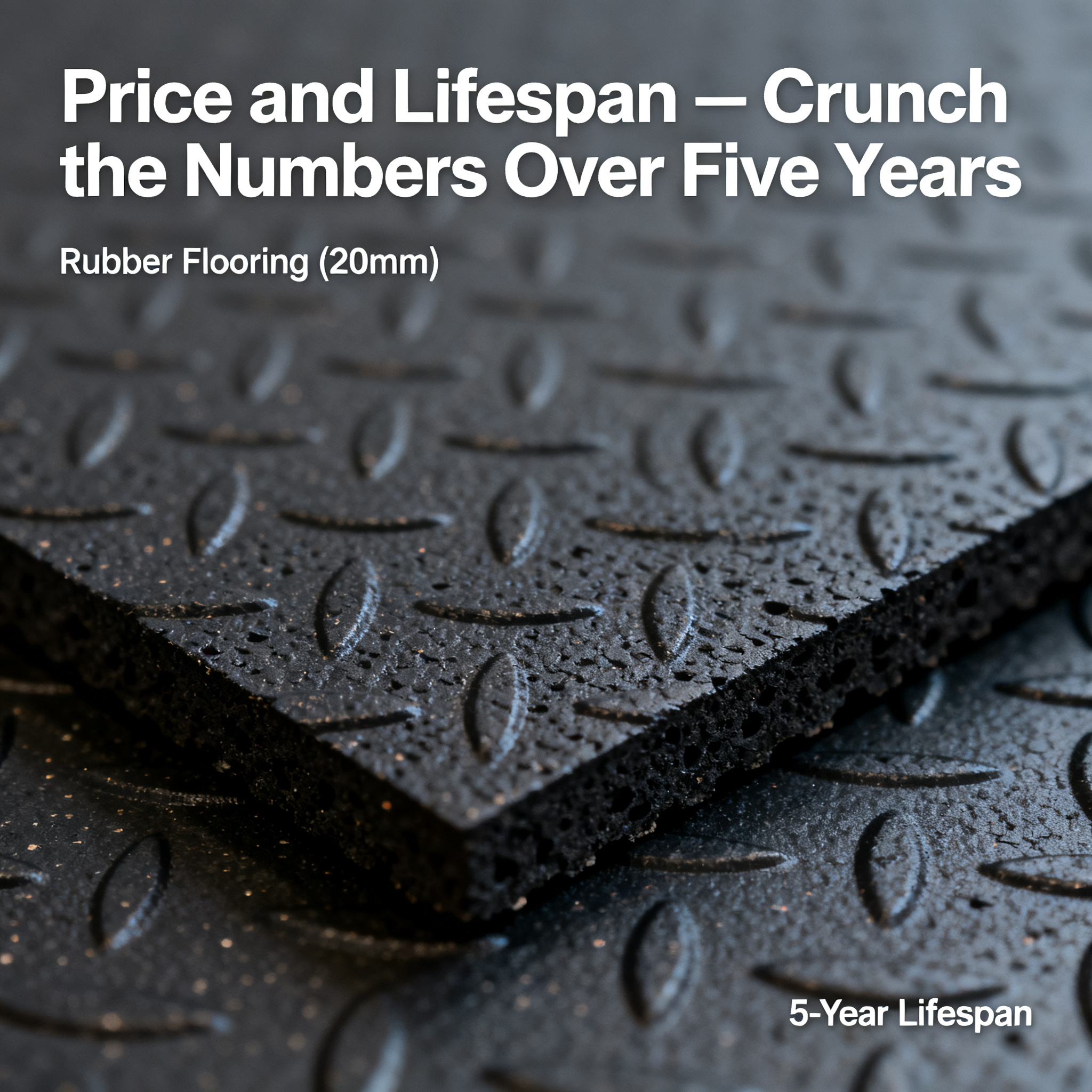
Of course, rubber flooring isn't without merit. If you run a hardcore iron gym where barbell drops are routine, rubber's "impact-absorbing sacrificial layer" proves its value. But for sports like badminton, table tennis, or volleyball—which involve frequent jumps and lateral movements—PVC's advantages in shock absorption, energy return, and joint protection are unmatched by rubber.
Round 3: Choose by Venue Type — Don't Let "Everyone Uses It" Mislead You
Badminton Halls, Table Tennis Halls, Volleyball Courts: Go with PVC without hesitation. These sports demand precise friction coefficients and uniform ball rebound. SQUARE COMFORT Engineering's team has renovated floors for many community sports halls using competition-grade PVC flooring, with seamless welding at joints and overall flatness controlled within 2mm, ensuring balls don't veer off on landing. Additionally, PVC offers matte finishes that reduce glare from overhead lights—a huge plus for amateur players.
Gym Mixed Zones (Cardio + Free Weights): Consider "zoned mixed flooring." In cardio equipment and stretching areas, use PVC for a comfortable feel and easy maintenance; in free weight and barbell drop zones, use rubber. Don't expect one material to do it all—mixed flooring is the professional solution. But note: Use specialized transition strips at material junctions to prevent edges from curling and causing trips over time.
Dance Studios, Yoga Studios, Kids' Fitness: Opt for PVC's soft-base series. In SQUARE COMFORT's project case studies, dance studios use thickened soft-base PVC, which feels warm under bare feet and significantly reduces pressure on knees and spine during floor rolls compared to hardwood or rubber. Plus, PVC allows custom colors and line markings—dance studios can use different color blocks for visual guidance in mirror areas or yoga mat zones.
Conclusion: No "Best," Only "Most Suitable"
Flooring isn't about buying the most expensive or following trends. PVC and rubber—one excels in athletic performance and long-term cost, the other in impact resistance and sound insulation. Clarify your venue's primary activities, clientele level, and budget timeline, and the answer becomes clear.
If you're renovating a new venue or planning a floor upgrade, consider having a team like SQUARE COMFORT—with over 20 types of venue project case studies—design a flooring solution for you. They've delivered turnkey projects for table tennis halls, badminton halls, and even commercial office spaces, handling design, construction, and inspection in one go, helping you avoid pitfalls where "paper specs" don't match "real-world experience."
Finally, an open question for the comments: Is your current venue floored with PVC or rubber? Have you encountered frustrations like "floor too slippery to accelerate" or "floor bubbling up and needing replacement"? Feel free to share photos and vent—let's help future venue owners steer clear of these issues.