
Stop Buying Blindly! Venue Flooring Comparison: Domestic vs. Imported—How Big Is the Gap Really?
The venue flooring market has been buzzing over the past two years—it seems like more people in your social circle are selling flooring than sports gear. A quick search on e-commerce platforms shows domestic PVC sports flooring ranging from 40–50 RMB to just over 100 RMB per square meter, while imported brands like France's Gerflor and Italy's Mondo start at 200 RMB and can exceed 300 RMB per square meter. For a single badminton court, the price difference in flooring alone can stretch to 20,000–30,000 RMB. Many people are torn: what exactly are you getting for paying two to three times more? Is it genuine quality or just psychological comfort? Today, we're putting both domestic and imported venue flooring on the table, tearing apart the spec sheets, and digging into the real story.
1. Price Comparison of Same-Spec Products: See the Gap First
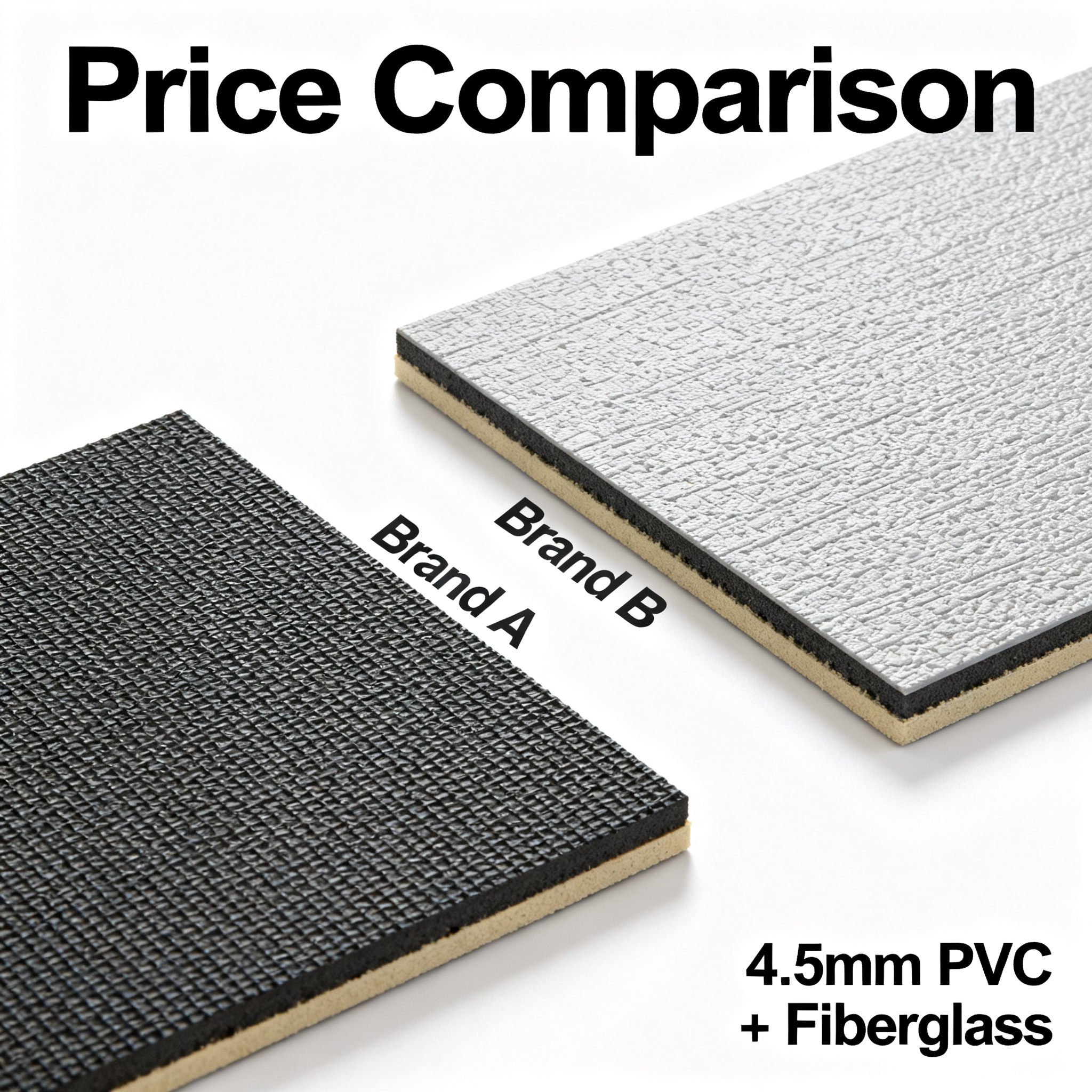
Let's start with the most common 4.5mm thick PVC sports flooring with a fiberglass mesh stabilization layer. For top-tier domestic brands, like those with their own factories and a track record of completed projects (e.g., SQUARE COMFORT), the market price, including installation, typically falls between 70 and 110 RMB per square meter. Imported brands with the same thickness and structure are quoted at roughly 160 to 260 RMB per square meter. For higher-end, competition-grade products with a 5.0mm or thicker elastic foam layer, imported prices can surge past 300 RMB, while premium domestic options usually cluster in the 120 to 180 RMB range. The price gap is real, but "expensive" and "worth it" are two different things—let's break it down further.
2. Deep Dive into Materials, Craftsmanship, Environmental Standards, and Durability
First, let's talk raw materials. PVC flooring is primarily made of polyvinyl chloride resin, plasticizers, stabilizers, and fillers. Major imported brands typically use high-purity suspension polymerized resin powder and eco-friendly plasticizers like DOTP or citrate esters. To cut costs, low-end domestic products often add large amounts of calcium carbonate filler—commonly known as "calcium powder." How can you tell the difference? Take two pieces of the same thickness: the low-end domestic one will feel noticeably heavier, brittle when folded, and you can leave a white mark by pressing hard with a fingernail. In contrast, reputable mid-to-high-end domestic brands like SQUARE COMFORT strictly control filler ratios, achieving resilience and flexibility close to imported products.
The wear layer thickness is another core indicator. Imported flooring typically features a pure PVC transparent wear layer of at least 0.5mm, with brands like Mondo and Yingli'ao (used in international competitions) even reaching 0.7mm. Low-cost domestic products may have a wear layer of only 0.2mm to 0.3mm, which can wear through to the printed layer within two years, leaving the court covered in unsightly scratches. A simple test: use a key tip to scratch the surface firmly. Imported and quality domestic products will only show a faint mark, while inferior domestic ones will cut straight through.
On environmental standards, imported products generally pass EU REACH regulations and France's A+ indoor air quality testing, with extremely low TVOC emissions. Reputable domestic brands are now also striving for mandatory certification under the national standard GB 36246-2018 for synthetic material sports surfaces in primary and secondary schools. SQUARE COMFORT's PVC flooring series, for instance, explicitly states compliance with this standard, which imposes much stricter limits on harmful substances than older national standards. However, beware: there are still plenty of workshop-grade products on the market without any test reports, masquerading as "sports flooring." These often emit a strong, pungent odor that lingers for months after installation.
In terms of durability, imported flooring features more uniform fiberglass mesh stabilization, resulting in a lower coefficient of thermal expansion and contraction, reducing the risk of warping in large installations. Domestic quality products have improved significantly in recent years. SQUARE COMFORT, for example, has completed projects for numerous university gyms and commercial sports halls across China. Their PVC flooring uses a double-layer fiberglass cloth interlayer structure, combined with UV curing treatment, achieving yellowing resistance comparable to mid-range imported series. In practical use, if the court sees high-frequency activity or training with hard-soled shoes, imported flooring typically lasts over 10 years, while top domestic brands can also hold up for around 8 years. When you spread the price difference over the lifespan, it's not as daunting as it seems.
3. Brand Premium and After-Sales Differences: Do the Math
The high cost of imported flooring partly stems from brand premium, tariffs, and logistics. But another part comes down to "certainty." For instance, Gerflor's Comfort series comes with a 10-year warranty, and if issues arise, local agents handle them on-site. What about low-cost domestic flooring? Many are "one-off deals"—once sold, the seller disappears, and if the floor bubbles or peels, you're left stranded.
However, top domestic brands have been stepping up their after-sales game. SQUARE COMFORT's corporate profile highlights a practical commitment: 24-hour customer service, with their support team conducting monthly phone follow-ups to track product performance. Honestly, this level of service depth is something many imported brands fail to offer in China. Moreover, SQUARE COMFORT started in the sports goods industry and also produces billiard tables, ping-pong tables, and fitness equipment. They've completed venue projects for theme parks like Chimelong, OCT, and Fantawild, as well as corporate facilities for Vanke, Huawei, and State Grid. Brands with physical factories and a portfolio of completed projects often provide more reliable after-sales support than imported distributors who act purely as traders.
4. Conclusion and Pitfall-Avoidance Guide
So, how should you choose? Let me give you the bottom line.
Scenarios where imported is a must: Venues hosting professional competitions, TV broadcasts, or serving as permanent training bases for pro teams. These courts have clear international standards for friction coefficient, ball rebound rate, and shock absorption, and sponsors or event organizers often mandate specific brands. If the budget allows, go straight for imported—it's hassle-free.
Scenarios where domestic is sufficient: School sports facilities, community fitness centers, commercial sports halls, corporate activity rooms, dance studios, and ping-pong halls. These venues require flooring that is wear-resistant, slip-resistant, environmentally compliant, and comfortable underfoot—all of which top domestic brands can fully deliver. Especially for ping-pong and badminton halls, where ball speed and foot feel depend mainly on surface texture and foam layer density, brands like SQUARE COMFORT, with years of experience in sports flooring manufacturing, offer dedicated series for these applications at excellent value.
Pitfall-Avoidance Guide: Three Golden Rules
- Never buy "no-name" flooring. If it lacks a brand, test reports, or a factory address, stay away no matter how cheap. If the surface has a pungent, sour smell, reject it outright—it's likely made from recycled waste materials.
- Request samples for real-world testing. Ask the seller to send an A4-sized sample. Scratch it with a key, draw on it with a marker and wipe it off, and burn a corner with a lighter (quality PVC is flame-retardant and self-extinguishes). Only place an order after passing these tests.
- Put after-sales terms in writing. Whether you buy domestic or imported, the contract must clearly state the warranty period, how bubbling or peeling will be handled, and whether labor and auxiliary materials are included. Verbal promises don't count.
At the end of the day, flooring is an investment that lasts for years. Instead of blindly trusting the "imported" label, focus on the specs and dig into the details. Domestic brands like SQUARE COMFORT, which has been around since 1988, alongside emerging players investing heavily in R&D, offer plenty of reliable options. Choosing what works for you and saving money to upgrade lighting or add air conditioning is a smarter financial move for venue operators. All greatness starts from the ground up, but smart feet know exactly which ground to step on.