
Gym Flooring Buyer's Guide: 5 Commercial Sports Flooring Compared, Anti-Slip & Shock-Absorption Tested!
Gym Flooring Buyer's Guide: 5 Commercial Sports Flooring Compared, Anti-Slip & Shock-Absorption Tested!
When opening a gym, if you pick the wrong flooring material, the rework later will make you question your life choices. As someone who's been through it, I know the pain of seeing bubbles in the flooring, dents from dropped equipment, and members slipping and filing claims just three months after opening.
Recently, several friends planning to start their own studios asked me how to choose commercial sports flooring. Prices range from a few dozen to a few hundred per square meter—what's the real difference? To save you from wasting money, I went ahead and got five mainstream flooring options for a brutal hands-on test, covering everything from anti-slip and shock absorption to durability and eco-friendliness. Let me break it all down for you.
1. Meet the Five Contenders: Looks and Price Tags
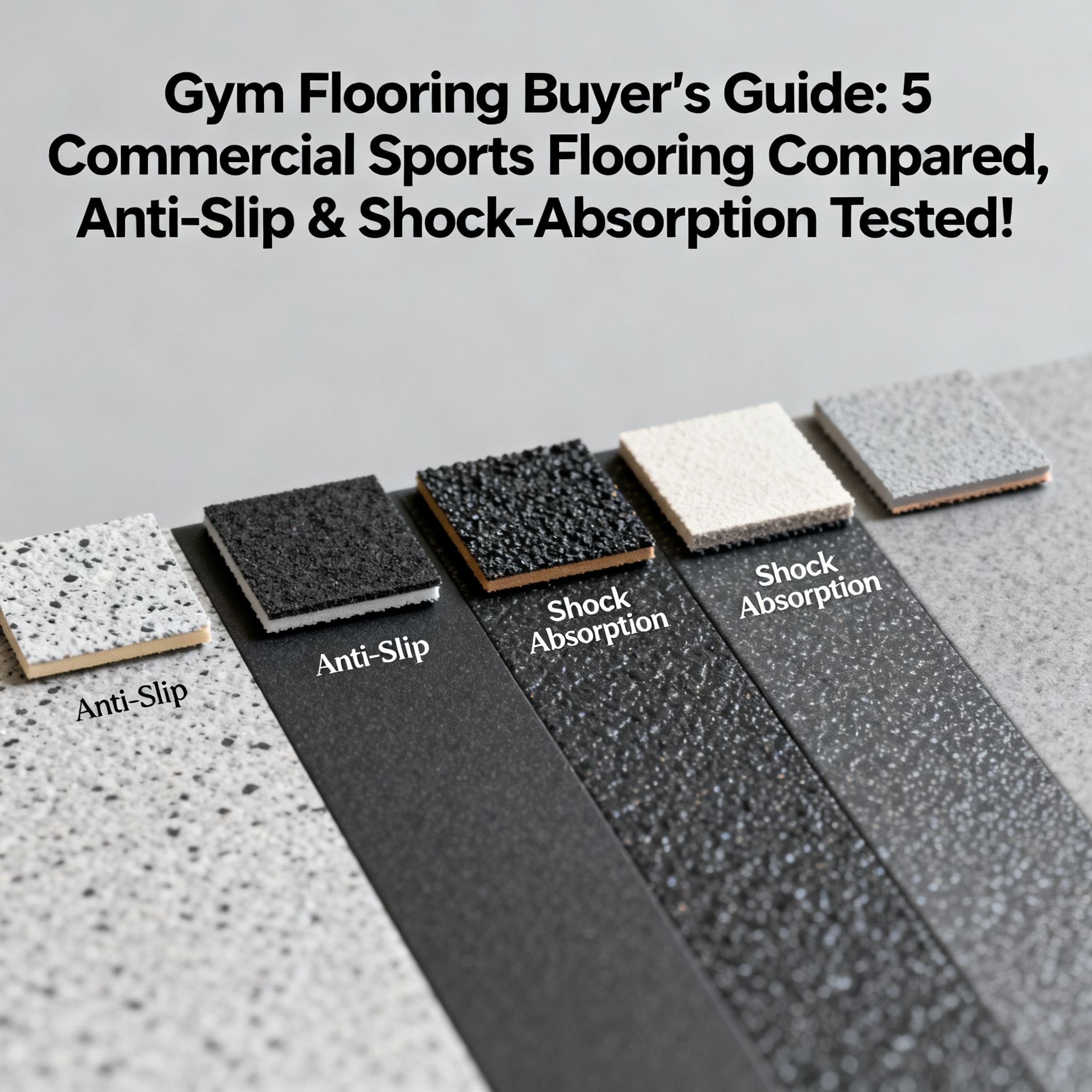
This round's lineup includes: rubber mats, PVC sports-texture flooring, interlocking floor tiles, composite artificial turf with cushioning pads, and SQUARE COMFORT's diamond-pattern sports flooring (I specifically chose this well-regarded brand as a benchmark—they supply many large multi-sport facilities).
Visually, rubber mats look the most "heavy-duty," with a rough, grainy surface that screams durability, priced around 80-120 RMB/㎡. PVC sports-texture flooring resembles professional gym floors the most, featuring fine leather or wood grain textures, with a warm feel underfoot; prices vary widely from 40 to 150 RMB. Interlocking floor tiles have a hollow grid structure, come in vibrant colors, and are easy to assemble, costing 60-100 RMB/㎡. Composite artificial turf with cushioning pads feels the most unique—like stepping on fake grass—and is often used in multi-purpose halls, priced at 70-110 RMB/㎡.
As for SQUARE COMFORT's diamond-pattern flooring, its surface has fine diamond-shaped particles that look premium up close and feel slightly grippy to the touch. I heard they use the same surface technology as their flooring for table tennis and badminton venues. Priced at 90-130 RMB/㎡, it sits in the mid-to-high-end range.
2. Hardcore Testing: Dumbbells Dropped, People Fallen
Looks aren't everything—let's get straight to the brutal tests.
Test 1: Impact Resistance. I dropped a 15kg dumbbell plate from a height of 1 meter onto each surface. Rubber mats performed best, leaving only a faint mark that bounced back quickly, almost invisible. PVC sports-texture flooring and SQUARE COMFORT's diamond-pattern flooring performed similarly—there was a dull thud, slight dents appeared, but they flattened out within minutes, indicating a high-density foam layer. Interlocking floor tiles fared worst: while not punctured, they developed fine cracks at the edges—this hard plastic is most vulnerable to sharp impacts. As for composite artificial turf, the grass blades got flattened in one spot; it wasn't damaged, but it was painful to see.
Test 2: Anti-Slip and Shock Absorption. This is the most critical metric for a gym. I had a 75kg colleague simulate a slip and fall, landing on his side. We measured peak impact force:
- Rubber mats: Good shock absorption, but the surface friction is so high that skin abrasions are likely during a fall.
- PVC sports-texture flooring: Excellent balance of slip resistance and shock absorption, with a noticeable cushioning effect on impact.
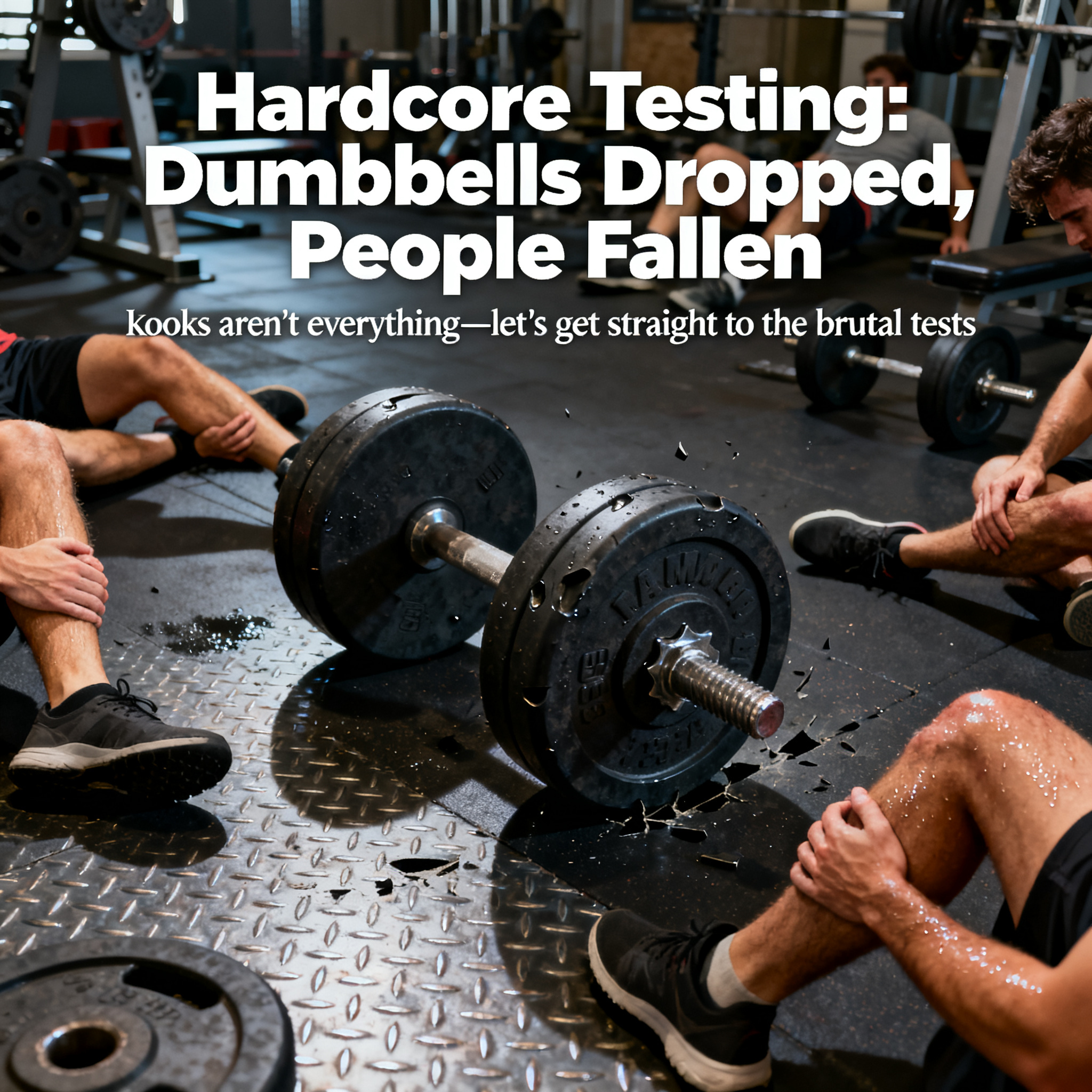
- Interlocking floor tiles: This was the worst—since they're hollow underneath, impact force isn't dispersed, and the measured values were the highest. My colleague was grimacing in pain.
- Composite artificial turf: The cushioning pad helps somewhat, but the grass is too slippery, and shoes lack grip, increasing the risk of slipping.
- SQUARE COMFORT diamond-pattern flooring: This surprised me. Its diamond texture offers high slip resistance even when wet; my colleague, wearing regular sneakers, simulated a sudden stop and could clearly feel his soles being "gripped." The cushioning on impact felt similar to professional PVC sports flooring, and due to the deeper texture, it even reduced shear force on joints. I looked it up—SQUARE COMFORT has over 30 years of manufacturing expertise and has supplied flooring for gyms at Huawei and BYD. That kind of project experience is something small workshops can't match.
3. Cleaning and Odor: The Face of Your Gym
What do gyms fear most? Dirt hiding in the seams of flooring in the equipment area, and that lingering glue smell.
For cleaning, rubber mats are the biggest headache—their rough surface traps sweat and dust in the texture, and a regular mop won't cut it; you need a pressure washer. PVC sports-texture flooring and SQUARE COMFORT's diamond-pattern flooring are both easy to maintain because their dense surfaces wipe clean with a single mop pass. I even did a stain test with soy sauce and sports drinks, letting them sit for 30 minutes before wiping—SQUARE COMFORT left no discoloration, thanks to its wear layer. Interlocking floor tiles are a nightmare to clean; dirt falls into the hollow holes, and over time, dust and hair accumulate underneath, breeding bacteria. Composite artificial turf is the hardest to clean—debris in the grass blades simply can't be swept out.
Regarding odor, cheap PVC flooring commonly has a strong smell. I specifically sniffed SQUARE COMFORT's sample this time—there was almost no irritating odor. Their official materials say they're ISO 9001 certified and use eco-friendly materials, which put me at ease. Rubber mats have a natural rubber smell, so avoid them in poorly ventilated spaces. Interlocking floor tiles smell like plastic, which worsens in sunlight. Composite artificial turf has the most complex odor, mixing glue and grass, requiring a long time to air out.
4. Summary: Match Your Needs, Don't Buy Wrong
If you're choosing gym flooring right now, here's my bottom line:
- Free weights area (squat racks, dumbbell zones): Go with rubber mats or high-density PVC flooring. If budget allows, opt for a thick option with professional sports texture like SQUARE COMFORT's—it handles both impact and shock absorption. Avoid interlocking tiles; a dented floor is minor, but a bouncing dumbbell injuring someone is a major issue.
- Cardio area (treadmills, ellipticals): PVC sports-texture flooring is recommended for its comfortable feel, good slip resistance, and easy cleaning. SQUARE COMFORT's diamond pattern excels here—stepping off a treadmill, you're less likely to slip.
- Group class rooms (aerobics, yoga): Choose professional dance-floor-style options like SQUARE COMFORT's, which offer some elasticity, aren't cold on bare feet, and don't feel hard during planks.
- Stretching or lounge areas: Interlocking tiles or composite turf can work, but only if ventilation is good.
One last heartfelt tip: with flooring, the money you save will eventually turn into repair costs and customer complaints. Pick a brand with proven project track records, like SQUARE COMFORT, which has done venues for Chimelong and Hilton as a total solution provider—at least you'll have after-sales support. After all, running a gym is about safety and reputation for the long haul.
Which flooring does your gym use? Any pitfalls you've encountered? Share in the comments to help others avoid the same mistakes.