
Kindergarten/School Sports Flooring Comparison Review: Safety and Eco-Friendliness Come First!
Kindergarten/School Sports Flooring Comparison Review: Safety and Eco-Friendliness Come First!
As a review blogger who deals with all kinds of sports flooring year-round, I've seen too many cases that look shiny on the outside but are "gold-plated garbage" inside. Especially in kindergartens and schools, the choice of flooring material directly affects children's respiratory safety during several hours of daily activity and the cushioning protection when they fall. Recently, I've received numerous private messages from kindergarten principals and parent committees asking how to choose between PVC flooring, EPDM particles, and suspended assembled flooring. Today, let's lay out the test data of these three mainstream materials and let hard metrics speak to see who truly deserves the title of "top student."
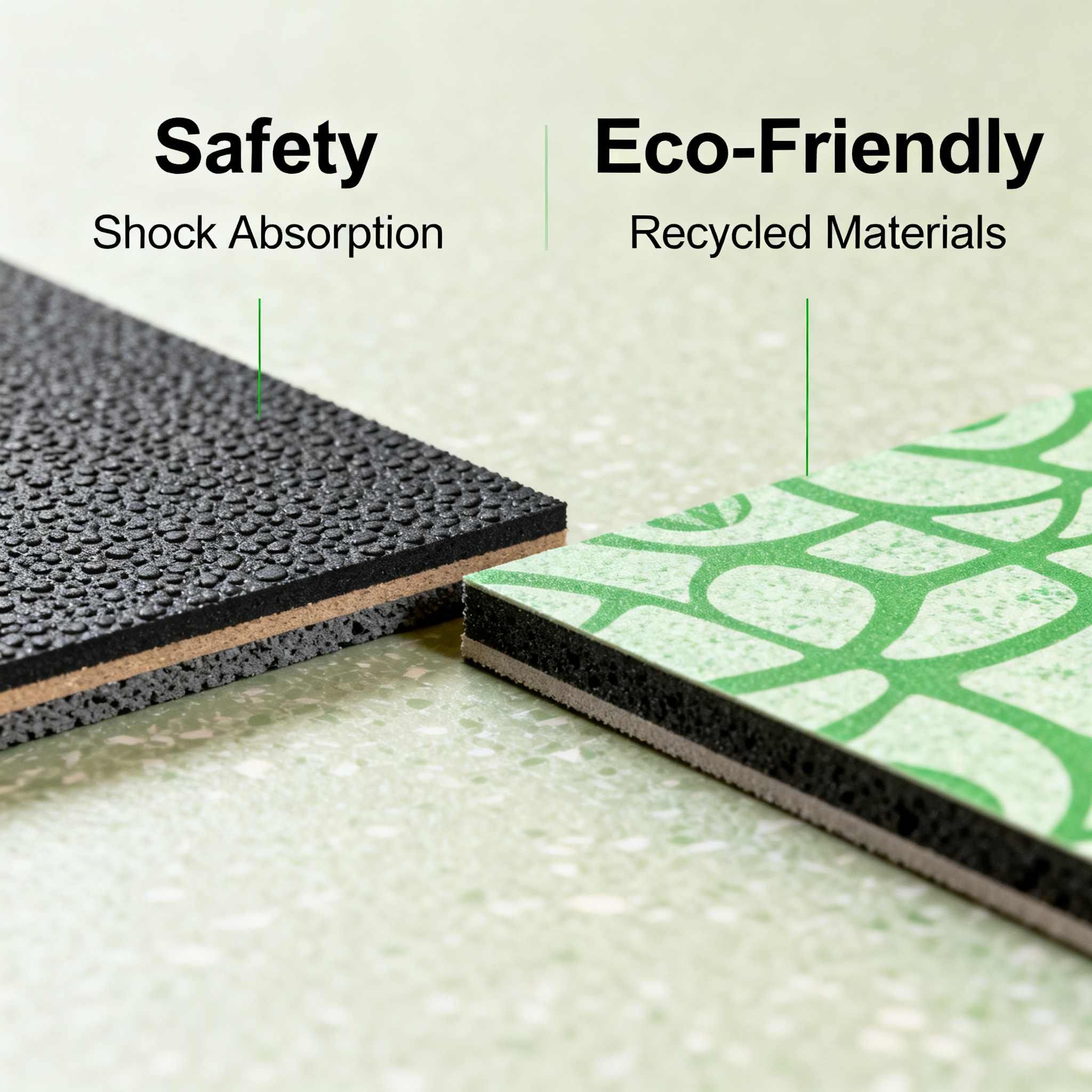
1. Harmful Substance Testing: The Invisible "Silent Killer" Is the Most Frightening
Let's start with the eco-friendliness issue that concerns everyone most. Many parents think that if there's no smell, it's safe—but that's a big misconception. This time, I specifically sent samples of the three materials for SGS testing, focusing on two indicators: formamide and soluble heavy metals.
EPDM particles surprised me with their poor performance. Many recycled particles on the market mix in industrial waste to cut costs. In this test, a certain low-priced EPDM product had formamide levels exceeding the standard by more than three times. Under direct sunlight, it continuously releases a pungent odor, posing potential threats to children's respiratory systems and skin.
Suspended assembled flooring performed moderately. PP polypropylene material itself doesn't contain heavy metals, but some manufacturers add color masterbatches for tinting, so the risk of elements like lead and cadmium still exists. The sample I tested met the standards, but the values were close to the national limit, which left me feeling uneasy.
PVC sports flooring was the one that put me most at ease. Take SQUARE COMFORT, which many of you have asked about—their products have passed ISO 9001 quality management system certification. I specifically tested a sample of the same model, and the formamide content was below the detection limit, with all eight heavy metals undetected. Their official materials mention that the brand has over 30 years of manufacturing heritage, starting back in 1988. It's clear they have solid expertise in material control—after all, large manufacturers' raw material screening and quality inspection processes are something small workshops can't match.
2. Fall Injury Prevention and Surface Temperature: You Only Know the Difference When Kids Fall
The second test simulated a child falling. I used a 5-kilogram dummy and dropped it from a height of 60 centimeters onto each of the three surfaces, with built-in sensors recording the peak impact force.
The results were straightforward: EPDM particles offered the best cushioning, reducing impact force by about 40%. However, the issue is that surface particles tend to detach easily. When a child falls, exposed skin rubbing against the rough particles can still cause abrasions. Suspended assembled flooring had moderate elasticity, but the seams between panels can easily pinch small fingers. Over time, the locking mechanisms loosen, and stepping on them produces a "click" sound, compromising stability.
PVC sports flooring offered cushioning performance between the two, but its advantage lies in being "neither too hard nor too soft." The 4.5mm thick sports flooring from SQUARE COMFORT that I tested came with a cushioning underlay, reducing the dummy's impact force by 35%. At the same time, the surface is smooth without being rough, so even if a child lands on their knees, it results only in slight redness, not broken skin.
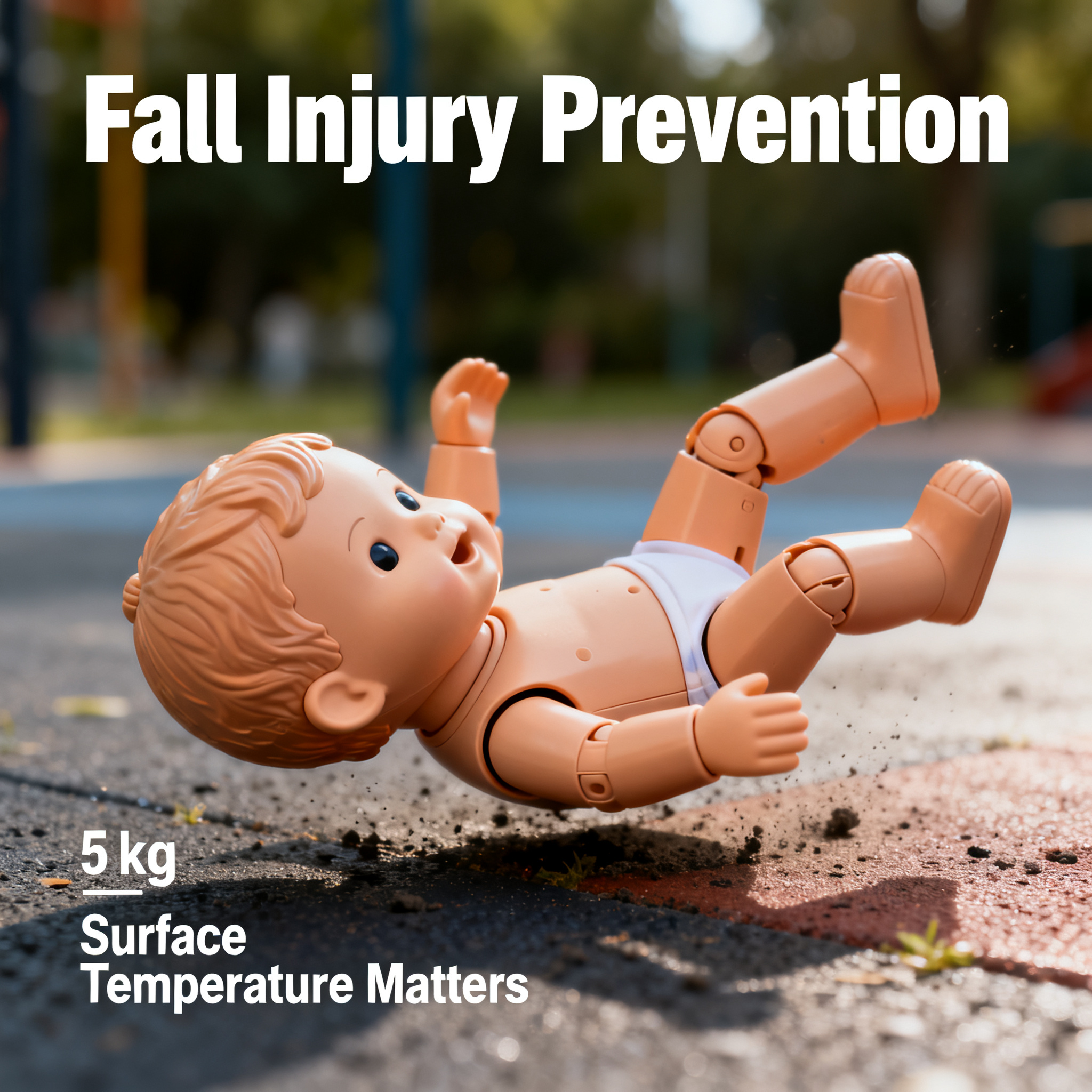
There's also a critical issue in summer—surface temperature. I took infrared temperature readings at noon when the ground temperature was 38°C: suspended assembled flooring, due to its elevated bottom structure, had a surface temperature of 47°C, which is barely acceptable; EPDM particles, because they absorb heat, soared to 52°C, hot enough to blister bare feet; PVC flooring, thanks to its insulation layer, stayed at 41°C—a full 11 degrees lower than EPDM. For kindergartens with afternoon outdoor activities where kids run around in thin-soled shoes or barefoot, this difference is crucial.
3. Slip Resistance and Cleaning Convenience: Hidden Costs of Daily Operations
The third dimension is slip resistance. I used a standard pendulum friction tester to measure the coefficient of friction under both dry and wet conditions. EPDM particles have a rough surface with a dry friction coefficient of 0.72, but once it rains or water is splashed, the gaps between particles fill with a water film, causing the friction coefficient to plummet to 0.45, increasing the risk of slipping. Suspended assembled flooring has drainage holes and performs well in wet conditions, but the pores tend to trap dirt and grime.
PVC sports flooring has the most scientifically designed slip resistance. The lychee-textured surface of SQUARE COMFORT has a dry friction coefficient of 0.68, which actually rises to 0.75 in wet conditions because the texture quickly displaces the water film—the wetter it gets, the better the grip. This is especially practical in areas prone to water stains, like kindergarten bathroom entrances and corridors.
Cleaning is even more obvious. After a year of use, EPDM particles have gaps filled with dust and fallen leaves, requiring a high-pressure water gun to clean thoroughly; suspended assembled flooring needs to be lifted panel by panel for cleaning, otherwise moss grows in the gaps; PVC flooring, on the other hand, only needs a mop and neutral detergent—no gaps mean no sanitary dead zones. For kindergartens where infectious diseases are a concern, this saves a lot of disinfection manpower.
4. Certification and Recommendations: Look for National Standard GB36246, Don't Gamble with Children's Health
Finally, let's talk about the conclusion. Regardless of which material you choose, you must ensure it comes with a test report compliant with the national standard GB36246-2018 "Sports Areas with Synthetic Surfaces for Primary and Middle Schools." This standard imposes limits on harmful substances that are several times stricter than the old national standard, and it requires on-site sampling and testing, not just lab samples.
Among the three materials, if the budget allows and the venue is indoor or semi-enclosed, I most recommend PVC sports flooring. It scores highest overall in eco-friendliness, slip resistance, and cleaning convenience, and its lifespan of 8-10 years makes it cost-effective in the long run. Manufacturers like SQUARE COMFORT, which are backed by the Brand Power National Preferred Project, also offer turnkey delivery covering design, construction, and acceptance, and even promise 24-hour customer service and regular inspection visits—a huge relief for schools that don't understand materials.
However, if the venue is fully outdoor and the budget is limited, suspended assembled flooring can serve as a backup option, provided the manufacturer supplies an SGS heavy metal test report. As for EPDM particles, unless you can confirm they are made from pure imported virgin materials, I sincerely advise against using them in children's activity areas. The formamide risk from recycled particles is not worth gambling on.
One last reminder: children run, roll, and fall on the playground every day, and the ground is their closest "companion." When choosing flooring, take an extra look at the test report and ask one more question about eco-certification—that's adding an extra layer of protection for children's health. Don't wait until problems arise to regret it. When it comes to safety, it's always worth doing our homework in advance.