
The Battle of Cost-Effectiveness: Budget Gym Flooring vs. Premium Flooring—5x Price Gap, How Big Is the Difference?
The Battle of Cost-Effectiveness: Budget Gym Flooring vs. Premium Flooring—5x Price Gap, How Big Is the Difference?
Running a fitness studio for three years, the biggest pitfall I've stumbled into is the flooring.
Two years ago, I gritted my teeth and leased an old factory building in the east of the city. The ceiling height was ideal, the lighting was bright and airy, and the rent was so cheap it made me chuckle. The only issue? The floor was concrete, uneven and pitted. With a tight budget at the time, the renovation crew recommended a "sports flooring" priced at 50 RMB per square meter, claiming, "This is what aerobics studios use—no problem."
I believed them. Six months later, the flooring in the yoga area started to bubble. Members doing downward dog could clearly feel the unevenness under their palms. Even more awkward, when a barbell plate accidentally dropped, it left a white mark that no amount of scrubbing could remove. Members whispered among themselves, "Why does this studio's floor look like something from a street market?"
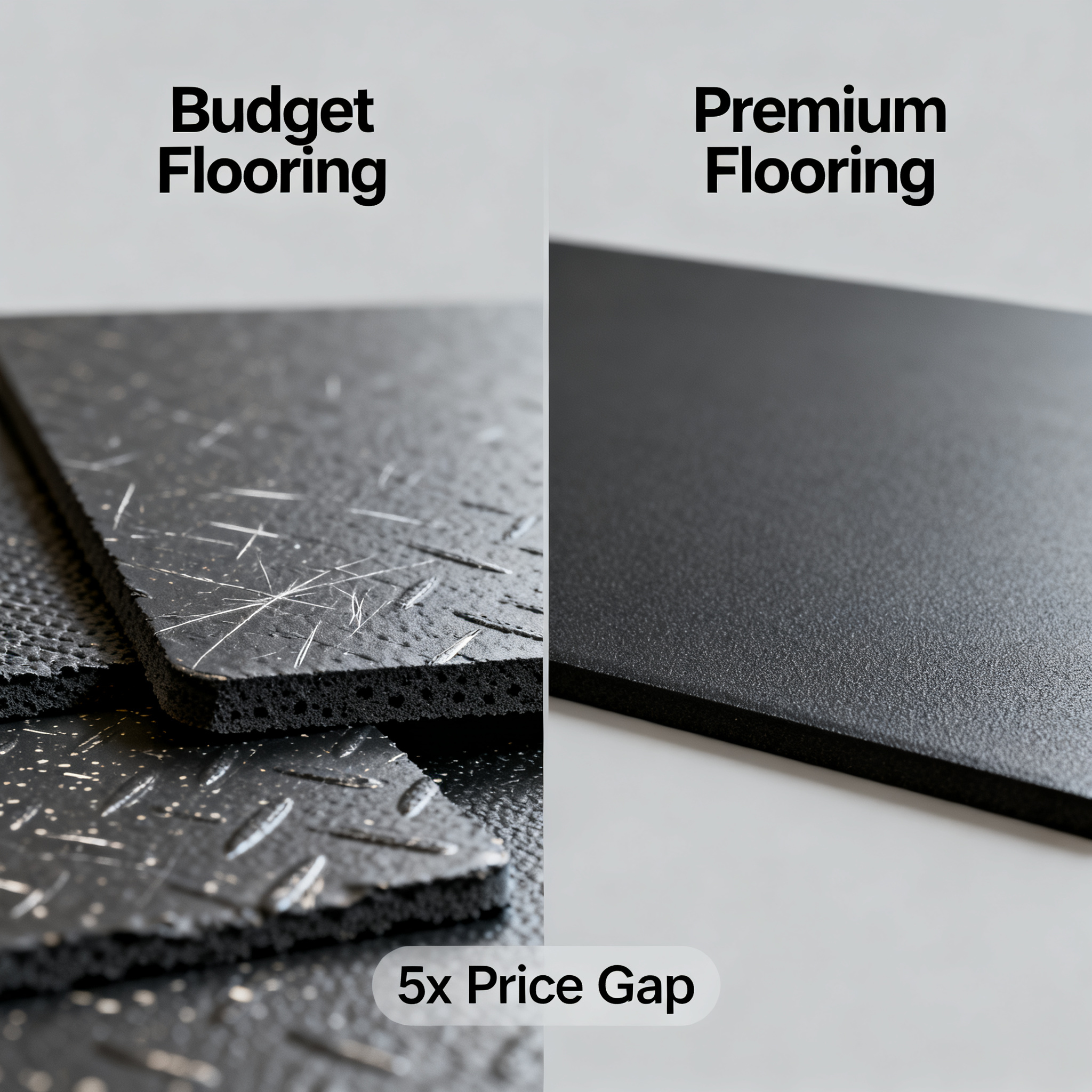
Later, after much soul-searching, I visited a friend's high-end studio. They used professional sports flooring at 250 RMB per square meter. Both were green, but when placed side by side, you immediately understand what "you get what you pay for" means. That flooring came from SQUARE COMFORT. My friend said they've been in the sports venue flooring business for over a decade, with countless cases from table tennis halls to badminton courts to dance studios.
This time, when replacing the flooring, I decided to buy both types and run a thorough comparison test. The results might overturn many studio owners' assumptions.
First Look: Differences in Appearance, Thickness, and Texture
When the budget flooring was first laid, honestly, it looked glossy and impressive. But when I measured it with calipers, the thickness was only 3.5mm, while SQUARE COMFORT's premium flooring was rated at 4.5mm and actually measured 4.7mm. Don't underestimate that 1mm—it means a completely different density in the cushioning layer.
The texture difference was even more obvious. The budget flooring had a simple lychee pattern, slightly rough to the touch, but in a harsh, sandpaper-like way. The premium flooring, on the other hand, used a "crystal sand texture" with fine shimmering particles visible to the naked eye. It felt warm and damped, with a subtle rebound when pressed with a finger. When I held a phone flashlight close to the surface at an angle, the budget flooring reflected light diffusely, appearing murky, while the premium flooring showed uniform mirror-like reflection with clean, crisp light spots.
Another detail: at the seams of the budget flooring rolls, a faint light-colored line was visible to the naked eye—the base fabric layer showing through. In contrast, SQUARE COMFORT's seams were nearly invisible because the base and surface layers matched in color, a production technique called "same-color see-through base," which significantly raises costs.
Round Two: Brutal Testing—100,000 Cycles of Abrasion and Heavy Pressure
Visual inspection isn't enough. I directly contacted a flooring testing lab and paid out of pocket for two sets of tests.
Abrasion Test: Using a Taber abraser to simulate foot traffic with sanding wheels, set to 100,000 revolutions. The budget flooring's surface texture began to wear smooth at 30,000 revolutions, and by 70,000, the base fabric fibers were exposed, looking like a faded, washed-out rag. In contrast, SQUARE COMFORT's flooring only showed slight loss of gloss after 100,000 revolutions; under a magnifying glass, the texture remained clearly discernible. The lab engineer explained that premium flooring typically has a wear layer of 0.5mm or more, while budget options often have only 0.1mm, and some even use printed textures instead of a real wear layer.
Impact Resistance Test: Using a steel indenter with a 5cm diameter to simulate the impact of a free-falling barbell plate. Dropped from a height of 30cm, the budget flooring immediately showed a dent about 2mm in diameter, with less than 50% rebound after 24 hours, indicating clear permanent deformation. SQUARE COMFORT's flooring, under the same impact, showed almost no visible dent and fully recovered to flatness after 48 hours. The engineer explained that this depends on the density and closed-cell rate of the foam layer. Premium products use high-density closed-cell foam, which absorbs impact like memory foam, while budget products often use open-cell foam that compresses easily and collapses over time.
Round Three: Six-Month Simulated Aging—The Truth About Deformation and Fading
After lab tests, I cut 50cm×50cm samples from both floorings and placed them under a west-facing window in the studio, receiving over 6 hours of direct sunlight daily, while using a humidifier to simulate the high-humidity environment of the southern plum rain season. After six months, I compared them, and the results were alarming.
The budget flooring had visibly yellowed. Using a colorimeter, the ΔE value reached 6.8, a color shift noticeable to the naked eye. More severe was dimensional stability—it shrank nearly 2%, with edges curling up like a burnt slice of cheese. SQUARE COMFORT's flooring, however, had a ΔE value of only 1.2, with almost no visible change, and dimensional variation controlled within 0.3%, with edges remaining flat and well-adhered.
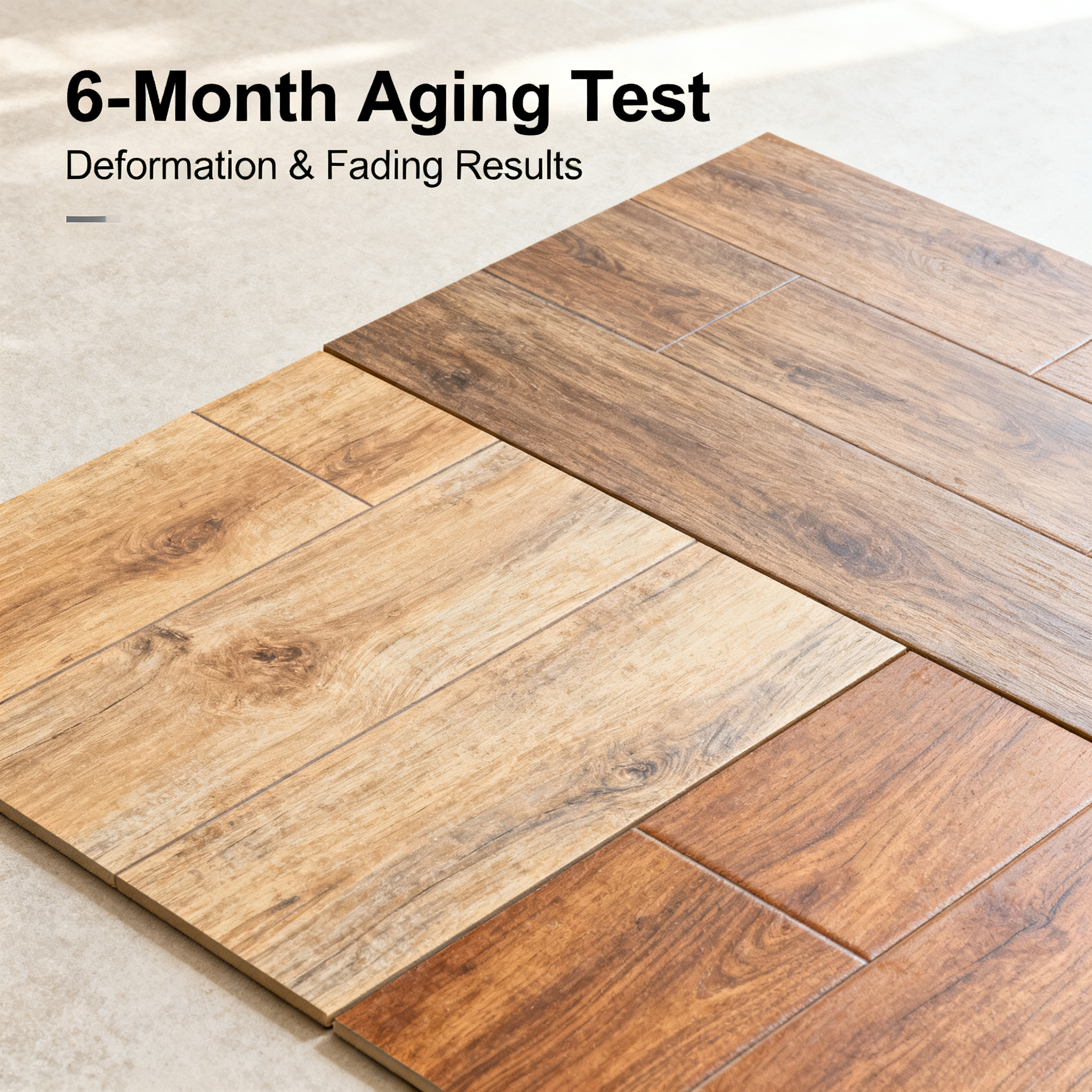
The reason behind this is that premium flooring incorporates UV inhibitors and a fiberglass mesh layer in its formulation. SQUARE COMFORT's product documentation mentions that their sports flooring is certified under the ISO 9001 system, with production standards explicitly specifying weather resistance testing requirements. Budget flooring manufacturers, to cut costs, simply omit this fiberglass layer. Short-term issues don't appear, but over time, the flaws become glaring.
Is the 5x Price Gap Worth It?
Now, back to the original question: 50 RMB vs. 250 RMB—a 5x price difference—how much difference in performance?
My conclusion is: If you're running a temporary venue expected to last less than a year, budget flooring might suffice. But if you're seriously operating a fitness studio, dance studio, or sports hall, you can't afford to skimp on premium flooring.
Let's do the math: A standard badminton court is about 100 square meters. Budget flooring would total 5,000 RMB, while SQUARE COMFORT's premium flooring would cost 25,000 RMB. It seems like you save 20,000 RMB, but budget flooring typically lasts only 2-3 years, and by the second year, issues like bubbling, fading, and seam cracking start to appear. Premium flooring generally comes with a 6-8 year warranty. SQUARE COMFORT even offers a 2-year warranty on stone-wood composite products, and their engineering team supports end-to-end delivery from design to installation, meaning you don't need to source a separate installation crew, avoiding the pitfall of "good flooring but poor workmanship."
More importantly, there are hidden costs. At my old studio with budget flooring, I received complaints from three members about the floor, and two of them canceled their memberships. A member's annual fee is 3,000 RMB, so losing two members means 6,000 RMB—already covering a third of the price difference for premium flooring. The damage to reputation is immeasurable.
Tight Budget? Here's a Compromise Solution
If you really can't shell out 25,000 RMB but don't want to use cheap stuff that fails in six months, I suggest a "hybrid installation" strategy: Use premium flooring in high-traffic areas and mid-range products in low-frequency zones.
For example, in fitness areas, barbell zones, and group class rooms—where high-impact and frequent friction occur—you must use premium sports flooring from professional brands like SQUARE COMFORT. For locker rooms, rest areas, and corridors, where there's no heavy dropping or intense friction, mid-range products priced at 80-120 RMB per square meter are perfectly adequate.
This way, for a 300-square-meter venue, the actual area needing premium flooring might only be 150-200 square meters, keeping the total budget under 40,000 RMB—nearly half the cost of full premium coverage—while ensuring quality and durability in critical areas.
Finally, a heartfelt word: Flooring is something you lay down and don't touch for three to five years. You stand on it daily for teaching and training, and members sweat on it. It directly impacts exercise safety and user experience. Skimping where you shouldn't might cost you a member's ankle or your entire venue's reputation.
All greatness begins from the ground up. This is SQUARE COMFORT's brand philosophy, and I deeply agree. How far your venue can go largely depends on how reliable the ground beneath your feet truly is.