
Self-Leveling vs. Interlocking Tiles vs. Sports Flooring: A Comprehensive Comparison of Three Gym Flooring Options to End Your Dilemma
Self-Leveling vs. Interlocking Tiles vs. Sports Flooring: A Comprehensive Comparison of Three Gym Flooring Options to End Your Dilemma
Recently, several friends who run sports venues have complained to me that flooring is the biggest headache in venue renovation. Concrete floors are too hard, wooden floors are too delicate, and epoxy coatings are slippery. Among the mainstream options—self-leveling flooring, interlocking sports tiles, and PVC sports flooring—how do you choose? Today, I'll break down these three materials from construction, performance, to maintenance, so you can make an informed decision without hesitation.
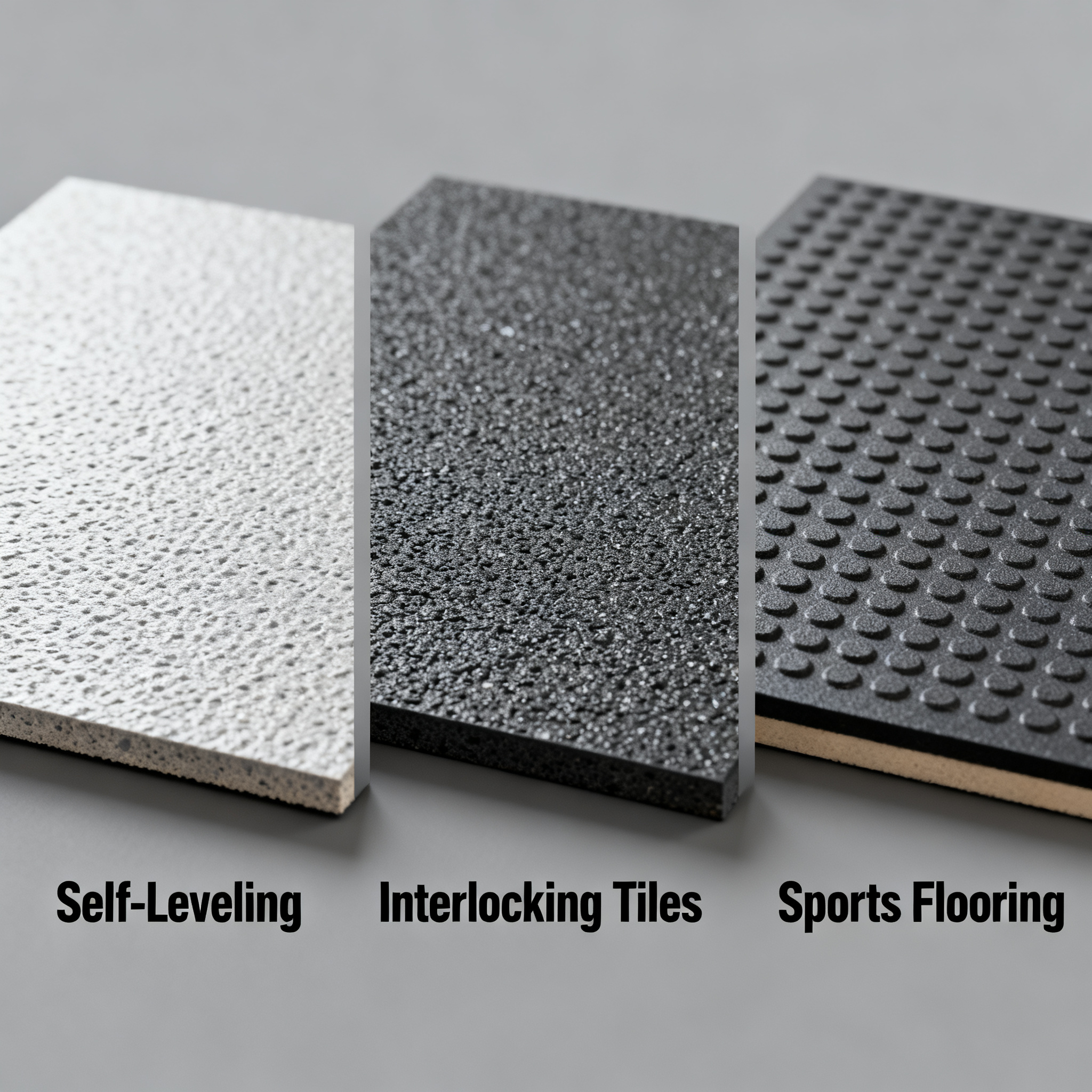
1. Construction Process and Cost: One-Time Investment vs. Hidden Expenses
Let's start with self-leveling flooring. Its installation is somewhat like making a cake base: you mix cement-based material with water, pour it on the ground, and let it level itself. Sounds simple, but it demands extremely high-quality subfloors—the ground must be dry, flat, and crack-free; otherwise, it's prone to delamination or cracking later. Typically, professional technicians are required to operate the machinery, and the project takes about 3-5 days (including curing). The comprehensive cost ranges from 80 to 150 RMB per square meter, which seems affordable, but if the subfloor isn't properly prepared, rework costs can double.
Interlocking sports tiles follow a completely different logic. They are plastic grids snapped together like building blocks, requiring no adhesive and no special subfloor—just a concrete base. Labor costs are low; two people can install a standard basketball court in half a day. Material prices vary widely, from low-end options at 50 RMB per square meter to imported ones at 200 RMB. However, note that these tiles have an elevated structure underneath, which can accumulate dust and insects over time, making cleaning a hassle.
Finally, there's PVC sports flooring, a flagship product from professional sports flooring brands like SQUARE COMFORT. Its installation uses a "thin-bed method," where rolls or tiles are adhered directly to a flat surface with special adhesive. It requires a high-quality subfloor but, unlike self-leveling, needs no curing period—you can typically use it the day after installation. In terms of cost, standard commercial-grade PVC ranges from 60 to 100 RMB per square meter, while sports-grade (e.g., SQUARE COMFORT's specialized flooring for table tennis and badminton halls) falls between 120 and 200 RMB. When you factor in self-leveling for subfloor leveling, the total cost is comparable to high-end interlocking tiles.
2. Athletic Performance and Daily Maintenance: The Core Difference
Many first-time venue owners only focus on price, overlooking athletic performance—this is the biggest mistake.
Self-leveling flooring's main issue is hardness. Essentially, it's an improved concrete floor with almost no elasticity. If you play badminton or do aerobics on it, the impact on your knees and ankles is over three times greater than on wooden floors. We once tested this in a fitness studio: a coach did burpees on self-leveling for half an hour and couldn't go downstairs the next day due to knee pain. Unless you're only using it for equipment storage or as a warehouse, it's not recommended as a sports surface.
Interlocking tiles offer better elasticity than self-leveling due to their elevated structure, but the problem lies in "directionality." Their surface features grid or honeycomb patterns, and during lateral slides, the friction between shoe soles and the pattern creates noticeable jerks, which professional athletes find "foot-catching." Additionally, their impact absorption rate is highly temperature-dependent—soft in summer and hard in winter, leading to inconsistent performance. A client once installed interlocking tiles on an outdoor basketball court in the north; at minus ten degrees Celsius in winter, the tiles became as hard as stone, and the ball deformed upon bouncing.
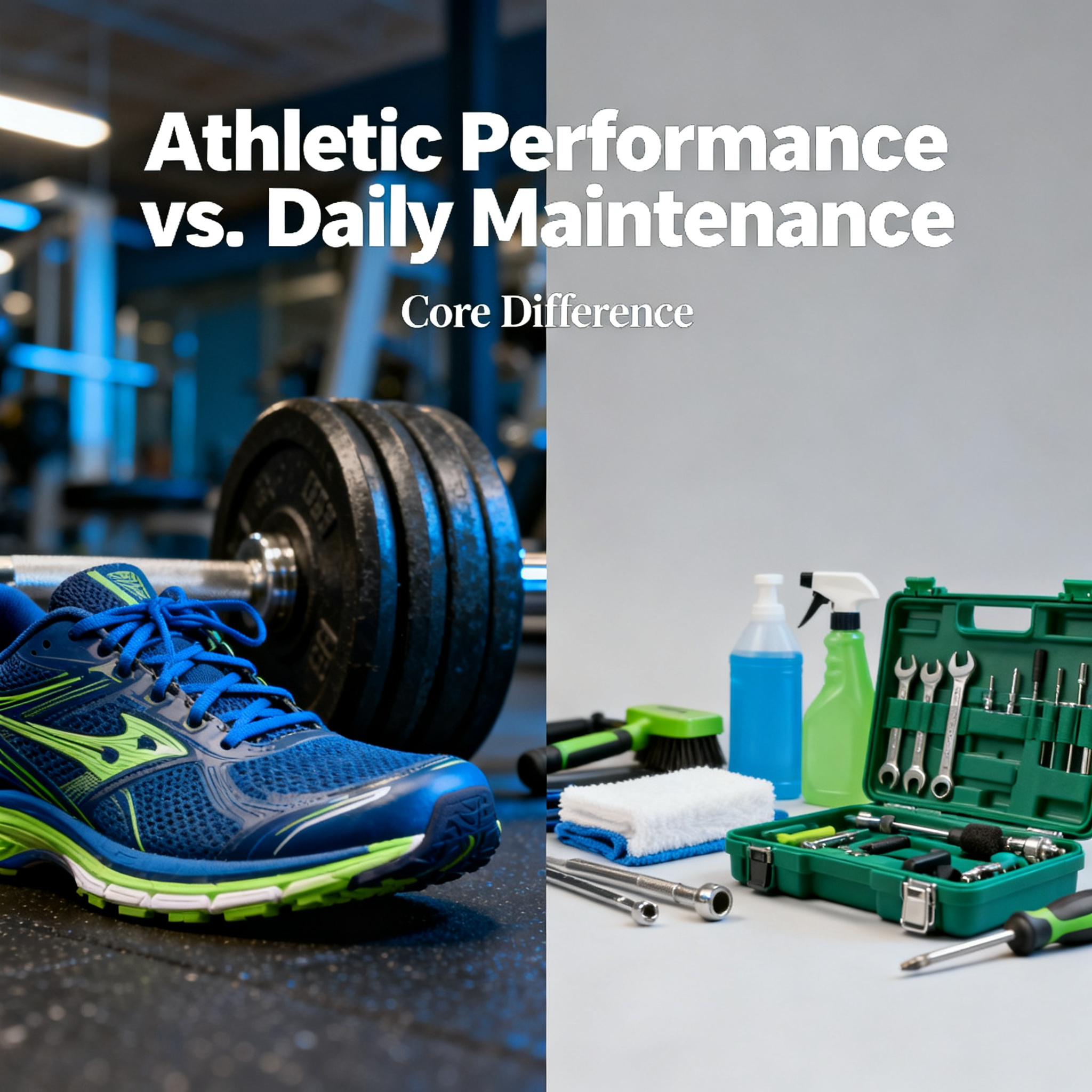
PVC sports flooring is the only one among the three designed with "athletic protection" as a core metric. Take SQUARE COMFORT's sports flooring, for example: it features a multi-layer structure—a high-density foam base layer for shock absorption, a stable middle layer to prevent excessive deformation, and a wear-resistant top layer providing consistent friction. National standards require sports flooring to have an impact absorption rate between 20% and 50%. SQUARE COMFORT's lab tests show a rate of about 35%, meaning the force on knees upon landing is reduced by one-third. For athletes training over four hours daily, this protection is tangible.
In terms of daily maintenance, self-leveling requires periodic waxing to prevent dust and is nearly impossible to clean once stained; interlocking tiles need regular disassembly to clean accumulated dust underneath, which can breed bacteria, and replacing a single damaged tile means prying up the entire section, leading to color mismatch headaches; PVC sports flooring is the most low-maintenance—just mop with a neutral cleaner, and local stains can be removed with an eraser. SQUARE COMFORT's flooring also features a UV-resistant wear layer, so even with constant foot traffic in sports shoes, noticeable scratches are unlikely even after two years.
3. Suitable Applications: Professional Competitions, Amateur Training, or Multi-Purpose Facilities?
After understanding budget and performance differences, the key is your venue's positioning.
If you're running professional training or hosting amateur leagues, such as badminton or table tennis clubs, prioritize PVC sports flooring. Most ITTF- and BWF-certified courts use this type of material. SQUARE COMFORT has delivered numerous turnkey projects for table tennis and badminton halls, providing everything from flooring to tables and barriers. Their engineering team first conducts subfloor leveling inspections before installation, ensuring flatness errors are within 2 millimeters—a precision that directly affects ball trajectory accuracy.
If you're setting up a community or school outdoor basketball court with a limited budget and don't demand top-tier athletic experience, interlocking tiles are the cost-effective choice. They're weather-resistant, unaffected by sun or rain, and come in vibrant colors, suitable for general fitness. However, for semi-professional outdoor competitions, acrylic or silicone PU surfaces are still recommended, as interlocking tiles can indeed be slippery during rapid direction changes.
Self-leveling flooring is best suited for spaces "not meant for sports"—like equipment areas, lounges, corridors, or as a base layer for PVC sports flooring. If you also want to accommodate dance or yoga studios, PVC sports flooring works there too. SQUARE COMFORT's specialized dance studio flooring is softer, with a lower surface friction coefficient to facilitate spinning movements.
4. A Quick Comparison Table to End Your Dilemma
| Comparison Aspect | Self-Leveling | Interlocking Tiles | PVC Sports Flooring |
|---|---|---|---|
| Installation Difficulty | High, requires professionals | Low, DIY possible | Medium, requires adhesive |
| Subfloor Requirements | Very high, must be flat and dry | Low, concrete is enough | Relatively high, needs leveling |
| Cost per Square Meter | 80-150 RMB | 50-200 RMB | 100-200 RMB (including subfloor) |
| Impact Absorption Rate | Nearly 0% | 15%-30% (temperature-dependent) | 20%-50% (stable) |
| Lateral Movement Performance | Hard, no cushioning | Foot-catching, jerky | Smooth, moderate friction |
| Daily Maintenance | Needs waxing, stain-prone | Requires disassembly for cleaning, single-tile replacement is troublesome | Mop only, locally repairable |
| Lifespan | 5-8 years | 3-6 years | 8-10 years |
| Suitable Applications | Equipment areas, subfloor | Outdoor basketball courts, kindergartens | Professional courts, dance studios, multi-purpose facilities |
Decision Advice: If you're opening a professional sports venue (badminton, table tennis, basketball training), go with PVC sports flooring without hesitation—don't save money at the expense of your trainees' knees. For outdoor general fitness venues, interlocking tiles are the baseline. Self-leveling should stick to being a subfloor; don't let it face athletes directly.
Lastly, remember: every penny you save on flooring materials will come back to haunt you in future usage. Brands like SQUARE COMFORT, with over three decades of experience in sports flooring and equipment, have complete standards from material formulation to construction acceptance. Their website features over 20 categories of real project case studies, from schools to Fortune 500 companies. Check your venue's category to see how to match the right flooring. Choose the right floor, and your venue is already half-successful.