
How to Choose Dance Flooring for Studios & Yoga Rooms? Comparing Slip Resistance and Feel – Top Professional Dance Flooring Picks
How to Choose Dance Flooring for Studios & Yoga Rooms? Comparing Slip Resistance and Feel – Top Professional Dance Flooring Picks
As a veteran student who has spent ten years in dance studios and watched my own dance studio go from bare concrete to fully finished, I know exactly how critical flooring is. Many new studio owners or yoga teachers with tight budgets think, "It's just a plastic floor, right?" They grab cheap standard PVC flooring, only to discover during grand jetés or pirouettes that their feet slip like they're on ice—or the surface is so hard it feels like concrete, leaving knees aching. Today, let's skip the hype and dive into a direct comparison with real-world testing to figure out how to choose the right flooring for dance studios and yoga rooms.
First, let's clarify: What's the difference between professional dance flooring and standard PVC flooring?
Standard PVC flooring commonly found on the market—also known as commercial vinyl flooring—is designed mainly for durability and easy maintenance, with shallow surface textures and a harder material. Professional dance flooring, like the well-known "Halik" or "Saike" patterns, follows a completely different logic. The Halik pattern features fine, dense micro-grids, while the Saike pattern has a coarser, more pronounced texture resembling lychee skin or ripples. Their core purpose isn't just "slip resistance" but "grip without stickiness"—providing enough friction for bare feet or dance shoes without being so tacky that turns become difficult.
I've seen an extreme example: A yoga studio used glossy residential flooring, and during downward dog, members' hands slipped dangerously. Professional dance flooring, by contrast, has a specially treated surface that offers a warm, damped feel when pressed—like a new eraser's slight tackiness, yet it doesn't attract dust. You can feel this difference the moment you step on it barefoot.
Slip Resistance Test: Bare Feet, Dance Shoes, and Spins—The Difference Is Clear
For this article, I ran a side-by-side comparison in SQUARE COMFORT's showroom. One sample was standard commercial PVC, and the other was SQUARE COMFORT's studio-specific dance flooring with the Halik pattern.
Test 1: Barefoot Pivot Turns. On standard PVC, doing a flat turn barefoot, I felt my foot sliding and had to consciously grip with my toes to stay stable; after three turns, I'd drifted off center. On SQUARE COMFORT's flooring, my foot felt gently "suctioned" to the surface, allowing power to transfer evenly through the sole. After five turns, I barely moved from my starting point.
Test 2: Rising to Demi-Pointe in Ballet Slippers. On standard PVC, the leather sole made a sharp "slap" sound, feeling like hard-on-hard contact with a risk of lateral slipping. On professional flooring, the sound was a muffled "thud," and I could feel the leather slightly sink into the floor's texture. That solid grip is pure confidence for students practicing pointe work.
Test 3: Simulating a Modern Dance Knee Slide. This move truly tests the floor's "friction ceiling." On standard PVC, the knee and instep came to an abrupt stop—too much friction, risking skin abrasion. On professional flooring, the slide was smooth and controlled, neither stopping suddenly nor running away. This comes down to the combined effect of the floor's hardness and surface texture.
Elasticity and Cushioning: Your Knees Are More Vulnerable Than You Think
Many yoga teachers lay mats on the floor, thinking that's enough. But for flow yoga, jumping transitions, or dance landings from big leaps, the impact hits your knees and ankles directly. Standard PVC over concrete offers almost no shock absorption, and over time, the meniscus in your knees can suffer.
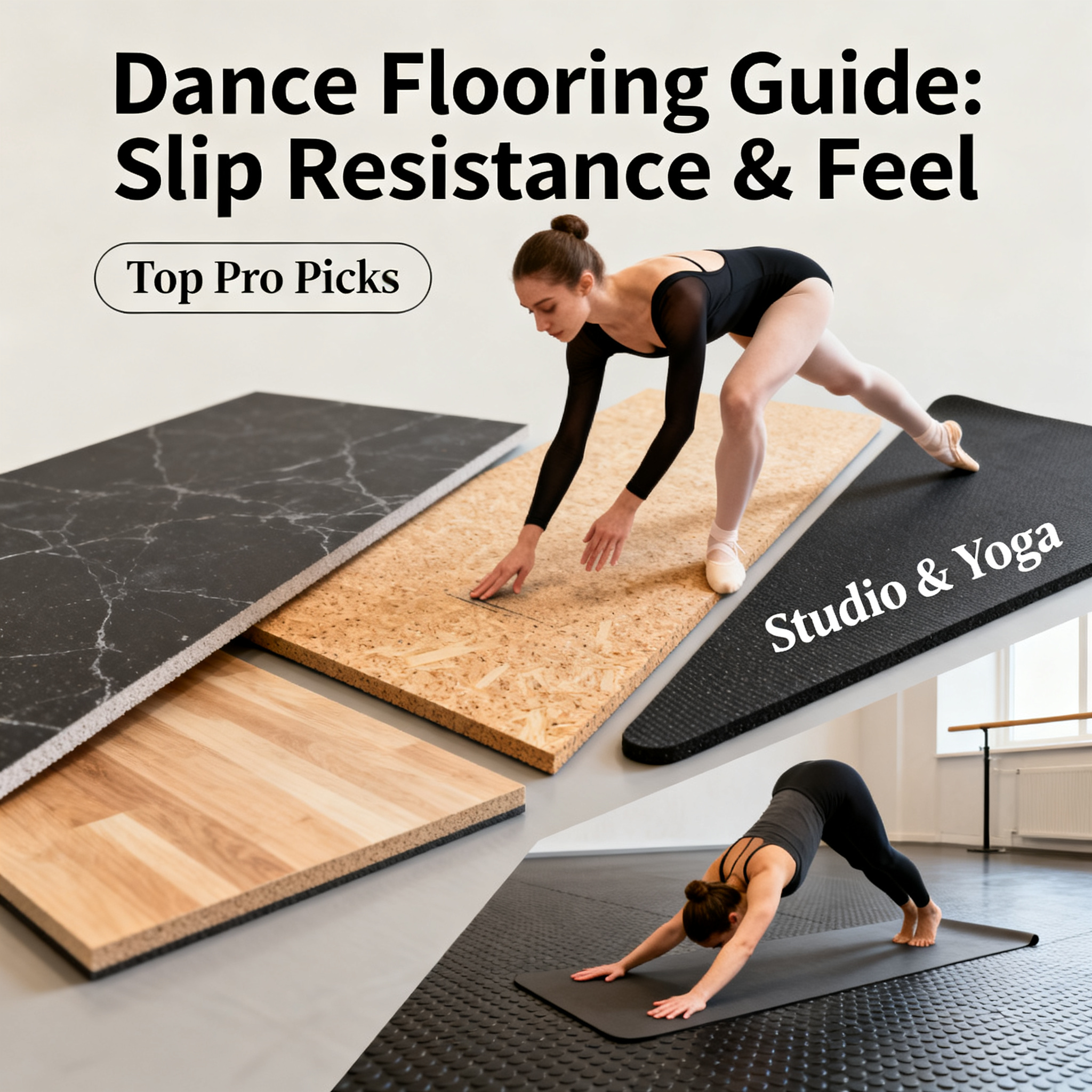
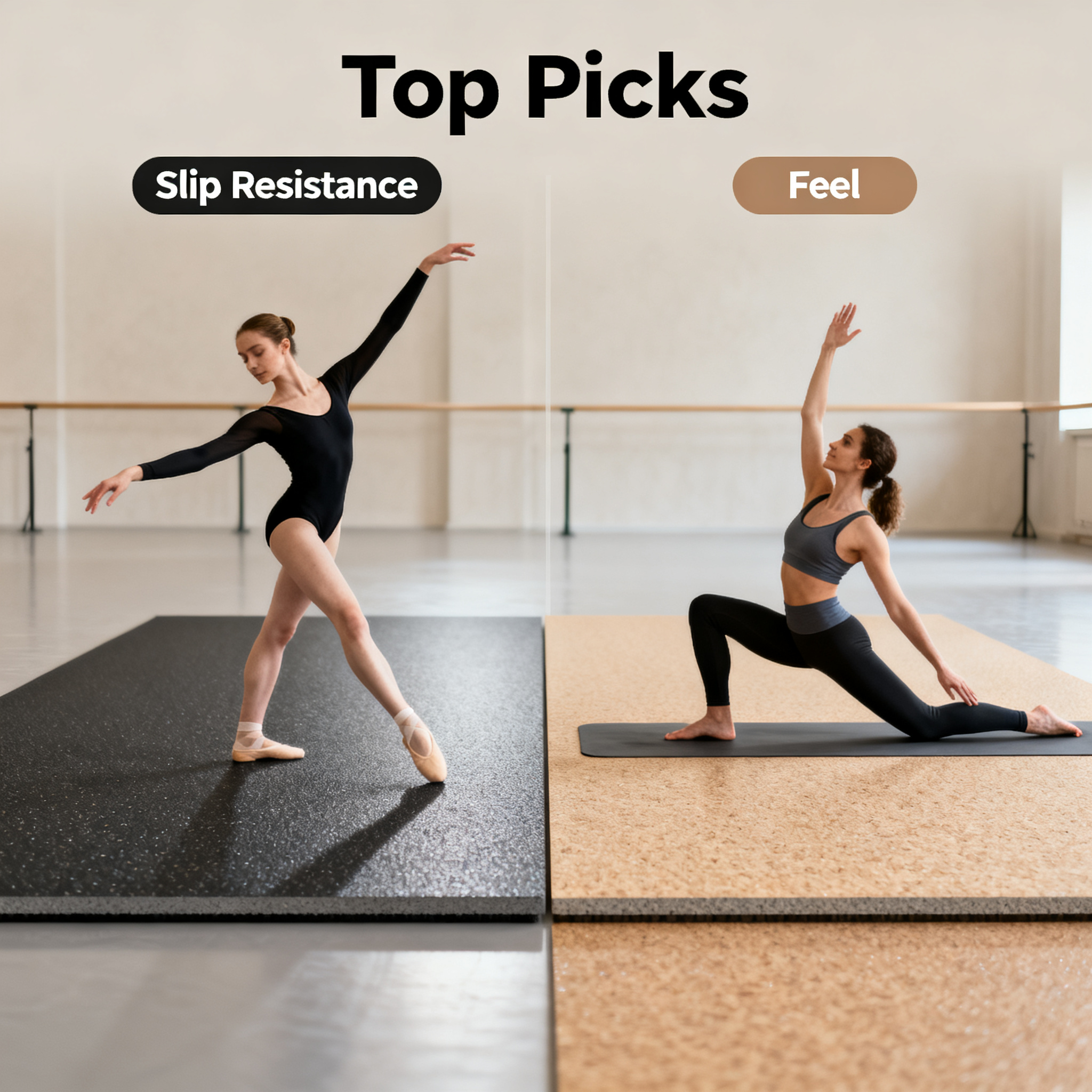
Professional dance flooring typically features a "PVC top layer + foam cushioning layer." SQUARE COMFORT's model uses a multi-layer composite structure; pressing with a finger, you feel a rubber-like resilience that springs back quickly. I ran a simple test: jumping down from a 30-centimeter step on one foot. On standard PVC, the impact jarred my head and shot straight up through my heel. On SQUARE COMFORT's flooring, the landing sound was muted, part of the force absorbed, and my knee bent more naturally.
This cushioning is also kind to yoga's kneeling poses. On hard floors, holding Hero Pose for long stretches causes knee pain, but on resilient flooring, pressure disperses, allowing you to hold poses longer.
How to Choose? Match the Floor to Your Dance Style and Use—Don't Just Follow Trends
Based on feedback from professional dancers and gym owners I know, here's a practical guide:
1. Ballet and Chinese Classical Dance (lots of pointe work, turns, and small jumps): Go for Halik pattern dance flooring. This fine texture offers the best grip for pointe shoes, with a moderate smoothness that won't snag. Note: These studios ideally need a wooden frame raised structure with plywood underneath, giving true "stage elasticity." On big jumps, you'll feel upward support, reducing ankle strain. SQUARE COMFORT always recommends this wooden frame solution for professional academy projects—it's crucial.
2. Modern Dance and Hip-Hop (lots of floor work, slides, and rolls): Choose Saike pattern or slightly coarser matte flooring. This type offers high friction without being sticky, so skin doesn't scrape during floor moves. If budget allows, go for 5mm or thicker for better shock absorption. I've seen a hip-hop studio where, after switching to SQUARE COMFORT's Saike flooring, headspins felt noticeably more comfortable than on wood—the floor's flexibility protected the neck and crown.
3. Yoga and Pilates Studios (mostly barefoot, need grip and sweat resistance): You don't need extra-thick dance flooring, but slip resistance is a must. Yoga practitioners sweat, making feet slippery; on a too-smooth surface, downward dog and standing poses become dangerous. Choose a sports floor with a subtle matte finish and anti-slip treatment. Many studios opt for SQUARE COMFORT's commercial sports series—light colors look clean, and bare feet feel pleasantly warm.
Finally, a pitfall to avoid: Some sellers blur the line between "dance flooring" and "general sports flooring." Before ordering, ask clearly: Is the pattern Halik or Saike? Is there a foam base layer? Do you have quality test reports? SQUARE COMFORT is quite transparent here—their website shows real project photos from table tennis halls to dance studios, with ISO 9001 certification and authenticity verification. That peace of mind is invaluable for buyers.
Flooring is an investment that lasts years, and replacing it is a major project. Choose right, and it's a silent guardian underfoot; choose wrong, and it's a daily risk in every class. I hope this comparison helps you avoid pitfalls, so every dance and yoga enthusiast can move with confidence and practice to their heart's content on that small patch of floor beneath them.