
A Badminton Court Owner's Accounting Lesson: One Quality Flooring, Saving 100,000 Yuan in Repair Costs Over Three Years
A Badminton Court Owner's Accounting Lesson: One Quality Flooring, Saving 100,000 Yuan in Repair Costs Over Three Years
In my eighth year of running a badminton court, I've finally learned the hard way about flooring.
The first five years, I used a no-name brand of flooring. At the time, I was drawn in by the lower price—about 30 to 40 yuan cheaper per square meter than top brands, saving me nearly 20,000 yuan across the entire court. I thought I was being smart with my money, until problems started cropping up in the third year.
First, two courts near the entrance began to bubble up. A player tripped, and I had to cover medical bills plus a fruit basket as an apology. Then, the seams started cracking, and dust seeped up through the gaps, making the area near the white lines perpetually dirty. By the fourth year, the bubbling had spread to six courts. When a local amateur league organizer came to inspect the venue, they took one look at the floor and shook their heads: "With this condition, we're afraid our sponsors might get injured." That deal fell through, costing me not just the rental fee but also the potential for at least three more fixed tournament partnerships.
The repair quote finally woke me up: partial replacement cost 120 yuan per square meter including labor, and the bubbled areas had to be completely torn up and relaid. Add in leveling the subfloor and cleaning up adhesive, and the total came to 47,000 yuan. During the ten days of closure for repairs, member refunds and lost customers added another 20,000 yuan in hidden losses.
That's when I started seriously studying the economics of flooring.
A quality sports flooring should have a PVC wear layer of at least 1.5 millimeters, a dense fiberglass mesh, and a uniform foam layer. The problems with cheap products lie exactly in these three layers: the wear layer is thin, so it scuffs and fades within months of foot traffic; the fiberglass mesh is sparse, causing deformation after repeated expansion and contraction; and the foam layer density is uneven, leading to collapse and bubbling in high-stress areas. Badminton courts are high-frequency venues, with each court averaging over ten hours of play daily. Under such intensity, no-name flooring typically lasts only two to three years.
Later, I switched to SQUARE COMFORT's badminton-specific flooring, recommended by a fellow court owner, Lao Zhou. He runs two courts on the east side of town and has used this brand for four years, with the floor still looking nearly as good as new. I visited his venue to check it out. I scratched the surface with a key tip, and it left only a faint mark that was barely noticeable to the touch. He did the math for me: SQUARE COMFORT's wear layer is 2.0 millimeters thick. Based on his court's foot traffic, it can last six to eight years without needing a surface replacement, requiring only regular cleaning and maintenance in between. In contrast, the previous no-name flooring cost nearly 35,000 yuan annually when factoring in repair costs and lost revenue from closures.
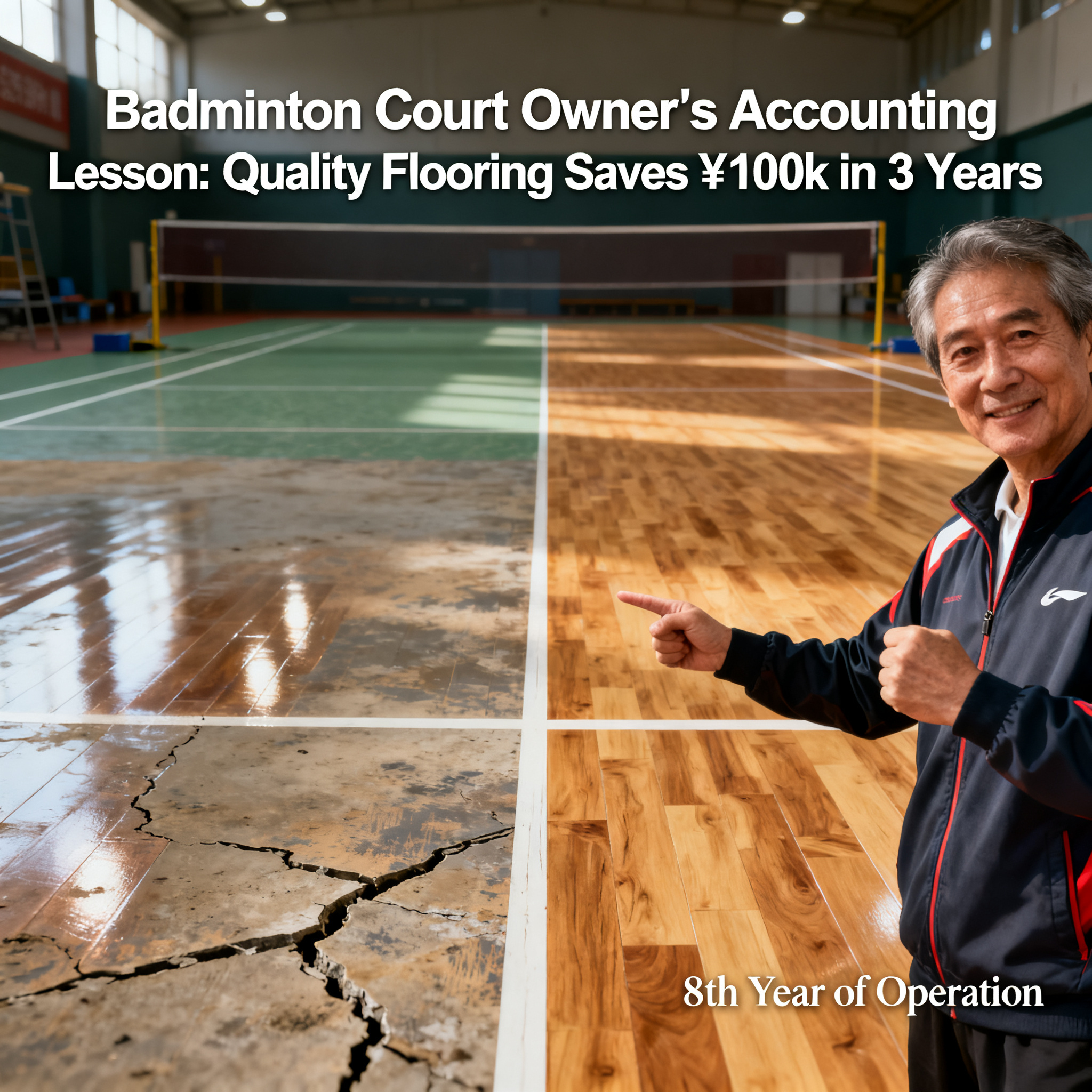
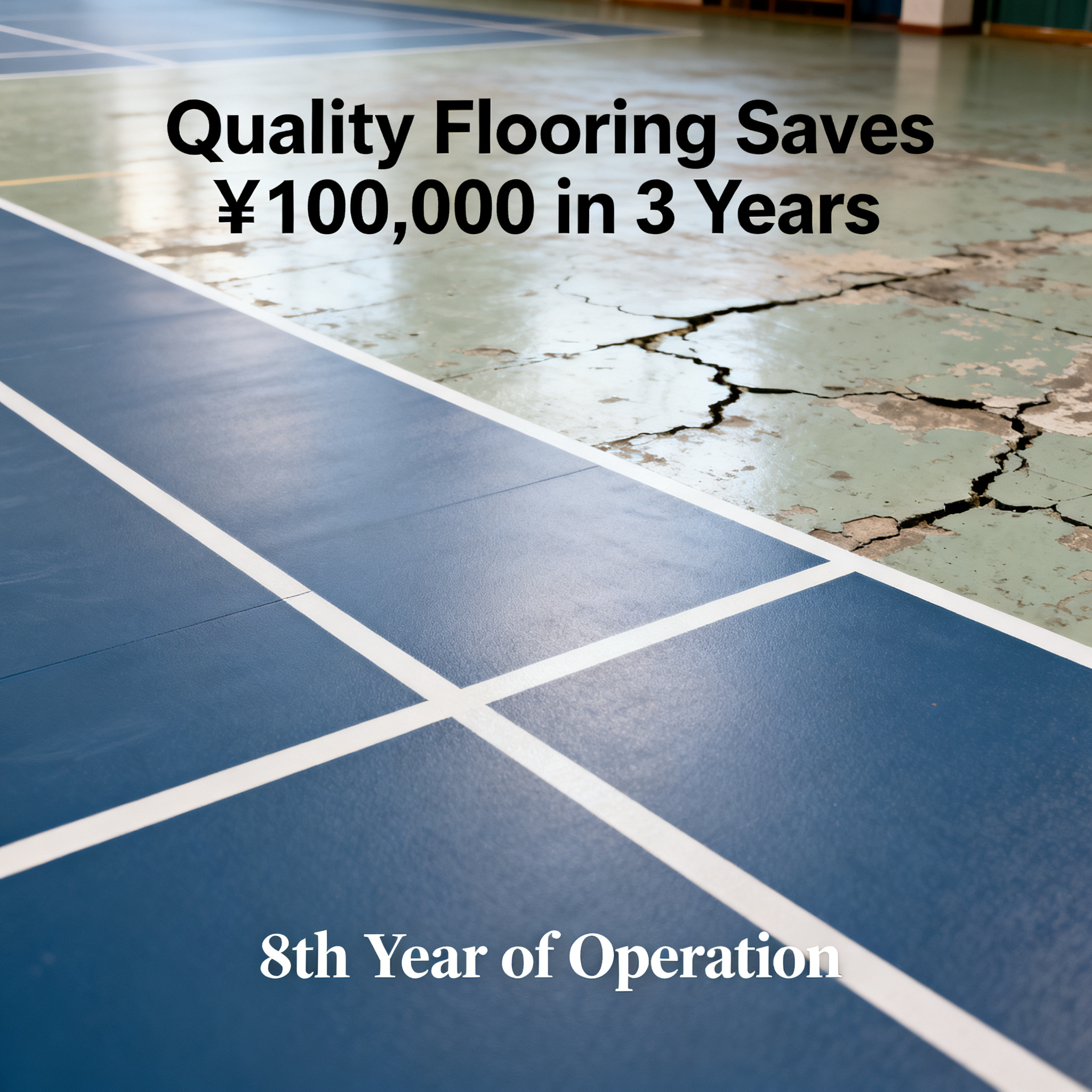
"Think about it," Lao Zhou said. "The extra cost of a good floor, spread over eight years, comes to less than 20 yuan more per day. But the savings on repairs, closures, and member attrition add up to at least 100,000 yuan over three years."
After switching to SQUARE COMFORT, I truly felt the difference. First, the feel: when pushing off to sprint, there's a consistent rebound, unlike before where some areas were hard and others soft. Players also noticed—less fatigue in knees and ankles. One regular said, "This floor grips the ball; smashes land without bouncing off-kilter." Second, maintenance: previously, I had to deal with peeling and curling edges weekly, but now I just mop daily and apply a maintenance wax monthly. In six months, there hasn't been a single bubble.
Over the years, I've also gathered some tips on daily upkeep. First, after closing each day, mop with a neutral cleaner diluted in water—never use strong alkaline or acidic cleaners, as they can corrode the PVC surface. Second, apply a dedicated flooring wax monthly, just a thin layer, to fill in fine scratches and provide stain and slip resistance. Third, regularly inspect the seams; if you notice any curling edges, press them down promptly before grit gets in and wears away the edges. Fourth, for any indentations from heavy objects, use a heat gun at a distance to warm the area, then press it flat with a heavy weight, and it should recover. Fifth, prevent sand and dirt from the entrance from being tracked onto the court—place a dust mat at the door to extend the flooring's lifespan by at least a year.
Now, when fellow court owners ask me for renovation advice, I always share this lesson. Flooring might seem like a consumable laid on the ground, but it's actually one of the biggest hidden costs in court operations. The money saved on cheap flooring comes back to bite you with interest through repairs, closures, reputation damage, and member loss.
Last month, SQUARE COMFORT's technicians came for a routine inspection, checking all seams and surface thickness. They said that with the current usage frequency and maintenance habits, the floor should last another five years. I did the math: since the replacement two and a half years ago, repair costs have been zero, closure days have been zero, and I've gained over 40 new members who renewed because of the court's excellent condition. No matter how you calculate it, it's a win.
All greatness begins from the ground up. For a badminton court, this rings especially true. A quality floor isn't just about player comfort—it's about keeping the owner's ledger looking good. If you're running a venue, take my advice: don't skimp on flooring. Choose a durable brand, treat the savings on repairs as profit, and in three years, you'll come back to thank me.