
From Drab to Fab: The Unexpected Delights of Upgrading a Table Tennis Club's Flooring
From Drab to Fab: The Unexpected Delights of Upgrading a Table Tennis Club's Flooring
Old Zhou had been running his table tennis club on the east side of town for a full eight years. The tables were top-notch—Double Happiness brand, purchased at a premium back in the day. But the floor? It was just bare concrete painted with a layer of dark gray—chosen years ago to save money and hassle. His thinking was simple: a table tennis club is about the tables and the skills, so who cares what's underfoot?
But over the past six months, he'd noticed something was off.
His regulars didn't mind—they knew the place like the back of their hands, changed shoes, and got straight to playing. But new, younger customers—especially those brought in by friends for a tryout—would pause at the door, let their eyes linger on the floor for a few seconds, and then give a slight, almost imperceptible frown. Some would ask, "Why does the floor look so dusty?" Others would bluntly say, "Let's check out that new place in the new district next time—I heard it just got renovated."
Old Zhou knew the problem lay right there on that floor. Concrete floors are prone to dust. Every morning, he'd mop the place clean, but by noon, a fine layer of gray powder would creep back up. Sneakers would skid on it, making sudden stops and pivots feel risky. Worse, visually, the dark gray floor against the white walls and tables made the whole space look gloomy and cramped, like an old warehouse.
"Drab," he complained to me, using that very word.
The turning point came by chance. Old Zhou attended an industry exchange event for sports facilities. During a coffee break, he struck up a conversation with a veteran venue operator. The man mentioned that last year, he'd renovated the old floors of all three of his venues with PVC sports flooring—two of them table tennis clubs, using blue flooring. "Guess what? Within the first month after the renovation, two companies booked the courts for team-building events. Before, they'd said the place didn't look presentable enough."
Old Zhou latched onto those words: "blue flooring." After the event, he went online and did his research, discovering that this industry had more depth than he'd imagined—thickness, density, surface texture, wear layer—there was a lot to consider. Being a cautious man, he compared several brands and ultimately chose SQUARE COMFORT. His reasons were simple: first, their portfolio had the most real-world photos of table tennis club installations, which looked professional; second, their customer service explained the suitable scenarios for different thicknesses and densities in detail, unlike some sellers who just quoted prices.
On installation day, Old Zhou made a point to be there, supervising. After leveling the old floor, rolls of flooring were laid out, like giving the entire venue a fresh new skin. He'd chosen a two-tone blue scheme—deep blue as the base, with light blue running as a border around the court. When it was done, Old Zhou said even he was taken aback—this was no longer that dull, gray old club. The blue floor reflected the overhead lights, making the very air seem brighter and cleaner.
The real surprise came with what happened next.
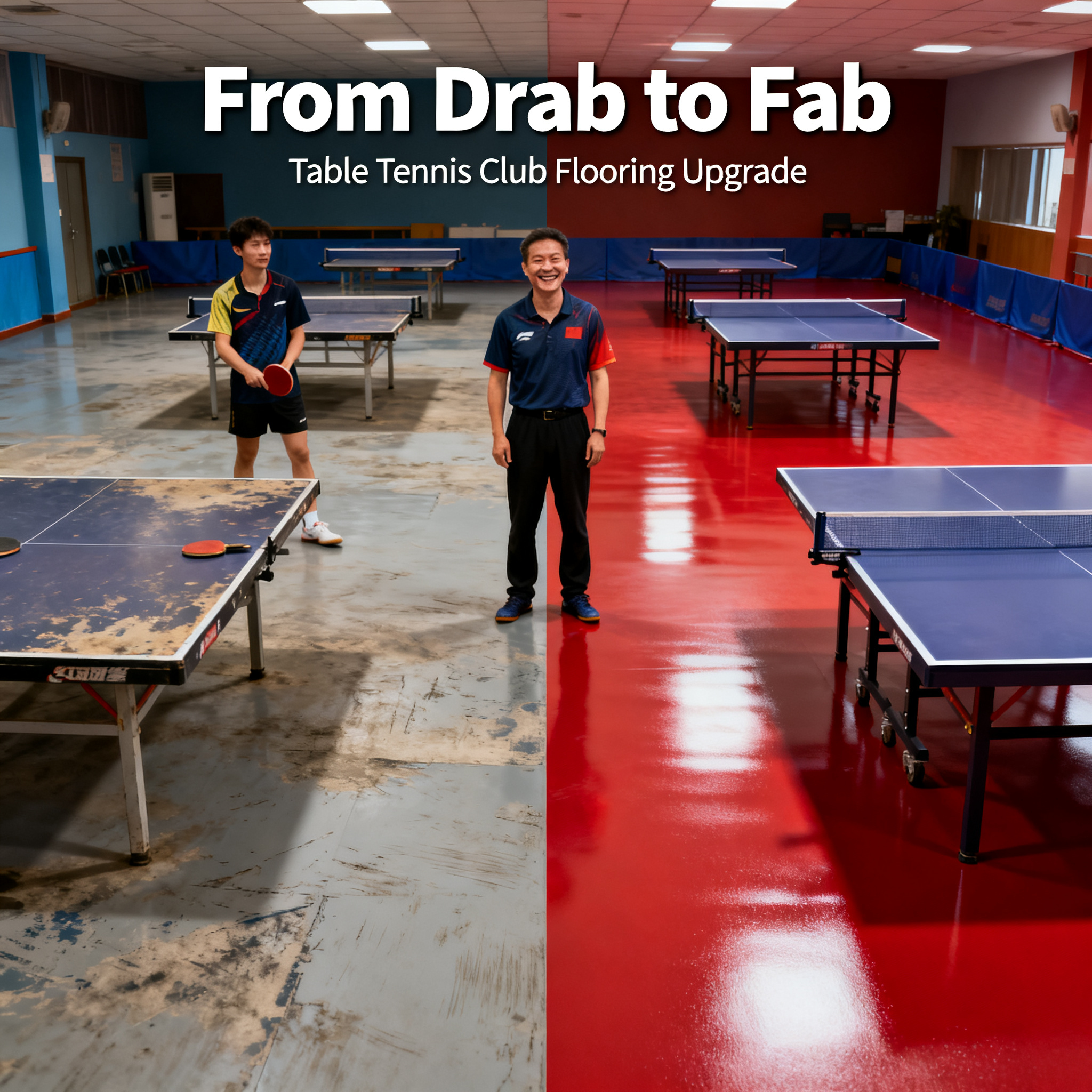
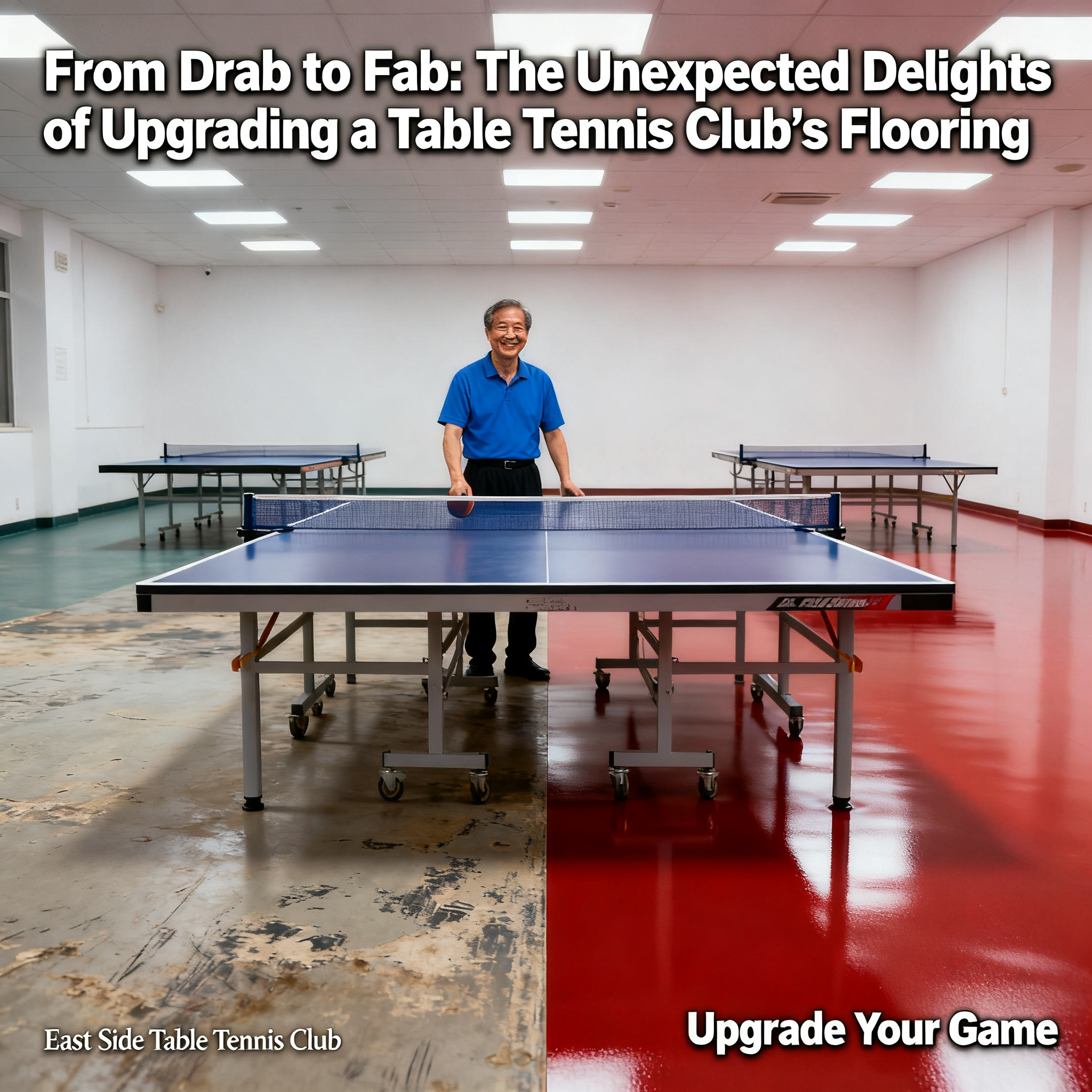
On the first weekend, a few young people who looked like college students came in and immediately pulled out their phones to take photos. One girl crouched down, touched the floor, and asked her friend, "Is this the kind of flooring used in professional matches? It looks so legit." Old Zhou overheard and smiled to himself. That afternoon, after playing, these young folks booked another session for the evening. They soon became regulars and brought along plenty of classmates.
Old Zhou pondered the logic behind it. He told me that the color of the flooring actually matters a great deal. Table tennis balls are white or orange and travel fast. If the floor is too dark, the ball's trajectory isn't as clear; if it's too flashy, it can be distracting. Blue is optically a "receding color," creating a sense of depth, and when paired with white balls and yellow barriers, it offers clear contrast and looks professional. The SQUARE COMFORT customer service rep had also mentioned that they'd worked on projects for universities and sports venues, and their color schemes were tested repeatedly, not just picked from a color chart.
More importantly, the new flooring completely solved the dust problem. The PVC surface is dense and smooth—a quick mop and it's clean, no more worrying about a gray film settling back by afternoon. Old Zhou did a comparison: before, after a match, players' soles and pant cuffs would be streaked with gray; now, after a whole afternoon of play, their shoes stayed spotless. One regular told him, "Old Zhou, since you changed the floor, it feels like the ball speed has picked up. I used to feel heavy on my feet, but now I move much more nimbly." Old Zhou knew it was partly psychological and partly physical—the flooring has better elasticity than concrete, providing more direct feedback when pushing off, and it's gentler on the knees.
On the cost front, Old Zhou had crunched the numbers. The entire venue was over 300 square meters, and the total cost, including labor and materials, was lower than he'd expected. He'd thought a "professional-grade" renovation would set him back tens of thousands, but it turned out the per-square-meter investment was less than a fraction of one month's court rental income. And the returns? In the second month after the renovation, the club gained over twenty new members, half of them under thirty. Previously, there were always open slots after 8 PM, but now prime weekend hours required booking ahead. Some regulars even proactively renewed their annual memberships early, saying, "With a floor this good, we're afraid you'll raise the prices."
The other day, I went to his club to play and ran into him chatting with a young designer. The designer offered to redesign the wall logo and lighting to give the venue more "ambiance." Old Zhou laughed and said, "Sure. I used to think a club just needed to be playable, but now I realize that how the place looks can really determine whether people want to walk in."
He paused, then added, "That SQUARE COMFORT flooring really opened my eyes. Turns out, in this business, you can't cut corners on the ground beneath your feet."
As I was leaving, Old Zhou walked me to the door. I glanced back—the blue court glowed softly under the lights, with players moving, swinging, and shouting, the whole space brimming with energy. Thinking back to its drab, gray appearance half a year ago felt like a different era.
Old Zhou was right—all change starts from the ground up. For a sports club, that saying rings especially true.